bio exam 3
 Call Kai
 Learn
 Practice Test
 Spaced Repetition
 Match
 Flashcards
 Knowt Play
1/95

There's no tags or description
Looks like no tags are added yet.
96 Terms
green world hypothesis
top-down approach; predators, parasitism, and disease prevent herbivores from consuming all of the primary producers (plants)
species richness
the total number of different species
relative abundance
the proportion each species represents
shannon diversity index (H)
between 1.5-3.5; the larger, the more diversity; takes into account total number of species in a community=richness
biogeographic factors
location and size, equatorial-polar gradients (species richness and biodiversity peak near the equator)
dominant species
the most abundant
keystone species
the most influential
foundation species
one that allows other species to inhabit a given area by altering the environment
umbrella species
selected for conservation due to large geographic ranges; legally protecting them shields other species that use their habitat
indicator species
species whose presence or absence provides information about the health of the environment; monitoring them helps to identify problems
intermediate disturbance hypothesis
moderate disturbances can create opportunities for greater species diversity
primary succession
begins in an almost lifeless area where soil has been removed by volcanic eruptions, glaciers, floods, or landslides
secondary succession
begins in areas where a disturbance removes some or all of the organisms but leaves the soil intact; e.g, fires, logging
facilitation
early stages; promotes other species by improving area (lichens, moss)
tolerance
early arriving species do not hinder or promote the environment; usually r-selected. the tolerant, late-successional species outcompete early species
inhibition
early species prevent the establishment of later species; cycle usually ends due to outside disturbance (fire, storm)
ecosystem
a system of multiple communities along with their chemical and physical environments
energetic hypothesis
limited by the inefficient of energy transfer along the chain; 10% of energy transfer from one tropic level to the next
dynamic stability hypothesis
long food chains are less stable than short ones
gross primary production
the amount of light energy that is converted to chemical energy by photosynthesis per unit time
net primary production
gpp minus the energy used by the primary producers for cellular respiration (R); NPP = GPP - R
secondary production
the rate at which heterotrophs convert the chemical energy from the food they eat into new organic biomass and tissue
production efficiency
the fraction of energy stored in food that is not used for respiration; net secondary production/assimilation of primary production
assimilation
in energy transfer, assimilation represents the total energy taken in and consumed by the organism minus the energy lost in feces (e.g., 200 J of plant material eaten minus 100 J in feces leaves 100 J in assimilated energy)
net secondary production
the energy stored in consumer biomass that is actually available to subsequent trophic levels, after accounting for energy lost to cellular respiration (e.g., out of 100 J assimilated, 67 J goes to cellular respiration and 33 J becomes net secondary production)
light penetration
only 5-10% of the radiation may reach a depth of 20 m
eutrophication
influx of nitrogen or phosphorus containing fertilizers in freshwater lakes; mainly due to phosphorus pollution
evapotranspiration
amount of water transpired from plants and evaporated from the soil and other surfaces; increases with precipitation and solar energy
bottom-up
mineral nutrients, temperature, and light control plants dictate the abundance of the higher trophic levels
top-down
the upper trophic level has an impact on lower trophic levels
tropical rainforest decomposition
organic material decomposes in a few months to a few years; little accumulation as leaf litter on the forest floor
temperate forest decomposition
organic material decomposes in about four to six years
biome
a large, naturally occurring community of flora and fauna occupying a major habitat. biomes are primarily defined and classified by their climate, geography, and vegetation types
primary abiotic factors - terrestrial biomes
temperature and precipitation; global variations create distinct predictable climate patterns that shape which plants can grow where
primary abiotic factors - aquatic biomes
salinity, depth (sunlight penetration+pressure), and water flow
tropical rainforest
warm, high rainfall, highest global biodiversity, nutrient-poor because rapid decomposition causes plants to absorb nutrients almost immediately

subtropical desert
extremely low precipitation; extreme temperature fluctuations between day and night; plants have thick cuticles and spines to conserve water

arctic tundra
extremely cold, dark, and long winters with very low precipitation. there are low growing-mosses, lichens, scrubs, not trees. has permafrost (a layer of permanently frozen subsoil)

boreal forest (taiga)
very cold, long winters and short, wet summers. dominated by evergreen trees like pine, spruce, and fir. the soil is highly acidic and nutrient-poor

temperate deciduous forest
four distinct seasons with moderate, even precipitation. oak and maple trees. rich and nutrient-dense soil due to leaf decay

temperate grassland (prairie)
cold winters/hot summers; rich, highly fertile agricultural soils; dominated entirely by grasses due to periodic droughts and fires

savanna
tropical or subtropical; constantly warm but features a severe wet vs. dry season; grasses with widely scattered trees

chaparral
mild, rainy winters and hot, dry summers; drought-resistant evergreen shrubs and small trees; highly adapted to and depended on periodic wildfires for seed germination
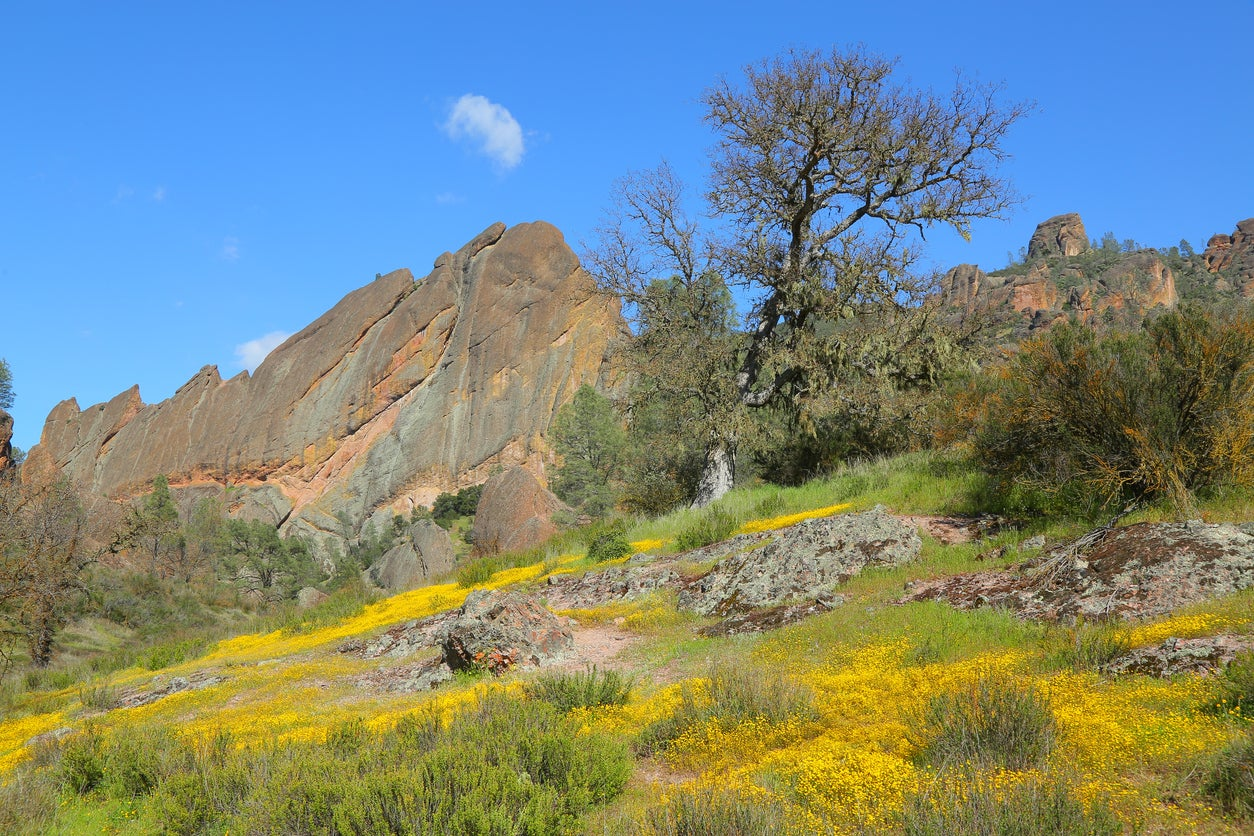
freshwater
lakes/ponds (lentic/standing) and rivers/streams (lotic/moving)

marine
the open ocean, coral reefs, intertidal zones

photic zone
shallow, sunlit surface water where photosynthesis can occur; high oxygen levels

aphotic zone
deep, dark water where light cannot penetrate. dominated by heterotrophs and decomposers
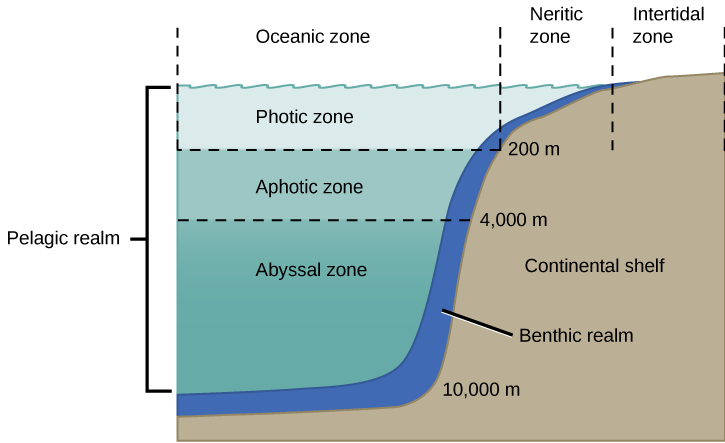
benthic zone
the very bottom layer (sediment) where organic waste drops and decomposers recycle nutrients

headwaters
cold, clear, fast-moving, high in dissolved oxygen, but low in nutrients

downstream
warmer, murky (turbid), slower-moving, lower in oxygen, but highly rich in accumulated nutrients
estuary
transition zone between freshwater and saltwater ocean that features brackish water with fluctuating salinity levels; requires highly specialized adaptations from resident organisms
coral reefs
in warm, shallow, clear marine waters within the photic zone; require sunlight; symbiotic relationship with algae
prokaryotes
(bacteria/archaea) no membrane-bound nucleus, no membrane-bound organelles, DNA is a single circular chromosome in a nucleoid region, much smaller cell size.
unicellular eukaryotes
(protists/yeast) true membrane-bound nucleus, contain organelles, DNA is arranged in linear chromosomes
cocci
prokaryote shape: spherical/round
bacilli
prokaryote shape: rod-shaped
spirilla
prokaryote shape: spiral/helical
chemotaxis
prokaryotes moving toward nutrients or away from toxins
phototaxis
prokaryotes moving toward the light
extremophile
organisms that thrive in extreme environments; archaea
archaea
lack peptidoglycan in their cell walls, have unique membrane lipids, DNA replication similar to Eukarya rather than Bacteria, not a pathogen
phytoplankton
plant-like autotrophs; photosynthetic, autotrophic protists that drift near the water’s surface. they form the base of aquatic food webs and generate massive amount of global oxygen
zooplankton
heterotrophic, animal-like plankton (mostly unicellular protists or tiny larvae) that drift and feed on phytoplankton
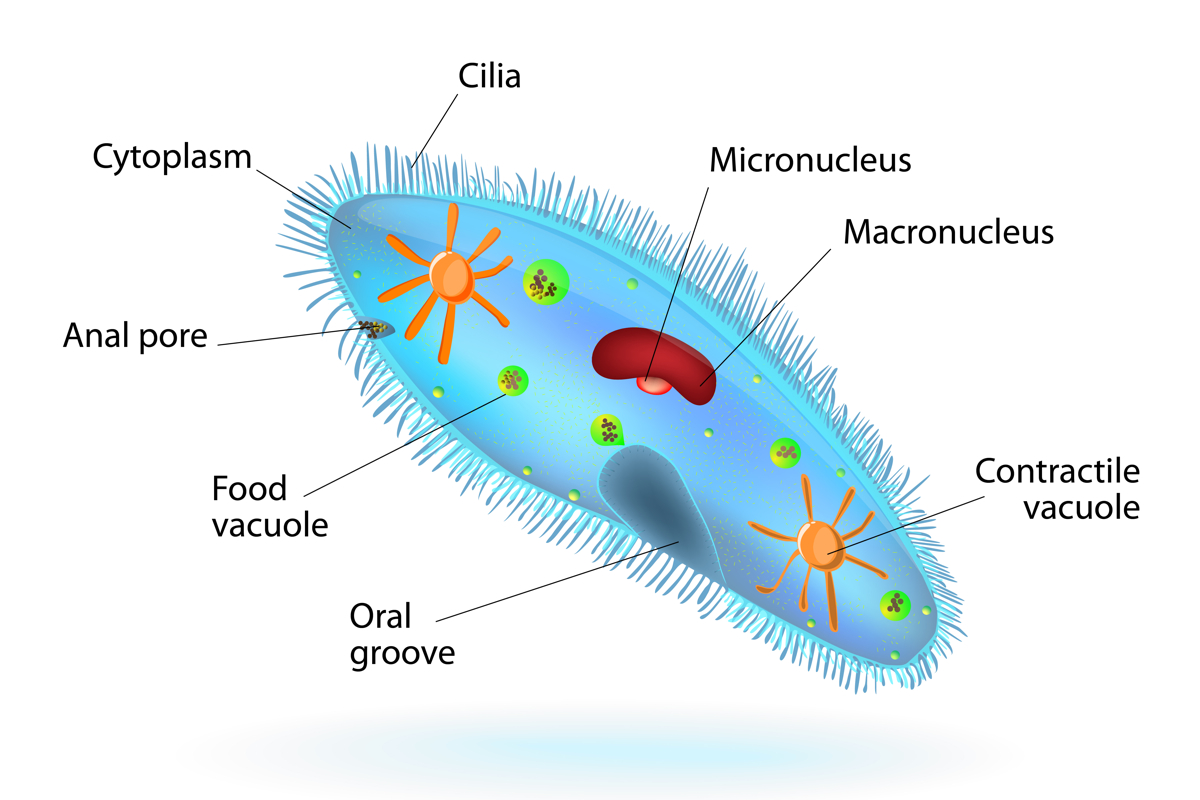
cilia
short, hair-like projections that beat in coordination; often creates currents to sweep food into a cytostome (cell mouth) — paramecium
flagella
long, whip-like tails that propel the cell — euglena

pseudopodia
false feet; temporary cytoplasmic extensions used for crawling and engulfing good via phagocytosis — amoeba

hyphae
fungus; filamentous, thread-like structures that make up the body of a fungus

mycelium
fungus; an interwoven, underground mass of hyphae that maximizes surface area for nutrient absorption

fruiting body
fungus; the visible, above-ground macrostructure (like a mushroom) used strictly for reproductive spore dispersal

absorptive heterotrophy
fungi, through hyphae, secrete powerful exoenzymes into their surroundings to break down complex organic matter externally, then absorb the simple nutrients through their cell walls
mycorrhizae
mutualism between fungal hyphae and plant roots; fungus provides water/minerals, plants provides sugars
lichen
mutualism between a fungus and a photosynthetic partner (algae or cyanobacteria)
parasitic/pathogenic
fungus feeds off a living host, harming it (e.g., athlete’s foot, ringworm, or cordyceps insects)
porifera
sponges; asymmetric, no true tissues, use flagellated choanocytes to filter-feed

cnidaria
jellyfish, anemones, corals; radial symmetry, diploblastic, tentacles armed with stinging cells (cnidocytes)

platyhelminthes
flatworms; bilateral, triploblastic, acoelomate (completely solid body, no cavity), flattened body for gas exchange via disfusion

annelida
segmented worm (earthworms, leeches); distinct ring-like body segments

mollusca
snails, clams, octopuses; soft bodies often protected by a calcium carbonate shell; features a muscular foot, visceral mass, and a mantle

nematoda
roundworms; unsegmented, cylindrical bodies tapered at both ends; pseudocoelomate
arthropoda
insects, spiders, crabs; jointed appendages, segmented bodies, and a hard exoskeleton made of chitin (largest animal phylum)

echinodermata
sea stars, sea urchins; marine deuterostomes with pentaradial symmetry as adults and a unique water vascular system for movement

chordata characteristics
notochord, dorsal hollow nerve cord, pharyngeal slits or clefts, muscular post-anal tail
vertebrates
have a backbone/vertebral column that encloses and protects the dorsal nerve cord, alongside a distinct cranium protecting a well-developed brain
binomial nomenclature
consists of a Genus and specific epithet; must be italicized
hierarchal taxonomy
domain (eukarya) → kingdom (animalia) → phylum (chordata) → class (mammalia) → order (primates) → family (hominidae) → genus (homo) → species (homosapiens); Dear King Phillip Came Over For Good Soup
cladogenesis
a pattern of evolutionary change where a lineage splits into two or more distinct species (creates a branching node)

anagenesis
a pattern of directional change where an entire species accumulates changes over time and morphs into a new species without branching

ammonia
waste product; highly toxic; requires massive water to flush out. excreted by aquatic animals/bony fish
urea
waste product; moderately toxic; medium energy cost, saves water. excreted by mammals, adult amphibians, sharks
uric acid
waste product; least toxic; very high energy cost, precipitates as a paste to save maximal water. excreted by birds, reptiles, insects
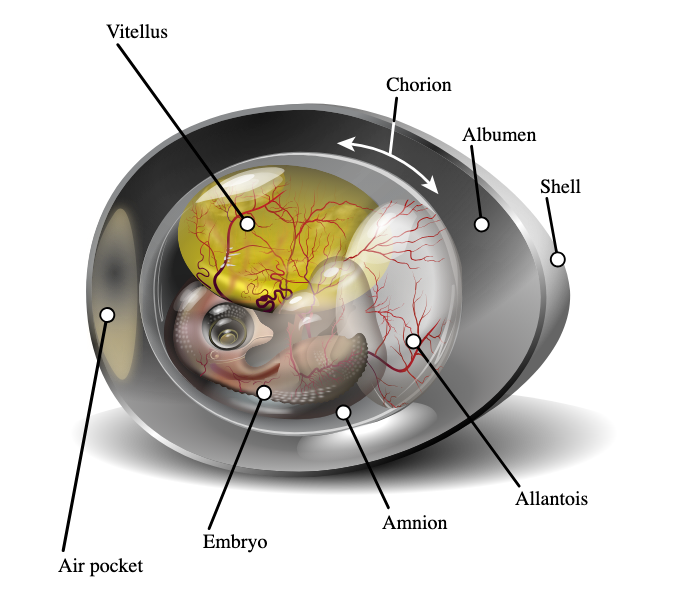
amnion
encloses the fluid-filled cavity to cushion and protect the embryo from mechanical shock

allantois
disposes of metabolic waste (confronts toxicity) and assists in gas exchange
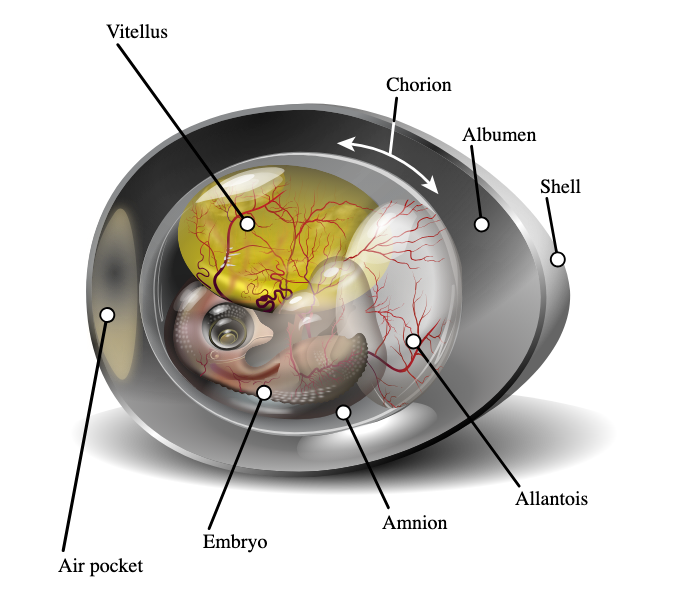
chorion
outermost layer; works with the allantois to handle overall gas exchange (O_2/CO_2)

yolk sac
encloses nutrients/yolk to feed the developing embryo
shared primitive character
trait shared with distant ancestor
shared derived character
shared by a group of organisms but not shared by a distant common ancestor