Week 6- Dementia, Delirium
 Call Kai
 Learn
 Practice Test
 Spaced Repetition
 Match
 Flashcards
 Knowt Play
1/55

There's no tags or description
Looks like no tags are added yet.
56 Terms
What is delirium?
acute confusion
reversible (treat condition → can return to baseline)
longer delirium → decreased chance of reversal
multifactorial, factors that tip the scale
+65 years old = increased chance of developing
no treatment= leads to institutionalization, mortality
3rd most common things to happen in the hospital
medical emergency
Dementia is more longterm or short term?
longterm
Delirium assessment
4 A’s Test (4AT)
Baseline from family
is the pt drowsy?
do they have trouble following instructions?
is the patient’s family saying that the patient isn’t themselves?
CAM
Hypoactive delirium
tends to lead to worse outcomes
more likely to be missed
low activity, lethargy, drowsiness, apathy, and reduced responsiveness
Places that have increased diagnoses of delirium
LTC→ good sense of what pt is normally like
Who is most likely to find delirium in healthcare?
Nurses
Confusion Assessment Method (CAM)
most common
The diagnosis of delirium by CAM requires the presence of BOTH features A and B AND the presence of EITHER feature C or D
A. Acute onset and Fluctuating course | Is there evidence of an acute change in mental status from patient baseline? Does the abnormal behavior:
|
B. Inattention | Does the patient:
|
C. Disorganized thinking D. Altered level of consciousness | Is the patient's thinking: disorganized? incoherent? For example does the patient have:
|
Overall, what is the patient's level of consciousness:
|
CAM acute onset and fluctuating course
A on the assessment
Is there evidence of an acute change in mental status from patient baseline?
Does the abnormal behavior:
come and go?
fluctuate during the day?
increase/decrease in severity?
acute onset:
believed that if theres multi day confusion that its no longer acute (this is wrong)
fluctuating course:
different from sundowning (predictable)
CAM inattention
B on the assessment
most commonly missed
Does the patient:
have difficulty focusing attention? become easily distracted?
have difficulty keeping track of what is said?
give pt attention task (months backwards, tap every time they hear a word previously given to them)
if they miss 2+ they have inattention
CAM disorganized thinking
C on the assessment
Is the patient's thinking
disorganized
incoherent
For example does the patient have
rambling speech/irrelevant conversation?
unpredictable switching of subjects?
unclear or illogical flow of ideas?
confusion
not following train of thought
ask basic questions and see if they answer
CAM altered level of consciousness
D on the assessment
assess patient
hyperactive? drowsy?
Overall, what is the patient's level of consciousness:
alert (normal)
vigilant (hyper-alert)
lethargic (drowsy but easily roused)
stuporous (difficult to rouse)
comatose (unrousable)
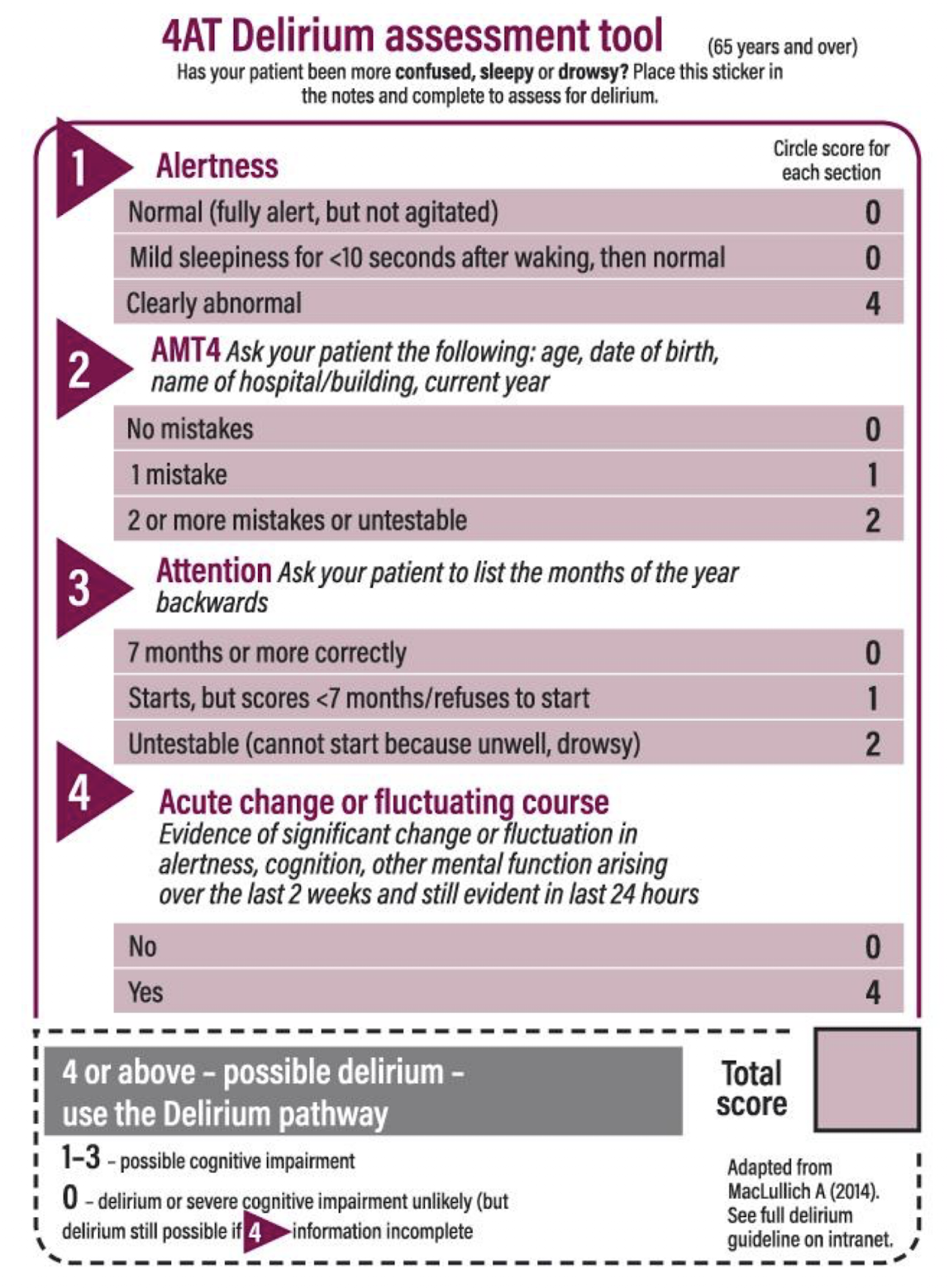
4 AT test
not as used compared to CAM, but similar to it
can be more accurate than CAM
1. Alertness
Assess the client's level of alertness.
Finding | Score |
|---|---|
Normal (fully alert, but not agitated) | 0 |
Mild sleepiness for less than 10 seconds after waking, then returns to normal | 0 |
Clearly abnormal alertness | 4 |
Important: Abnormal alertness may include excessive drowsiness, difficulty staying awake, or agitation.
2. AMT4 (Abbreviated Mental Test – 4)
Ask the client the following four questions:
What is your age?
What is your date of birth?
What is the name of this hospital/building?
What is the current year?
Finding | Score |
|---|---|
No mistakes | 0 |
1 mistake | 1 |
2 or more mistakes OR unable to test | 2 |
Purpose: Assesses the client's orientation and basic cognitive function.
3. Attention
Ask the client to list the months of the year backwards, starting with December.
Finding | Score |
|---|---|
Correctly lists 7 or more months backwards | 0 |
Starts but lists fewer than 7 months OR refuses to start | 1 |
Unable to test (cannot start because unwell or drowsy) | 2 |
Purpose: Assesses the client's ability to concentrate, maintain attention, and follow instructions.
4. Acute Change or Fluctuating Course
Determine whether there is evidence of a significant change or fluctuation in the client's:
Alertness.
Cognition.
Other mental functions.
The change must:
Have occurred within the last 2 weeks.
Still be evident within the last 24 hours.
Finding | Score |
|---|---|
No acute change or fluctuation | 0 |
Yes, evidence of acute change or fluctuation | 4 |
Purpose: Identifies sudden changes in mental status compared with the client's usual baseline.
5. Interpreting the Total 4AT Score
Add the scores from all four sections.
Total Score | Interpretation |
|---|---|
0 | Delirium or severe cognitive impairment unlikely (however, delirium is still possible if information is incomplete). |
1–3 | Possible cognitive impairment. |
4 or above | Possible delirium – use the delirium pathway. |
Important nursing considerations
A score of 4 or higher suggests possible delirium and requires further assessment.
The 4AT is a screening tool, not a definitive diagnosis of delirium.
Always compare the client's current mental status with their baseline.
Pay close attention to sudden changes in alertness, attention, and cognition.
A score of 0 does not completely rule out delirium, especially when information is incomplete.
Delirium risk factors groups
Predisposing risk factors
Precipitating risk factors
Predisposing risk factors of delirium
Cognitive impairment at baseline- underlying dementia
Functional status at baseline- not able to walk
Sensory impairment- trouble hearing**, seeing
Decreased oral intake
Medications
Medical conditions- thyroid, b12 unmanaged
Polypharmacy- independent risk factor
Precipitating risk factors of delirium
Prolonged sleep deprivation
Medications
Constipation**
Primary neurological diseases- Stroke, Tumar
Urinary retention- palpate bladder, ask pt
Intercurrent illnesses
Dehydration- thirst decreases as you age (look at tenting, mucous membrane
Surgery
Electrolyte abnormalities- bloodwork
Environment changing
Hypoxia- decreased O2
Pain- analgesics
Anemia
Emotional stress
Hip fracture independent risk factor (increased risk)
Infection
High Risk Medications for delirium
Opioids: morphine, hydromeple
Anti-cholinergic medications: amitriptylline, gravol
Benzodiazepines: lorazepam
"Z" drugs: sleep drays (zopiclone, melatonine)
Anti-psychotics: hyper(non pharmacy first, take at lowest effective dose)
H2 receptor antagonists (ranitidine for heart burn)
Risk Factors for Delirium in LTC Homes
Absence of:
Adequate nutrition
Aids to orientation
Family member
Glass of water
Reading eyeglasses
Presence of:
Antipsychotic medications
Bed rails/restraints
Dementia or depression
Hearing impairment
Pain
Percentage of muscle loss per day if not moblised
1-3%
Subtypes of delirium
hyperactive: aggression, increased motor activity, agitated
hypoactive: under recognized
mixed: morning hypo, night hyper
Nursing Interventions for Delirium
Treating constipation (increase fiber, give laxatives)
Providing a routine
Hearing aids and glasses (give it to them and make sure they’re working
Watching for and treating urinary retention
Promoting sleep (limit naps to under an hour if trouble sleeping at night)
Encouraging and assisting with mobility
Trying non-pharmacological approaches first
Assisting with nutrition
Remove lines as soon as possible
Managing pain
Recognize delirium early and treat
Nursing Considerations for delirium
Stressful experience (for family, explain its reversible, not dementia, reassure them)
Many family members worry about memory issues
Establish rapport with patient and their family
Establish baseline cognition
Agitation can be a symptom of hyperactive delirium
Agitation seen in what?
hyperactive delirium
ask pt to bring familiar things to reduce agitation
Does patient have unmet needs? → in pain?, had liquids? need to pee?
Always try non-pharmacological techniques first
Avoid restraints whenever possible
increased injury when all 4 bed rails are up (bed rails considered restraints)
HELP
Created in 1999 by Dr. Sharon K. Inouye at Yale University's School of Medicine
An innovative delirium prevention program designed to improve the hospital experience for older patients and their families
Well studied and effective model implemented in hospitals internationally
Primary goals of HELP (Inouye, 2000):
Maintaining cognitive and physical functioning
Maximizing independence at time of discharge
Assisting with overall transition from hospital to home
Geriatric patient care education for frontline staff
Preventing unplanned hospital admissions
Delirium vs dementia
Delirium:
Multifactorial
Rapid onset (hours to days)
Fluctuating symptoms (from day to day or thorughout the day)
Disturbances in consciousness and attention
Changes in cognition
Dementia
changes in the brain, physiological process non reverisble
Gradual onset
slow progression
Steady pattern of decline without alterations in consciousness
Neurological changes with aging
Confusion is not an expected finding: resilient as we age,
Dendrite wear: slower processing
Number of neurons decrease
Brain weight and size decrease -> primarily frontal lobe atrophy
Decrease of adherence of the dura mater to the skull: concussion, brain bleeds, haematoma. more space for brain to hit skull
Increased subarachnoid space
Decreased deep sleep: going in and sustaining REM sleep
Mild memory impairment and balance difficulty
Promoting brain health
Physical activity and weight management: vascular dementia (caused by CV health changes)
150 mins of vigorous activity a week
Diet and nutrition
Limiting excess alcohol consumption: correlation
Manage blood vessel health: BP, blood sugar
Brain and social activity: crosswords, sudoku, puzzles, going out and about, dont do the same thing everyday
Specific conditions/side effects of medications: benzos, insomnia, antidepressants, anticholinergic, bladder (incontinance),
What is Mild Cognitive Impairment
Memory and thinking skills have shown some signs of decline
Cognitive function is worse than expected but not as impaired as dementia
Different than normal aging
day to day tasks: take longer, work around problems, increased frustration
causes: depression,
Assessment of mild cognitive impairment
Rule out reversable causes: identify reversible causes (anemia, low b12, use of alcohol, thyroid problems, constipation, infection)
Comfortable physical environment: mild cog imparement (can exacerbate it)
Mental Status Exam
Observation and careful interviewing
Screening instruments/standardized assessments
Cognitive Assessment: look for baseline
Level of consciousness, orientation (who what when where why), attention and concentration, abstract reasoning, problem solving
Aphasia, apraxia and agnosia assessed when indication of cognitive disturbance
Screening for Cognitive Impairment
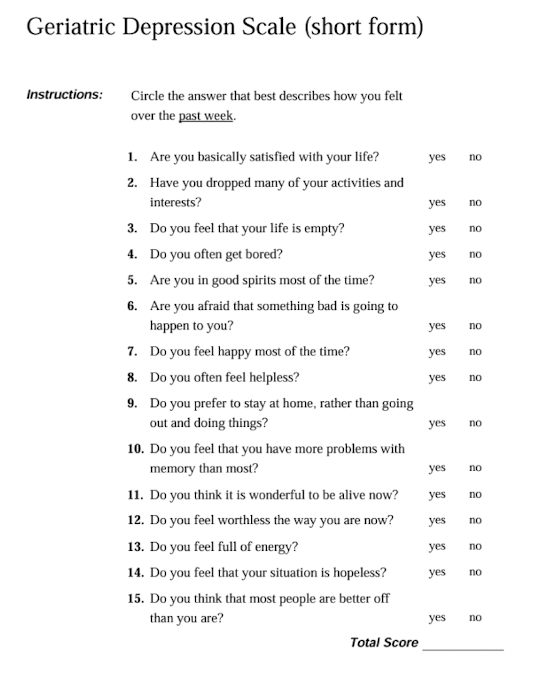
Geriatric Depression Scale (FYI, not talked about in class)
Comprehensive assessment
Labs (rule out medical causes)
Formal cognitive testing
Neuro-psychological exam
Interview (family and patient)
Functional assessment
Computed tomography, magnetic resonance imaging, electroencephalogram (LEG)→ test for seizures (electrical activity)
Rule out other causes
Screening Tools: Mini-Cog, Confusion Assessment Method, Necham-Champagne Confusion Scale, Montreal Cognitive Assessment (MoCA)
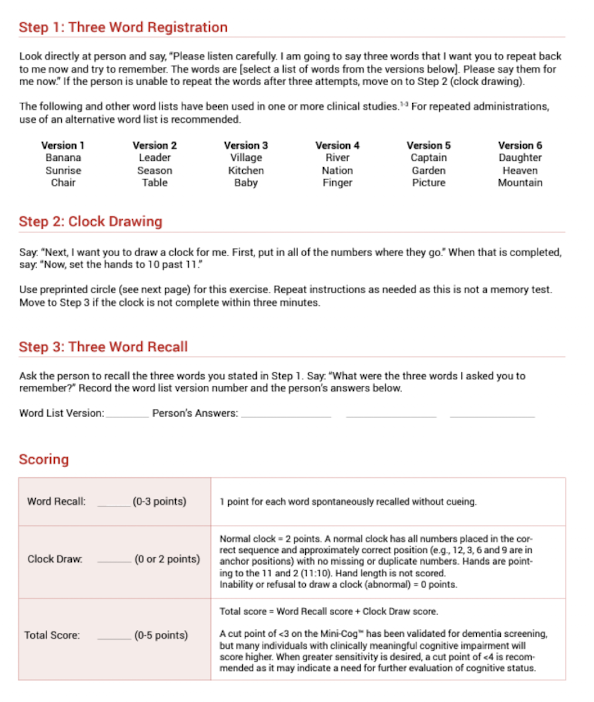
Mini-cog
does not diagnose with delirium or dementia
used to determine if they need more follow up
mini version of MOCA
three word registration
clock drawing
three word recall
Score of 0–2: Suggests a higher likelihood of clinically important cognitive impairment. A full medical evaluation is recommended.
Score of 3–5: Suggests a lower likelihood of dementia, though it does not completely rule out mild impairment
Geriatric depression scale
a widely used, self-report screening tool designed to identify depressive symptoms in older adults (typically 65+ or older)
Scoring (Short Form - 15 Items):
Each designated depressive response scores 1 point.
0 – 4 points: Normal / No depression.
5 or more points: Suggests depression and warrants a full clinical evaluation.
10 or more points: Almost always indicates moderate to severe depression.
Scoring (Long Form - 30 Items):
0 – 9 points: Normal.
10 – 19 points: Mild depression.
20 – 30 points: Severe depression
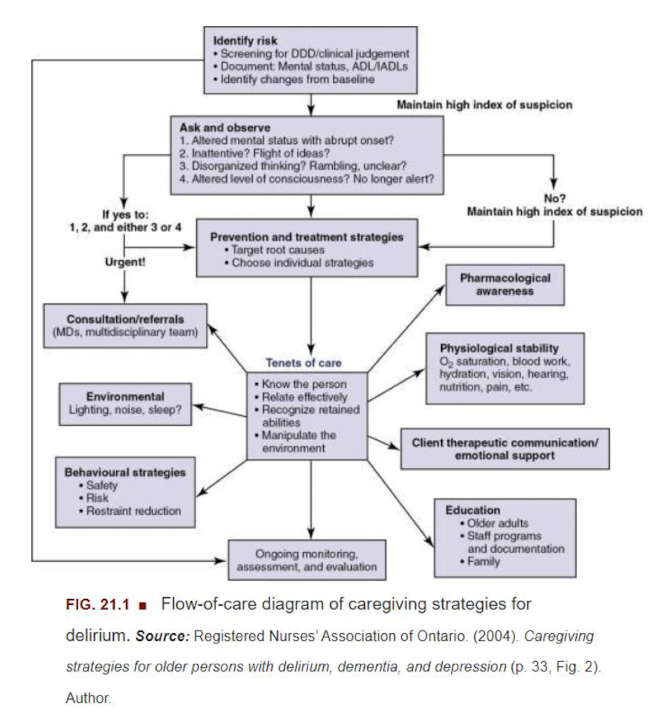
Interventions: non-pharmacological for delirium
1. Identify Risk
Screen for dementia, delirium, and depression (DDD) and use clinical judgment.
Document the client's mental status and ADLs/IADLs (Activities of Daily Living and Instrumental Activities of Daily Living).
Identify any changes from the client's baseline mental status.
Maintain a high index of suspicion for delirium.
2. Ask and Observe
Assess the client for the following:
Altered mental status with abrupt onset?
Inattention? (Flight of ideas)
Disorganized thinking? (Rambling or unclear speech)
Altered level of consciousness? (No longer alert?)
If the client has findings 1 and 2, and either 3 or 4, this is considered urgent.
If the answer is no, continue to maintain a high index of suspicion and monitor the client.
3. Prevention and Treatment Strategies
Target the root causes of delirium.
Choose individualized strategies based on the client's needs.
If urgent findings are present, initiate consultation/referrals to:
Medical doctors (MDs).
The multidisciplinary healthcare team.
4. Tenets of Care
The main principles of delirium care include:
Know the person: Understand the client's history, usual behaviours, and baseline mental status.
Relate effectively: Communicate clearly and appropriately with the client.
Recognize retained abilities: Identify and encourage the abilities the client still has.
Manipulate the environment: Modify the surroundings to support orientation, comfort, and safety.
5. Individualized Care Strategies
The tenets of care guide the following interventions:
A. Environmental Strategies
Consider:
Lighting.
Noise levels.
Sleep.
B. Behavioural Strategies
Focus on:
Safety.
Identifying and reducing risk.
Restraint reduction.
C. Pharmacological Awareness
Be aware of medications that may contribute to or worsen delirium.
Monitor medication effects and potential adverse reactions.
D. Physiological Stability
Monitor and maintain:
Oxygen saturation (O₂).
Blood work.
Hydration.
Vision.
Hearing.
Nutrition.
Pain management.
E. Client Therapeutic Communication / Emotional Support
Provide therapeutic communication.
Offer reassurance and emotional support.
Maintain a calm and supportive approach.
F. Education
Provide education to:
Older adults.
Healthcare staff through staff programs and documentation.
Family members.
6. Ongoing Monitoring, Assessment, and Evaluation
Continuously monitor the client's mental status and condition.
Assess whether interventions are effective.
Evaluate changes in the client's condition.
Reassess and adjust care strategies as needed.
Interventions- pharmacological for delirium
benzos: only used to treat it secondary to alcohol withdrawal, not used typically
not first choice of intervention
psychotropic medications
Risk factors for dementia
Can be prevented or delayed if these 14 factors are addressed
Life Stage | Risk Factors to Remember |
|---|---|
Early life | Less education (5%) |
Midlife | Hearing loss 7, high LDL cholesterol 7, depression 3, traumatic brain injury 3, physical inactivity 2, diabetes 2, smoking 2, hypertension 2, obesity 1, excessive alcohol 1 |
Late life | Social isolation 5, air pollution 3, visual loss 2 |
2 factors added in 2024 (high LDL cholesterol and vision loss)

Overview of Dementia
Irreversible state of cog decline
Progressive
Major neurocognitive disorder
Causes memory impairment
Decline in other cognitive abilities
Hallmarks for dementia
Aphasia: dont have purpuseful speech, word salad, word finding trouble
Apraxia: inability to execute purposeful movement
Agnosia: cant recognise items, faces, etc.
Disturbances in executive functioning
seeing things not there, lack of linear thought mood and attitude changes (especially in males) forgetful in unsafe ways wandering
How is Mild Cognitive Impairment different than Dementia?
MCI
Cognitive changes less severe
Affects day-to-day life, but still function independently
Complex tasks may take longer
5-10% each year of it to develope into dementia
Dementia
Most severe cognitive impairments
Cognitive decline interferes with independent function
Complex tasks likely too hard to do
Alzheimer's Disease (AD)
most common
beta amyloid deposits in the brain
symptoms: difficulty remembering, word expression language disturbances
mid and back of brain affected
Cerebral degenerative disorder
Unknown origin
Destroys proteins of nerve cells in the cerebral cortex by diffuse infiltration with nonfunctional tissue
Tangles and plaques
= Death of nerve cells = brain shrinks
Tau protein = clogs inside of the brain cells and their connections
Early vs late onset
8-10 years of life expectancy genetic component
increased age= higher rate life style and possibly genetic brain biopsy after death to confirm
Parkinson's Disease Dementia
dementia one year or less on onset of parkinsons symptoms
Parkinson’s: a progressive brain disorder that affects the nervous system and motor control, resulting from the loss of dopamine-producing neurons in the brain
Dementia with Lewy Bodies
Degenerative
Spectrum of disorders that includes dementia with lewy bodies and Parkinson's disease dementia
Presence of Lewy bodies (abnormal clumps of a protein called alpha-synuclein depostis) in the nerve cells
Cognitive fluctuations, unpredictable changes in concentration and attention, visual hallucinations, parkinsonian symptoms, rapid eye movement sleep behaviour disorder and sensitivity to neuroleptics
problem with fainting and falls
similar parkinsons, protein deposit in nerve cells
Frontotemporal Dementias (FTD)
frontal and temp brain atrophy, behaviour changes,
TAU fiber attacked at front of brain deterioration rapid and alarming (sexual, violent, etc) happens young and higher in males
Clinical syndrome associated with shrinkage of the front and temporal lobes
Linked to chromosomal mutations
Symptoms: bizzare behaviour, large personality changes
Mean onset 52-56 years of age
Rapid progression, poor prognosis
diagnosed late and inaccurately
No approved medications to slow progression
Nonpharmocological: supporting caregivers, managing behavioural symptoms and functional decline
Medications to assist with depression and behaviours associated
Trazodone, SSRI's
Vascular Diseases
Vascular dementia
Primary neurodegenerative disease mixed with vascular dementia
Cognitive impairment of vascular origin that doesn't meet dementia criteria
second most common
decreased blood flow to brain secondary to CV condition
anywhere in brain can be afffected
Often coexists with AD (mixed dementia)
Memory may not be impaired or may be more mild than AD
Apathy, mood changes, anxiety, agitation
Risk factors: hypertension, cardiac disease, diabetes, smoking, alcoholism, dyslipidemia
Prevention (antiplatelet and anti-hypertensives)
CCV insufficiency, ischemic or hemorragic 1/3-1/4 who have stroke develop it
Dementia facts
1% of Canada have
50 million people worldwide
25% above
women more likely
higher minorities (under representation, investigation of MH)
No test (possible grey matter)-> no reversible cause and ruling out leads to diagnoses of dementia
Diagnoses of Alzheimer’s
PRECLINICAL STAGE: measurable changes in brain in CSF up to 20 years before symptoms
MILD COGNITIVE IMPAIRMENT: changes in cog more than expected doesnt compromise functioning
may or may not progress to alzeimers
ALZHEIMER'S DISEASE
history is important in diagnosing
lots of stigma-> delaying diagnosis, treatment and prevention and progression slowing measures
Common Symptoms of AD
Short-term Memory: Repeating stories, repeating questions, missing appointments, forgetting events taking place in the last day or several days, becoming disoriented to time
Visual and spatial functions: Getting lost while out for walks, not being able to find a way home, misjudging distances, bumps or scrapes on the car, difficulty reading fine print, difficulty recognizing faces (usually after presence of dementia for some time)
Language: Difficulty with word finding/names, choosing incorrect words, slowed speech with decreased fluency
Movement: Apraxia → difficulty using the TV remote, having a clumsy hand, inability to brush hair or teeth, trouble writing neatly
Thinking: Difficulty multi-tasking, difficulties cooking, difficulties planning
Behavioural and Psychological: Depression, apathy
Treatment of Alzheimer's - Pharmacological
no treament for dementia, only meds can slow down need to look out for SE
not one thats better than the other of first line treatment
Mediation therapy with cholinesterase inhibitors (ChEls)
increased bradycardia, fainting, increasing risk of falls
Donzepil, galantamine, riastigmine
donzepil most common
Memantine (can be used with ChEl's, very expensive)
N-methyl-d-aspartate antagonist
Moderate to severe AD
Blocks effect of abnormal glutamate activity that may lead to neuronal cell death and cognitive dysfunction
Rivastigmine
patch
fewer adverse effects
Symptom management
real goal, maintain current function, decrease carer burnout
Hemorrhagic stroke
bleed in the brain
Ischemic stroke
clot in the brain
Nursing Considerations for dementia
No cure for dementia
Competent and compassionate person-centered care
Focus on:
Quality of life
Nutrition
Meaningful engagement
Activities of daily living
Maintenance of function
Safety
Communication
Caregiver needs
Create meaningful moments and activites | Structure daily living to maximize remaining abilities | Monitor general health | Create opportunities Gentle Persuasive Approaches approaches | Educate caregivers | Support advance |
Common Concerns with Dementia
Behaviour
ADL's
Wandering
Behaviour concerns for dementia
Avoid labelling the behaviour of persons with dementia
Four models:
Progressively Lowered Stress Threshold (a person's biological and psychological capacity to handle stress steadily decreases)
Need-Driven Dementia-Compromised Behaviour Model (This framework views all actions—such as wandering, repetitive questions, or agitation—not as purposeless symptoms of a disease, but as meaningful expressions of unmet needs. Because individuals lose the language skills required to explicitly ask for help, they communicate through their behavior instead.)
Recognition of Retained Abilities Approach (maps out and builds upon the cognitive, physical, and emotional abilities they still possess)
Relating Well (posits that well-being is maintained through the quality of human connections, rather than just the physical management of a disease)
Assessment of dementia
View all behaviour as meaningful
Investigate sources of distress
Rule out medical concerns
Behaviour log for 2-3 days
document behaviour at every hour
What, where, why, when, who and what now (page 324 of text)
Nursing intervention for dementia
Comprehensive assessment of behaviour
Non-pharmacological interventions
Team approach
Person-centered care
Exercise, activities, music therapy, sensory interventions, reminiscence, simplifying tasks, enhancing communication, group activities, art therapy
Combining interventions
Pharmacological interventions
Should I lie to my patient with dementia?
Patients may ask us challenging questions
These are often reality for the person with dementia
See if these are identifying a need
Truth and lies aren't always 'clear cut'
This is a spectrum
We all want to tell the truth but minimize distress
But maybe it will cause pain or discomfort?
Need to also consider our own wellbeing
Therapeutic lying/ fibbing
a communication practice used primarily in dementia and memory care.
It involves bending or omitting the strict truth to calm, comfort, or protect a person whose cognitive decline prevents them from processing factual reality without severe distress
SHIELD model
a memorable, evidence-based lifestyle framework designed to protect cognitive function, reduce inflammation, and help prevent or delay Alzheimer’s disease and dementia
Sleep
Head injury
Exercise
Learning
Diet
Activities of Daily Living
"Bathing without a battle"
“What is the easiest, most comfortable, least frightening way to bathe the person right now?"
Understand their routines
Encourage self-care
Wandering
Can present safety/privacy concerns
Encourage social interactions and activities
Provide enclosed outdoor areas, paths for walking, alarm exit bracelets
Use "Risk level" interventions
Caregiver Support for Persons with Dementia
Support physical and mental health
Start this early in diagnosis
Individual and group supports
Patient and caregiver
Education, counselling, support groups, care management and telephone support