Chest : Special Views
 Call Kai
 Learn
 Practice Test
 Spaced Repetition
 Match
 Flashcards
 Knowt Play
1/29

There's no tags or description
Looks like no tags are added yet.
30 Terms
Chest Special projections/positions
Ap supine or semierect
Lateral decubitus
Ap Lordotic
Anterior Oblique
Posterior Oblique
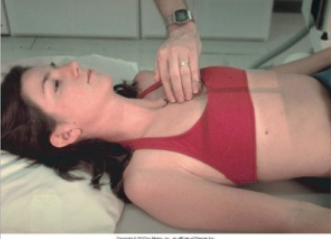
AP chest positioning
Position: Supine , Semi-upright , Upright
CR: ± 5 degrees caudad perpendicular with long axis of sternum
CR centering: Level of T7 3-4 inches below jugular notch
Top of IR 1.5 inches above shoulders
AP Chest : Evaluation criteria
Scapula not completely out of lung field
8-9 ribs
2/3 posterior ribs above clavicles if proper caudad angle
How to find centering for AP chest
Find jugular notch and xiphoid process
The centering is the halfway between the two
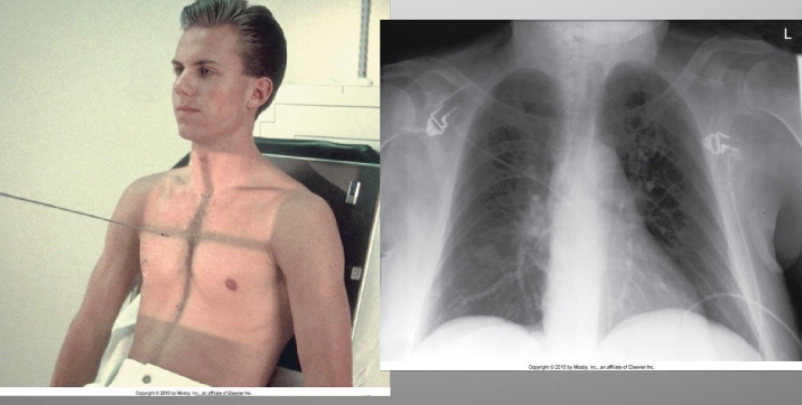
AP Semi-erect chest
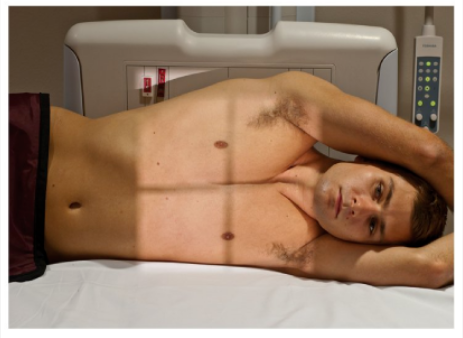
Left Lateral Decubitus
Support patient to build them up so they are even and we don’t clipped anything
14×17 CW center T7
Look for air/fluid levels since patient can’t stand →
To determine if patient has air/fluid in lungs
Lateral Decubitus : What are you looking for air or fluid?
Fluid is heavier than water (Pleural effusion)
When looking for air → Side up
Looking for fluid → Side down
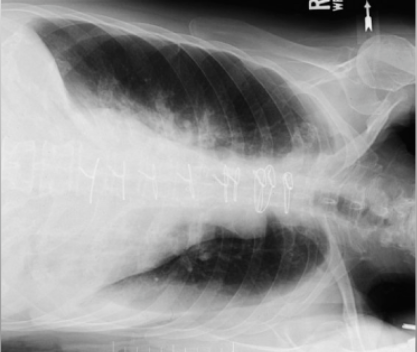
Lateral Decubitus : Evaluation criteria
Entire lung included
no rotation
arms up not superimposed over lungs
Full inspiration
No motion
exposure factors
If you mark side up also put upright marker. Most put side down
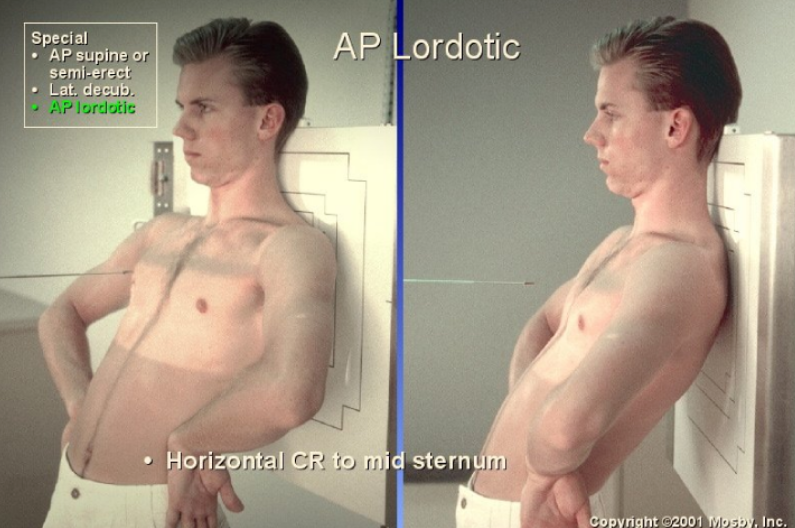
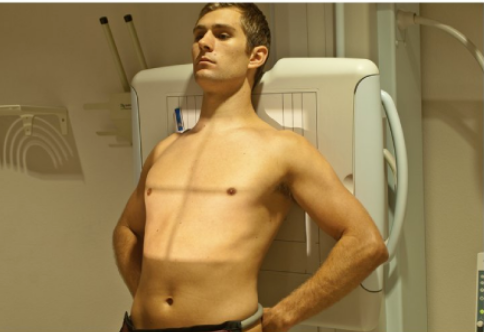
AP Lordotic
Patient steps a foot away from wall bucky and leans back
Allows clavicles to be high enough to see apices
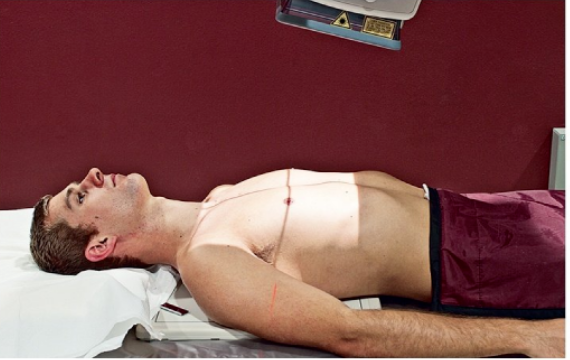
AP axial Lordotic Supine
CR: 15-20 degrees cephalad as it achieves the same as AP Lordotic
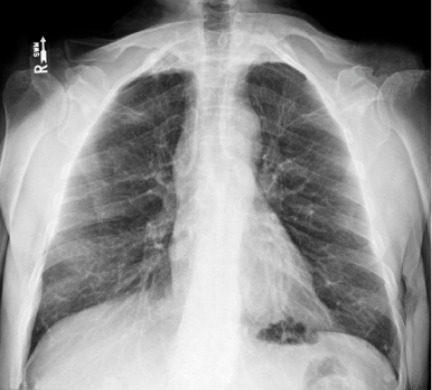
Lordotic position evaluation criteria
No rotation
No motion
Clavicles above apices
center at T-7
Exposure factors
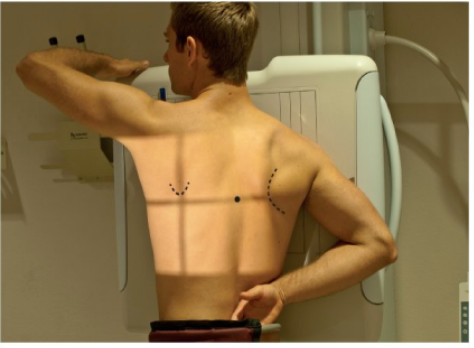
Anterior Obliques : ( Side away is elongated)
Left arm up/ right arm down ( RAO)
Light field to frame chest
thyroid is behind lots of tissues
CR perpendicular level of T7
RAO → Left side elongated
LAO → Right side elongated
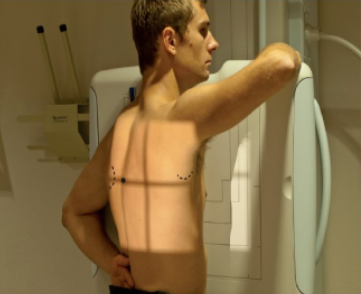
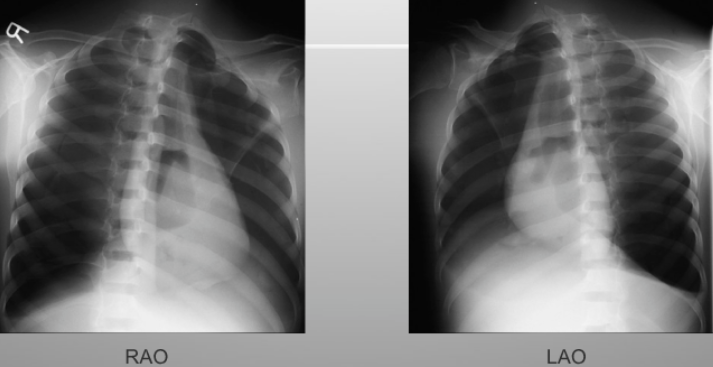
How to measure which side is elongated?
Measure the of spine to lateral ribs to determine elongation/foreshortening
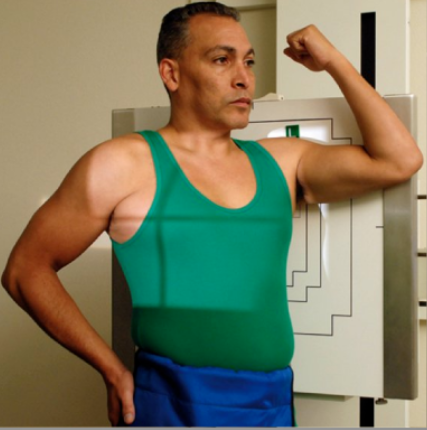
Posterior Obliques : Side down is elongated
Arms away ; Right down/left up ( LPO)
LPO → Left side elongated
RPO → Right side elongated
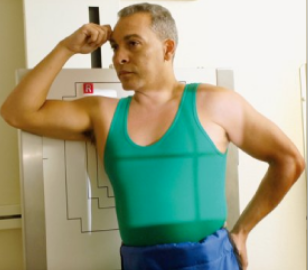
Posterior Obliques : Evaluation criteria
Correct side elongated
no motion
both lungs demonstrated
LAO/RPO Identical
RAO/LPO identical
Dyspnea
Difficulty breathing
SOB
Shortness of breath
Hyperventilation
Rapid/fast breathing
Aspiration
food or liquid entering the lungs instead of the stomach
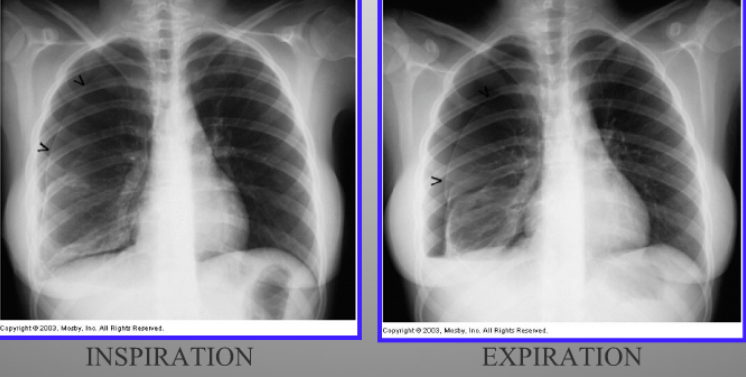
Pneumothroax
Excess air in pleural cavity
→ pushes lungs can’t fully expand
Atelectasis
Collapse of lung tissue
collapses on itself
Pleural effusion / Hemothorax
Fluid/blood in pleural cavity
Pulmonary emphysema
chronic lung disease that damages the air sacs (alveoli) in the lungs, making it difficult to breathe
Pneumonia
an inflammation of the lungs caused by an infection.
Bronchogenic Carcinoma
Lung cancer
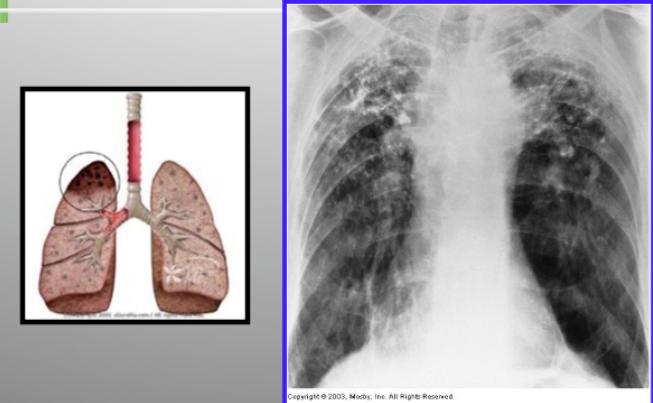
TB
an infectious disease, caused by the bacterium Mycobacterium tuberculosis, that primarily affects the lungs but can also spread to other parts of the body
What type of CR angle is required for the AP semiaxial projection for the apices of the lungs ?
15-20 degrees cephalad
What chest projections/positions should be performed to demonstrate a pneumothorax in the left lung if the patient cannot stand ?
Right lateral decubitus
What chest projection/positions should be performed to demonstrate a pleural effusion ibn the right lung if the patient cannot stand ?
Right lateral Decubitus
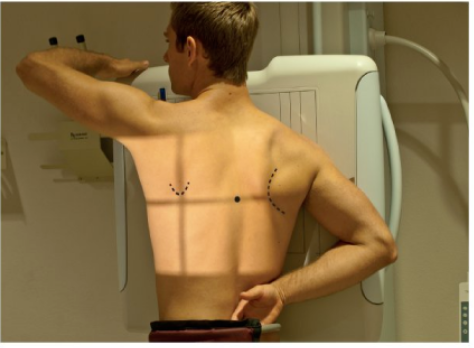
Anterior Obliques - PA RAO/PA LAO
Patient erect
45 degree oblique standard
45-60 degrees for heart and great vessels
15-20 degrees for possible pulmonary disease
Air filled trachea , great vessels and heart outline 60 degree LAO