viruses
 Call Kai
 Learn
 Practice Test
 Spaced Repetition
 Match
 Flashcards
 Knowt Play
1/24

There's no tags or description
Looks like no tags are added yet.
25 Terms
general properties of viruses
-Poison or venom
Composed of protein, nucleic acid and occasionally lipids
- no ribosomes and only ONE type of nucleic acid
Genome
- DNA or RNA, never both
- genome can be circular or linear
- genome can be "segmented"-
Viruses require
a host cell for replication
- no metabolic pathways
Obligate Intracellular Parasites
- require a host cell for replication
virion
-complete, fully developed viral particle
- nucleocapsid (genome + capsid (protein "shell"))
capsid
Outer protein coat of a virus
Icosahedral
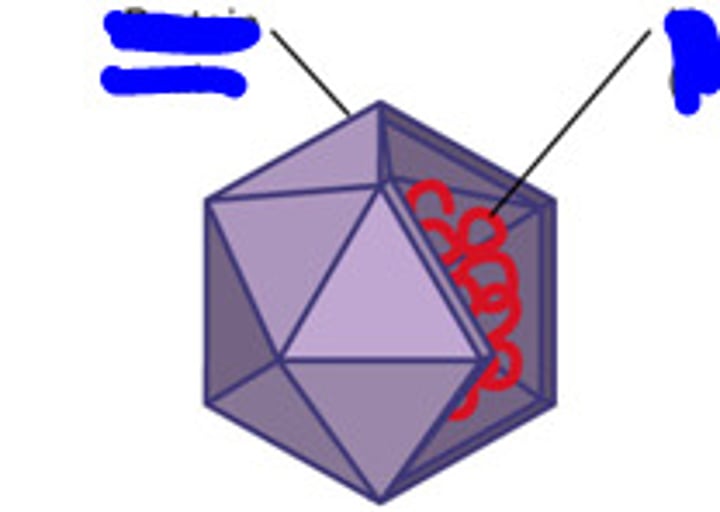
Papovaviridae (Papillomavirus)
HPV
Warts
Herpesviridae- Varicella-zoster (VZV)- Epstein-Barr (EBV)
VZV= chicken pox
EBV= mono
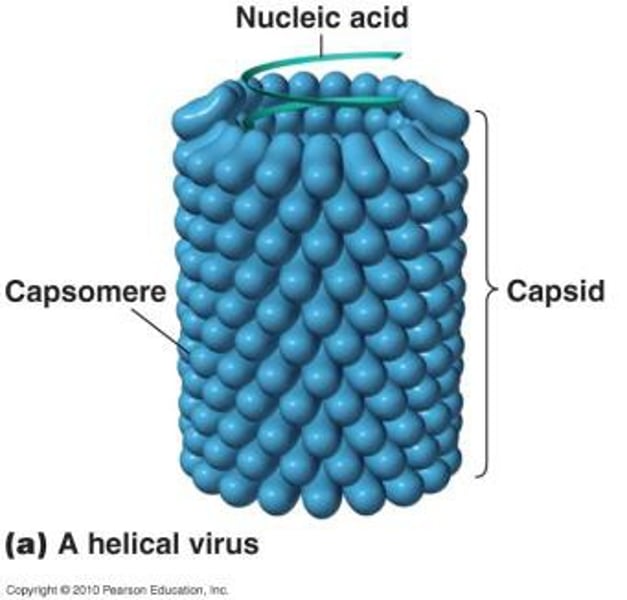
helical
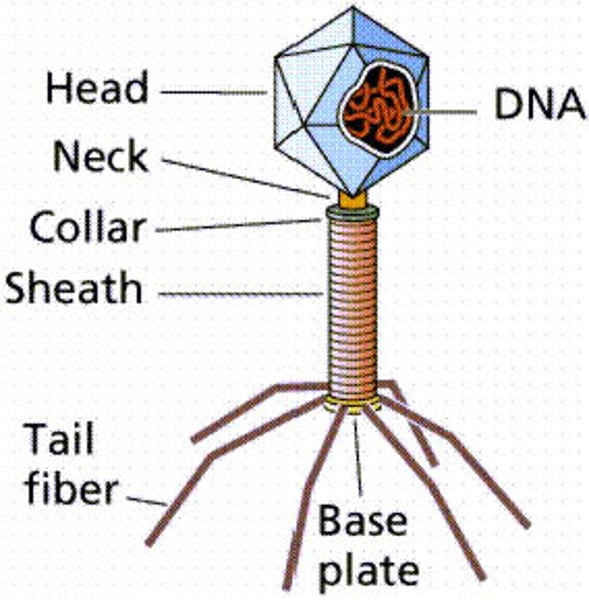
Complex
-don't fit into other categories
-multi-component
- more genes involved in the structure
Virus lifecycle
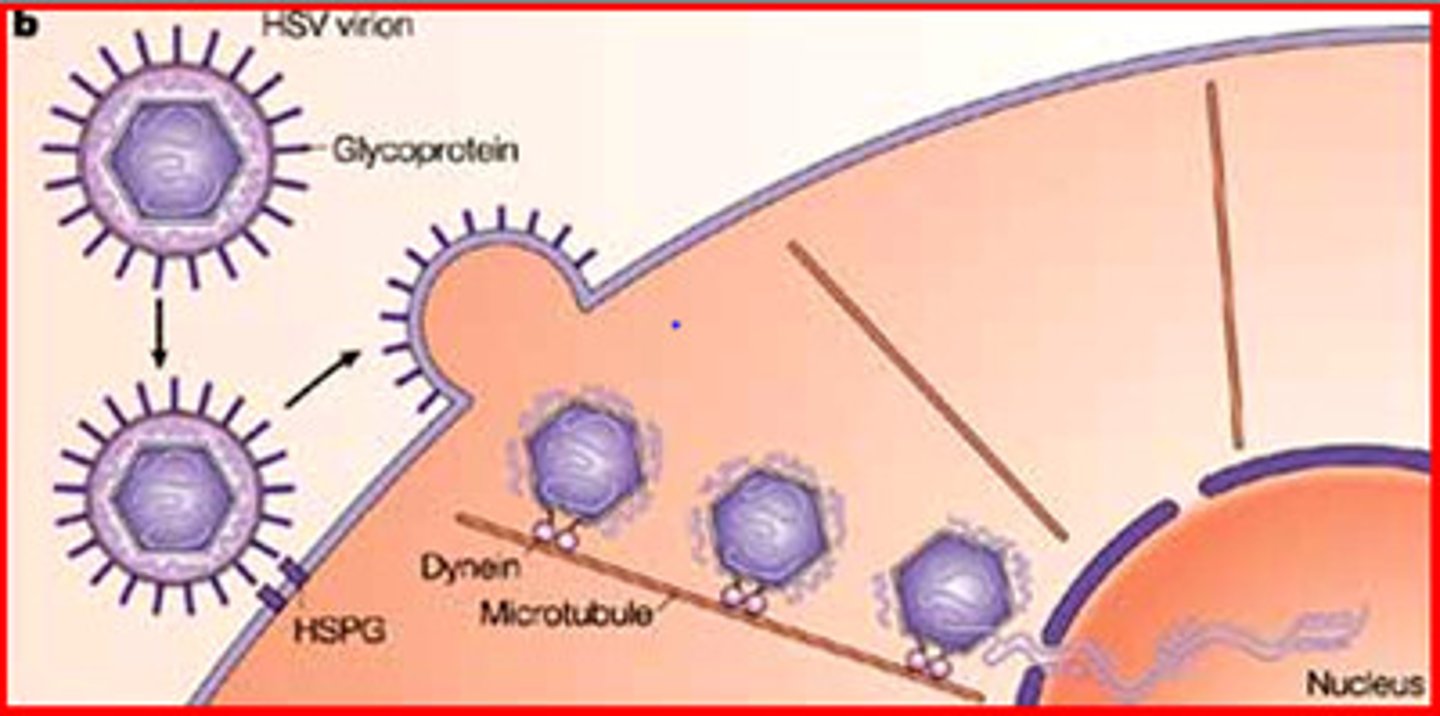
1)attachment, 2)penetration, 3)early expression of nucleic acid
4) replication pf nucleic acid
5)synthesis
6)packaing and assembly
7)egress
attachment
virus attaches to specific host receptor
Penetration
- viral or "host" mediated
- nucleic acids to cytoplasm or nucleus
- entry in some cases of entire nucleocapsid
Early" expression of virus genes
depending on genome type
- could require specialized viral enzymes
Replication of virus nucleic acid
- could require specialized viral enzymes
- virus taking over cells and replicating nuc. acids
Synthesis of new virion components
structural proteins last to be synthesized
Packaging and assembly of new virions (Maturation)
"self-assembly"
Egress (exit from cell
lysis or budding
Viropexis
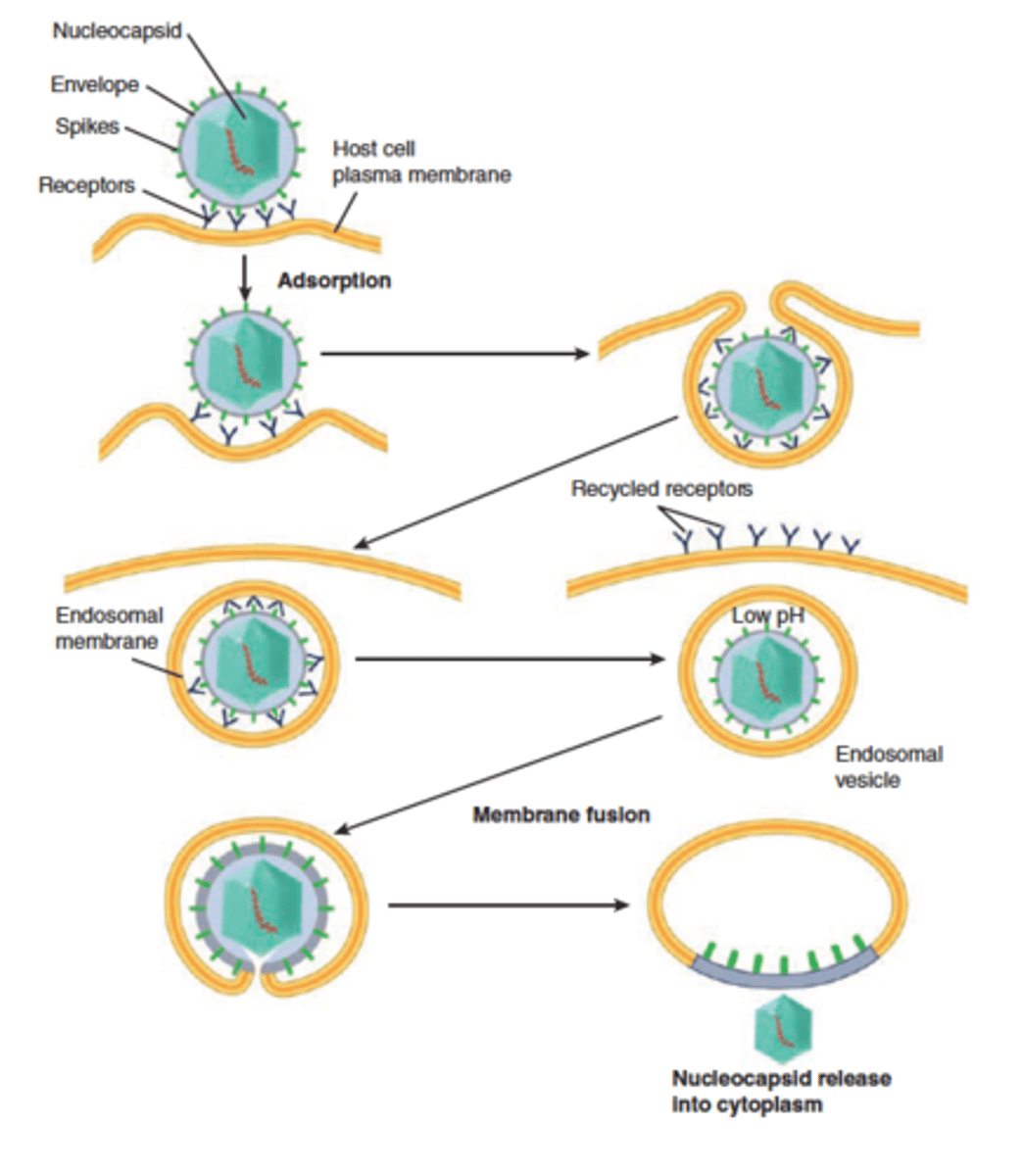
fusion penetration
virology
study of viruses
viruses are
acellular and non-living
Plaque
viral growth & replication
- cell lysis- inhibition of cell growth
- millions of virons at site
- PFU = plaque forming units