From Rococo to Neoclassicism, 2/4 MODERN ART QUIZ 1
 Call Kai
 Learn
Learn Practice Test
 Spaced Repetition
 Match
Match Flashcards
 Knowt Play
1/38

There's no tags or description
Looks like no tags are added yet.
Name | Mastery | Learn | Test | Matching | Spaced | Call with Kai | Chat |
|---|
No analytics yet
Send a link to your students to track their progress
39 Terms
Louis XIV (1638-1715): The Art and Architecture of Power
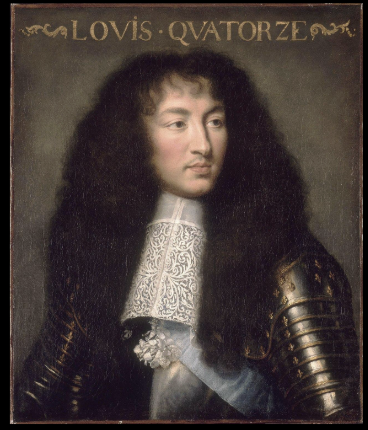
Charles Lebrun (France). Portrait of Louis XIV. 1661
Powerful monarch; powerful portrait exploring his divine right as King and his power
Pre-Rococo style

Gianlorenzo Bernini (Italy). Model for an Equestrian Monument to Louis XIV. C. 1669
Large, detailed sculpture depicting his power as king
Looking UP at him, showing his honor etc

Louis Le Vau and Jules Hardouin-Mansart (France). Chateau of Versailles (aerial view). 1669-85
The nature and gardens of Versailles were very orderly, meant to convey that the King transends all, even nature
Louis Le Vau and Jules Hardouin-Mansart (France).
Chateau of Versailles (garden-side facade).
1669-85

Hyacinthe Rigaud (France). Louis XIV, King of France. 1701 (Janson 21.10)
Powerful portrait of Louis XIV
Regal robes, scepter, and sword, showing how he is portrayed as an extremely powerful man
French Rococo and Genre Painting

Antoine Watteau (France). Pilgrimage to Cythera. 1717
After Louis XIV died, the wealthy families who were originally made to live in Versailles were allowed to leave
They move into their own homes outside
This results in the ROCOCO style
Leisurely, romantic activities outdoors
New type of painting for the intimate, private mansions people moved to
Moves to interest in family life, slower, etc
Freedom!

François Boucher (France). Odalisque with Brown Hair. 1745
The woman in the painting is portrayed very intimately and specifically, as if the painting were a portrait of a particular person.
Exotic theme, perhaps of a female concubine

Jean-Honoré Fragonard (France). The Swing.1767
Intimate setting
Leisurely activities outdoors
Aristocratic luxury
Playful eroticism
Older husband and servant in the background

Jean-Baptiste-Simeon Chardin (France). Saying Grace. 1740
Intimate settings, gathered around the hearth of family life
Less regal, family interiors
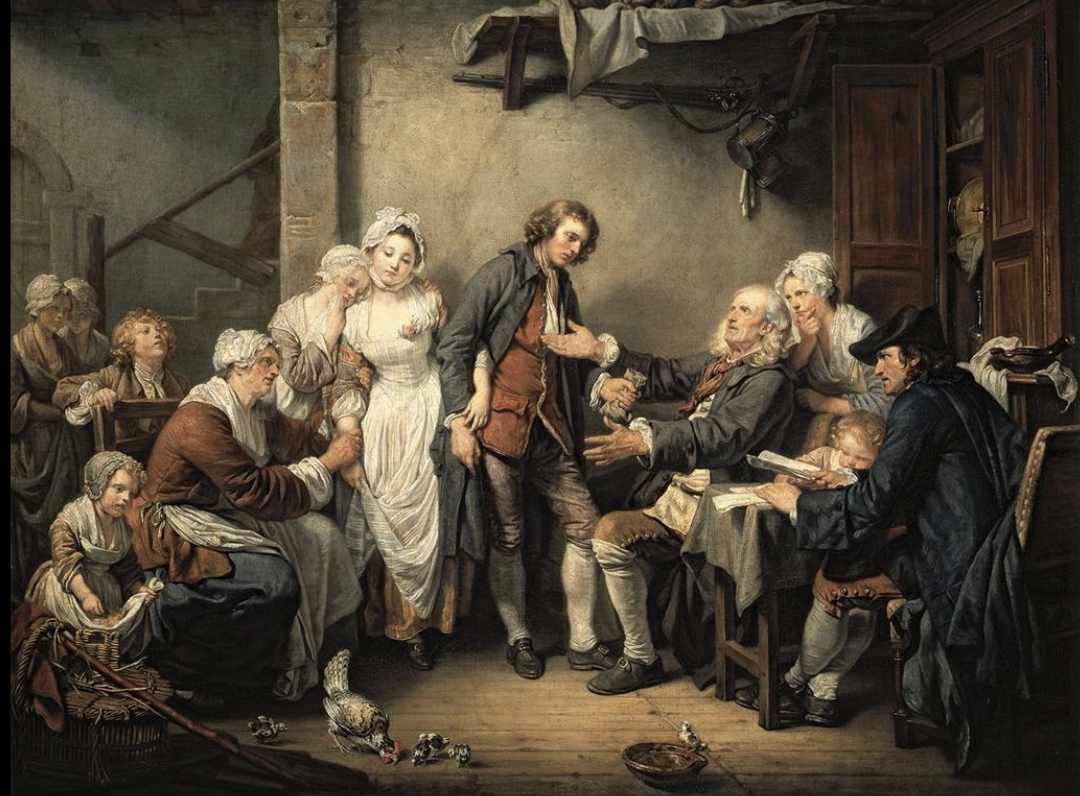
Jean-Baptiste Greuze (France).The Village Bride.1761
Intimate setting
Gathered around hearth of family life
Marriage
England

William Hogarth (England). Marriage à la Mode. 1743-45 (The Marriage Contract)
Intimate setting, satirical genre painting
Six paintings telling the story of arranged marriage
Paintings created to be turned into engravings for prints - made it much more accessible, people can own prints to put it on their wall
Art as tool to craft social fabrics

William Hogarth (England). Marriage à la Mode. 1743-45 (Breakfast Scene)
Intimate setting, satirical genre painting
Six paintings telling the story of arranged marriage
Paintings created to be turned into engravings for prints - made it much more accessible, people can own prints to put it on their wall
Art as tool to craft social fabrics

William Hogarth (England). Marriage à la Mode. 1743-45 (Visit to the Quack)
Intimate setting, satirical genre painting
Six paintings telling the story of arranged marriage
Paintings created to be turned into engravings for prints - made it much more accessible, people can own prints to put it on their wall
Art as tool to craft social fabrics

William Hogarth (England). Marriage à la Mode. 1743-45 (The Countess’ Morning Levee)
Intimate setting, satirical genre painting
Six paintings telling the story of arranged marriage
Paintings created to be turned into engravings for prints - made it much more accessible, people can own prints to put it on their wall
Art as tool to craft social fabrics

William Hogarth (England). Marriage à la Mode. 1743-45 (Death of the Count)
Intimate setting, satirical genre painting
Six paintings telling the story of arranged marriage
Paintings created to be turned into engravings for prints - made it much more accessible, people can own prints to put it on their wall
Art as tool to craft social fabrics

Hogarth. Four engravings of Marriage à la Mode
Intimate setting, satirical genre painting
Six paintings telling the story of arranged marriage
Paintings created to be turned into engravings for prints - made it much more accessible, people can own prints to put it on their wall
Art as tool to craft social fabrics

Thomas Gainsborough (England). Mr. and Mrs. Andrews. 1748-50
Presented in their regal outfits
Is this a landscape paintings? or a portrait? Combining two styles

Joshua Reynolds (England). Mrs. Siddons as the Tragic Muse. 1784
grand manor style
telling ancient story

Henry Fuseli (Switzerland/England). Oath of the Rutli. 1780
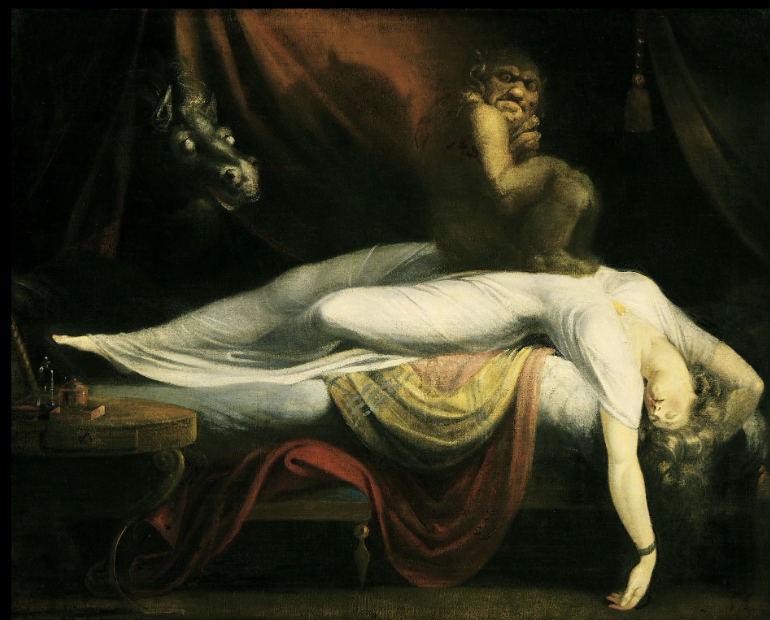
Henry Fuseli.The Night Mare.1781(Janson 23.17)
Spain

Francisco Goya (Spain). Family of Charles IV. 1800
He made images/paintings of the royal family
Did not make it super regal like Louis XIV \
Reformatting of power- shift to detailed slice of life
Not a POWERFUL portrait- makes us ask what is happening?
The Grand Tour and the Rediscovery of Ancient Rome

Canaletto (Italy). Riva degli Schiavoni. Venice, 1735-40
Going to Italy was a rite of passage to become a sophisticated artist and man
Italy, a space where ancient Rome and the BEST, most elite sort of art came from, became the subject of paintings

Giovanni Battista Piranesi (Italy). Piazza Navona. Rome, mid-18th century
Going to Italy was a rite of passage to become a sophisticated artist and man
Prints like these were created for the rise in tourism
Made grand illustrations of Italy to make them desirable to bring home

The Selling of Cupids. Fresco from Pompeii. c. 70 AD
Excavation of Pompeii- entombed in 75 AD and then excavated in 1748
Artists were able to see works written about with their own two eyes
Frescoes like these were unearthed and then used as inspiration

Joseph-Marie Vien (France). Selling of Cupids. 1763
Inspo from OG Frescoe from Pompeii
Trying to make a “modern” painting look ancient

Angelica Kaufmann (Switzerland/England/Italy). Mother of the Gracchi (“My Children are My Treasures”). C. 1785 (Janson 23.5)
Supposed to look ancient, telling an old story
old robes etc
Archaism and Neo-Classicism
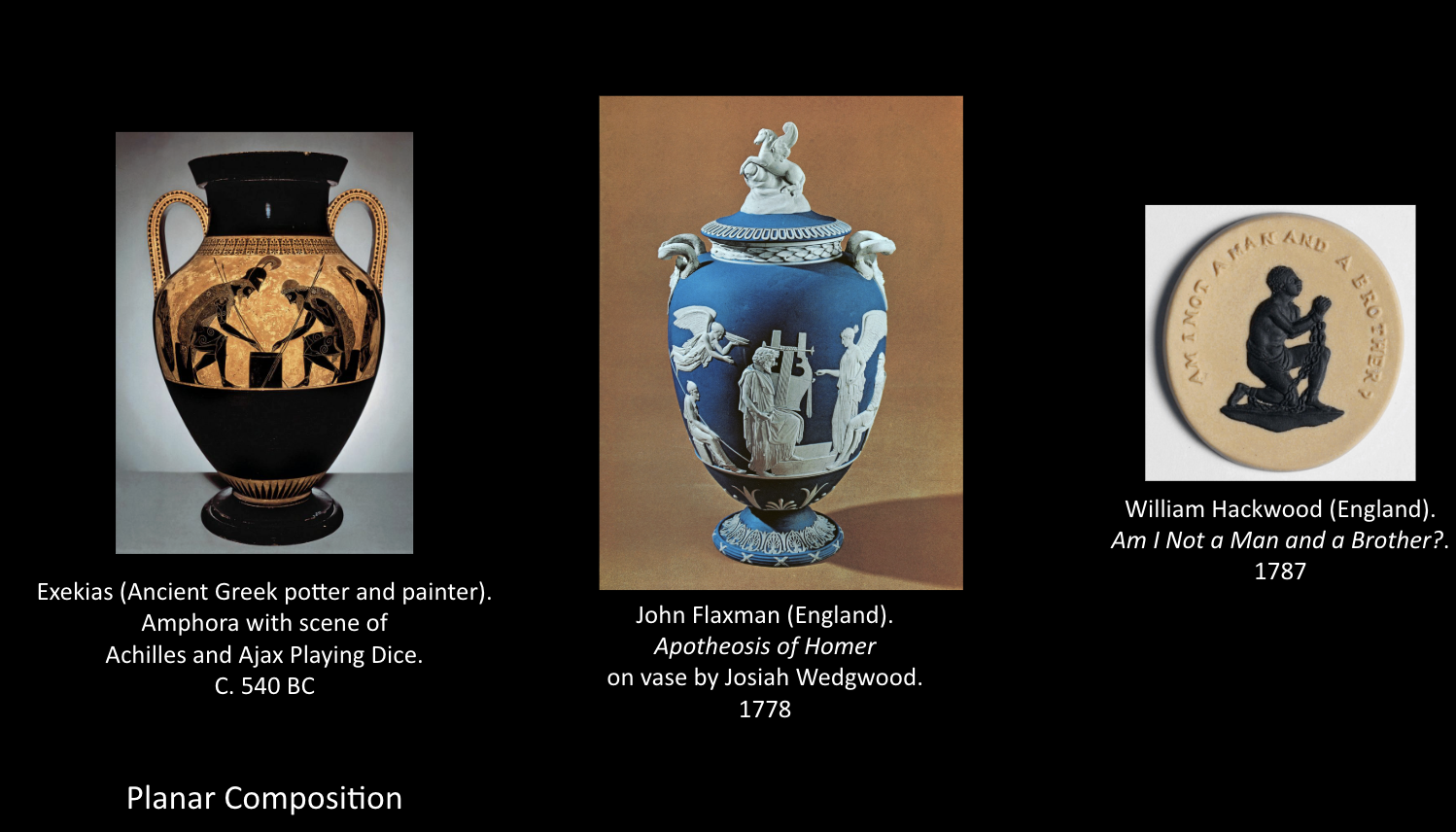
Inspo from Ancient Greece, flat figures, Frescoes on vases

Elisabeth Vigée-Lebrun (France). Marie-Antoinette, Queen of France, and her Children. 1787
Intimate, small scale position of family life
Prior to the French revolution, trying to portray herself as down to earth and like “one of the people”
Compare. to the portraits of Louis 14th

Elisabeth Vigée-Lebrun (France).Self-Portrait with her Daughter Julie. 1787-93 (Janson 23.30)
Intimate, familial portraits

Jacques-Louis David (France). The Combat of Mars and Minerva. 1771
Morality and civic virtue = themes from ancient Greece and Rome
David is painting these things in a time of political turmoil

Jacques-Louis David (France). The Oath of the Horatii. 1784 (Janson 23.27)
Melodrama
As revolution in France loomed, paintings urging loyalty to the state rather than to clan or clergy abounded. Although it was painted nearly four years before the revolution in France, The Oath of the Horatii became one of the defining images of the time. In the painting, the three brothers express their loyalty and solidarity with Rome before battle, wholly supported by their father. These are men willing to lay down their lives out of patriotic duty.

Henry Fuseli (Switzerland/England). Oath of the Rutli. 1780
Melodrama

John Flaxman (England). Apotheosis of Homer. 1778

L: Nicolas Poussin (France). Death of Germanicus. 1626-28
R: Jacques-Louis David (France). The Oath of the Horatii. 1784 (Janson 23.27)