Overcoming Surgical and Physiological Barriers to Transplantation
 Call Kai
 Learn
 Practice Test
 Spaced Repetition
 Match
 Flashcards
 Knowt Play
1/45

Earn XP
Description and Tags
Comprehensive vocabulary flashcards covering the historical, surgical, immunological, and bioengineering milestones in organ transplantation based on unit lectures.
46 Terms
Anastomosis
The surgical connection created between two tubular structures, such as blood vessels, requiring precise suturing to prevent leakage, clotting, stenosis, or aneurysm.
Invagination Technique
A vascular repair method developed by John Murphy in 1897 in which one end of a severed blood vessel is invaginated into the lumen of the other end, successfully used to repair a transected femoral artery.

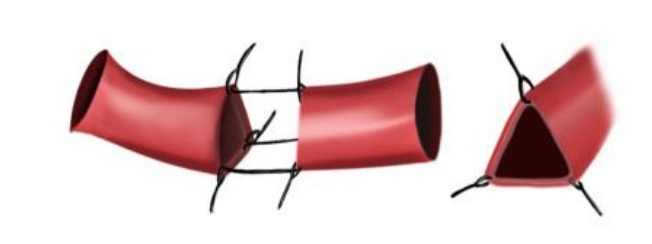
Triangulation
A vascular suturing technique developed by Alexis Carrel in 1902 in which three equidistant stay sutures are placed in the vessel ends and pulled to convert circular vessel lumens into equilateral triangles, facilitating continuous suturing of flat edges.
Carrel Patch
A surgical technique devised in 1906 by Alexis Carrel and Charles Guthrie in which a donor vessel (such as the renal artery) is excised along with an intact cuff or patch of its parent vessel (such as the aorta), allowing suturing of larger vessels without compromising lumen diameter or arterial blood flow.

Alexis Carrel
French-American surgeon awarded the 1912 Nobel Prize, widely regarded as the father of modern vascular and transplantation surgery for pioneering triangulation, the Carrel Patch, strict asepsis, and cold organ preservation (latent life).
Leo Loeb
Early 20th-century biologist who investigated outbred rat tissue transplants, demonstrating that graft survival was longer in close relatives and that fetuses behave immunologically as tolerated homografts.
Second Set Experiment
A 1943 study conducted by Thomas Gibson and Peter Medawar on burn patients demonstrating that a second set of skin homografts from the same donor was rejected significantly faster than the first set, proving graft rejection is an acquired immunological memory response.
Bonner vs. Moran (1941)
A landmark court decision arising from an unconsented skin flap procedure between cousins, legally establishing that invasive surgery requires informed consent and that pediatric organ or tissue donation requires parental authorization.
The Boston Group
A renowned multidisciplinary team at Peter Bent Brigham Hospital—including David Hume, John P. Merrill, Joseph Murray, and E. Donnall Thomas—that performed the first successful identical twin kidney transplant in 1954 and early twin bone marrow transplants.
Histocompatibility
The degree of antigenic similarity between donor and recipient tissues that dictates the immunological acceptance or rejection of a graft.
Major Histocompatibility Complex (MHC)
A cluster of highly polymorphic cell-surface glycoproteins encoded in mice by the H2 region (identified by Peter Gorer and George Snell) that binds peptide antigens and presents them to T cells, serving as the primary barrier to allograft survival.
Human Leukocyte Antigen (HLA) System
The human MHC complex located on chromosome 6p21.31, containing polymorphic Class I genes (HLA-A, HLA-B, HLA-C) expressed on all nucleated cells and Class II genes (HLA-DR, HLA-DQ, HLA-DP) expressed primarily on antigen-presenting cells.
Linkage Disequilibrium
The non-random inheritance of specific combinations of HLA alleles across generations due to genetic proximity, causing certain haplotypes to appear together far more frequently than expected by independent chance.
Minor Histocompatibility Antigens
Peptides derived from normal cellular proteins (encoded outside the HLA locus, such as on the Y chromosome or autosomes) that differ between donor and recipient, causing gradual graft rejection even in fully HLA-matched allografts.
Transplant Preconditioning
Preparatory treatment given to a transplant recipient prior to grafting—such as total body irradiation, chemotherapy, or plasmapheresis—to ablate marrow, deplete reactive cells, or eliminate circulating antibodies.
Ischemia-Reperfusion Injury (IRI)
Biphasic tissue damage occurring when an organ is temporarily deprived of blood and oxygen during harvest (ischemia) followed by restored blood flow (reperfusion), which releases DAMPs, triggers innate PRRs, and recruits inflammatory neutrophils and monocytes.
Passenger Leukocytes
Donor-derived immune cells (primarily dendritic cells and other APCs) carried within a transplanted organ that migrate to the recipient's draining lymph nodes and directly activate host T cells.
Direct Allorecognition
An alloreactivity pathway where recipient T cells recognize intact, foreign MHC:peptide complexes presented directly by donor-derived antigen-presenting cells, initiating a robust polyclonal response primarily responsible for acute cellular rejection.
Semi-Direct Allorecognition
An alloreactivity pathway in which recipient antigen-presenting cells acquire intact donor MHC molecules via trogocytosis or plasma membrane transfer and present them directly to recipient T cells to drive acute rejection.
Indirect Allorecognition
An alloreactivity pathway in which recipient antigen-presenting cells internalize, process, and present donor-derived alloantigens as peptides on self-MHC molecules to recipient T cells, primarily driving chronic rejection.
Hyperacute Rejection
An immediate graft rejection response occurring within minutes to hours, caused by pre-existing recipient antibodies binding to donor blood group or MHC antigens on vascular endothelium, triggering complement activation, thrombosis, and rapid graft infarction.
Acute Rejection
Graft rejection typically occurring within weeks to months after transplantation, driven by cellular cytotoxicity from alloreactive T cells and the formation of donor-specific antibodies (DSAs).
Chronic Rejection
An indolent, progressive process occurring over months to years post-transplant, characterized by chronic vascular remodeling, interstitial fibrosis, parenchymal atrophy, and recurring indirect alloreactive immune responses.
Chronic Allograft Vasculopathy (CAV)
A chronic, concentric arteriosclerosis of the allograft vasculature involving endothelial injury, smooth muscle proliferation, intimal thickening, and luminal occlusion, frequently causing long-term failure in heart and kidney transplants.
Graft-versus-Host Disease (GvHD)
A systemic immune complication primarily seen after allogeneic bone marrow or hematopoietic stem cell transplantation, in which mature donor T cells recognize the recipient's tissues as foreign and destroy host epithelium, particularly in the skin, liver, and intestines.
Accommodation
A physiological state in which an allograft maintains normal organ function and resists complement-mediated destruction despite the continuous presence of circulating donor-specific antibodies (DSAs), often involving non-complement-fixing antibody class switching (such as IgG3 to IgG2).
6-Mercaptopurine (6-MP)
A purine analogue and antimetabolite chemotherapy agent shown by Robert Schwartz in 1959 to suppress bone marrow and prolong rabbit skin graft survival, demonstrating that continuous immunosuppression could replace the search for one-shot tolerance.
Azathioprine
A prodrug of 6-mercaptopurine developed by Roy Calne and Joseph Murray that inhibits cell cycle progression and DNA synthesis, which became a foundational immunosuppressive maintenance therapy for clinical solid organ transplantation.
Thomas Starzl
Pioneering transplant surgeon termed the 'Father of Organ Transplantation' who developed the standard dual regimen of azathioprine combined with prednisone, performed the first successful human liver transplant in 1967, and instituted hypothermic organ flushing.
Cortisone
An adrenal glucocorticoid hormone partially purified by Edward Kendall (1950 Nobel Prize) with anti-inflammatory and lympholytic properties, demonstrating early proof-of-concept for chemical immune modulation.
Prednisone
A synthetic corticosteroid immunosuppressant that broadly suppresses inflammatory cytokine gene transcription; used as a primary maintenance agent and in pulse-dosing to reverse acute allograft rejection episodes.
Induction Immunosuppression
Intensive, short-term immunosuppressive therapy administered perioperatively (immediately after transplantation) using potent T-cell depleting or blocking agents (such as OKT3, alemtuzumab, or basiliximab) to prevent initial acute rejection.
Maintenance Immunosuppression
Long-term baseline immunosuppressive therapy administered continuously throughout a patient's life (including calcineurin inhibitors, antimetabolites, and steroids) to prevent graft rejection while minimizing drug toxicity and infections.
Artificial Organs
Engineered mechanical or synthetic devices designed to replicate the vital functions of human organs, ranging from temporary bridges like hemodialysis and ECMO to total artificial hearts such as the BiVACOR.
Bioengineered Organs
Laboratory-synthesized organs constructed by isolating and differentiating autologous or pluripotent stem cells, seeding them onto a three-dimensional scaffold, and conditioning them inside a specialized bioreactor.
Bioink
A biomaterial mixture composed of living cells, biocompatible polymers, and cross-linkers formulated for 3D bioprinters to construct functional, cell-seeded biological architectures.
Decellularized Scaffold
An acellular extracellular matrix framework derived from a cadaveric organ via detergent perfusion, preserving structural vascular networks and adhesion motifs for subsequent reseeding with recipient cells.
Xenotransplantation
The surgical transplantation of living cells, tissues, or organs across species barriers, notably from genetically modified pigs (with knocked-out carbohydrate antigens and humanized complement regulators) into human patients.
Cellular hypothesis
Recipient T cells recognize donor antigens and attack graft cells or trigger inflammation that damages the graft.
Antibody hypothesis
Recipient antibodies bind donor antigens on graft blood vessels, activating complement and damaging the vessels.
Early vs. modern approaches to determining histocompatibility
Early approaches used skin grafts or lymphocyte transfer tests to infer compatibility from how quickly a graft was rejected or how strongly the immune system reacted.
Modern approaches use HLA typing to compare donor and recipient HLA alleles and crossmatching to check whether the recipient has antibodies that react with the donor.
Normal Lymphocyte Transfer Test
Donor lymphocytes were injected into the recipient’s skin. A stronger local immune reaction suggested a greater mismatch because the recipient’s immune system recognized the donor cells as foreign. A weaker reaction to donor lymphocytes suggested a closer match.
Irradiated Hamster Test
Lymphocytes and antigen-presenting cells from the donor and recipient were injected into an irradiated hamster’s skin. Irradiation suppressed the hamster’s own immune response, so a reaction could help reveal whether the donor and recipient cells recognized each other as foreign. A reaction between donor and recipient cells in the hamster suggested incompatibility.
Third Man Test
A healthy volunteer first received a skin graft from the recipient, then skin grafts from potential family donors. Faster rejection of a donor’s graft meant the volunteer’s immune system recognized antigens it had already seen on the recipient’s graft. This suggested the donor and recipient shared antigens and might be a better match.
Modern testing
HLA typing compares donor and recipient HLA alleles. Crossmatching checks whether the recipient has antibodies that react with the donor.
Why are pig-to-human transplants prone to hyperacute rejection?
Preexisting human antibodies bind antigens on pig graft blood vessels and activate human complement. The pig’s complement-regulatory proteins are less effective at controlling human complement, so the graft can suffer rapid blood vessel damage and clotting.