Breathing Control & Chemoreceptors
 Call Kai
 Learn
Learn Practice Test
 Spaced Repetition
 Match
Match Flashcards
 Knowt Play
1/19

There's no tags or description
Looks like no tags are added yet.
Name | Mastery | Learn | Test | Matching | Spaced | Call with Kai | Chat |
|---|
No analytics yet
Send a link to your students to track their progress
20 Terms
What is respiratory rate?
The number of breaths taken per minute.
What is a normal adult respiratory rate?
About 12–18 breaths per minute.

Where is the respiratory center located?
Mainly in the medulla oblongata, with modulation from the pons.
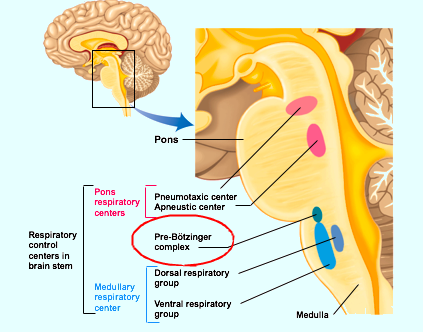
What is the main job of the medullary respiratory center?
It sets the basic rhythm of breathing.

What does the ventral respiratory group (VRG) do?
It helps generate breathing rhythm and stimulate inspiratory muscles.
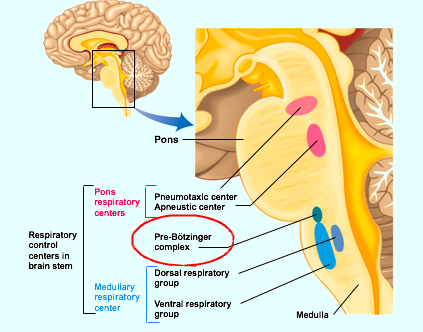
What does the dorsal respiratory group (DRG) do?
It integrates sensory input from stretch receptors and peripheral chemoreceptors.

What is the pontine respiratory group (PRG)?
A pontine center that modifies the medullary breathing pattern.
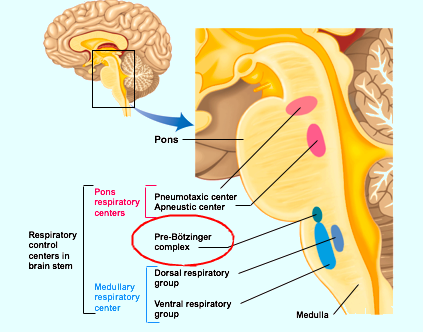
What does the apneustic center do?
It promotes and prolongs inspiration, especially helping control depth.
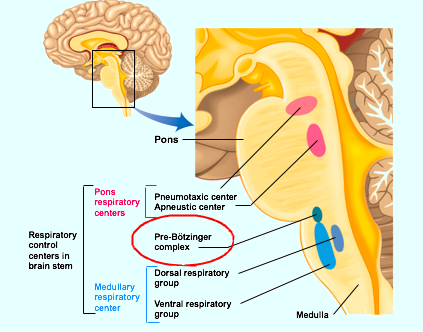
What does the pneumotaxic center do?
It inhibits inspiration and helps control overall respiratory rate.
What is the major chemical driver of breathing under normal conditions?
Carbon dioxide, not oxygen.
Why does carbon dioxide strongly affect ventilation?
Because increased CO₂ raises H⁺ and lowers pH, which stimulates chemoreceptors.

Where are central chemoreceptors located?
In the brainstem.
What do central chemoreceptors mainly respond to?
Increased H⁺ in brain extracellular fluid, usually caused by increased CO₂.

Where are peripheral chemoreceptors located?
In the carotid bodies and aortic bodies.
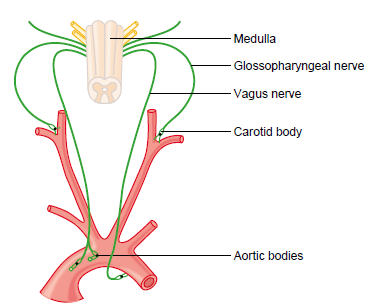
What do peripheral chemoreceptors monitor?
Arterial PO₂, PCO₂, and pH.
When does low oxygen become a strong ventilatory stimulus in humans?
When arterial PO₂ falls to about 60 mm Hg or less.
Do chemoreceptors mainly sense oxygen bound to hemoglobin?
No. They respond to dissolved oxygen, which is reflected by PO₂.
How does low pH affect ventilation?
It increases ventilation.
How do the hypothalamus and limbic system affect breathing?
They can change breathing with emotion, pain, and temperature.
How do proprioceptors affect breathing during exercise?
They signal muscle and joint movement and help increase ventilation.