Lecture 9 - Alt. of generations, early plant development
 Call Kai
 Learn
 Practice Test
 Spaced Repetition
 Match
 Flashcards
 Knowt Play
1/55

There's no tags or description
Looks like no tags are added yet.
56 Terms
Angiosperms
Group of flowering plants
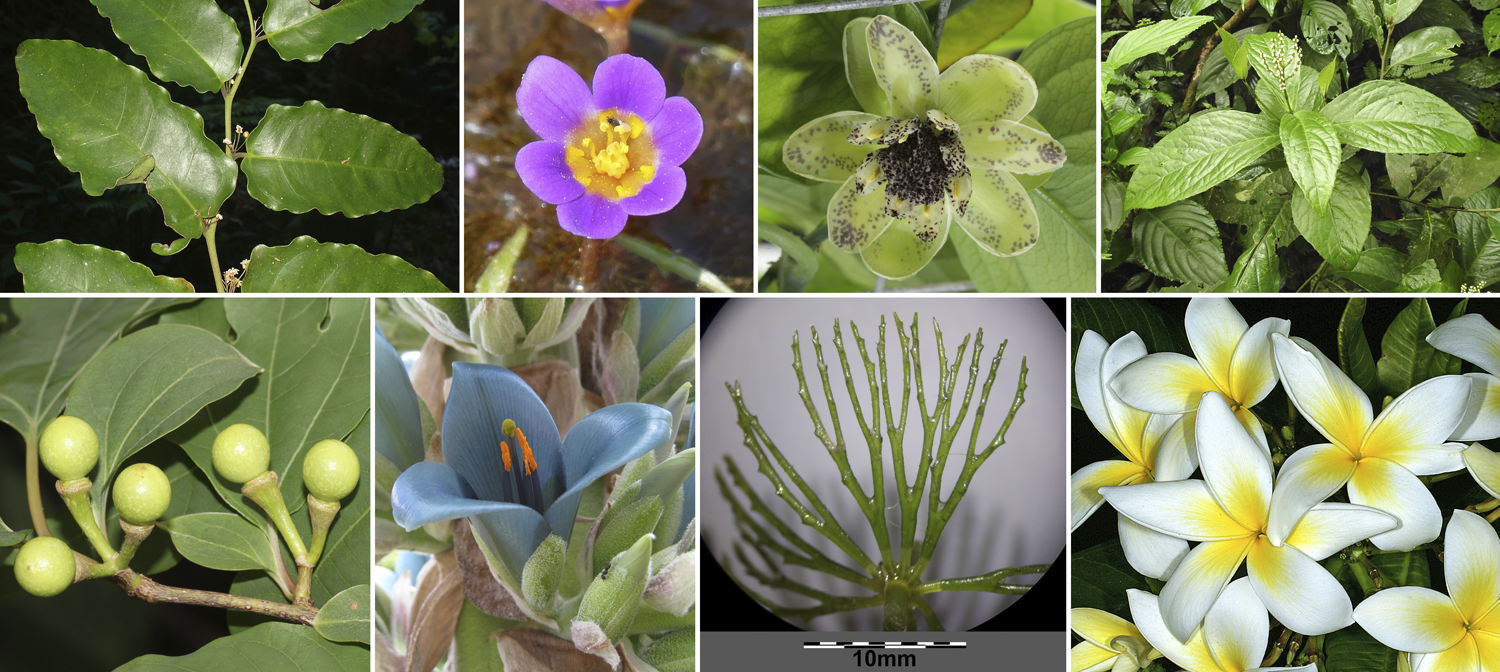

Angiosperms are…?
The largest phylum of photosynthetic plants
How many species are in the angiosperm phylum?
~300,000

Angiosperm size diversity
1mm - 100 meters
Angiosperm form diversity
Trees, bushes, grasses, vines, cacti, aquatic

What percent of all plant species includes Angiosperms?
~75-80%

Largest angiosperm
Eucalyptus!

Smallest angiosperm
Duckweed

Characters of Angiosperms
Flower production
Double fertilization
Seeds produced in enclosed ovary, which is fruit
Flower
Determinate shoot of the sporophyte, bears modified leaves for reproduction

Angiosperms include
all hardwood trees
herbaceous and woody plants
Cotyledon
Embryonic leaves that provide nutrients for seedlings before true leaves begin photosynthesizing
Monocots #
One cotyledon
Eudicot #
Two cotyledons
Monocots include…
Corn, wheat, lillies, orchids and palms

Eudicots include…
Roses, clover, tomatoes, oaks, and daisies

Monocot leaf venation
parallel
Eudicot leaf venation
netlike
Monocot stem
Complex vascular bundle organization
Eudicot
Vascular bundles in rings
Monocot root system
fibrous
Eudicot root system
Taproot
Monocot flower #
multiples of three
Eudicot flower #
multiples of four or five
Alternation of generations photo

Alternation of generation cycle
gametophyte plant produces sperm and eggs
1n sperm and egg fuse to form 2n zygote
zygote begins sporophyte/diploid generation
Where does reproduction take place in angiosperms?
The flower
Male gametophyte
develops within anther, spore cells undergo meiosis, which produces haploid pollen grains
Female gametophyte
develops in ovules
embryo sac = female gametophyte
contains eight nuclei that divide into eggs
Microsporogenesis
formation of microspores within the microsporangia/pollen sacs
microsporocytes
in anther
divide via meiosis to product 4 microspores
microgametogenesis
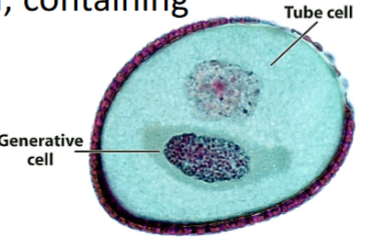
development of male gametophyte/microspores into pollen grains/microgametophytes
mature pollen grain cell types
tube, generative
megasporogenesis
formation of megaspores within the megasporangium
megasporogenesis process
one megasporocyte develops and divides by meiosis
three of four haploid megaspores die, leaving one megaspore
megagametogenesis
megaspore divides 3 times by mitosis to form 8 nuclei
arranges into female megagametophyte

double fertilization yields
zygote and endosperm
zygote ploidy
2n
formed by unity of sperm nucleus and egg
endosperm ploidy
3n
provides nutrients to developing embryo
endosperm development
triploid nucleus divides many times
supercell undergoes cytokinesis to form cell mem/walls, becomes multicellular
Endosperm purpose
provides nutrients to developing embryo
Monocot endosperm
stores nutrients for use after germination
Eudicot endosperm
reserves of endosperm are exported to cotyledons
Embryo development
grows with mitotic divisions
cotyledons appear
basic body plan appears
apical meristems produced
seed produced
Suspensor
extension at the base of embryo that anchors it in the embryo sac
aids in nutrient/hormone transfer between embryo and parent
embryo development multistep process
established polarity
designating tissue layers
determining body plan
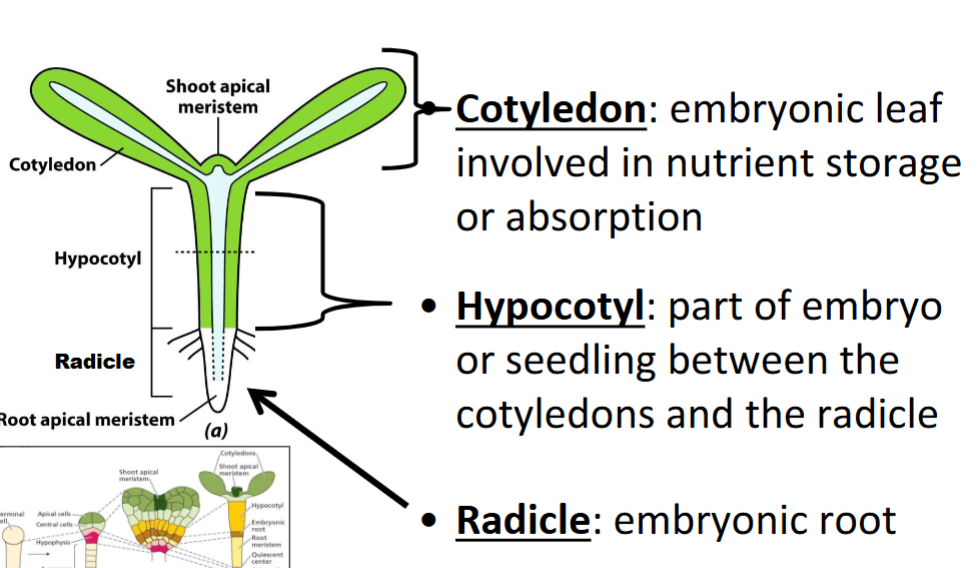
cotyledon
embryonic leaf, nutrient storage and absorption
hypocotyl
part of embryo between leaves and radicle
radicle
embryonic root

label embryonic plant
unique feature of monocot development
scutellum
coleoptile
coleorhiza
scutellum
Specialized cotyledon w/ large surface area to absorb nutrients from endosperm during germination
coleoptile
Sheath that protects shoot
coleorhiza
Protects root

label monocot embryo
