FAH313 - WEEK 5 - Zeus, Hera, and Gods Behaving Badly
 Call Kai
 Learn
 Practice Test
 Spaced Repetition
 Match
 Flashcards
 Knowt Play
1/6

There's no tags or description
Looks like no tags are added yet.
7 Terms
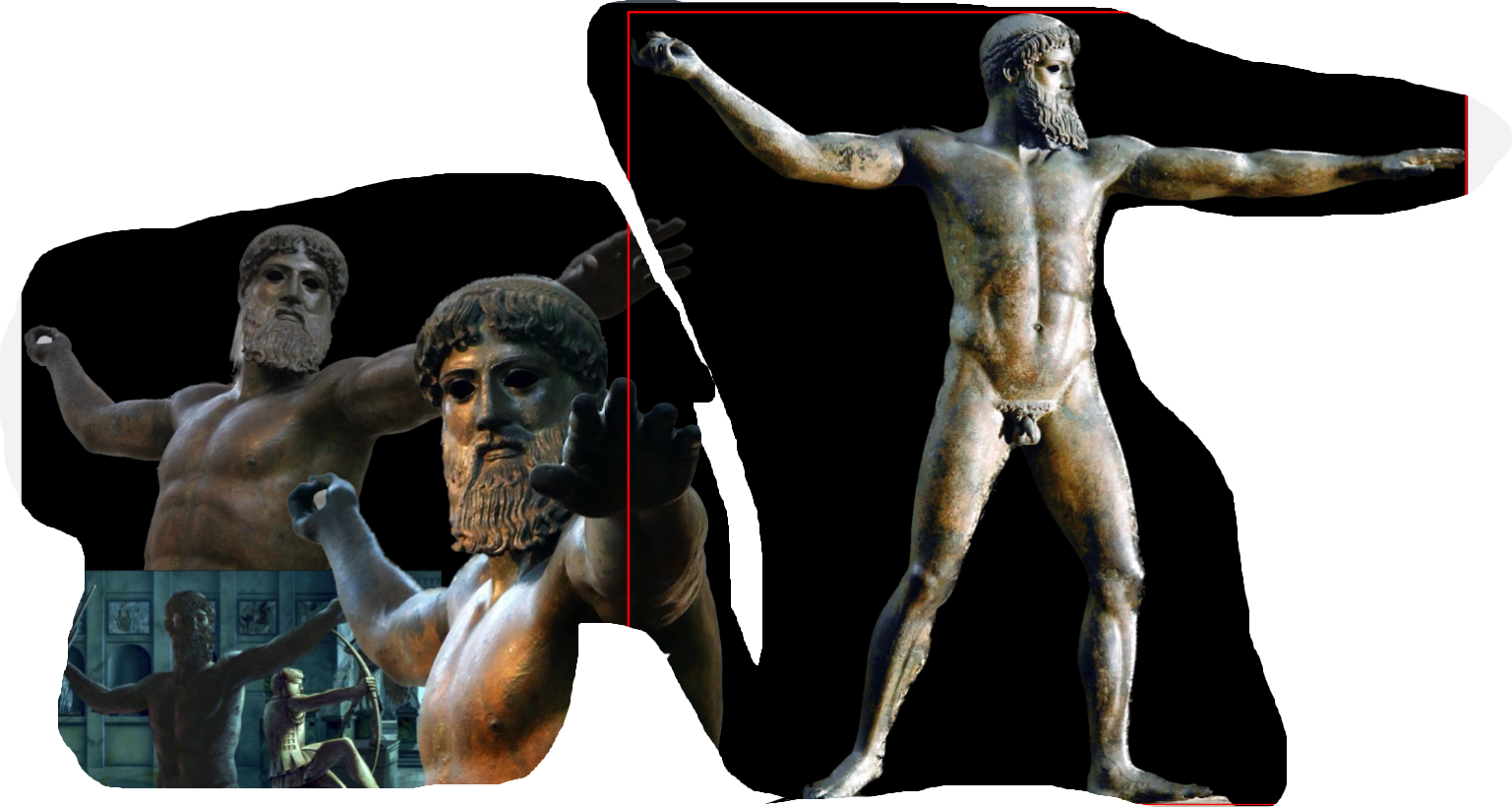
Title: Artemision Zeus
Date: ca. 460-450 BCE
Location: Found by fishermen in the sea near Cape Artemision
Medium: sculpture (bronze)
Description of art:
6 ft 10 statue
Zeus
thought to be Poseidon
but stance proves its Zeus
Braided hair fillet = keeps hair out of way during battle
right arm flung back —> holding thunderbolt
left arm forward for aiming
long beard
cap-like hair
motion in body
looking up and out
left hip slightly raised
left foot = not completely on ground
blade of foot pitched = holding all the weight of body
Shows MOMENT IN BETWEEN
about to throw thunderbolt
about to pivot back foot and twist torso —> build momentum for throw
ARMS = too long
supposed to be viewed at ¾ perspective = arms look normal

Title: Barberini Hera
Date: ca. 450 BCE
Medium: sculpture
Description of art:
Cult statue of Hera
HERA = specific attributes
stephane = crown
sceptre = queen of the gods
in hand = Phiale (Patera) = fill with oil and pour out as offering to gods
Chiton = rectangular modest dress
Mantle = thicker woolen fabric thrown over chiton
Facial attributes
cupids bow lip + classical mouth
flat forehead
parted hair
flat cheeks
extended + flat nose bridge
no emotions = stoic + calm face
no wrinkles
Venus rings = neck = well fed
barely covered breasts
Significance:
Chiton + Mantle = modest, devout, and didactic
Queen of Gods, goddess of marriage + commitment
Barely covered breasts = element of sensuality
wet-drapery look = showing shape of body
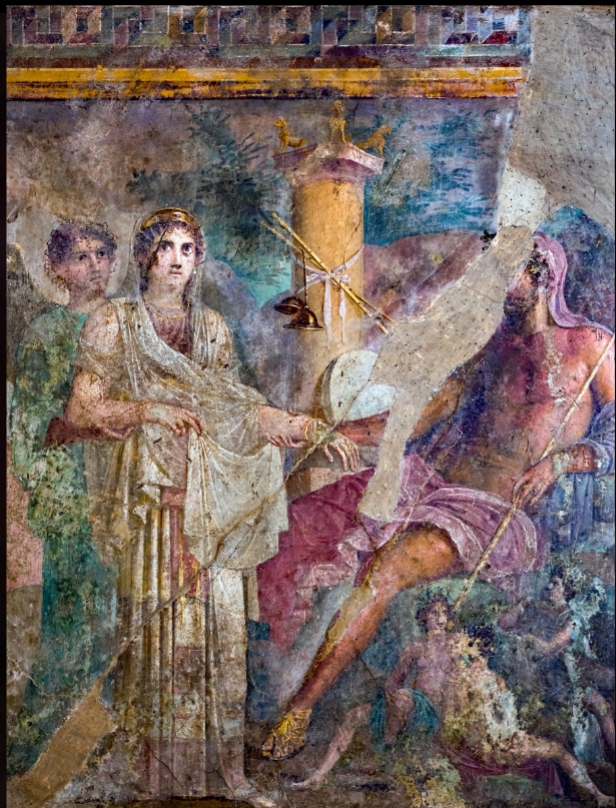
Title: The Wedding of Zeus and Hera
Date: ca. 50-79 CE
Location: House of Tragic Poet, Pompeii
Medium: Fresco
Description of art:
either Hierogamia (sacred marriage) or Dios Apate (Deception of Zeus)
most likley marriage
occured on Mount Aida
Music
Cymbals
Tympanon = Greek tambourine
Aulos Flutes
Zeus sitting on his throne
face is missing
beard + leafy crown = king of gods + victor
lounging
holding scepter
wearing purple mantle = rare + expensive dye
purple dye from murex snail = tyrian purple
Hera
stephane = crown
jewellry (earrings, necklace, bracelets)
Chiton + mantle = beige/yellow colour (from saffron)
Anakalypteria = The Formal Unveiling
metaphor = consummating marriage
arm held by zeus
Boopis = Cow-eyed Hera
dramatic irony = looking at observer
Isis or Hypnos
Isis = marriage scene
Hypnos = Deception scene
Significance:
Zeus holding Hera
Hand-on-wrist = cheir’ epi karpo
ancient greek wedding ceremony = man leading wife back home by the wrist
central part of fresco
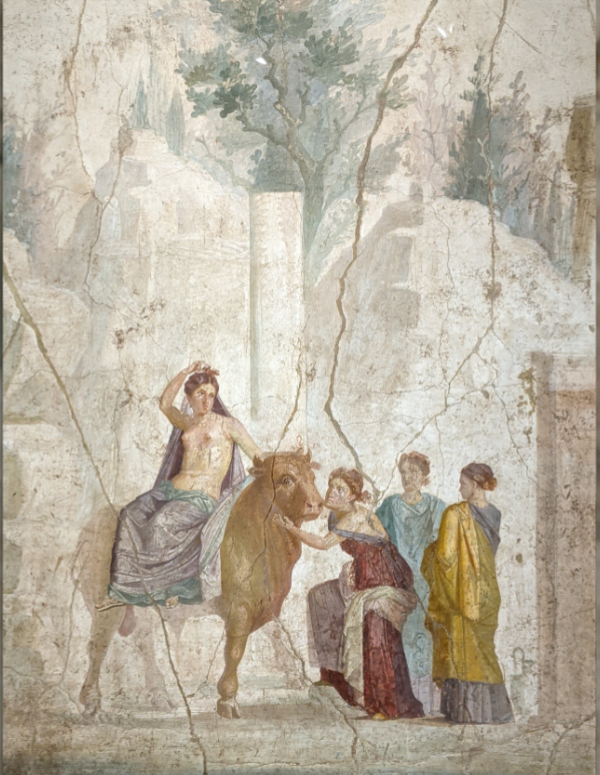
Title: Europa and the Bull Fresco
Date: ca. 30 CE
Location: House of Jason, Pompeii
Medium: fresco
Description of art: MOSCHUS EUROPA
Europa sitting on bull
bull = Zeus
no meadow —> more urban setting
3 companions near bull
one of them stand in = kissing action to bull that Europa does in Text
Bull = Coy-eyed = Boopis
Observer aware of Zeus’ scheme
Europa
like bride on wedding day - euphemisitic
wearing jewelry
showing herself to her husband —> formal unveiling
Pregnant moment/ moment in-between
before zeus flies away with Europa

Title: Europa and the Bull Calyx-Krater
Date: ca. 340 BCE
Medium: red figure calyx-krater
Artist: Asteas
Description of art:
nucleus = Europa on Bull’s back
Zeus flying with Europa over sea to Crete
on belly of vase
Informants
Skylla, Triton, Pothos
Pothos = sprinkles desire on people = creates yearning
causes Zeus to yearn for Europa
Index figures
separated by visible boundary
spectators of nucleus
i.e agreeing with actions of Zeus = cosmically sanctioned scene/action
top right = Eros, Adonis, Aphrodite
top left = Zeus, Crete (personified), Hermes (holding Caduceus, his staff)
Europa
billowing textile = wind = flying fast
also doubles as veil for unveiling (“wedding scene”)
Inscription:
Assteas Egraphe (Asteas Painted [This])
Significance: MOSCHUS EUROPA
Skylla + Triton = let us know events happening above water
Zeus + Europa = Minos
Skylla = falls in love with their son Minos —> becomes king of Crete


Title: Zeus and Ganymede Mosaic
Date: ca. 150 CE
Location: House of Vergil in ancient Hadrentum (Sousse, Tunisia)
Medium: Mosaic
Description of art:
Zeus found Ganymede beautiful
Ganymede = his cup bearer
younger
softer thighs, belly
no musculature
Trojan prince
phrygian cap
sheperd’s crook
chlamys
Zeus as an eagle = attribute
behind Ganymede
a tergo sex = “sex from behind”
idealizes acts of sexual violence
Composition = Rondel
encloses both characters
leads to chiastic disposition of bodies (X-shaped)
Significance:
God at the back, young person at front
dichotomy
active sexual assaulter = Zeus (Active + hard)
passive receiver = Ganymede (passive + soft)
Other rondels involved in Mosaic
predator + prey rondels = euphemism
erotic pursuit
On left = predators (lion, panther, tiger)
On right = prey (stag, gazelle, antelope)

Title: Zeus and Ganymede Bell-Krater
Date: ca. 500 BCE
Location: Attica
Medium: Red-figure bell-krater
Description of art:
SIDE A:
Zeus
leaf crown
scepter
beard
right arm reaching out for Ganymede on other side
Erastes = older = the lover
SIDE B:
Ganymede playing hoop and stick
innocent image
younger = clean shaven
long hair = feminine representation
leaf crown
fully nude
missing attributes = instead seen in erotic pursuit
holding rooster in left hand = pederastic courtship gift
Significance:
Pederastic relationship = between older man and younger man
for education + sexual purposes
Older man pursuing young boy minding his business
sexual innuendo = sceptre + hoop
separation of figures on both sides = suspense
active pursuer + active pursued
Ganymede = active = looking back at Zeus (interest shown)
not giving in quickly = humble
Erotic pursuit = simile for pederasty
Zeus not disguised
Pederasty was considered beneficial relationship and was encouraged
art = for male viewers = to keep this idea/institution going