Flowering Plant Classification and Lab Practical Review
 Call Kai
 Learn
Learn Practice Test
 Spaced Repetition
 Match
Match Flashcards
 Knowt Play
1/77

Earn XP
Description and Tags
Vocabulary practice flashcards covering plant taxonomy, field observations at Burnet Woods, plant list classifications, and lab practical skills.
Name | Mastery | Learn | Test | Matching | Spaced | Call with Kai | Chat |
|---|
No analytics yet
Send a link to your students to track their progress
78 Terms
Galinsoga parviflora
A plant species in the family Asteraceae commonly known as Quickweed

Quercus bicolor
A tree species in the family Fagaceae with the common name Swamp White Oak.

Populus tremuloides
A deciduous tree in the family Salicaceae commonly known as Quaking Aspen.

Medicago lupulina
A plant belonging to the family Fabaceae commonly named Black Medic.

Hemerocallis spp.
Daylilies belonging to the family Asphodelaceae.

Arctium lappa
A species in the family Asteraceae commonly known as Great Burdock.

Symphyotrichum lateriflorum
A species in the family Asteraceae with the common name Calico Aster.

Thuja occidentalis
An evergreen conifer in the family Cupressaceae commonly called Northern White-Cedar.

Populus deltoides
A tree in the family Salicaceae commonly referred to as Eastern Cottonwood (or Cottonwood).

Juglans nigra
A species in the family Juglandaceae commonly known as Black Walnut.

Quercus shumardii
An oak species in the family Fagaceae commonly known as Shumard Oak.

Acer negundo
A species in the family Sapindaceae commonly called Boxelder (or Box elder).

Agastache foeniculum
An aromatic herbaceous plant in the family Lamiaceae commonly known as Anise Hyssop.

Silphium perfoliatum
A species in the family Asteraceae known by common names such as Cup Plant or Prairie Dock

Symphyotrichum novae-angliae
A flowering perennial in the family Asteraceae commonly called New England aster.

Solidago flexicaulis
A species in the family Asteraceae commonly known as Zigzag Goldenrod.

Amphicarpaea bracteata
A vine in the family Fabaceae with the common name American Hog Peanut.

Menispermum canadense
A climbing vine in the family Menispermaceae commonly referred to as Canadian Moonseed.

Tilia americana
A tree species placed in the family Malvaceae (or Tiliaceae) commonly called American Basswood (or Basswood).

Liquidambar styraciflua
A tree belonging to the family Altingiaceae commonly known as American Sweetgum (or Sweet Gum),

Quercus muehlenbergii
A species in the family Fagaceae commonly called Chinkapin Oak.

Commelina communis
An annual plant in the family Commelinaceae commonly called Asiatic Dayflower (or Japanese Dayflower).

Amsonia hubrichtii
A perennial in the family Apocynaceae commonly known as Threadleaf Bluestar.

Campsis radicans
A woody vine in the family Bignoniaceae commonly known as Trumpet Vine.

Wisteria floribunda
A climbing woody vine in the family Fabaceae commonly called Japanese Wisteria.

Dioscorea polystachya
A vine in the family Dioscueaceae commonly known as Chinese Yam.

Catalpa speciosa
A deciduous tree in the family Bignoniaceae commonly called Northern Catalpa.

Verbena bonariensis
A flowering species in the family Verbenaceae commonly called Purpletop Vervain.

Sassafras albidum
A tree in the family Lauraceae commonly called White Sassafras (or Sassafras tree).

Floral Formula
A standardized symbolic notation used to denote flower symmetry, whorls, number of parts, connation, adnation, and ovary position. Floral formulas provide an
easy way to write down the important features
of flowers.
Ca/K = Calyx (sepals)
Co/C = Corolla (petals)
A = Androecium (stamens)
G = Gynoecium (carpels)
black bar = Receptacle
Z means zygomorphic (not radial) symmetry
A means actinomorphic- radial symmetry
Infinity sign means more than 12
The first symbol in this floral formula describes the
symmetry of a flower.
• (*) Radial symmetry – Divisible into equal halves by
two or more planes of symmetry.
• (x) Bilateral symmetry – Divisible into equal halves
by only one plane of symmetry.
• ($) Asymmetrical – Flower lacking a plane of
symmetry, neither radial or bilateral


Floral Diagram
A schematic graphical cross-section showing the relative arrangement, numbers, fusion (connation/adnation), and placentation of floral organs.


Fruit Anatomical Types
Botanical classifications of fruits; Simple Fruits: Formed from a single ovary of one flower (which may have one or multiple fused carpels). They are split into fleshy and dry.
Aggregate Fruits: Formed from a single flower that contains numerous separate carpels or ovaries that merge into a single unit (e.g., raspberries, blackberries).
Multiple Fruits: Formed from the fused ovaries of multiple distinct flowers in an inflorescence or cluster (e.g., pineapple, fig).
Accessory Fruits: Fruits that incorporate extra non-ovary plant tissues—such as the receptacle or hypanthium—as the main edible portion (e.g., apple, strawberry).
Types of Simple Fleshy Fruits
Berry: The entire pericarp is fleshy and soft, and seeds are embedded in the flesh (e.g., tomato, grape, banana, blueberry).
Drupe: Features a thin exocarp, a fleshy or fibrous mesocarp, and a hard, stony endocarp (pit) enclosing a single seed (e.g., peach, cherry, mango, olive).
Pome: An accessory fruit where the inner core encases the seeds and the outer fleshy layer develops from the floral tube or receptacle (e.g., apple, pear).
Hesperidium: A specialized berry with a tough, leathery exocarp packed with oil glands and a segmented inner pulp (e.g., orange, lemon, lime).
Pepo: A specialized berry with a hard, thick rind (exocarp/receptacle fusion) and fleshy interior (e.g., squash, cucumber, melon).
Types of Simple Dry Fruits
Dry Dehiscent (Open at maturity to release seeds)
Legume: A dry fruit that splits open along two seams or sutures (e.g., peas, beans, peanuts).
Capsule: A dry fruit made of multiple carpels that splits open in various ways to release many seeds (e.g., poppy, cotton, sweetgum).
Follicle: A dry fruit derived from a single carpel that splits open along a single suture (e.g., magnolia, milkweed). [1, 2, 3, 4]
Dry Indehiscent (Remain closed at maturity)
Achene: A small, one-seeded dry fruit where the seed coat is separate from the thin pericarp wall (e.g., sunflower "seed," strawberry surface specs).
Nut: A large, one-seeded dry fruit with a very hard, woody pericarp wall (e.g., acorn, hazelnut, chestnut).
Caryopsis (Grain): A dry fruit where the single seed coat is completely fused to the thin pericarp (e.g., corn, wheat, rice).
Samara: A dry fruit with a flattened, wing-like outgrowth of the pericarp to aid in wind dispersal (e.g., maple, ash, elm)

Placentation
The pattern of ovule attachment within the ovary exemplified by types. The area of the ovary wall where the
ovules are attached is called the placenta. When the placentas are on the outer wall of the
ovary it is called parietal placentation (A). If it is central, where the carpels
meet in the centre of the ovary, it is known as axile placentation (B). The
ovary may have several chambers. In some plants the ovary only has one
chamber despite consisting of several fused carpels. In this case, if the
placenta is central it is known as free central placentation (C) and (D).
Asimina triloba
A small understory tree in the family Annonaceae commonly called Pawpaw.

Cercis canadensis
A tree belonging to the family Leguminosae with the common name Redbud Tree.

Maclura pomifera
A tree belonging to the family Moraceae commonly known as Osage Orange

Platanus occidentalis
A large tree in the family Platanaceae commonly called American Sycamore.

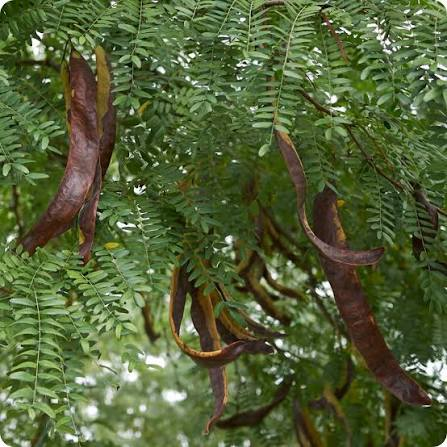
Gleditsia triacanthos
A tree in the family Fabaceae commonly named Honey Locust, characterized by pronounced thorns and seedpods.
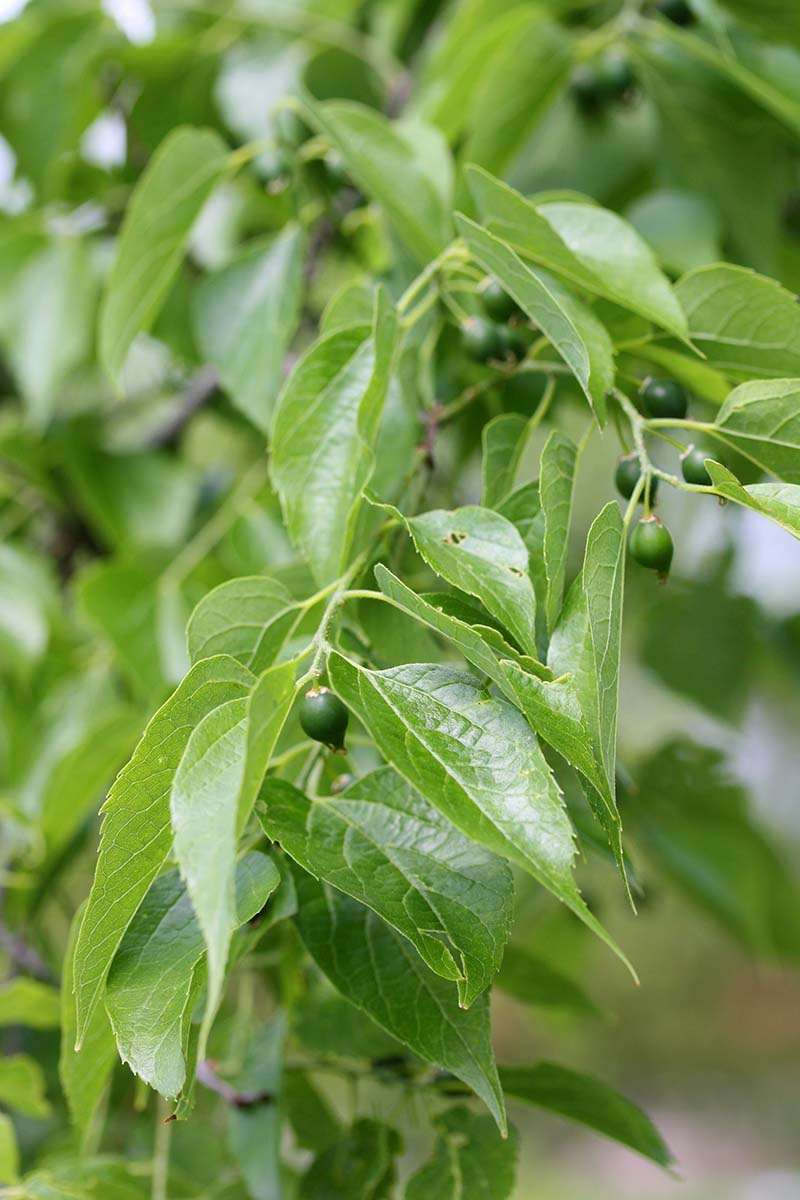
Celtis occidentalis
A deciduous tree in the family Cannabaceae commonly known as Hackberry.
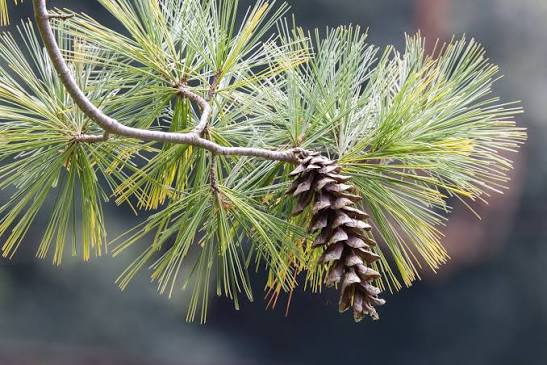
Pinus strobus
An evergreen conifer belonging to the family Pinaceae commonly known as White Pine.
Toxicodendron radicans
A woody vine or shrub in the family Anacardiaceae commonly known as Poison Ivy

Impatiens pallida
An herbaceous plant in the family Balsaminaceae commonly called Pale Jewelweed.

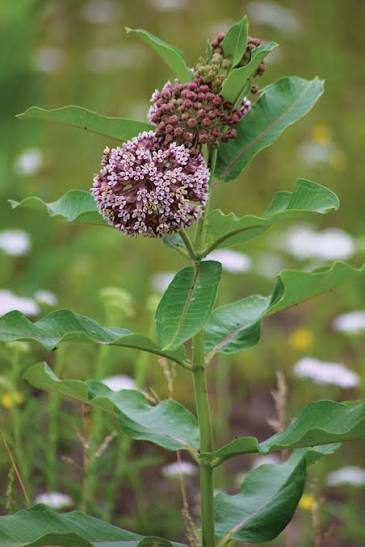
Asclepias syriaca
A perennial herb in the family Asclepiadaceae commonly known as Common Milkweed.
Phytolacca americana
A large perennial herb in the family Phytolaccaceae commonly known as Pokeweed.

Fagus grandifolia
A deciduous forest tree in the family Fagaceae commonly named American Beech.

Lonicera maackii
An upright shrub in the family Caprifoliaceae commonly known as Amur Honeysuckle.

Ageratina altissima
A perennial herb in the family Asteraceae commonly known as White Snakeroot.

Ailanthus altissima
A fast-growing tree in the family Simaroubaceae commonly known as Tree of Heaven

Euphorbia nutans
An herbaceous species in the family Euphorbia commonly known as Eyebane

Andropogon gerardi
A warm-season prairie grass in the family Poaceae commonly called Big Blue Stem Grass

Equisetum hyemale
A spore-producing vascular plant belonging to the family Equisetaceae commonly called Scouring Rush / Horsetail.

Diospyros virginiana
A fruit-bearing tree in the family Ebenaceae commonly called Persimmon.

Parthenocissus quinquefolia
A woody climbing vine in the family Vitaceae commonly known as Virginia Creeper.

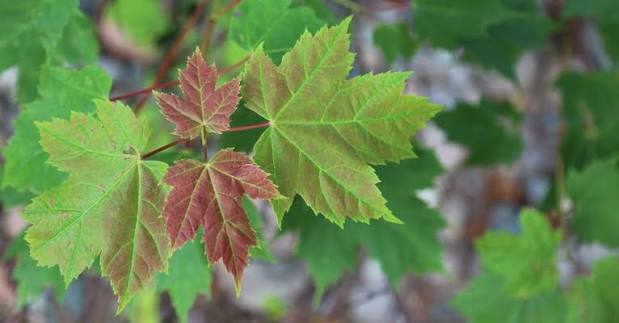
Acer rubrum
Red Maple; Sapindaceae family.
Quercus palustris
Pin oak; Fagaceae family

Lindera benzoin
Spice bush; Lauraceae family

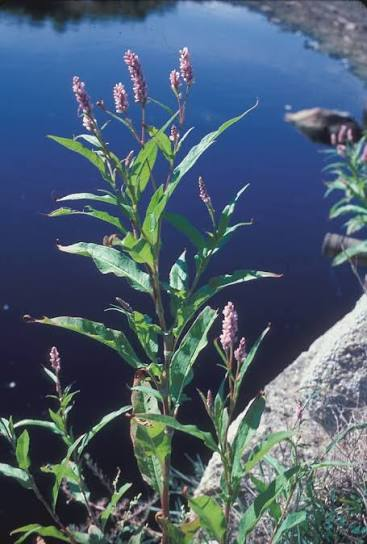
Polygonum pensylvanicum
Pennsylvania Smartweed; Polygonaceae family
Quercus macrocarpa
Bur Oak; Fagaceae family

Acer saccharum
Sugar Maple; Sapindaceae family

Euonymus fortunei
Winter Creeper; Celastraceae family

Smilax rotundifolia
Common Greenbrier; Smilacaceae Family

Persicaria lapathifolia
Dock-leaved Smartweed; Polygonaceae family

Salix discolor
Pussy Willow; Salicaceae family

Helianthus tuberosus
Jerusalem Artichoke; Asteraceae family

Actinomeris alternifolia
Wingstem; Asteraceae family

Sambucus canadensis
Common Elder; Adoxaceae family

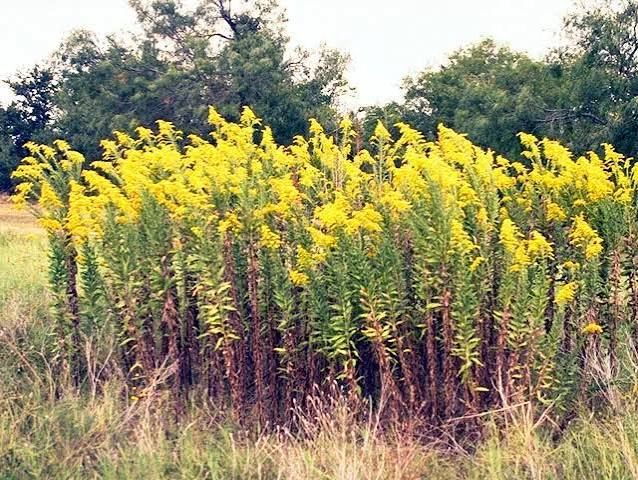
Solidago altissima
Tall Goldenrod; Asteraceae family
Ulmus americana
American Elm; Ulmaceae family

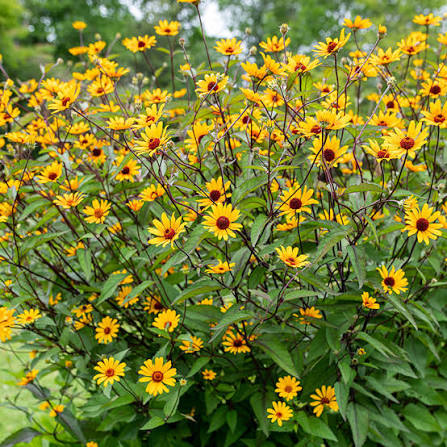
Heliopsis helianthoides
Oxeye Sunflower; Asteraceae family
Morus alba
White Mulberry; Moraceae family

Polygonum cespitosum
Persicaria Cespitos; Polygonaceae family

Solanum nigrum
Black Nightshade; Solanaceae family

Fraxinus americana
White Ash; Oleaceae family

Nyssa sylvatica
Black Gum; Nyssaceae family

Carya cordiformis
Bitternut Hickory; Juglandaceae family

Vitis riparia
Riverbank Grape; Vitaceae family

Quercus phellos
Willow Oak; Fagaceae family

Acer campestre
English Maple; Sapindaceae family
