2 - Classical Conditioning
 Call Kai
 Learn
 Practice Test
 Spaced Repetition
 Match
 Flashcards
 Knowt Play
1/79

There's no tags or description
Looks like no tags are added yet.
80 Terms
What is learning in psychology?
Learning is long‑lasting changes in behavioural mechanisms based on experience.
What is the performance–learning distinction?
performance is moment‑to‑moment behaviour
learning is long-term underlying behavioural mechanisms
What is latent learning?
learning that occurs w/o visible performance changes until conditions change
What makes a change “enduring” in learning?
It must persist over time, even if not expressed in behaviour.
What does “based on experience” mean in learning?
Learning results from experience, not maturation or natural development.
What is habituation?
A decrease in response to a stimulus after repeated exposure without consequences.
What is dishabituation?
Recovery of responsiveness when a previously habituated stimulus changes.
What is sensitization?
An increase in responsiveness after repeated exposure to a relevant or threatening stimulus.
What is non‑associative learning?
Learning that modifies an existing stimulus–response relation without forming new associations.
What is classical conditioning?
Associative learning where contingencies are learned between stimuli.
What is acquisition?
CS becomes associated with the US
What is short‑delay conditioning?
The most effective timing: CS presented shortly before the US.
What is asymptotic responding?
plateau in CR strength after repeated conditioning trials
What is the difference between a test trial and an extinction trial?
Both present the CS alone
test trials measure learning
extinction trials weaken the association
What is reacquisition?
Relearning a contingency after extinction, which occurs faster than initial learning.
renewal
return of CR when the CS is presented in the original acquisition environment after extinction elsewhere
inhibitory conditioning
CS predicts the absence of the US
compensatory response
biological response that counteracts a drug’s effects to maintain homeostasis
higher‑order conditioning
new stimulus becomes a CS by being paired with an already established CS
classical conditioning
the learning of a contingency b/w a signal and event
what is an example of classical conditioning?
salivating when seeing food
instrumental conditioning
allows us to associate actions and consequences
explain briefly pavlov’s experiment
the sound of a metronome was used to signal the arrival of food, which would then cause the dog to salivate
after training, the dog would salivate in response to the metronome alone (conditioned response)
contingency
one stimulus reliably predicts the presentation of another (e.g. sound of metronome signaled the arrival of food for the dog in Pavlov’s experiment)
conditioned response (CR)
response that occurs once the contingency b/w CS and US has been learned
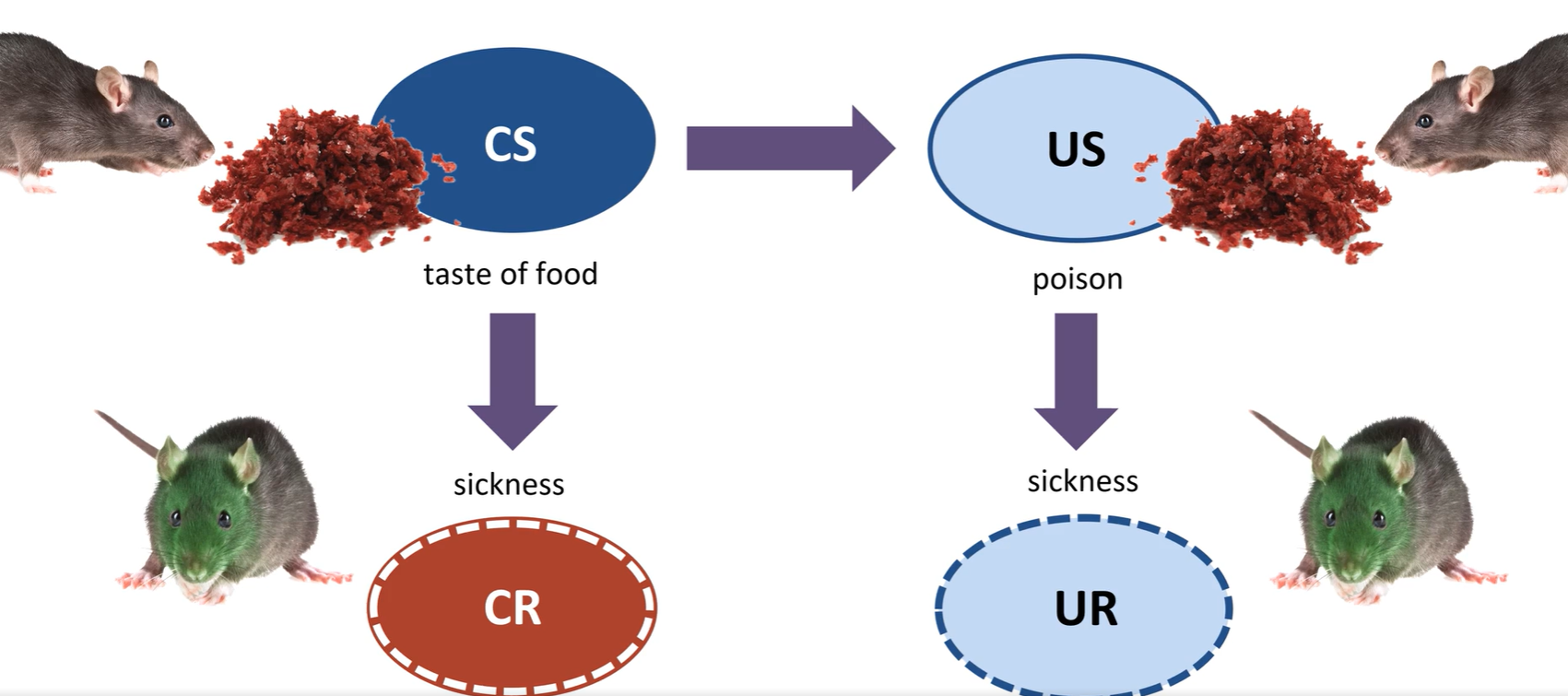
conditioned stimulus (CS)
previously neutral stimulus
becomes associated w/ an unconditioned stimulus (US)
eventually triggers a response on its own
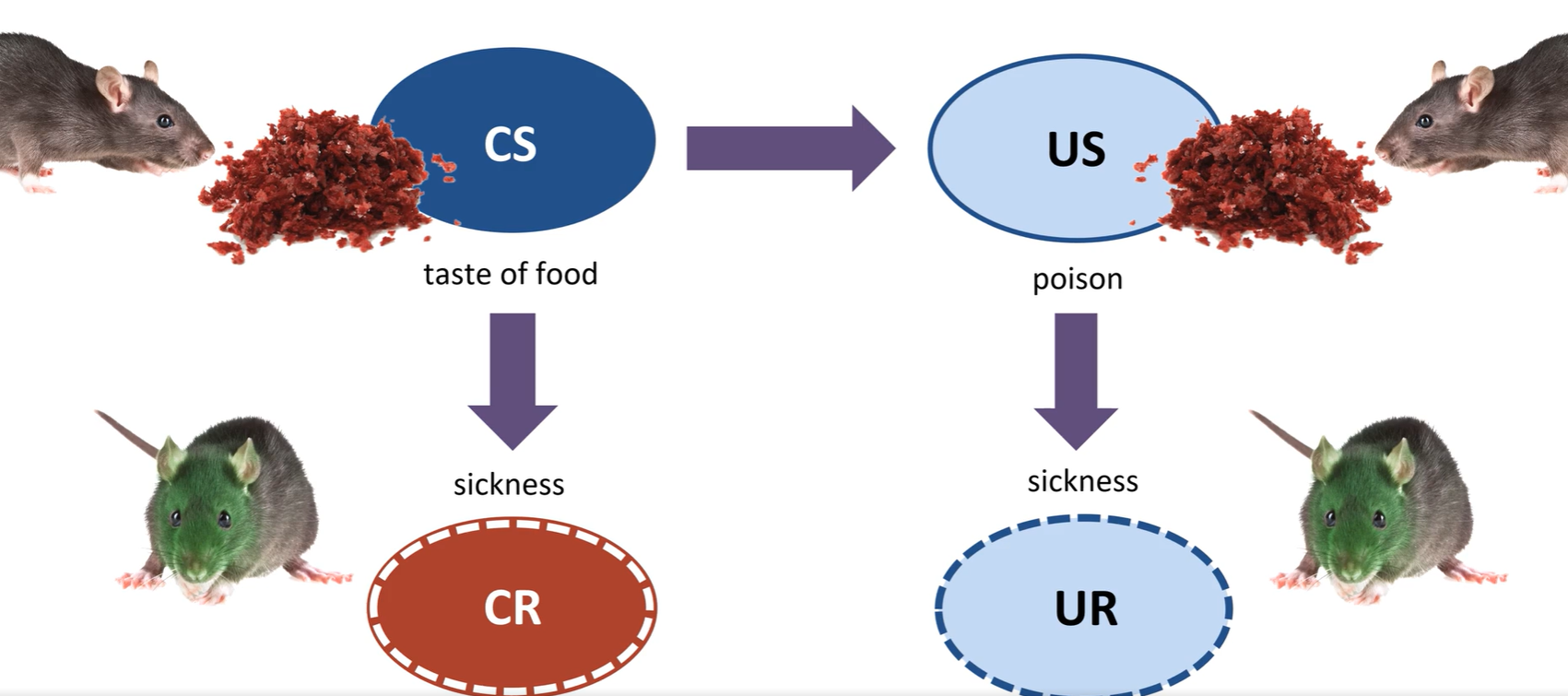
unconditioned stimulus (US)
stimulus/event that automatically triggers a response in the absence of any training/learning

unconditioned response (UR)
response that occurs after an unconditioned stimulus (US)
occurs automatically without training/learning

in Pavlov’s experiment, what kind of stimulus/response was the sound of the metronome and the act of placing the food in the dog’s mouth?
sound of metronome: conditioned stimulus (CS)
placing food in dog’s mouth: unconditioned stimulus (US)
acquisition
the process by which a contingency b/w a CS and US is learned
normally, contingencies are learned _____
slowly

does most learning of contingencies happen early on or later on in trials?
early on
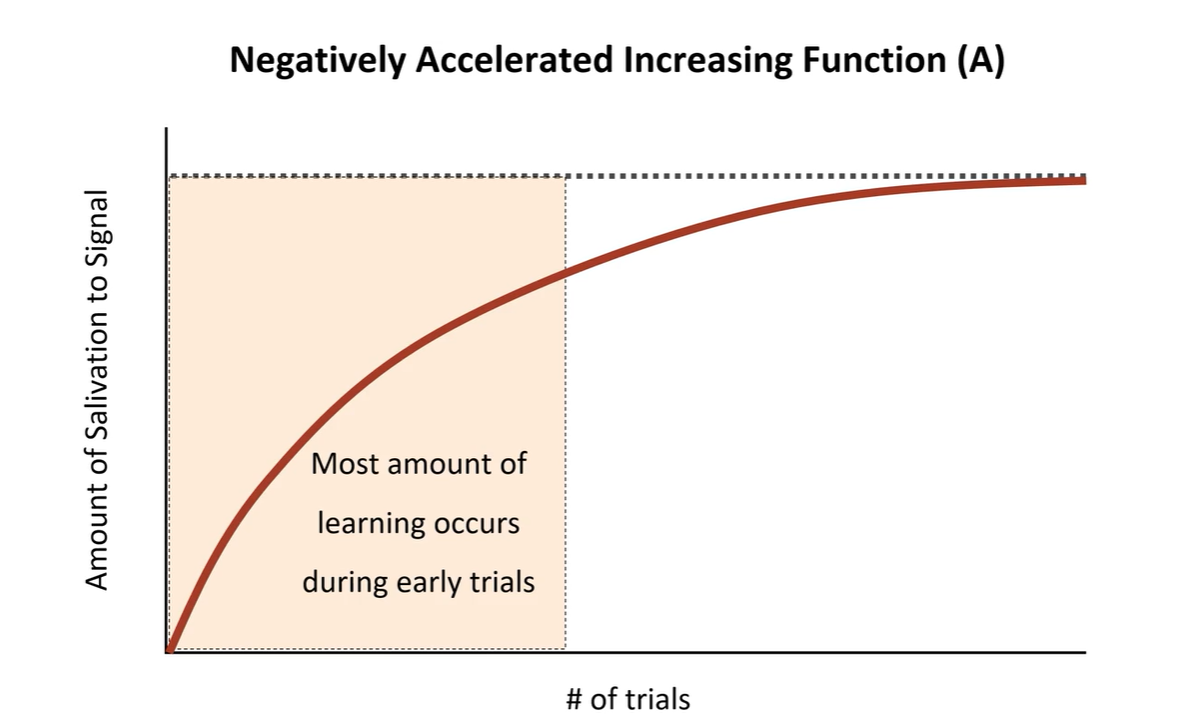
true or false: contingencies can be learned in a single trial
true
extinction
loss of the conditioned response (CR) when the conditioned stimulus (CS) no longer predicts the unconditional stimulus (US)
inhibits the conditioned response (CR), not forgotten
when relearning a conditioned response (CR) after extinction, does it take a shorter or longer period of time?
shorter; the behaviour is still there, just repressed
spontaneous recovery
sudden recovery of a conditional response (CR) following a rest period after extinction

only the __ is required to trigger a spontaneous recovery
CS
stimulus generalization
the process by which stimuli similar to the conditioned stimulus (CS) will also elicit a conditioned response (CR)
e.g. you are bitten by a black doberman as a child; as an adult, the sight of the doberman elicits a conditioned response (CR), and so does the sight of other dogs, even though you were only bit by a doberman before (and thus it should be the only conditioned stimulus)

how to test for stimulus generalization
establish a contingency b/w a conditioned stimulus (CS) and unconditioned stimulus (US), creating a conditioned response (CR)
present the conditioned stimulus (CS) in various different ways to see if it still elicits the conditioned response (CR)

what type of graph do we typically observe when testing for stimulus generalization? what is the specific name when applied to stimulus generalization?
a normal distribution
generalization gradient
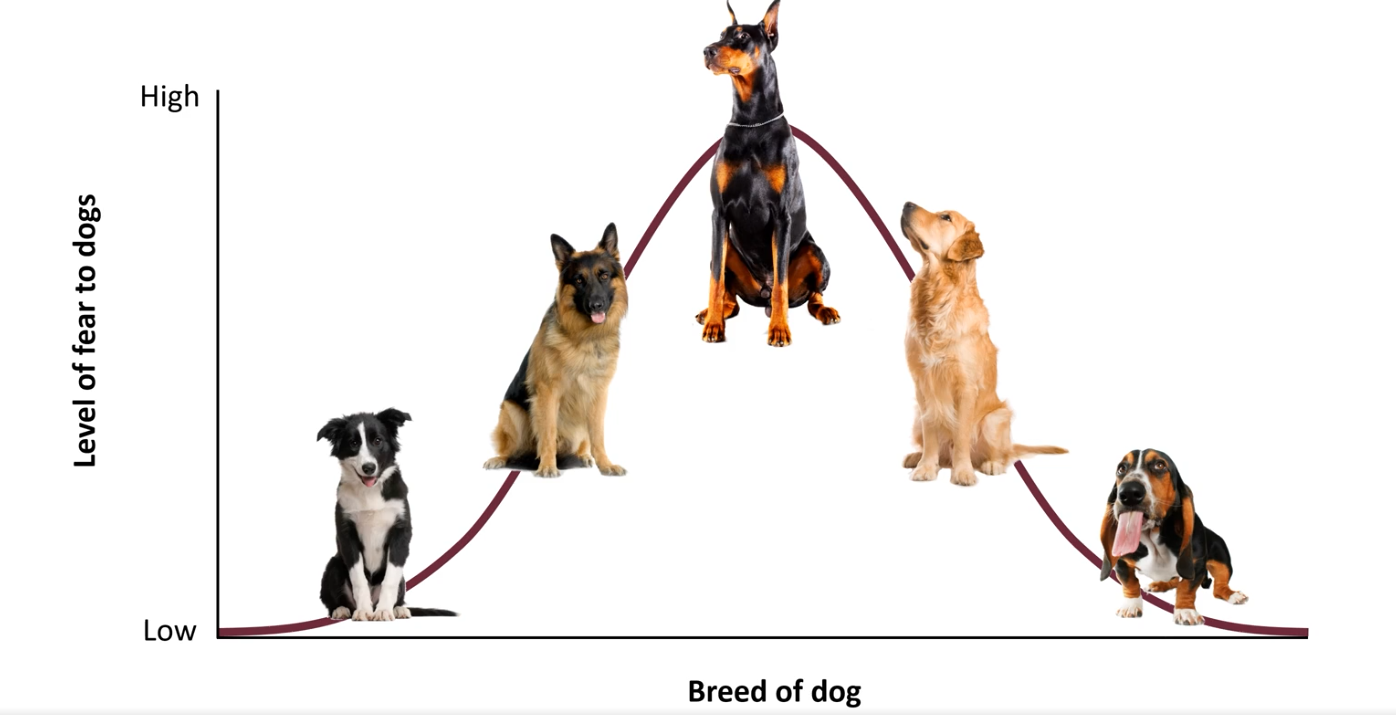
if a stimulus is potentially harmful, you will ___ be required separate conditioning experiences to learn that important relationship. Instead, you will generalize your learning to _____ similar stimuli that cue potential danger.
NOT
avoid
how does extinction affect a generalized stimulus? (follow the dog example)
after undergoing therapy, the normal distribution will be flattened, showing lessened fear towards all dogs

stimulus discrimination
restricts the range of conditioned stimuli (CS) that can elicit a response
how do you use extinction to cause stimulus discrimination (use the shock example + assume 500Hz is what typically accompanies a shock)
repeatedly present the 600Hz tone with no shock; eventually, the conditioned response (CR) of fear will diminish in regards to the 600Hz tone
BUT the conditioned response (CR) of fear will stay consistent for the other tones
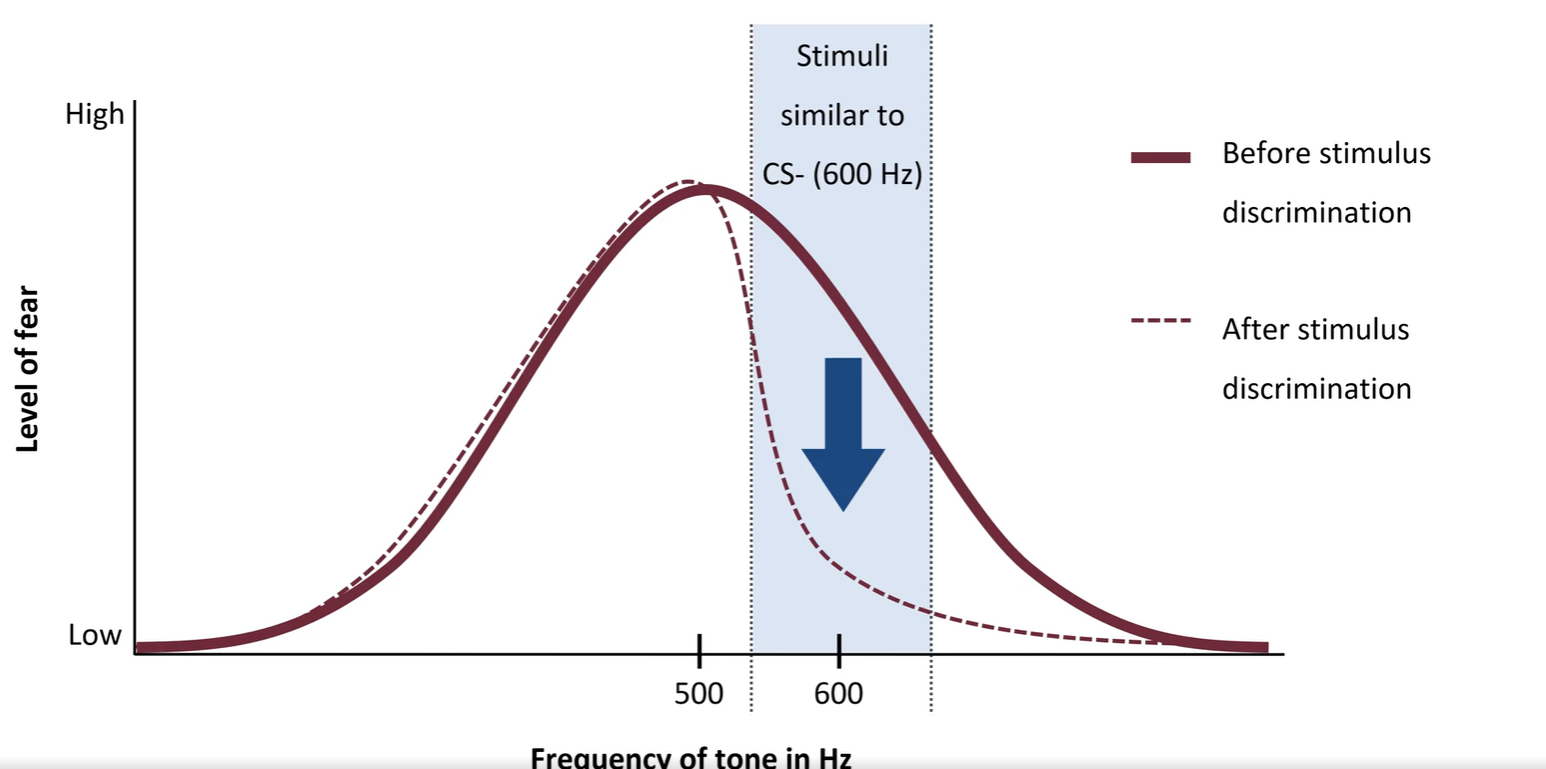
variables in stimulus discrimination
conditioned stimulus+ (CS+)
conditioned stimulus- (CS-)
explain the CS+ and CS- using the shock example
CS+ = 500Hz tone
reliably predicted presence of shock
CS- = 600Hz tone
reliably predicted absence of shock
how to create the most precise stimulus discrimination (use shock example)
alternating trials (500Hz tone paired w/ shock, then 600Hz tone paired with nothing)
what happens when a CS+ and CS- are presented at the same time? (use shock example)
following discrimination training (500Hz becomes CS+ and 600Hz becomes CS-), if both tones are presented simultaneously, the participant will show an intermediate fear response (somewhere b/w the responses of the 2 tones)

CS+ vs CS-
CS+: presence of biological stimulus
CS-: absence of biological stimulus
stimulus _________ and _________ are opposite sides of the same coin
generalization, discrimination
stimulus ________ provides efficiency and flexibility, whereas stimulus _________ refines the learning process
generalization, discrimination
how can classical conditioning explain phobias?
traumatic event that elicits a fear response every time you see the phobia (can be generalized stimulus)
2 therapies for treating phobias
implosive therapy
systematic desensitization
implosive therapy
person w/ phobia is encouraged to confront the conditioned stimulus (CS) that invokes their anxiety using their imagination
this way, the CS is presented in the absence of the associated US
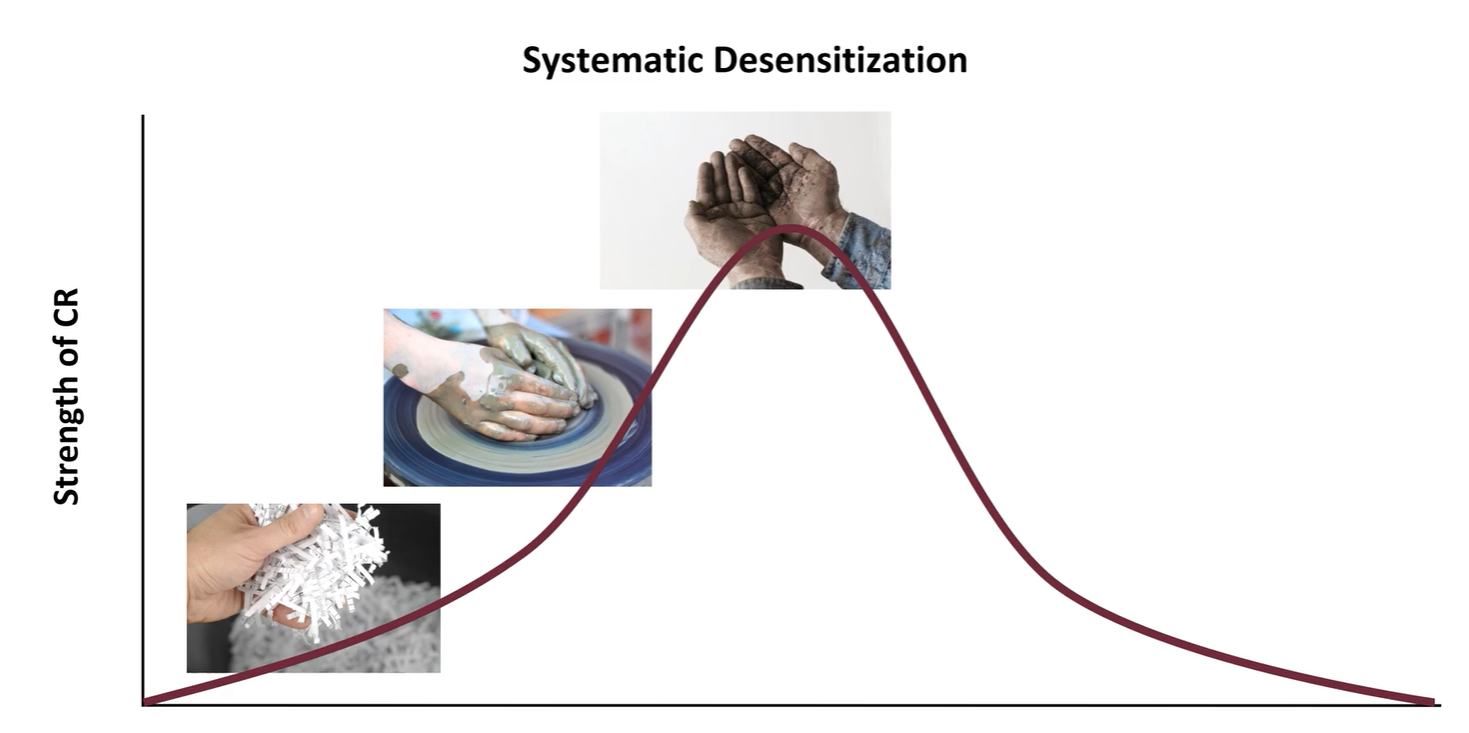
systematic desensitization
gradual exposure to feared stimulus
if you think of the generalization gradient, the therapist would start by extinguishing the fear response at the end of the curve, gradually working towards the middle
(the example in the image is someone w/ germophobia
compensatory response
a response that counteracts expected changes to the body and helps to maintain homeostasis
e.g. if you ingest something sugary, insulin is released into the bloodstream to store excess glucose
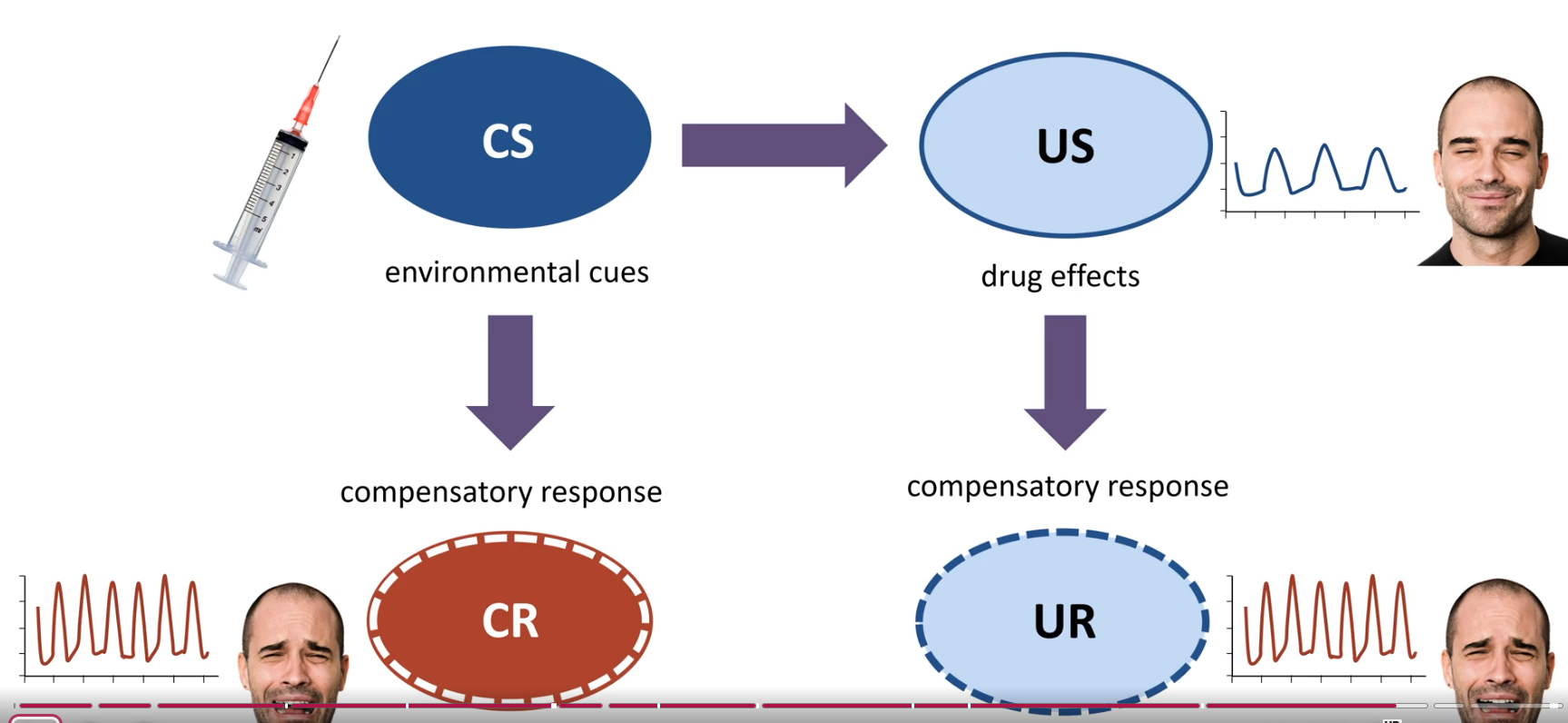
why would a drug addict who is presented with a needle (but not actually administered the drug) suddenly become uncomfortable?
the effects of the drug (US) caused a compensatory response (UR) from the body to help bring the body back to homeostasis
a contingency b/w the effects of the drug (US) and the environment in which the drug is administered (CS) is made
now, the environment in which the drug is administered (CS) elicits a compensatory response (CR) by itself, causing the person to become uncomfortable (ie if the compensatory response was increasing heart rate, increasing pain levels, or causing nausea)
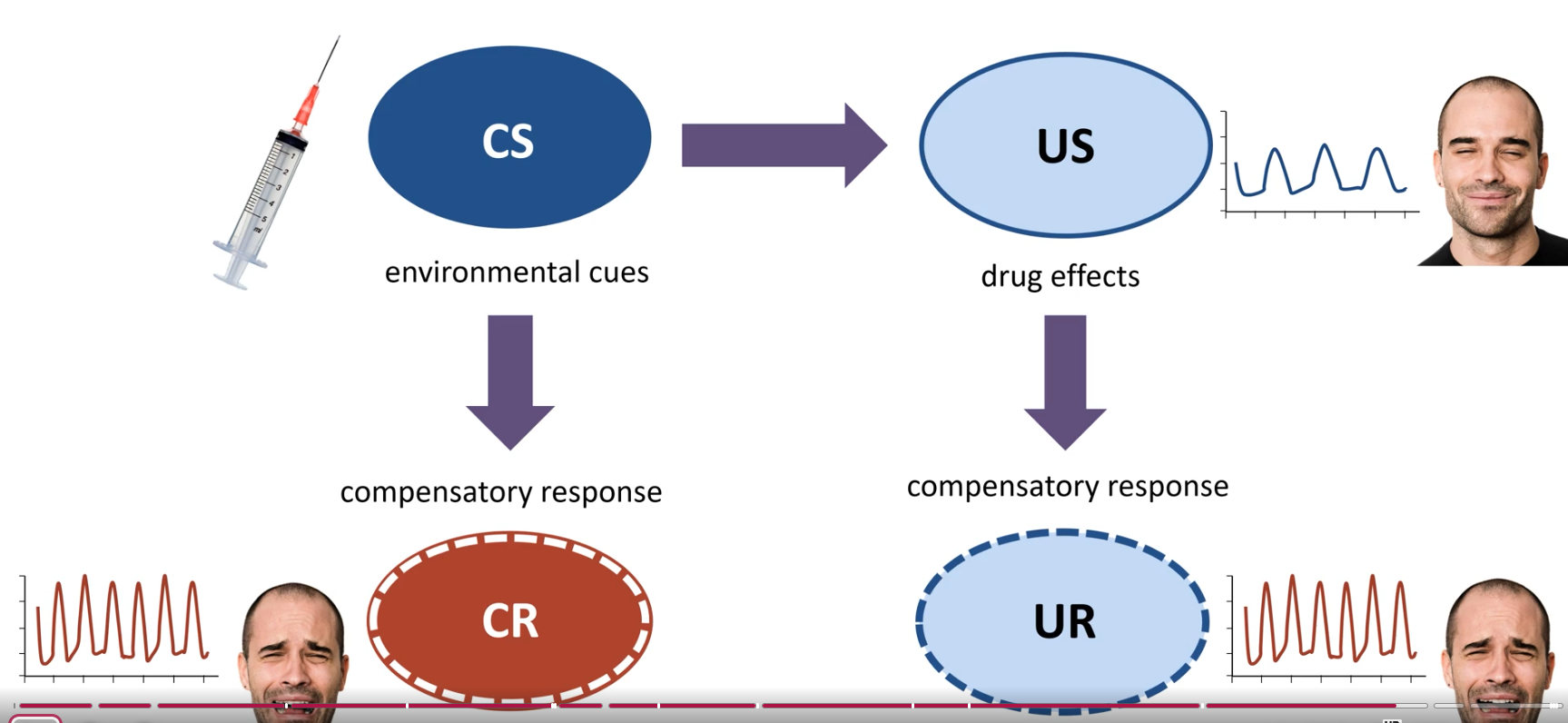
drug withdrawal/prepatory responses
the body prepares the person for the administration of the drug (CR), which comes after exposure to environmental cues that the drug is usually administered in (CS)
latent learning
learning occurs even when there are minimal changes in performance
orienting response
automatic shift of attention toward a stimulus
Pavlov
Reflexive responses associated w/ cues
Watson
Interaction of environment and associated effects
Skinner
Prediction and control of behaviour
psychological orientation is focused on measurement of ________ behaviour rather than ________ processes
observable, internal
Non associative learning
info about one external stimulus
types of non associative learning
Habituation
sensitization
habituation
decrease in behavioural response to a repeated stimulus
e.g. you move to a big city from the country and eventually get used to the loud sounds
sensitization
increase in behavioural response to a repeated stimulus
e.g. watching a scary movie and someone suddenly pokes you
associative learning
how 2 or more pieces of info are related
types of associative learning
classical conditioning
operant conditioning
classical conditioning
learn that 2 stimuli go together
e.g. smell of cookies w/ cookies
operant conditioning
learning that a behaviour leads to a particular outcome
e.g. using a vending machine leads to getting a snack
long-term potentiation (LTP)
the strengthening of synaptic connections b/w neurons
learning allows for _______
homeostasis
is conditioning explicit or implicit?
it can be both
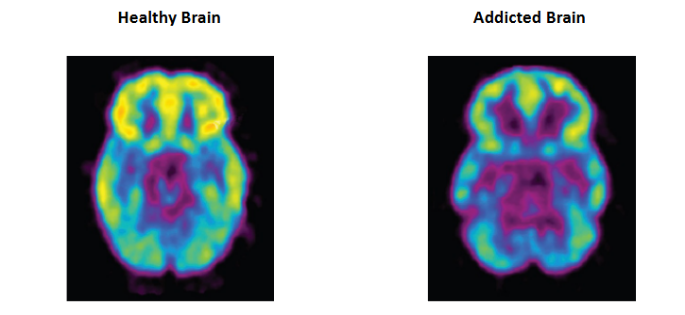
what are the differences b/w a healthy brain and addicted brain?
addicted brain has less impulse control
addicted brain responds to the drug and cues associated w/ the drug


explain this image
cocaine addict has a certain part of the brain light up bc they are getting excited due to the cues receiving cocaine

explain this picture
receiving the drug in the same environment leads to lower mortality rates than receiving the drug in a different environment or receiving the drug for the first time

cues illicit a real _________ response
physiological
CC generates ______ responses
CC establishes preferences AND _______
CC underlies various _____________ conditions
Pairing the US and CS is NOT sufficient for _____________ to occur
multiple
aversions
psychological
conditioning