Lecture 12 Monochromatic Aberrations part 2
 Call Kai
 Learn
Learn Practice Test
 Spaced Repetition
 Match
Match Flashcards
 Knowt Play
1/22

There's no tags or description
Looks like no tags are added yet.
Name | Mastery | Learn | Test | Matching | Spaced | Call with Kai | Chat |
|---|
No analytics yet
Send a link to your students to track their progress
23 Terms
what factors do aberrations in the normal eye depend on?
-Individual variability
-Pupil size
-Age
-Accommodation
-Retinal eccentricity
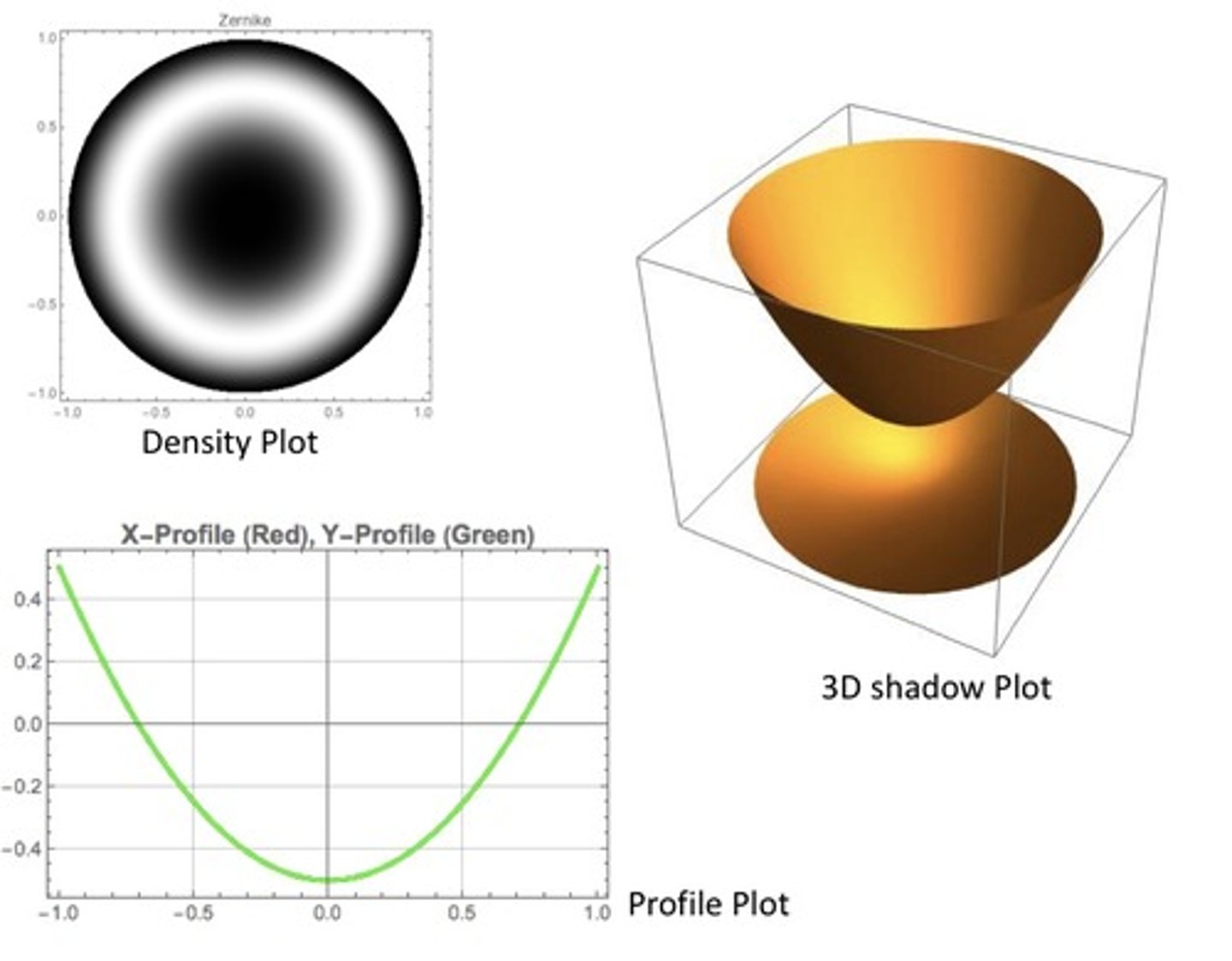
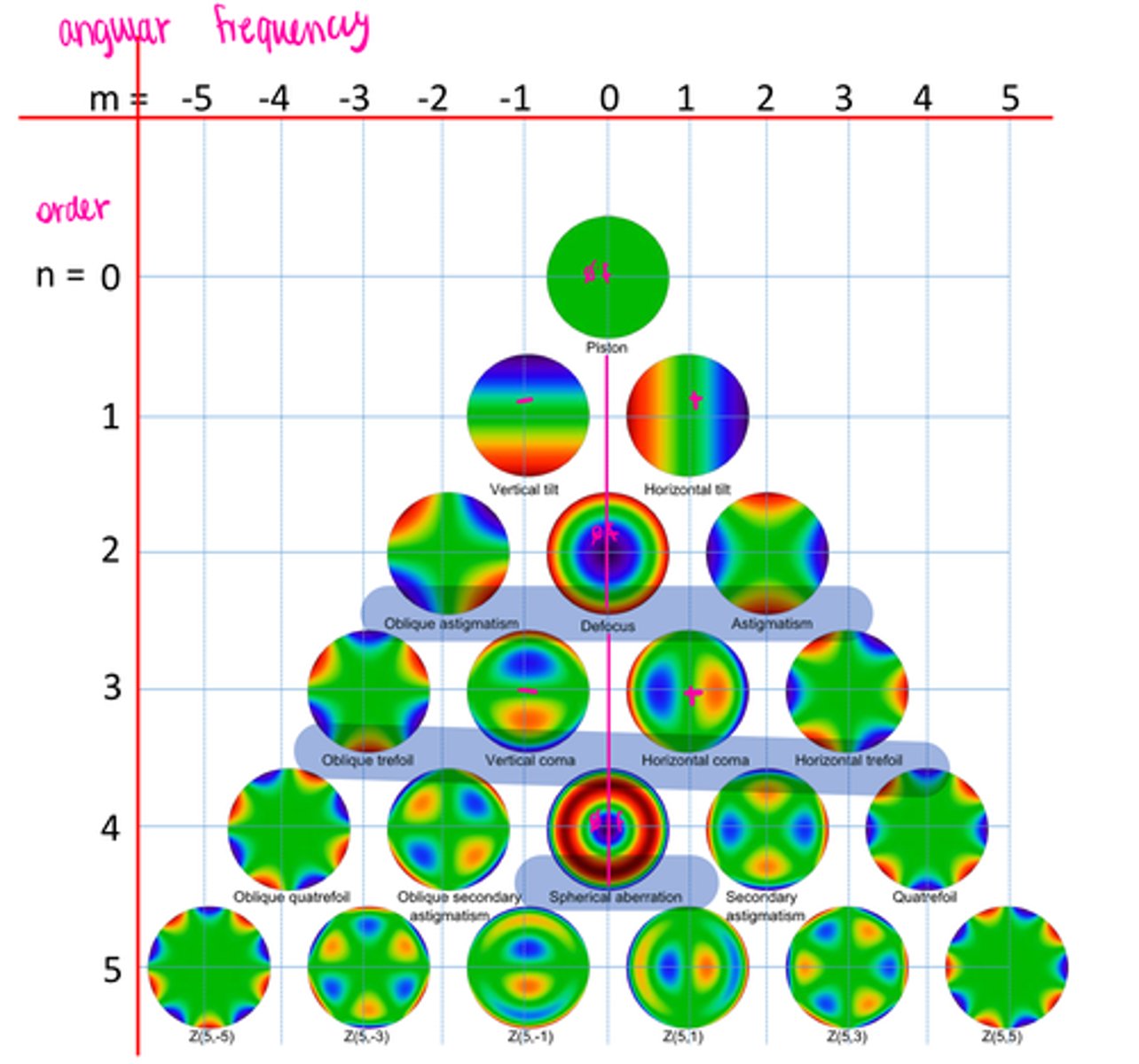
Defocus aberration
a lower order aberration
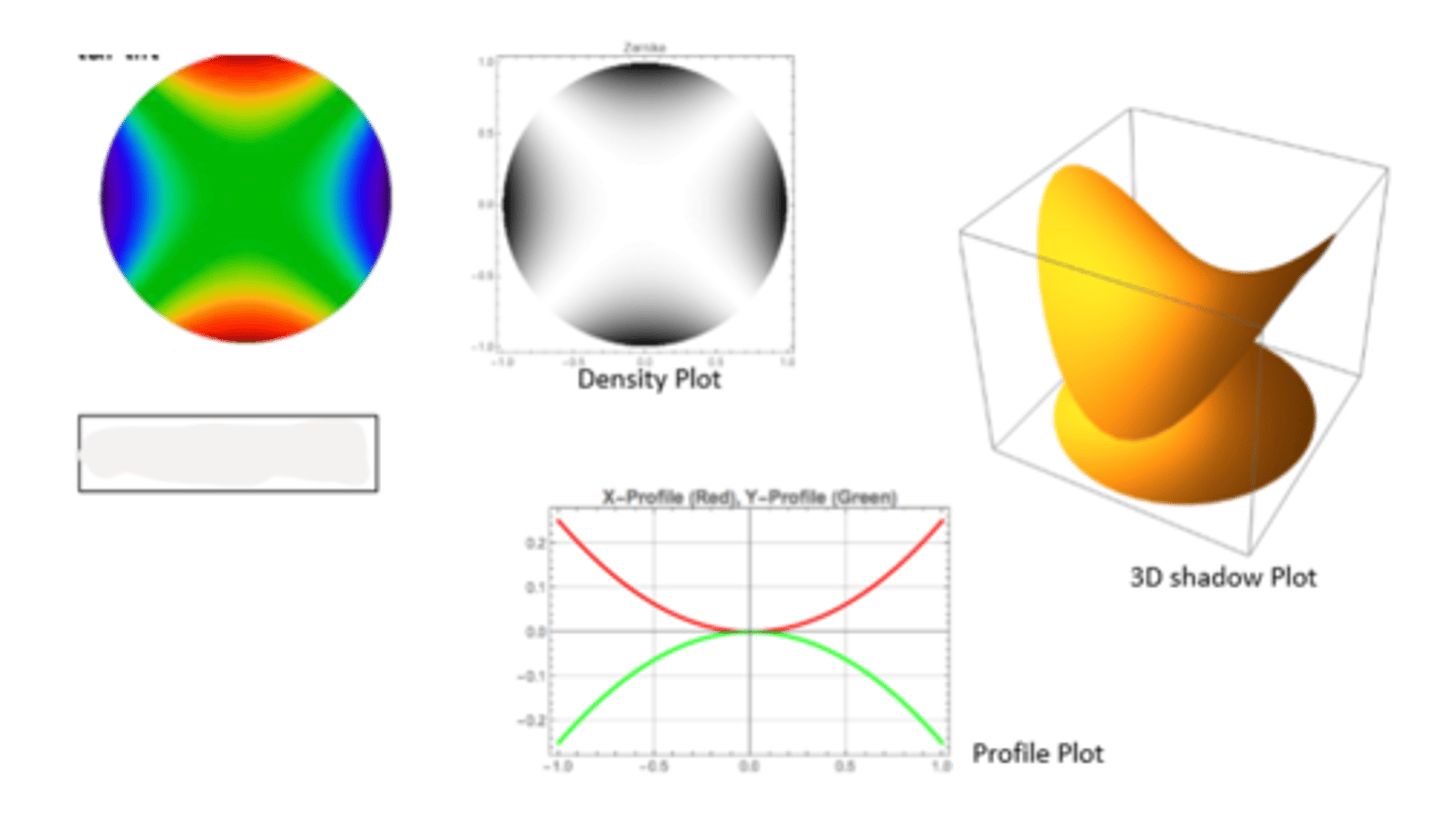
Astigmatism aberration
a lower order aberration
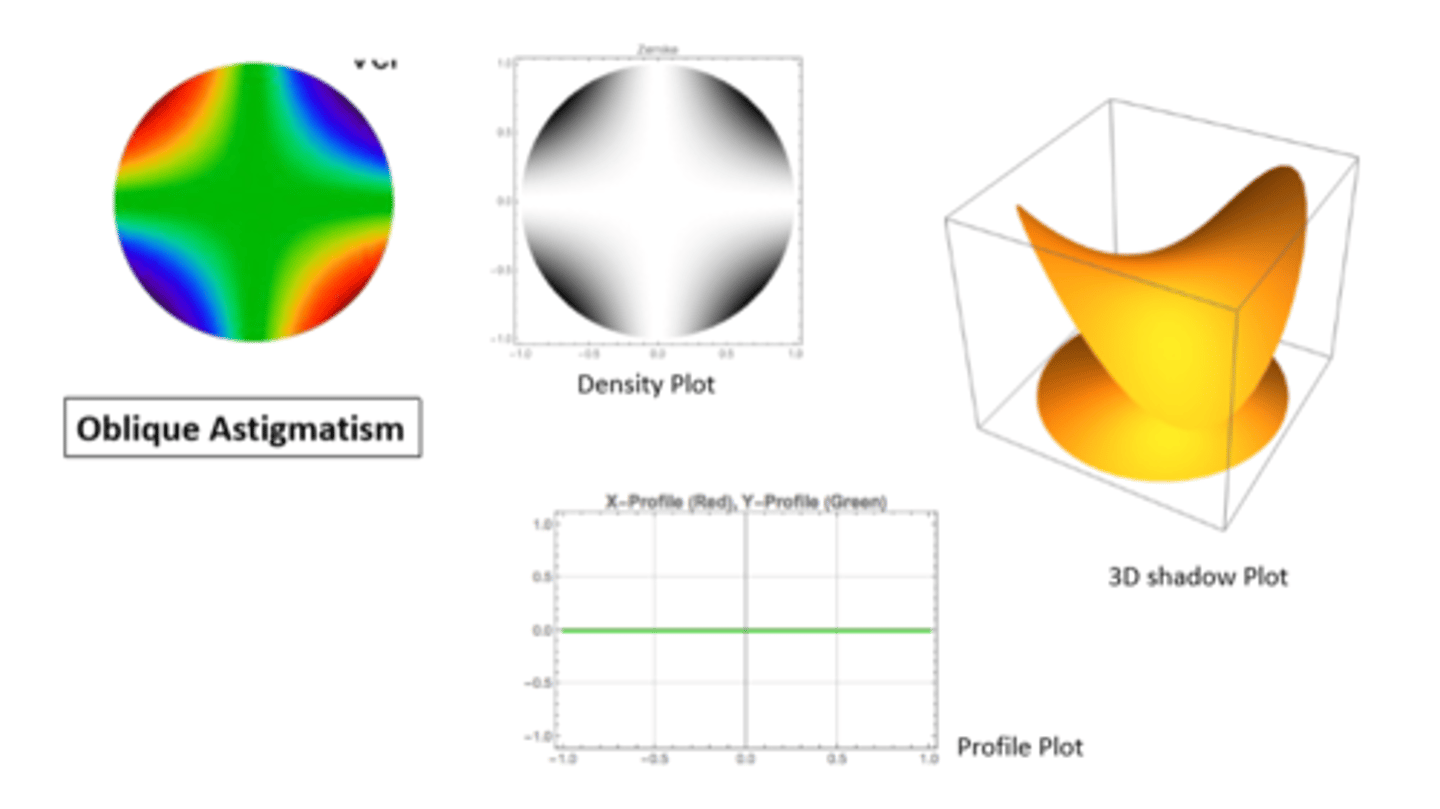
oblique astigmatism
a form of astigmatism
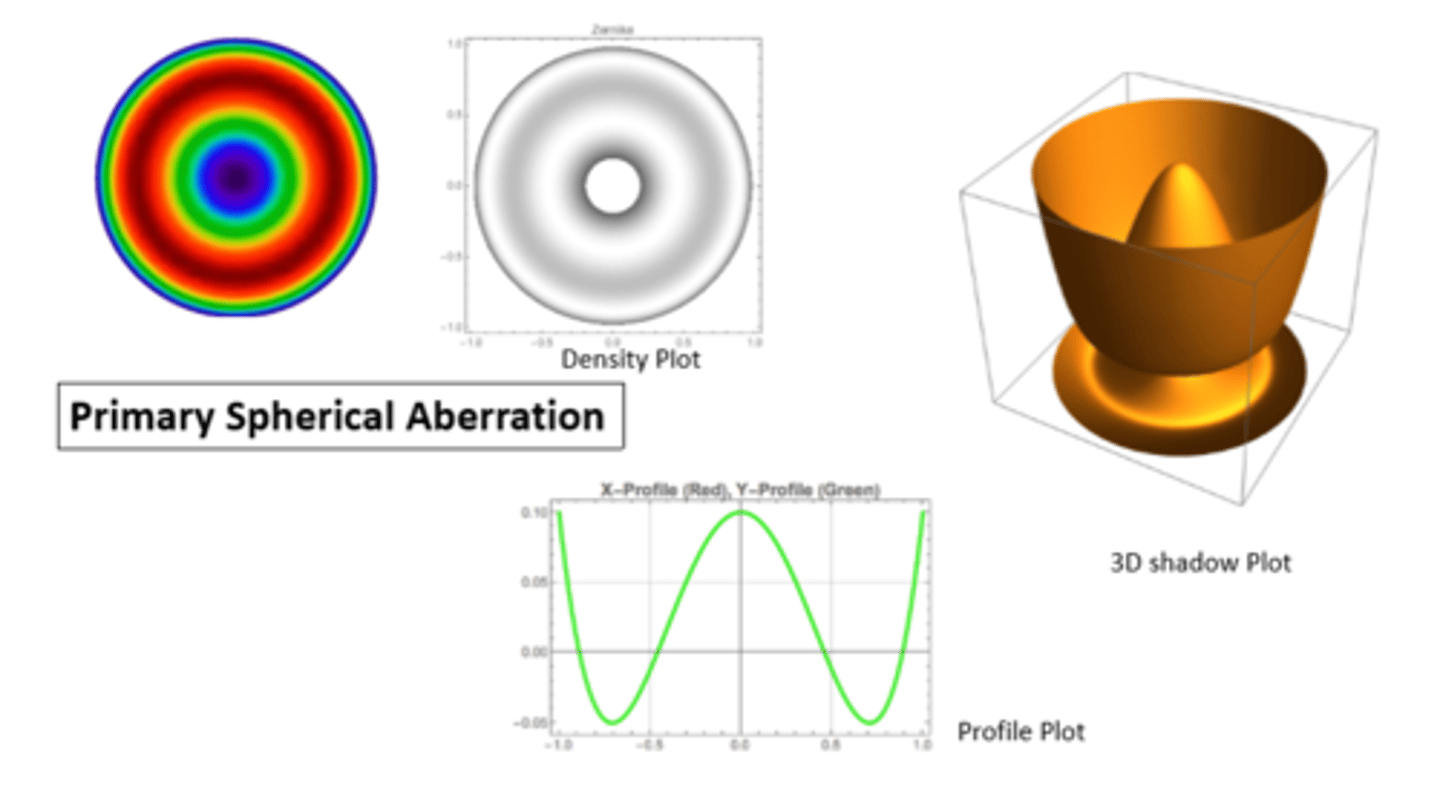
primary spherical aberration
a higher order aberration
horizontal coma
a higher order aberration
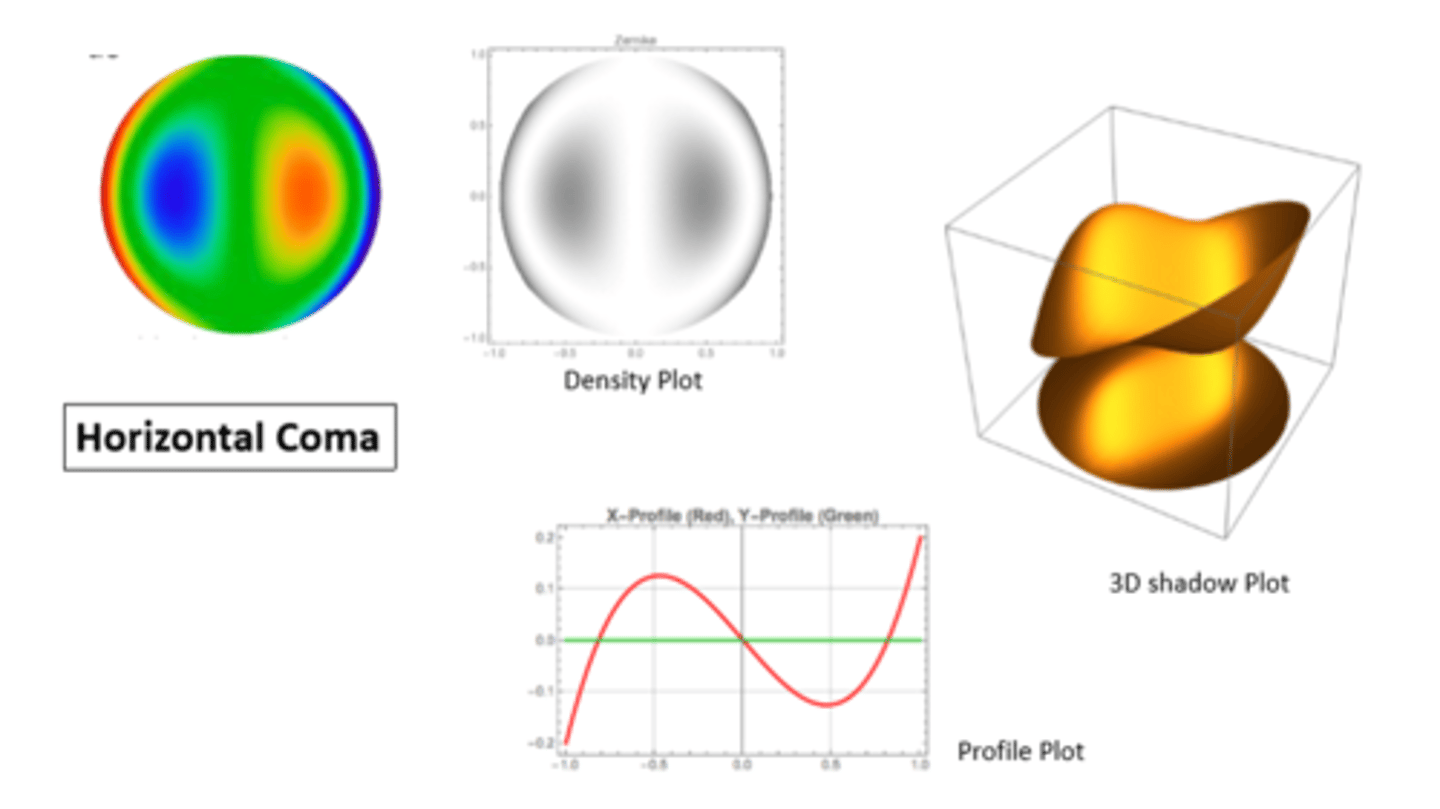
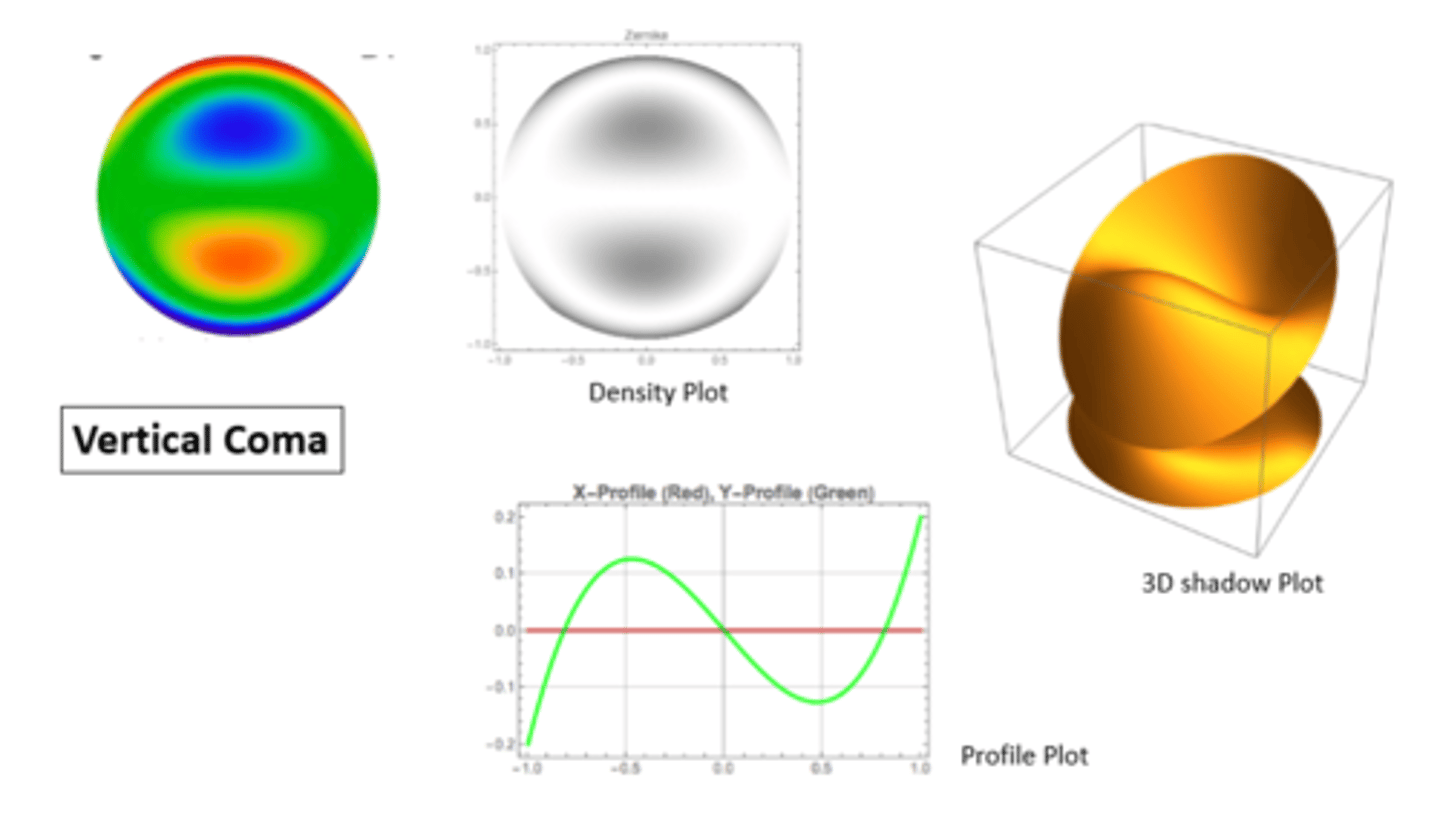
vertical coma
a higher order aberration
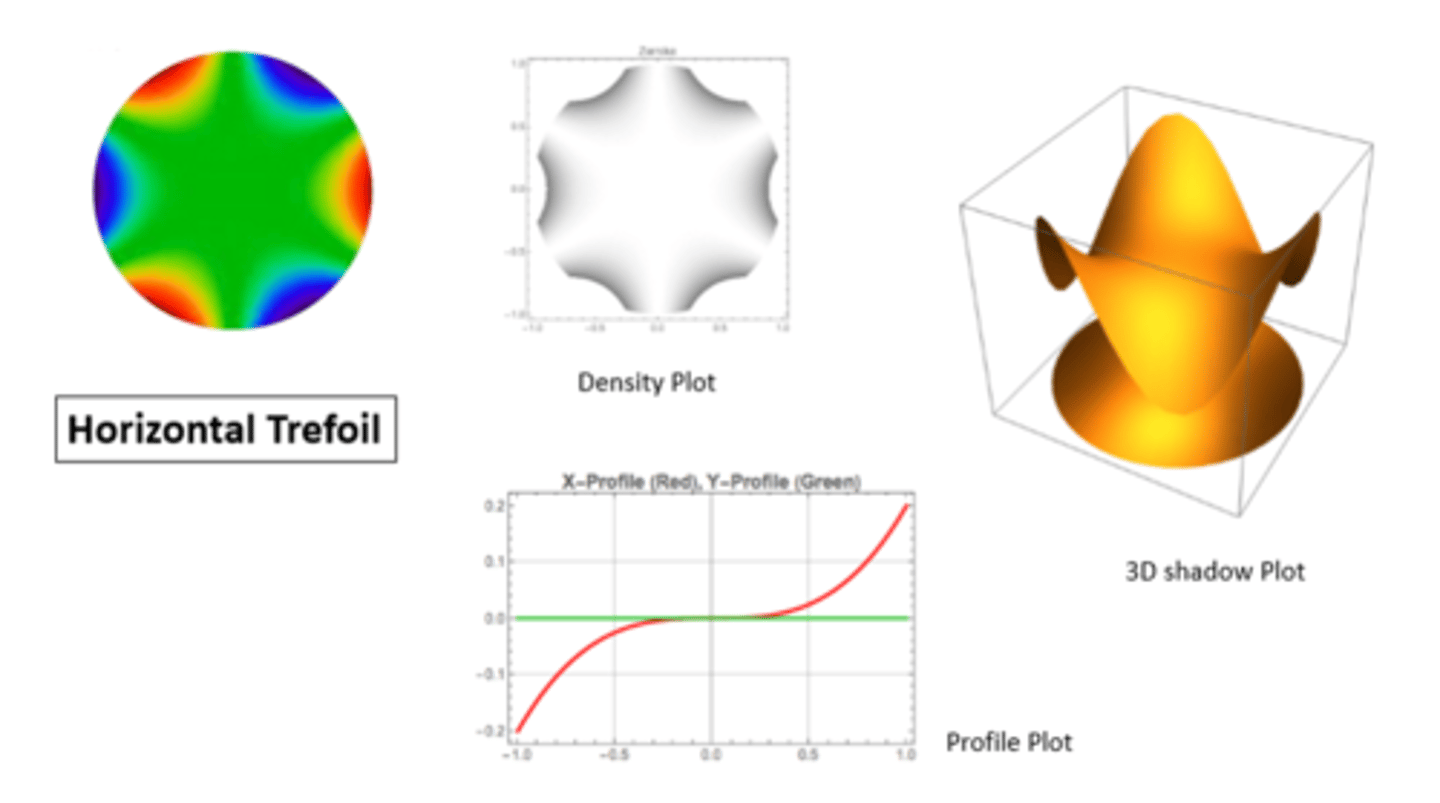
Horizontal trefoil
a higher order aberration
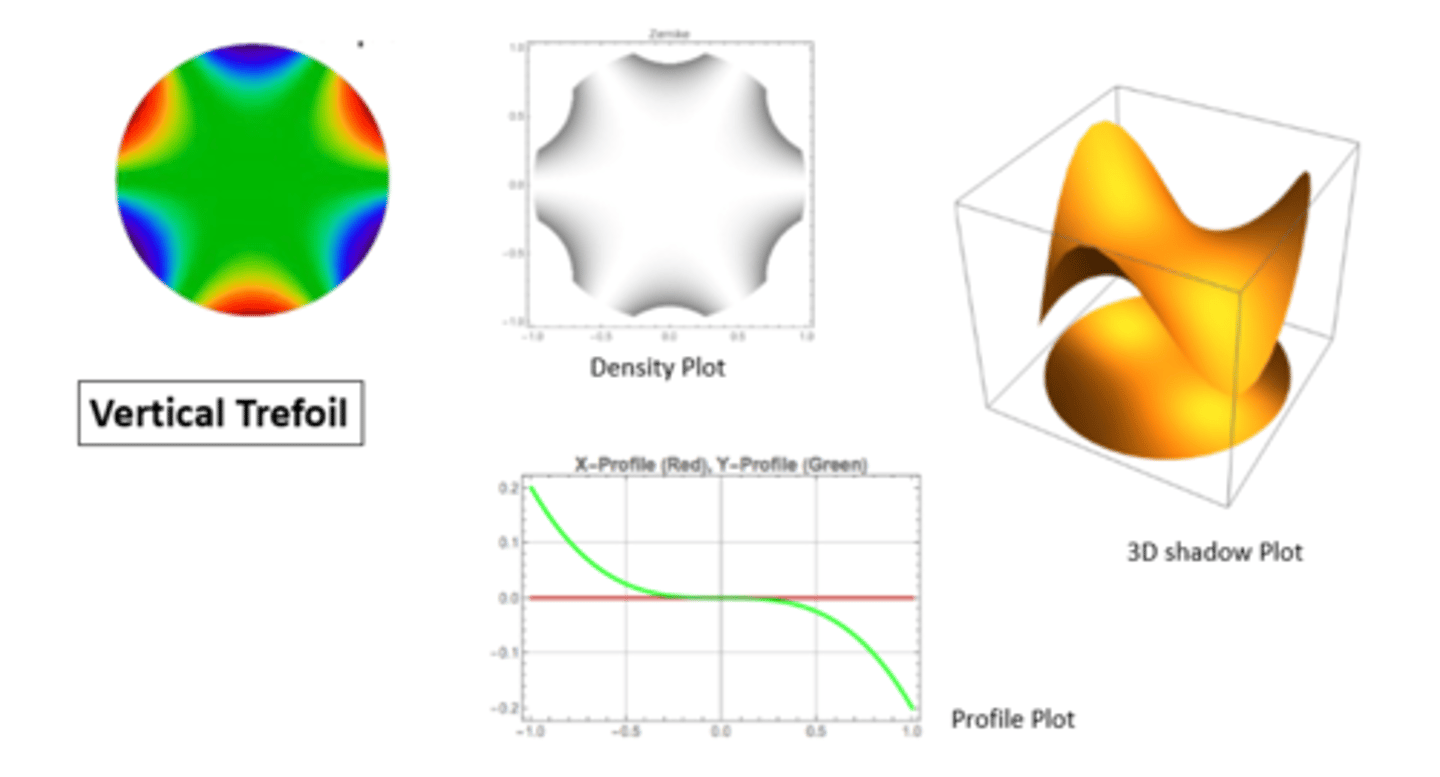
Vertical Trefoil
a higher order aberration
Zernike representation
wavefront is reconstructed by computation method using Zernike polynomial at the pupil plane.
Zn^m
n- radial order (subscript)
m - angular frequency (superscript)
Z2^0 = Defocus
about 92% of total aberrations is contributed by
defocus and astigmatism
Of the higher order aberrations, which is the significant contributer?
Primary Spherical aberration
Mirror symmetry in the aberrations between two eyes
high degree of correlation between aberrations in left and right eyes suggests that some form of symmetry exists between the wave aberrations of each eye in an individual.
Sources of aberrations in the eye
-Corneal aberrations measured form the anterior cornea in a topographer
-Ocular aberrations are measured for the entire eye using Aberrometers
-Internal aberrations is posterior corneal aberration plus crystalline lens optics
The aberrations of the internal optics =
Whole eye aberrations - Corneal aberrations
Where is the magnitude of aberrations larger?
Larger in both the cornea and the internal optics than in the whole eye.
-This indicates an active role of the lens in partially reducing the aberrations produced by the cornea
what does the magnitude of several aberration terms being similar for two components but tending to have opposite signs indicate?
It indicates that the internal optics may play a significant role in compensating for the corneal aberrations in normal young eyes.
decrease in retinal image quality with age is due to
an increase in ocular aberrations.
-Corneal aberration are too small to account for the complete reduction of retinal image quality observed with age. The main contributor seems to be the continuous changes in the crystalline lens with age.
what aspects of the lens change with age affecting the retinal image quality?
As the lens grows, its dimensions, surface curvatures, and refractive index change, altering the lens aberrations and thereby affecting the retinal image quality.
Higher order aberrations with age is statistically significant.
Part of the increase of optical aberrations with age was due to the disruption of the compensation of corneal and internal optics aberrations.
Spherical aberrations of the crystalline lens shifts towards
more positive values with age.
why do aberrations change with accommodation?
The shape of the crystalline lens changes
-Among all the other ocular aberrations, the spherical aberrations shows the greatest change with accommodation - the change being always negative.
-Coma and Astigmatism also changed with accommodation, but the direction of change was variable.
Who has higher corneal spherical aberration?
hyperopic patients have higher corneal spherical aberration
-Corneal asphericity tends to be less negative in hyperopic eyes
-Total spherical aberration is significantly higher in hyperopic eyes, although internal spherical aberration is not significantly different between both groups.