NU 236 Care of the Adult II: Biliary Disorders
 Call Kai
 Learn
 Practice Test
 Spaced Repetition
 Match
 Flashcards
 Knowt Play
1/72

There's no tags or description
Looks like no tags are added yet.
73 Terms
Biliary Tract
the organs and ducts that participate in the secretion, storage, and delivery of bile to the duodenum
What organs are part of the biliary tract?
liver, gallbladder, bile ducts, and duodenum, working closely with the pancreas
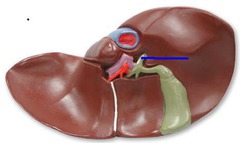
Common Bile Duct
carries bile from the liver and gallbladder to the duodenum
Cholecystitis
acute or chronic inflammation of the gallbladder, occurring when there is an obstruction (such as edema or gallstones)
Trapped bile = _______ to itself!
toxic
Bile, poor circulation, edema, and distention may lead to complications such as?
Necrosis/gangrene of the gallbladder
Perforation
Peritonitis
Causes: Cholecystitis
Cholelithiasis
Estrogen therapy
E-coli infection
Obesity
Immobility
Trauma
Long-term fasting
Prolonged dehydration

Cholelithiasis
gallstones in the gallbladder
Risks: Gallbladder Disease
Female
Fat
Fertile
Fair
Forty
Assessment: Cholelithiasis
Indigestion or chest pain after eating fried or fatty foods
Episodic colicky pain (epigastric or right upper quadrant) that radiates to back/right shoulder
Belching
N/V
Signs of biliary obstruction
Jaundice
Icterus
Pruritis
Dark amber urine
Clay colored stools
Steatorrhea
Icterus
yellow sclera
Post-hepatic obstructive jaundice
obstruction of the bile ducts (e.g. by a gallstone)
Diagnostics: Labs
Elevated AST
Elevated ALT
Elevated alkaline phosphatase
Elevated Serum Amylase/Lipase (specific to pancreas)
Elevated Bilirubin
Elevated WBC?
Gallbladder Diagnostics: Tests
Ultrasound
CT scan
HIDA scan
MRCP
ERCP
HIDA Scan
more accurate for gallbladder; IV radioactive tracer injected and pictures over 1-4 hrs
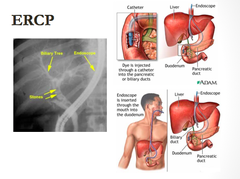
ERCP
invasive test that visualizes the esophagus, requires numbing of the throat like a bronchoscopy
Concerns: Cholecystitis
Pain (acute/chronic)
Impaired nutrition
Infection risk
Treatment: Cholecystitis with Minimal Symptoms
Low fat diet
Medications
Extracorporeal shock wave lithotripsy (ESWL)
Treatment: Cholecystitis with Acute Symptoms
Endoscopic sphincterotomy (ERCP)
Cholecystectomy (laparoscopic or open)
Foods to Avoid: Cholecystitis or Cholelithiasis
High-cholesterol foods (dairy products!)
Gas-forming veggies (broccoli, cucumbers, beans, cabbage, cauliflower, onions, etc.)
Fried, fatty foods
Pastries
Nuts
Gravies
Chocolate
Egg yolks
Avocado
Lap Cholecystectomy (Lap Chole)
removal of gallbladder through 2-4 stab sites that is done outpatient and is very common with great prognosis
Post-op Interventions: Lap Chole
Routine post-op care
Assess for and explain shoulder pain (3-4L of carbon dioxide inflates the abdomen; encourage early ambulation)
Can resume activities/work after 1 week
Discharge teaching for low-fat diet as tolerated for 6 months, then reintroduce fats
Open Cholecystectomy
removal of the gallbladder through an abdominal incision, used when the gallbladder is too large or disease is to extensive for lap chole
Post-Op Interventions: Open Cholecystectomy
Inpatient stay 2-5 days
Routine post-op care
Vitals
Labs
Turn, cough, deep breathe
Early ambulation
Pulmonary hygiene d/t high risk atelectasis
Out of bed evening of surgery
Observe for pain, N/V, bleeding, infection
Advance diet once gas is passed
Care for and teach about T-tube
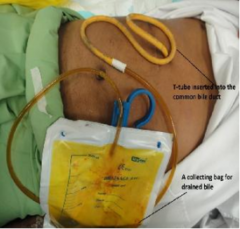
T-Tube
tube placed in the bile duct for drainage into a small pouch (bile bag) on the outside of the body
Interventions: T-Tube
Keep the T-tube bile collection bag lower than the level of the gallbladder
Inspect for redness, swelling, and leaks
Do not irrigate, aspirate, or clamp without MD order
Monitor amount, color, consistency, and odor of drainage
Clamp when ordered to aid fat digestion
If discharged, provide teaching about cleaning daily
Bile
breaks down fat and makes stool brown
Alcoholism
A disease in which a person has a physical or psychological dependence on drinks that contain alcohol
Symptoms/Effects: Alcoholism
Memory and mood changes
HTN/arrythmias
Esophageal varices
Pancreatitis
Cirrhosis
Hepatitis
Breathing difficulties
Stomach ulcers
Gastritis
Vomiting
Alcohol Withdrawal
occurs due to suppression of GABA with chronic alcohol use, creating dependence, so withdrawal leads to CNS excitement peaking around 24-36 hours
Risky Drinking
Men: >4 drinks/occasion or >14/week
Women: >3 drinks/occasion or >7/week
CAGE
Cut down
Annoyed
Guilty
Eye opener
Alcohol Withdrawal: Symptoms
Hyperventilation
Hyperthermia
Hypertension
Tachycardia
Hyperreflexia
Restlessness
Mydriasis
Seizures
Diaphoresis
Anxiety
Fear
Paranoia
Hallucination
Confusion
N/V/D
Cramps
CIWA-AR Scale
Clinical Institute Withdrawal Assessment Scale for ETOH; used to assess need for medication and appropriate care
What symptoms are included on the CIWA-AR?
N/V
Tremors
Sweats
Anxiety
Agitation
H/A
Orientation
Hallucinations
Delirium Tremens (DTs)
a rare and potentially fatal complication of alcohol withdrawal, usually 2-4 days after last drink
Meds: Acute Alcohol Withdrawal
Benzodiazepines
Phenobarbital
Assessment: Liver Disease
Ascites
Dullness over the liver
Peripheral edema
Weight gain
Nausea
Anorexia
Gynecomastia
Caput medusae
Spider angiomata
Dyspnea
Pleural effusions
Orthostatic hypotension
Jaundice
Liver Damage
Portal hypertension
Labs (elevated LFTs)
Clotting disorders
Hepatic encephalopathy
Portal Hypertension
elevation of blood pressure within the portal venous system, as the liver becomes hard and resistant to blood flow, so it backs up in the gastric/sesophageal veins, spleen, and abdomen, leading to varices, splenomegaly, thrombocytopenia, and ascites
A huge risk with portal HTN is..
esophageal varices, as there is a risk for bleeding
Esophageal Varices
enlarged, thin-walled veins in the esophagus d/t portal HTN, presents with no symptoms until they bleed/rupture, and then will be vomiting blood
Treatment: Esophageal Varices
Nonselective beta-blockers to lower BP
Variceal ligation
Shunts/liver transplants
NO NG tubes
Ascites
abnormal accumulation of fluid in the abdomen
Treatment: Ascites
Paracentesis
Sodium restriction
Furosemide/Spironolactone
Abstinence from alcohol
Hepatic Encephalopathy
ammonia builds up in the blood due to liver failure, leading to neurotoxic effects and temporary/permanent brain damage
Symptoms: Hepatic Encephalopathy
Confusion
Impaired attention
Tremor
Somnolence
Agitation
Coma
Treatment: Hepatic Encephalopathy
Lactulose
Pancreas
regulates the secretion of insulin/glucagon for blood glucose and is involved in digestion
Acute Pancreatitis
inflammation of the pancreas that is serious and potentially life-threatening due to risk for pulmonary failure and hypercoagulability; risk for recurrence
What is acute pancreatitis associated with?
activation of pancreatic enzymesi n the pacreas rather than the duodenum, causing autodigestion of the pancreas
Causes: Pancreatitis
Alcohol use/abuse
Biliary tract disease
Gallstones
Assessment: Acute Pancreatitis
Abdominal pain (ache, burn, stabbing) in the mid-epigastric region or LUQ and is aggravated by fatty foods/alcohol
N/V
Weight loss
Absent/decreased bowel sounds
Hypotension
Tachycardia
Elevated amylase and lipase
Enlarged pancreas on CT
Positive fecal fat test
Concerns: Acute Pancreatitis
Pain
Impaired nutrition
Fluid volume deficit
Ineffective breathing pattern
Interventions: Acute Pancreatitis
Strict NPO status
NG to decompression
Hydration with IVF/electrolytes
Nutrition = huge concern; start with TPN on day 7
Bedrest
Pain management
H2 blockers/PPIs
Once ready to eat (check amylase/lipase), small, frequent, high-carb, high-protein, low-fat meals
Avoid alcohol
Teach signs of biliary obstruction
Assessment: Chronic Pancreatitis
Alcohol-related continuous, burning, gnawing abdominal pain with exacerbations/remissions
LUQ abdominal mass
Jaundice
Loss of exocrine function (steatorrhea, foul-smelling stools)
Weight loss d/t fat malabsorption
Signs of diabetes (3 Ps)
Concerns: Chronic Pancreatitis
Pain
Impaired nutrition
Ineffective coping
Anxiety
Interventions: Chronic Pancreatitis
Manage pain
Strict NPO during exacerbations with TPN/electrolyte replacement
H2 blockers/PPIs
Small, frequent, low-fat, high-protein, high-carb meals
No alcohol, fatty meals, or caffeine
Administer pancreatic enzymes
Support glucose management/control
Acute vs. Chronic Pancreatitis
Acute is severe and sudden, with many different causes; chronic sees recurrent episodes and long-term inflammation
Evaluation: Pancreatitis
Adequate pain control
Lipase/amylase WDL
No signs/symptoms of complications of immobility
Hydration
Tolerates meals
Stable weight
Pancreatic Cancer
malignant tumor of the pancreas, very rare and is very deadly, often rising from exocrine cells and spreads quickly
Assessment: Pancreatic Cancer
Often asymptomatic
Vague back or abdominal pain
Jaundice (late sign, common first symptom)
Anorexia
Weight loss
Ascites
DVT
Tests for Pancreatic Cancer
No specific blood test
Elevated liver enzymes
Elevated CEA
CT for cyst vs solid tumor
Biopsy for definitive diagnosis
Treatment: Pancreatic Cancer
PALLIATIVE, not curative, to increase QOL and prevent spread
Opioid analgesics
Chemotherapy
Radiation
Surgical Management: Pancreatic Cancer
aggressive surgery that can be curative in clients with small tumors confined to the head of the pancreas
Radical Pancreaticoduodenectomy (Whipple)
resection of the head of the pancreas, duodenum, portion of jejunum, partial or total gastrectomy, gallbladder removal, and possible the spleen with anastomosis of pancreatic duct, common bile duct, and stomach to the jejunum
Post-Op Whipple: Interventions
Routine post-op care
Monitor drains
Monitor for s/s of peritonitis
Monitor for fluid/electrolyte/blood loss
Glucose monitoring
Biliary Drainage of the Common Bile Duct
palliative surgery for pancreatic cancer that can be external or internal; monitor/change dressing PRN
Concerns: Pancreatic Cancer
Anticipatory grieving d/t poor prognosis
Pain
Ineffective coping
Impaired nutrition
Fear
Anxiety
Activity intolerance
Teaching: Pancreatic Cancer
Get affairs in order
Physical support
Emotional support Big risk for DVT
Pancreatitis is _______ painful, and not everyone with it is an alcohol abuser.
VERY
Pancreatic cancer is __________ and has ________ prognosis.
aggressive, poor