electricity 2
 Call Kai
 Learn
 Practice Test
 Spaced Repetition
 Match
 Flashcards
 Knowt Play
1/32

There's no tags or description
Looks like no tags are added yet.
33 Terms
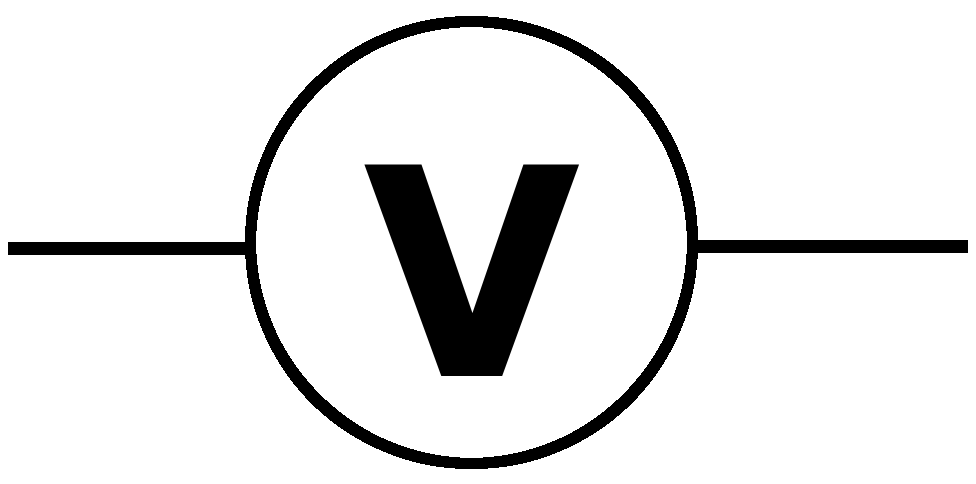
voltmeter
measures the potential difference across a resistor. high resistance device connected in parallel to the circuit element. does not draw current from the circuit.
ammeter
measures the current that flows through a resistor. it is a low resistance device that is placed in series with a resistor in a circuit

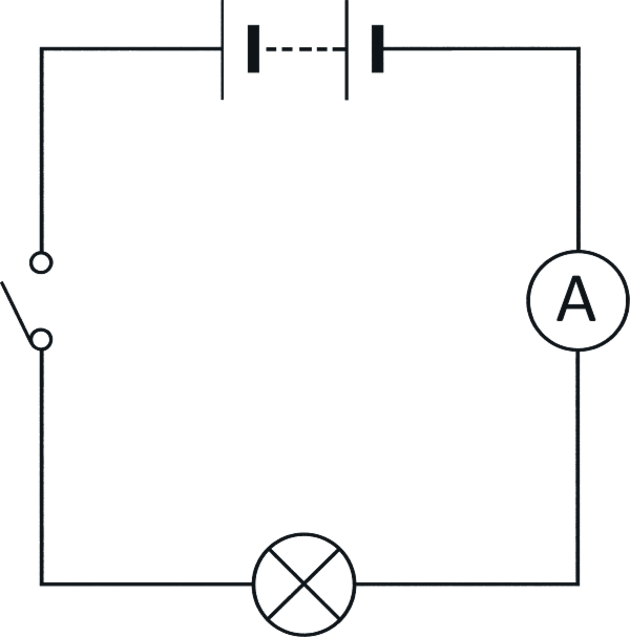
series circuit
an electrical circuit in which all components are connected end-to-end in a single continuous loop, creating only one pathway for electric current to flow.
parallel circuit
an electrical circuit with multiple paths or branches for electric current to flow

electromotive force (emf)
voltage supplied by the battery or power source.
what does voltage refer to?
supply voltage, voltage drop, voltage etc. → general
potential difference
change in voltage across a resistor in the circuit
kirchhoff’s current law
the sum of currents entering a junction equals the sum of the currents leaving the junction.
kirchhoff’s voltage law
the sum of potential difference from sources is equal to the sum of the potential difference used in the circuit.
thevenin’s theorem
all circuits can be reduced to one source of emf that is equivalent to all the sources, and one load that is equivalent to all the loads.
series circuits voltage
each coulomb of electrons in the circuit are given a certain amount of electrical energy by the voltage source (VT). each circuit component uses some of this PE. when the electrons return to the power source they have no more PE left.
parallel circuits voltage
each coulomb of electrons in the circuit are given a certain amount of EPE by the voltage source (VT). each branch uses ALL of this PE. when the electrons return the power source, they have no more PE left.
combination circuits
have series and parallel circuit components
electrical distribution
most electricity energy in perth is generated in collie and muja power stations. once electricity is generated by the power stations, the AC voltage is stepped up (increased) by transformers. the high voltage electrical power is then transmitted to Perth along the high voltage power lines. Once in Perth, the electrical power is stepped down to lower voltages by transformers. Transformers on street power poles reduce voltage to 240V.
why are low currents used to transmit electricity over long distances rather than high currents?
Low currents are used for transmitting electricity over long distances because power is lost as heat in the transmission cables. The power loss is given by Ploss=I2R, so reducing the current greatly reduces the energy lost. Since the total power transferred is P=VI, the same amount of power can be transmitted using a higher voltage and a lower current. Therefore, electricity is transmitted at very high voltages so that the current is low, minimising power losses and improving efficiency.
street circuit
three live (active) wires at 11 kV and one neutral wire at 0V.
household circuit
in australia, the electricity supplied to houses is 240 V, 50 Hz, single phase. the electrical cable comes from the power liens to the main connection box which contains a fuse. the cable then goes to the fuse box or switchboard. it is then distributed to the home.
three types of connection in household circuits
active (brown/red), neutral (blue/black), earth (green/yellow)
active connection
also called live or hot. brings 240 volt AC at 50 hz to the home. has the main switch and separate fuses for light/power and other main circuits.
neutral connection
completes the circuit from the power station and is held at 0V. the neutral wire is connected to a bar called the neutral bar, which is connected back to the earth via a metal stake. also earthed at the substation.
earth connection
safety device. it is connected to the metal casing of electrical appliances and to the earth to produce a short circuit in case of faulty equipment (NB, not 100% safe). no earth connection is used in equipment which has plastic (non-conductor) casing → it is double insulated.
double insulation → no earth
some equipment and appliances are not connected to the earth wire; only have active and neutral connections. they have two layers of insulation: the insulation around the live wire and the non-conductive plastic covering the device.
what does a fuse or circuit breaker do?
break a circuit when the current reaches a certain limit. 8A for light circuits and 16A for power circuits
how does a fuse break a circuit?
melting
how does a circuit breaker break a circuit?
flicking a magnetic switch
can a fuse or circuit breaker be reused?
fuse cannot be reused but circuit breakers can be reset
do fuses or circuit breakers protect lives?
no but protect electrical equipment
earth leakage system
also known as residual current device (RCD). disconnects a circuit whenever the electric current in the active and neutral are different. an imbalance may indicate current lekage through the body of a person who is grounded accidentally. RCDs disconnect quickly enough to prevent injury and death (less than 0.02 seconds).
explain why fuses are put on the active connection of a power point rather than the neutral connection
Fuses are not put on the neutral wire because burning out a fuse on neutral wire does not necessarily isolate the active wire.
It would still be possible for current to flow through the active wire and for a person to be electrocuted.
what are the names and functions of the three main wires used in a house wiring circuit?
Active wire – supplies the power and is set at high absolute potential. (+/- 340 V = 240 V RMS = average equivalent to a DC circuit)
Neutral wire – completes the circuit from the power station. Set at zero potential so potential difference between active and neutral = 240 V
Earth wire – acts as a safety device. It is held at 0 V and diverts current to the ground if a short circuit occurs through it.
explain how a short circuit occurs.
A low resistance pathway is created between the active and the neutral (or ground) connections. This allows the current to bypass the load and results in high currents.
explain why it is more convenient to have several separate circuits in your home rather than a single circuit
Having several circuits makes it easier to identify faults once a fuse has blown or a circuit breaker has tripped.
Not all circuits need to be isolated if maintenance is being done on a certain component.
explain the similarities and differences between a circuit breaker and a fuse
Both fuses and circuit breakers break a circuit when the current reaches a certain limit.
The fuse does this by melting and the circuit breaker does this by flicking a magnetic switch.
A fuse cannot be reused but a circuit breakers switch can be reset.
Both fuses and circuit breakers do not protect life but protect electrical equipment.