ALFS Learning Objectives
 Call Kai
 Learn
 Practice Test
 Spaced Repetition
 Match
 Flashcards
 Knowt Play
1/252

There's no tags or description
Looks like no tags are added yet.
253 Terms
Explain what VPH is
Veterinary public health is the sum of all contributions to the physical, mental, and social well-being of humans through an understanding and application of veterinary science
Outline the farm to fork concept
The various processes involved in the production of food for human consumption from the agricultural stage to consumption. Important points: traceability, hazards, step management
Outline the One Health approach
a collaborative, multisectoral, and transdisciplinary approach - working at local, national, and global levels - to achieve optimal health and well-being outcomes, recognizing the interconnections between people, animals, plants, and their shared environment
Explain the role of veterinarians in the food chain
On the Farm
Preventative medicine
Responsible use of medicines
residue control
animal welfare
emergency slaughter
notifiable disease recognition
animal identification
At the livestock Market
Animal welfare
NDS control
ID control
At slaughterhouses and cutting plants
Inspection duties
animal welfare
hygiene
nds
audits
enforcement
technical managers
Every animal inspected before slaughter
Import and Export
List the main authorities in charge of Animal Health, Welfare, and Food Safety worldwide at the EU level
The European commission, the European food safety authority, and the European centre of disease prevention and control
List the main authorities in charge of Animal Health, Welfare, and Food Safety worldwide at the UK level
Food standards agency, local authorities, UK health security agency, the department for environment, food, and rural affairs, animal and plant health agency
The main ways by which foodborne pathogens cause adverse health effects in humans
Infections: the microorganism itself is ingested with the food
Intoxications: pathogenic bacteria grow in the food and release toxins into the food that is ingested
Toxicoinfections: Ingesting bacteria which are noninvasive and cause illness by producing toxins while multiplying in the GI tract
Identify the main foodborne pathogens
Campylobacter, listeria monocytogenes, E.coli, norovirus, salmonella
Describe the risk associated with campylobacter
Present in chicken and unpasteurized milk/cheese. Very sensitive to temperature. The infectious dose is very low and can cause as little as diarrhea or severe illness.
Describe the risk associated with listeria monocytogenes
Resistant to acidity, low oxygen, low temperatures, and lasts for long periods in environment (very resilient). Often seen with ready-to-eat refrigerated foods. Mostly affects the immunocompromised and can cause bacteremia, septicemia, meningitis, encephalitis, etc. Controlled through good hygiene throughout food chain.
Describe the risk associated with E. coli
Facultative anaerobic bacillus found in lower intestinal tract of mammals and birds. Transmitted through meat products, unpasteurized milk, or contact with infected ruminants. Low infective dose that causes mild diarrhea to haemorrhagic colitis or hemolytic uremic syndrome (BAD). Controlled through biosecurity, stocking density, control of feces, and managing diets
Identify common methods used to identify captive birds
closed leg ring/band: plastic or metal; color or alphanumeric coding; unique, permanent identification
microchip: permanent ISO-compliant identification
Wing feather tag: useful at distance; consider dislodgment and trauma
Main bird groups encountered in Veterinary practice
Psittacines, passerines, birds of prey, columbiformes, galliformes, anseriformes

What bird group is this bird from and other examples?
Psittacines: Parrots, cockatoos, macaws, parakeets

What bird group is this bird from and other examples?
Passerines: songbirds, finches, canaries, starlings

What bird group is this bird from and other examples?
Birds of prey: falcons, hawks, eagles, owls

What bird group is this bird from?
Columbiformes: pigeons and doves

What bird group is this bird from and other examples?
Galliformes: chickens, quails, pheasants, turkeys
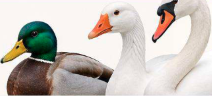
What bird group is this bird from?
Anseriformes: ducks, geese, swans
Safe transport of birds
well ventilated, secure, appropriately sized carrier covered with a familiar towel
Remove open water
Birds of prey transported in a dark, secure box and maybe a hood
DO NOT transport bird loose, overcrowd cage, too large cage
Safe handling and restraint approaches of parrots
minimize handling time and stress
use towel for secure restraint
maintain control of head and beak
Don’t compress thorax
Moniter continuously
Safe handling and restraint approaches of backyard birds
approach calmly and quietly
keep wings gently secured against body
support body and legs
avoid thoracic compression
minimize handling time
Safe handling and restraint approaches of birds of prey
approach calmly and confidently with a low voice
control feet and talons first
secure wings gently against body
support body and legs
consider using a hood
minimize handling time
Safe handling and restraint approaches of wild birds
minimal, gentle handling
secure wings and species-specific hazards
avoid thoracic compression
Parrots key husbandry
cage should permit full wing extension without touching sides
Daily supervised out-of-cage flight/exercise
multiple natural wood perches
foraging diet
regular social contact with compatible species
10-12 hours of uninterrupted rest in an isolated, quiet, dark place
Galliformes key husbandry
secure predator-proof coop and outdoor run
avoid overcrowding
roosts and nest boxes
group housing for social behavior
opportunities to scratch, peck, forage, dust-bathe, and perch
1 month quarantine for new birds
Passeriformes key husbandry
Long flight cage
highly species specific diet
Compatible conspecifics
Allow for flight, bathing, foliage, and foraging
Columbiformes key husbandry
Long aviary allowing for horizontal flight
broad perches and platforms
Balanced pigeon/dove diet
Companions
allow for flight, foraging, regular bathing, and appropriate nesting opportunities
Birds of prey key husbandry
species appropriate mews/aviaries
space for exercise/flight
species appropriate perches
Whole prey diet
Allow for frequent exercise, bathing, and training/enrichment
Waterfowl key husbandry
clean, dry resting substrate
water deep enough to immerse head/nares
species/life stage specific waterfowl diet
Social groups
Allow for dabbling, grazing, foraging, bathing
Key elements of complete and safe nutrition in birds
fresh, clean water always available
small amounts of treats
use food as enrichment
formulated pellets should make up majority of diet
Equine ethological requirements
Friends, forage, freedom
Oral abnormal repetitive behaviors in horses
Windsucking and cribbing, repetitive licking, abnormal tongue movements/lip licking, excessive wood chewing
Locomotor abnormal repetitive behaviors in horses
weaving, box walking, pawing, door kicking, head circling/shaking/nodding
Equine social organization
Live in bands with an average size of 5.
Herd = one or more bands plus any solitary individuals that live fairly close proximity
Hareem bands:
Stallion keeps the group together, spends time watching over band, plays with youngsters
Older, more experienced mares may lead the pack sometimes but not considered herd leader
Juveniles normally disperse at 2 years old if they decide to leave
Do horses have monocular or binocular vision
Both!
Vomeronasal organ in horses
Accessory olfactory system within the hard palate that detects pheromones. Flehmen response!
Equine time budgets
Eating: 60%
Standing: 20%
Lying: 10%
Other: 10%
How do horses learn?
Non-associative learning: habituation and sensitization
Associative learning: classical and operant conditioning
Evaluate the management requirements of horses, ponies, and donkeys
Should be kept in a field in herds for the majority of the day. Scans for poisonous plants or rubbish conducted daily. Boundary fence checked daily. Shelter to protect from elements. Constant water source. Rugs if required (especially donkeys!)
Advantages and disadvantages of bedding systems for equids
Shavings: absorbent but expensive and difficult to dispose of
Straw: Cheap, warm, and good drainage but horses may eat it and not as absorbent
Paper: Absorbent and warm but expensive and difficult to dispose of
Rubber Matting: easy to clean and warm but expensive, slippery, and easy to dirty horse
Peat: Absorbent, but expensive and horse is easily dirtied
Advantages and disadvantages of watering systems for equids
Buckets: Easy to monitor water intake but labour-intensive
Automatic drinkers: Less labour intensive but can break easily, difficult to monitor water intake, and some horses just don’t like them.
Different management systems and their effect on horse health and welfare
Track systems: create more movement mimicking horses natural lifestyle. Allows for increased movement and decreased calories but improper design of track can lead to injury and colic.
Equicentral: sustainable horse keeping and land management that centers the horse as part of the ecosystem. Allows for increased movement and decreased calories but can lead to binge eating if grazing isn’t managed correctly.
Identify some UK plants/trees that are poisonous to horses
Ragwort, yew tree, oak trees, bracken, buttercup, foxglove, privet, rhododendron, sycamore
Improvements to hospitalized horse stables that could improve wellness
have another horse in a stable opposite
Provide comfortable bedding
allow horse to look over door
addition of a mirror
provide licks, feed balls, and flavored water
discuss the link between farming activities, the production of green house gases, and climate change
The types of soils used, manure management, energy used in buildings, and gases produced by ruminating livestock all release greenhouse gases like methane and nitrous oxide. The increase in these gases in the atmosphere causes the temperature to rise, directly affecting climate change.
explain the role of veterinarians in managing the impact of farming on the environment and preventing animal diseases
Setting up a nutrient management plan to reduce the harmful gases being produced by cattle and manure management plans to reduce farm wastes entering the environment through manure disposal. This can also reduce micro-organisms in the soil which will reduce parasitic infections later on.
Basic biology of a ferret
Obligate carnivores
Social species
Anatomy very similar to dogs and cats
Nasal breathers
Ferret odour comes from sebaceous glands in skin
Dental formula 3/3 1/1 3/3 1/2
Life expectancy 5-8 years
Reproduction in ferrets
Sexual maturity 6-9 months of age
Gestation period 42 days
Altricial kits weaned at 8 weeks
Females seasonally monoestrus
If not mated, persistent estrus that can cause death due to oestrogen toxicity
Cannot spay bc causes cancer later on
Female ano-genital distance much shorter than males
Basic biology of a sugar glider
Average lifespan: 10-15 years
Social animals
Gliding membrane (patagium) extends from 5th digit of forepaws to the ankle
Dental formula: 3/2 1/0 3/3 4/4
Reproduction in sugar gliders
Females have a pouch and two lateral vaginas
Males have a bifurcated penis and a pendulous scrotal sac
Males reach sexual maturity from 12-14 moths while females in 8-12
Polyestrous with up to 2 litters per year
Gestation period: 16 days
litter size: 1-2
weaning age: 110-120 days
Basic biology of an African Pygmy Hedgehog
Nocturnal
Insectivore
Solitary animals
Dental formula: 3/2 1/1 3/2 3/3
Average life span is 4-6 years
Reproduction in African pygmy hedgehogs
Reach maturity at 6-8 months
Seasonally polyestrus
gestation period: 34-37 days
litter size: 1-7
Weaning age: 4-6 weeks
Altricial young
Females have very short ano-genital distance while males have very large testicles
Housing requirements of ferrets
Hutch and run system with lots of toys, tunnels, and space to run around. Suitable cosy bedding and designated latrine area required.
Housing requirements of african pygmy hedgehogs
Best housed alone with lots of hide boxes, a solid exercise wheel (should be cleaned daily), and a heat lamp to keep temperature between 24-30 C. Vivariums are commonly used to provide enough space to roam.
Housing requirements for sugar gliders
Large metal cage with lots of space to exercise and a high ceiling. Need nest box, wheel, shelves, and environmental enrichment
Preventative healthcare for ferrets
Vaccinated against distemper and rabies 3 if traveling abroad. Check frequently for ear mites. Spaying is unsafe so implants, vaccinations, or mating with a hobble can prevent estrogen toxicity.
Principles of safe handling and restraint in ferrets
Support thorax and body weight. If energetic you can swing them like a pendulum. Watch out for teeth as they tend to bite and hold on. Naughty ferrets can be cuffed around the neck or have their body pinned
Principles of safe handling and restraint in sugar gliders
Loose grip with fingers positioning the head to avoid being bitten
Principles of safe handling and restraint in african pygmy hedgehogs
Begin handling at young age with patience and lots of treats. Begin at floor level and let them approach you. Can be held with a towel and scruffed or put into a clear bin to observe without handling.
Ferret terminology: kit
a young ferret
Ferret terminology: sprite
a neutered female
Ferret terminology: gib
A neutered male
Ferret terminology: Hobble
Vasectomized male
Ferret terminology: Hob
Male
Ferret terminology: Jill
Female
Normal wild rabbit behaviors
Social animals that live in large groups
Crepuscular
High reproductive capacity due to less than 20% of wild rabbits living beyond year 1
Depend largely on flight instinct
Basic rabbit biology
Female rabbit is doe while male is buck
Life span: 8-12 years
Sexual maturity: 4-8 months
Reflex ovulators
Gestation period: 28-32 days
Altricial kits in litter sizes of 2-8 that are weaned at 6 weeks
Females have a slit-like vulval opening while males have prepuce
Deviations from normal rabbit behavior and biology caused by domestication
Much more placid and tolerant of handling. Less afraid of other species (can even see themselves as dominant). Oftentimes are housed alone which is quite bad for them, but improper introductions can lead to two rabbits hating eachother.
Social requirements in rabbits
Must have a buddy that they are kept with 24/7. Even separations for only one night have led to the bunny bond breaking and two rabbits hating each other. Introductions should be made slowly and steadily and both should be neutered
Housing requirements for pet rabbits
Hutch is not enough! Should have room to run, hop, stretch, jump and play. Shelter should be provided from direct sunlight and bad weather and indoor cages should be kept away from radiators. A larger exercise space with a digging pit is recommended. Destruction is good! Can be litter trained. Substrate required. Need multiple hides.
Nutritional requirements of rabbits
78% hay/grass - ad libitum
20% leafy greens - 2 handfuls
2% pellets - 1 tablespoon
Flavored hay, herbs, and dried flowers can be used as treats
Dietary fiber is incredibly important for energy, teeth and gastrointestinal health, and normal behavior.
Must eat caecotrophs directly from anus to reabsorb whatever wasn’t absorbed by cecum.
Preventative medicine in rabbits
Frequent dental exams to ensure no overgrowth of teeth.
Proper substrates to avoid pododermatitis
Vaccines: Nobivac Myxo-RHD Plus and Yurvac RHD for rabbit hemorrhagic disease and myxomatosis
Parasitic treatments only when required (watch out for flystrike!)
Neutering and spaying always recommended

What breed is this?
English
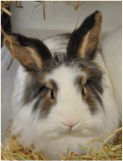
What breed is this?
Lionhead
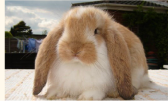
What breed is this?
Lop

What breed is this?
Dutch

What breed is this?
Netherland dwarf

What breed is this?
Rex

What breed is this?
Angora
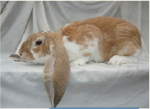
What breed is this?
English Lop
2 Main sub orders of rodents
Hystricomorphs: Chinchillas, guinea pigs, degus
Myomorphs: Rats, mice, gerbils, hamsters
Social requirements of guinea pigs
Naturally live in colonies of 20-50 so very social. Generally recommended to be kept in single sex pairs/groups, although boars should only be kept together if they were raised together.
Guinea Pig housing requirements
Not very hardy so should be kept indoors.
Hutch is not enough! Large floor pen with lots of space to run is needed
Lots of hides and toys
Hay racks for grazing and soft bedding
No litter trays so frequent cleaning required
Guinea pig diet
High fibre diet similar to a rabbits. Lots of leafy greens, hay, and peppers with a small amount of pellets. NEED Vitamin C in their diet as they cannot produce it themselves.
Reproduction in guinea pigs
Males have round preputial orifice and the penis and testicles can be extruded through gentle maneuvering and pressure
Females have Y shaped anogenital area with a urethra and a vulva
Both sexes have inguinal nipples
Females are polyestrus with a gestation period of 60-72 days and litter size of 2-6
Young are precocious and weaned at 21 days
After mating, obvious vaginal plug is seen to ward off other males
Should be bred before 7-8 months old to avoid pubic symphysis fusing!
Social requirements of chinchillas
Very social so should always have a friend
Reproduction in chinchillas
Female anogenital spacing much shorter than males
average life span is 10-15 years and reach maturity at 6-8 months
seasonally polyestrous
gestation period is 111 days with precocious litter sizes of 1-4 that are weaned at 42 days
Monogamous pairs
Social requirements of Degus
Very social so should have a friend
Degu reproduction
Males have greater anogenital spacing than females
life expectancy is 6-8 years with maturity reached at 3-6 months
oestrus occurs every 3 weeks with gestation periods of 87-93 days
Altricial/precocious litters of 4-6 pups that can be weaned at 4-6 weeks
Chinchilla and degu housing requirements
Multiple tiered metal enclosures with lots of space and hay. Must have exercise wheel and dust/sand bath
Chinchilla and degu nutrition
High fibre diet with lots of hay/grass. Pellets in small doses. Avoid sugary foods as degus are prone to diabetes
Social requirements of mice
Sociable so should have a friend. Female groups do well together while male groups are likely to fight. Live in groups with a dominant male, a hierarchy of females, and subordinate males
Social requirements of rats
Sociable so should have a friend. Live in mixed groups
Social requirements of hamsters
All hamster breeds are sociable and should have friends, except for Syrians, which are solitary animals and will fight.
Social requirements of gerbils
Sociable so should live in single sex groups or breeding pairs
Myomorph housing
Most products in market are unacceptable. Should be metal with small bars, lots of enrichment, multiple hides, and a suitably sized wheel. Multiple floors recommended for space and enrichment
Myomorph nutritional requirements
No hay required. Pellets should be main food source. Avoid unnatural treats like honey or yogurt drops.
Mouse reproductive behavior
Average life span of 1-2.5 years old and reaches maturity at 6-8 weeks
polyestrous
Gestation period of 19-21 days with litter size of 5-12
Rat reproductive behavior
Average life span of 2-3.5 years and reaches maturity at 1 month
Continuous polyestrous
Gestation period of 21-23 days