art 1
 Call Kai
 Learn
 Practice Test
 Spaced Repetition
 Match
 Flashcards
 Knowt Play
1/569

There's no tags or description
Looks like no tags are added yet.
570 Terms
facade
any exterior vertical face of a building, usually the front
Crenellated
a fortified wall with notches or openings on top

Campanile
italian word meaning bell tower
podesta
a person whose function was similar to that of a city’s mayor
fresco
a wall or ceiling painting on wet plaster; when pigment merges with the plaster, and once harened the painting becomes an integral part of the wall
Masaccio, Holy Trinity
Iconography?
the visual images or symbols used by artists within their work to convey specific meanings
Hierarchical scale
the use of size to denote the relative importance of subjects in an artwork
Pulpit?
a raised lectern from which priests read biblical passages and deliver sermons

Baptistery
a building or room for the sacrament of baptism
Polychromatic
displaying several differnce colors
Trefoil
a decorative shape consisting of three lobes; resembles a 3 leaf clover
High relief
raised forms that project far from a flat background
Continuous narrative
multiple events combined within a single pictorial frame
Classical
artworks from, or in a style deriving from, ancient Greece or Rome
what artists during the Renisance focused on
Quatrefoil
a decorative shape consisting of four lobes; resembles a stylized flower

byzantine imagery
flat figures on shallow gold backgrounds
Franciscans
order of monks who agreed to forfeit the ownership of property and become preachers to ordinary people
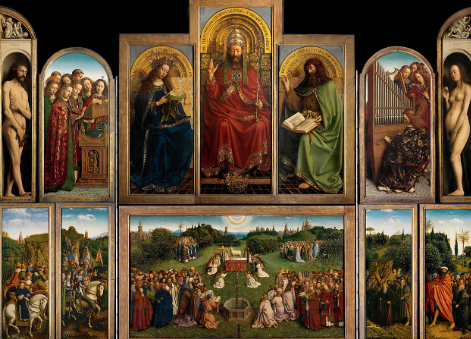
Polyptych
a work of art with more than three parts, usually attached together

Predella
a wooden step or platform that supports an altarpiece and is often painted with related scenes

Pinnacles
a summit or peak, often capping a tower, gable, buttress, or other projecting
Narthex
the entrance hall or vestibule of a church

Mosaic
a picture or pattern made from the arrangement of small colored piece of hard material, like stone tile or glass
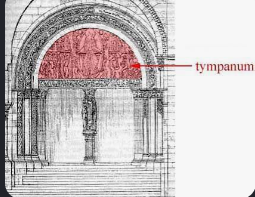
Tympanum
a lunette shaped space above a portal, ofen filled with relife sculpture
Appropriations
borrowing images, objects, or ideas and inserting them into another context
Oratory
a prayer chapel

Grisaille
a method of painting in gray tones, typically to imitate sculpture`
Lunette
a semicircular or arch-shaped space on a wall or ceiling, usually with a frame

Renaissance
a period of classically inspired cultural and artistic change in Europe from approximately the fourteenth century to the mid sixteenth century
A return to the philosophies of classical antiquity (humanism)
education, logic, and morality
Buon fresco
wet or true fresco
wet pigment merges with the plaster, and once hardened the painting becomes and integral part of the wall
good preservation
Fresco secco
dry fresco
painting on dry plaster
Italy in the 1400s
composed of different politcal territores
ruled by different rulers
wealthy merchants and bankers, traveling to asia
The Medici (most prominent family)
them and other families start commissioning art to show their wealth
More art
italy in 19th centruy
italy city states combine to from the country of Italy
Expansion of city states create what?
new people commissioning different types of art
merchants were gaining wealth and importance, can now commission art (Marco Polo)
humanism?
“an ideology based on the celebration of human achievement and civic virtue”
popular around the 14th century
focus more on logic, humans
less religion
study of grammar, logic, rhetoric, arithmetic, geometry, music, and astronomy
created a more balance society
Francesco Petrarca
revived Humanism in 1345
circa
c
means about

the seated boxer/boxer at rest statue
his face is covered in cuts, most likely just came from a fight
no eyes, just darkness where his eyes should be
looking up as if someone is talking to him
human in the form of art
Italy 15th century
New wealthy merchants begin challenging the idea of aristocracy (ruling by noble class)
Veduta della Catena
Map of Florence by Francesco and Raffaello Petrini
Used new optics with perspective and color
Shows new structural techniques being used, bigger buildings
Transition of builder to architect
The Medici Family
Medici Palace
Giovanni di Bicci de’Medici
Giovanni’s Son-Cosimo “the Elder” de Medici
focus on humanism
Power in education by Cosimo “the Elder” de’ Medici
collected illuminated manuscripts
sent scholars to Egypt to find ancient scrolls and codices
Hired the humanist scholar Poggio Bracciolini to search for lost Classical writings to medieval monasteries
Sponsored construction of a library
Created an informal academy based on Plato’s ancient academy in Athens
Medici Palace
Medici hosted & entertained rulers and religious leaders, and scholars across Europe
Introduced a new language of architecture based on Classicism
Promoted the superiority of Florence
was based on classical architecture (Michelozzo di Bartolomeo)
Rusticated
rough-cut stonework

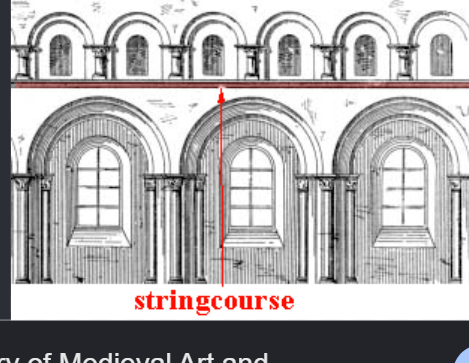
Stringcourse
a horizontal band of bricks or stone on a building
Cornice
the uppermost strip of molding on a building’s entablature
Piano nobile
the main floor of a house, one this is “noble”, or elaborately decorated
where they hosted nobles and religious leaders

Aethetics
principles, which vary from culture ot culture, concerned with the nature of beauty and taste om art and architecture
Florence Cathdral
Begun in 1296 and completed in 1469
With a dome topped by a lantern and golden bell that dominates the skyline
Dome of Florence Cathedral
Cathedrals signaled politcal power, civic wealth, and religious authority
Brunelleshi won the Florence “Duomo” competition in 1418
Brunelleschi’s engineering skills allowed him to create a new structural design for this massive dome
The ribbed dome sites on a octagonal drum (wall taht support a dome) that spans 144 ft
Problems Brunelleschi faced?
Not enough lumber to build a scapholding
Amount of force applied to the wall as the dorm is being made, not cracking wood and splaying out
(Made it egg shape with two shells)
Brunellesschi solutions?
making the dome light, hollow, creating an outer shell
create ribs to hold weight (a skeletal structure)
self sustaining
create chains to hold the dome in, counter outerward thrust
create new machines to bring materials up
Dome structure?
egg shpaed, self-supporting dome
two dome shells to disperse weight (inner, outeer)
pointed arch to reduce thrust
reversable hoist to deliver materials to top of dome
used a mathematical method to render 3d images on a grid
Inner shell?
long, thin bricks with a self-supporting herringbone pattern
Outer shell?
stone rings and oak beams to form a horizontal support chain
Linear perspective
painting/drawing contains arhcitecture
parallel lines move together as they recde away from the viewer
artist utilizes a vantage point, horizon line, and orthagonal lines
horizon line is equal to the line of sight of the viewer
Aeiral perspective?
forms in the distance are represented with less clarity (smaller and lighter)
Horizon line
where a horizon of the sun would be
horizontal
vanishing point
where the far distance dissapeers, can’t see past it
when discussing perspective in two dimensions, the point on the horizon at which parallel lines seem to converge and disapeer

orthogonals
lines that represent what the person sees right in front of them
two vertical lines that meet with the vanishing point (narrow down to it)
Brunelleschis
his studies of perspective and proportion had a profound impact on painters
Dome of Florence Cathedral
Santa Maria del Flore
Duomo

Ionic?
“an order of Classical architecture characterized by the use of volutes on teh capital”
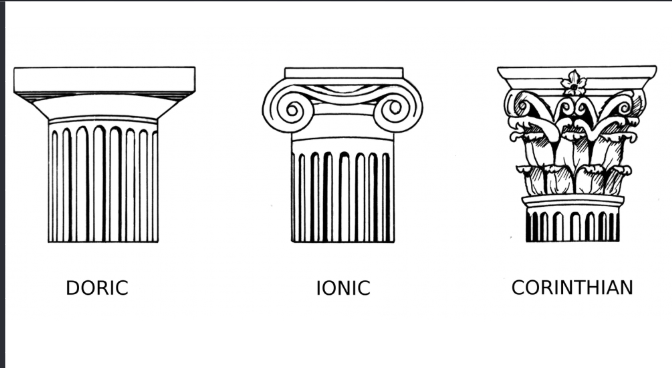
Corinithian
'“an order of Classical architecture characterized by slender fluted columns and elaborate capitals decorated with stylized leaves and scrolls”

doric columns
oldest and most simple
What formal qualities often distinguish a Gothic (late medieval) artwork from a Renaissance artwork?
Divine figures are often frontal (sense of authority)
figures are often elongated
hierarchy of scale (size expresses relative importance)
increasing patronage from wealthy individuals and families
tempera (pigment and egg yolk)
portable art is easily bough and sold
emotion
figures from many points of view
modeling (chiaroscuro)/creating of an illusion on a flat surfac that is rounded or taking up space, shadowing
revival of classical intersest in anatomy and proportin
illusion of space (an earthly setting)
fresco
deeper understanding of and appreciation for the human body
heightened influence of classical antiquity
graceful and complex movement
figues interrelated in complex ways
What is the art historical definition of Naturalism?
the faithful representation of the observable
like nature, truthful
What techniques do Renaissance artists employ to achieve Naturalism?
creating an believable landscape/background
illusion of space in an earthly setting (atmospheric perspective)
making those highly regarded religious figures look more human, what we see day to day
interest in human aunatomy and emotion
mannerism
emphasis on artist’s virtuosity
an interest in complicating the body
complex, unatural compesitions
natural philosophy
study of politics, philosophy, art, and science
History of the Renaissance art?
Shaped in Italy by the writings of Giorgio Vasari and Jacob Burckhardt
Who saved the competition panels?
Filippo Brunelleschi
What does the baptistery panel depict?
A new sense of spatial depth and naturalism of the human form that art historians associate with Renaissance aesthetics
Drama and emotion
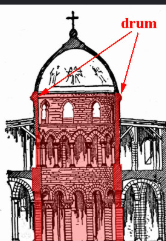
drum
a wall (most often cylindrical) that supports a dome
corbel
a wood, stone, or brick wall projection, such as a bracket, that supports a structure above it

flying buttress
in architecture, a supporting pier that extends, or “flies”, from an external wall, with an arch that provides additional support to the wall while allowing space for windows

Gothic
a western European medieval style primarily of the mid-12th to 15th centuries, characterized in architecture by the use of pointed arches and rib vaults
rib vaulting
a vault consisting of numerous intersecting ribs, often associated with Gothic architecture
perspective
the two dimensional representation of a 3 dimensional object or a volume of space
contrapposto
from the Italian word for “counterpoise”, a posture of the human body that shifts most weight onto one leg, suggesting ease and potential for movement
relief
raised forms that project from a flat background
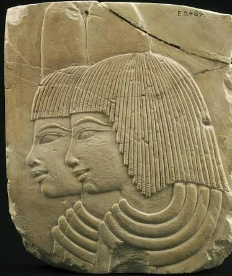
low relief
bas relief
raised forms that project only slightly from a flat background
memento mori
an artistic reminder of the passing of time and eventual death
iconography
the visual images or symbols used by artists within their work to convey specific meanings
tapestry
a decorative textile in which pictures and/or designs are woven into the fabric
atmospheric perspective
a means of representing distance based on the way atmosphere affects the human eye, where details are lost, outlines are blurred, colors become paler, and color contrasts less pronounced
mural
a painting made directly on the surface of a wall
gesso
a mixture of animal glue, chalk, and white pigment used to coat a wood surface in prepartion for painting
brocade
a type of luxary fabric woven with a raised design

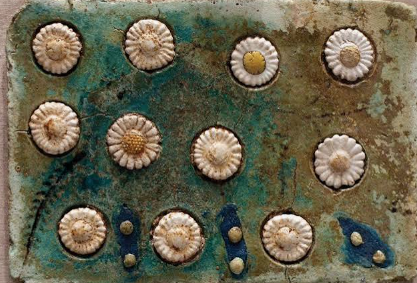
inlay
decoration embedded into the surface of a base material
molding
a decoration architectural feature that covers the transition between two surfaces, such as the dividing line from one story, portal, or window framing, to another, or to the roofline of a building
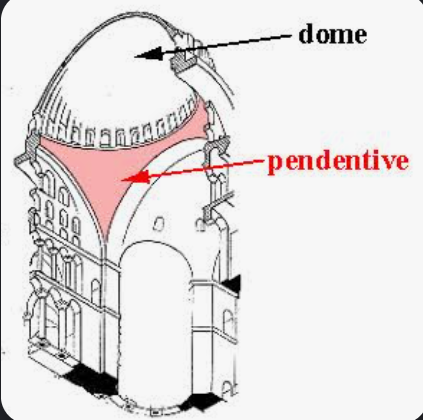
pendentive
a curved triangular wall section linking a dome with a supporiting vertial peir or wall
entablature
on a building, a horizontal lintel on a building that consists of differnt bands of molding; might include an architrave, frieze, or cornice

mausoleum
a building or freestanding monument that houses a burial chamber
stucco
fine plaster that can be easily carved; used to cover walls or decorate a surface

triumphal arch
a freestanding archway that often spans a road or marks an entrance; decorated with relief carvings alluding to a historical, often military, victory

registers
a horizontal section of a work. usually a clearly defined band or line
fluted
shallow ridges running vertically along a column, or other surface

heraldic
related to heraldry, which is the display of coats of arms and other symbols of ancestry


pilasters
a flat, rectangular vertical projection from a wall; usually has a base and a capital, and can be fluted
intarsia
a type of wood inlay where pieces of stained wood of varying colors and shapes are set together into a pattern or image, usually on a wall surface or floor

marquetry
a woodworking process that makes detailed, illusionistic pictures from a elaborate jigsaw puzzle of thin veneers of wood
