Mechanics
 Call Kai
 Learn
 Practice Test
 Spaced Repetition
 Match
 Flashcards
 Knowt Play
1/78

There's no tags or description
Looks like no tags are added yet.
79 Terms
What is the center of gravity of a uniform rod
Midpoint of the rod
What is the center of gravity of a uniform ring?
The geometric center of the ring
What is the center of gravity of a uniform circular disk?
Center of the disk
What is the center of gravity of a uniform rectangular lamina?
Point of intersection of diagonals
What is the center of gravity of a uniform solid or hollow cylinder?
Midpoint along the axis.

What is the center of gravity of a uniform triangular lamina?
The centroid of the triangle ( point of intersection of medians ).

What is the center of gravity of a uniform hollow cone?
On its axis, at a distance of h/3 from its base.
What is the center of gravity of a uniform solid cone?
On its axis, at a distance of h/4 from its base.
Briefly define inertia
Resistance of an object to change its motion.
Briefly define momentum.
Its what measures the quantity of motion or how difficult it is to stop an object.
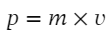
Equation for momentum.
where p → momentum , m → mass , v → velocity
Briefly describe Newton’s 2nd law and state its equation.
Resultant force is proportional to the change of momentum ( F = ma ).
Briefly define impulsive force.
It’s a large force acting in a very small period of time.
State the equation for impulse.
Impulse = Impulsive force X time, or Impulse = Change in momentum.
State the principle of conservation of linear momentum.
If no external resultant force acts, total momentum remains constant.

What are the real-life scenarios in which the principle of conservation of linear momentum is used?
Collisions
Explosions
Recoil of guns
Rocket propulsion
Briefly define static friction.
This is the frictional force that acts when the two surfaces aren’t sliding ( when the object isn’t moving ).
Relationship between static friction and the force applied.
Static friction = force applied
Briefly define limiting friction.
The maximum frictional force acting between two surfaces when the object tends to move.
Equation for limiting friction.
where F → limiting frictional force, N → normal reaction, μ → coefficient of static friction.

Briefly define dynamic friction.
This is the frictional force that acts while the surfaces are sliding ( when the object is moving ).
Formula for the work of an object.
Work = Displacement X Force applied in the direction of the displacement
Briefly define the energy of the object.
Energy is the ability to do work. Energy of an object = Work done by an object.
Formula for gravitational potential energy.
P.E. = mgh; m → mass of the object, g → gravitational acceleration, h → height of the object relative to the reference level.
Briefly define elastic potential energy.
It’s the energy possessed by a spring.
Briefly define Hooke’s law.
When a spring is stretched or compressed, it has a tendency to return to its natural length. So the more you stretch or compress it, the harder it pushes/ pull back, or F = -kx ; F → restoring force, k → spring constant, x → extension or compression of the spring.
State the equation for elastic potential energy.
Elastic potential energy = Work done by the spring = (Fx / 2) = (1/2)kx² ; F→ restoring force, k → spring constant, x → extension or compression of the spring.
Formula for kinetic energy.
K.E. = (1/2)mv² ; m → mass, v → velocity
Briefly define the power of an object.
The rate of doing work or transferring energy.
Equation for power
P = W/t or P = Fv ; W → work done, t → time taken, F → force applied on the object, v → velocity of an object.
Equation for the efficiency of an object.

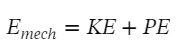
Briefly explain the principle of conservation of energy.
If in a certain process, the conversion of energy takes places only between kinetic energy and potential energy, the the sum of kinetic energy and potential energy remains constant.
Briefly define rotational motion
Motion of an object about its own axis
Formula for angular displacement.

Formula for angular velocity

Relationship between angular velocity and linear velocity.
v = r ω ; ω → angular velocity, r → radius, v → linear velocity
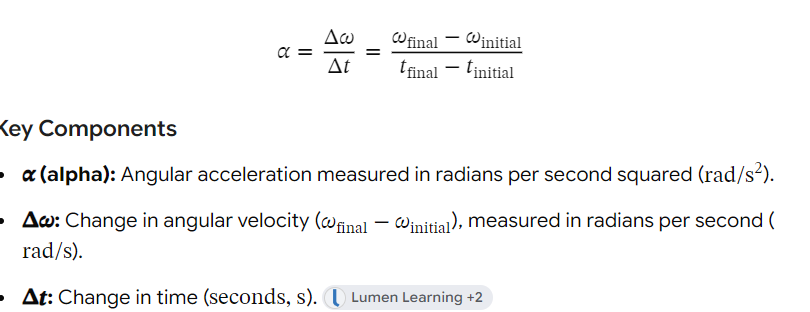
Formula for angular acceleration.
Relationship between angular acceleration and linear acceleration
a = r α ; α → angular acceleration, r → radius, a → linear acceleration
Relationship between angular velocity and frequency.
ω = 2𝝅f ; f → frequency, ω → angular velocity
Relationship between periodic time and frequency
T = 1/f ; F → frequency, T → periodic time
State the rotational equations of motion.
ω = ω₀ + αt.
Θ = [(ω + ω₀)/2] × t
θ = ω₀t + 1/2 × α × t²
ω² = ω₀² + 2αθ.
where ω → final angular velocity, ω₀ → initial angular velocity, α → angular acceleration, t → time taken, and θ → angular displacement.
General equation for the moment of inertia.
I = mr² ; m → mass of object, r → distance from axis
What is the moment of inertia of a uniform rod of length L, mass M, about an axis passing normally through the end of a rod?
I = (1/3)ML²

What is the moment of inertia of a uniform rod of length L, mass M about an axis passing normally through the midpoint of a rod?
I = (1/12)ML²

What is the moment of inertia of a solid thin ring, uniform circular disc or solid cylinder of radius R and mass M about an axis normal to the plane passing through the centre?
I = (1/2)MR²
What is the moment of inertia of a uniform solid sphere, with a mass M and a radius R, about an axis through the centre?
I = (2/5)MR²

What is the moment of inertia of the uniform hollow sphere, of mass M and radius R, about an axis through the centre?
I = (2/3)MR²

What is the moment of inertia about a uniform rectangular lamina, of mass M, length ‘a‘, and width ‘b‘, through its centre and perpendicular to the plane?
I = (1/12)M(a² + b²)

What is the moment of inertia about the axis of a hollow cylinder, with a mass of M, internal radius of R1, and external radius of R2?
I = (1/2)M(R1 2 + R2 2 )
Formula for rotational kinetic energy
K.E. = (1/2)Iω²
Formula for angular momentum.
L = Iω ; L → angular momentum, I → moment of inertia, ω → angular velocity
Formula for torque.
𝜏 = Fr or 𝜏 = Iα ; F → force, r → radius, I → moment of inertia, α → angular acceleration
What does the moment of inertia depend on?
Position of axis of rotation : The axis is the imaginary line about which the object spins. When the axis is closer to the center of the object, ‘I’ is lower. When the axis is further from the center of the object. ‘I‘ is higher.
Distribution of mass throughout the body : When rotating an object, where the weight is located matters more than how much weight there is. When mass is far from the center of the object → ‘I’ is higher → object is harder to spin. When mass is closer to the center of the object → ‘I’ is lower → object is easier to spin.
Equation for the change of angular momentum.
Change of angular momentum = Torque X Time.
Briefly define circular motion.
The motion of an object along a circular path around another point.
What is centripetal acceleration?
It’s the inward acceleration that keeps an object moving in a circle by continuously changing its direction.
Equation for centripetal acceleration.

Briefly describe centripetal force.
The net force that is directed constantly towards the center of the circle and causes an object to move in a circular path.
Formula of centripetal force.

What is relative density?
Its the density of a substance relative to the density of water.

Equation for hydrostatic pressure
P = hρg ; h → height of liquid column above the relevant point, ρ → density of liquid, g → gravitational acceleration
Value of atmospheric pressure.
1 X 10⁵ Pa or 760 mm Hg
Briefly explain Pascal’s principle.
An incompressible enclosed fluid at rest transmits pressure equally.

Formula for upthrust
Upthrust = Apparent loss of weight = Weight of fluid displaced when the object is submerged in water, or Upthrust = Aρhg = Vρg; ρ → density of liquid, A → area of cross-section of an object, h → height of portion of the object submerged in liquid, g → gravitational acceleration, V → volume of the portion of object submerged in liquid
Briefly describe the principle of flotation.
When an object is floating in a liquid, its in equilibrium or U = mg.
At what instance is the mean density of body = density of liquid?
When an object is fully immersed in a liquid.
At what instance is the mean density of the body greater than the density of liquid?
When an object is partially submerged in a liquid.
What is the center of buoyancy of an object?
It’s the point from which the upthrust acts on the object or the center of gravity of the submerged portion of the object.
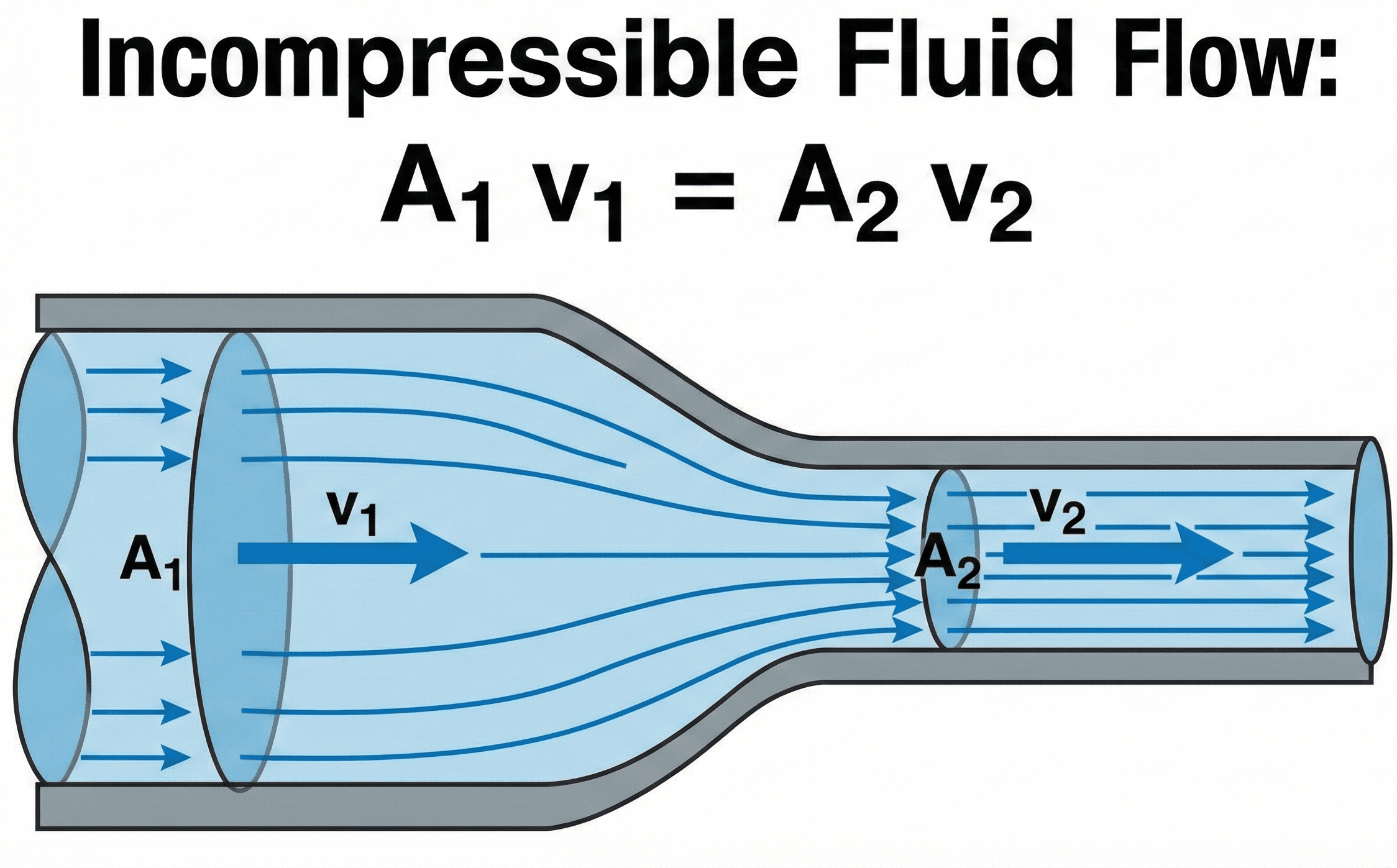
State the continuity equation
Volume flow rate ( volume of fluid flowing per second ) = A1 v1 = A2 v2 ;
State Bernoulli’s principle.
P + (1/2)ρv² + ρgh = constant
Pressure (P) → measures how strongly the fluid is pushed. Higher pressure means more stored energy.
Kinetic energy (1/2 ρ v² ) → when the fluid of the speed is greater, it has more kinetic energy
Potential energy (ρgh) → when the fluid is positioned at a higher position, it has more gravitational potential energy
State the two types of collisions and state the difference between them.
Inelastic collision → Momentum is conserved, but kinetic energy isn’t conserved.
Elastic collision → Momentum and kinetic energy are conserved
In an inelastic collision, what happens to the mechanical energy of the system?
Mechanical energy was converted into other forms of energy such as heat energy ( from deformation ), sound energy ( sound produced during the collision ), and internal energy ( changes in objects involved in the collision )