Human Pests: Bed Bugs
 Call Kai
 Learn
 Practice Test
 Spaced Repetition
 Match
 Flashcards
 Knowt Play
1/18

Earn XP
Description and Tags
Lecture 13
19 Terms
Which species are primarily responsible for bed bug infestations?
NOTE: Both belong to genus Climex
Cimex lectularius (common bed bug)
Cimex hemipterus
Morphology of Bedbugs
Adults grow to 4–5 mm (0.16–0.20 in) long and 1.5–3 mm (0.059–0.118 in) wide.
Adult Cimex are light brown to reddish-brown, flat, oval, and have no hind wings
The front wings are vestigial and reduced to pad-like structures
These insects feed exclusively on blood and may survive a year without eating
How many nymph life stages do bed bugs have?
Five immature nymph life stages
Basic Overview of Life Cycle of a Bed Bug
Bed bugs have 5 immature nymph life stages and a final sexually mature adult stage
They shed their skins through ecdysis at each stage, discarding their outer exoskeleton
Newly hatched nymphs are translucent, lighter in color, and become browner as they molt and reach maturity.

Life Cycle of a Bed Bug: Eggs
After mating, females lay white, oval eggs (1/16" long) into cracks and crevices
An individual bed bug can lay 200 to 250 eggs in her lifetime
The eggs hatch in 6 to 10 days and the newly emerged nymphs seek a blood meal
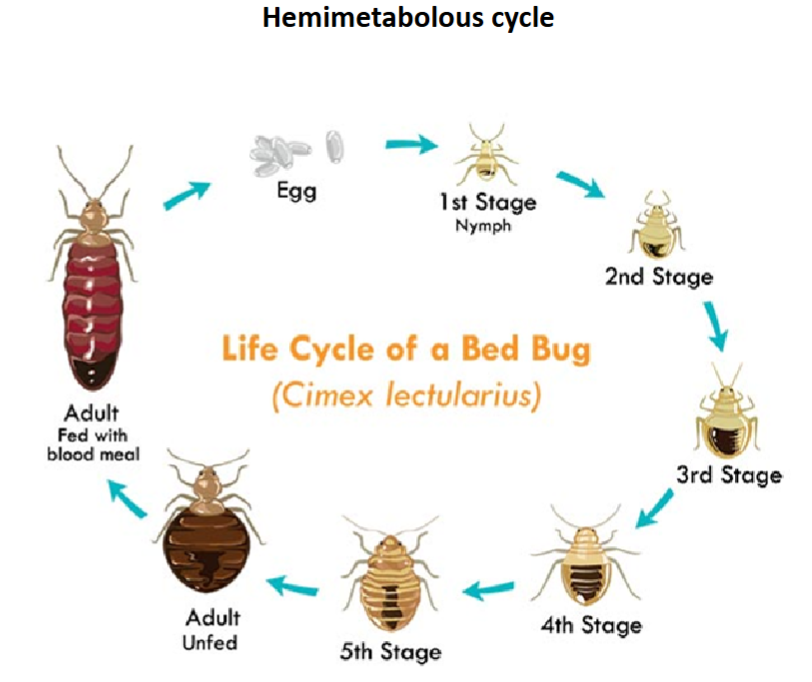
Life Cycle of a Bed Bug: Nymphs
Immature nymphs molt five times (they shed their outer exoskeleton) before reaching adulthood.
There may be three or more generations per year
All ages are found in a reproducing population
Young nymphs can survive without a blood meal for days up to several months
Older nymphs and adults can survive longer without a blood meal up to a year under favorable conditions.
Life Cycle of a Bed Bug: Adults
Under normal circumstances, adult bed bugs will live for about 2 to 4 months.
Feeding and its relation to Ecdysis
bed bugs need to feed at least once before each moth
they could feed as often as once a day
How many instar nymphs stages do bed bugs have?
5 nymph instar stages
Define instar
stages within a stage
Evolutionary History and Human Association of Bed Bugs
Different lineages evolved which specialized in either bats or birds
Medicinal use of beg bugs including treatment hysteria or snake bites
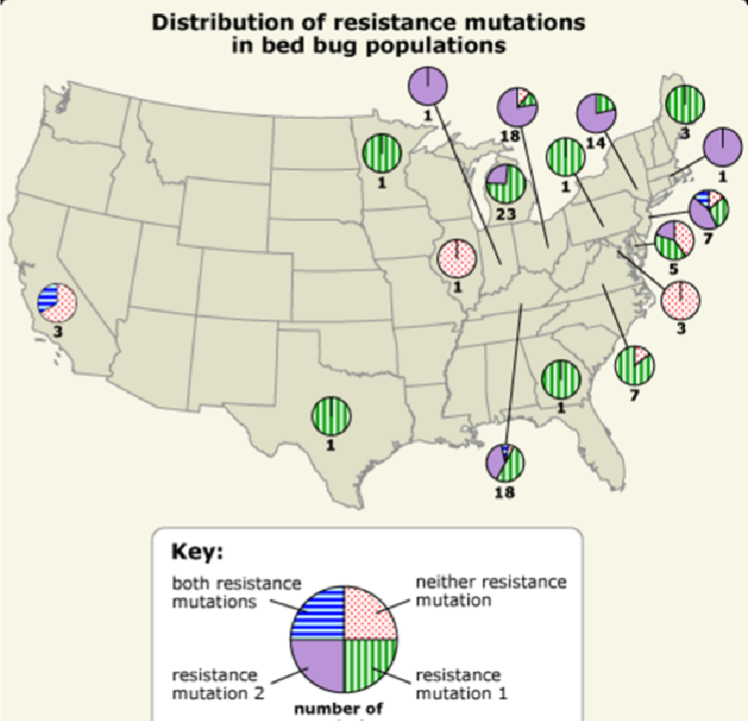
Bed bugs started to develop resistance to insecticide
Bed bugs were very common in the mid 20th Century
Some cases in the US had some (one type) resistance mutations
Insecticide Resistance in Bed Bugs
Ways to Control Bed Bugs
Environmental modification
Non-chemical controls
Insecticide Treatment
Monitoring (with follow-up)
Controlling Bedbugs: Environmental Modification
Vacuuming reduces bed bug populations. Clean and vacuum bed bug-prone areas daily. Immediately seal and dispose of the vacuum bag.
Install encasements on the mattress and box spring.
Make the bed an island: Keep the bed away from the wall and do not let bedding touch the floor.
Install bed bug interceptors under the bed and furniture legs.
Remove clutter where bed bugs can hide.
Keep clothing off of the floor.
Isolate infested items in sealed plastic bags or containers.
Seal cracks where bed bugs can hide.
If you live in an apartment or other multi-family dwelling, and you see a bed bug, contact your landlord immediately.
Controlling Bedbugs: Non-Chemical Controls
Bed steam cleaning with a hot steam application
Items that cannot be washed or dried may be steamed, heated or frozen using specialized equipment
Raising the indoor temperature with a thermostat or space heater will not kill the bed bugs
Launder bed sheets and clothing regularly. Dry for 30 minutes on the highest heat setting
Put small items in a freezer for 4 days
Apply hot steam to infested furniture
Dispose of heavily infested items
Other methods available to professionals: Place items in heat chambers designed for controlling bed bugs.
Controlling Bedbugs: Monitoring
Visually inspect bed and sofa.
Place interceptors under bed and sofa legs. Interceptors should be checked every 1-2 weeks
If you cannot find bed bugs but are still concerned about their presence, you may set up a home-made monitor to detect low numbers of bed bugs
Controlling Bedbugs: Insecticide Treatments
Apply DE to cracks and crevices in walls, bed frames, spaces around the bed, behind wall plates and along the junction of wall and floor.
Wear a mask to apply DE
Apply DE dust to new harborages found during follow-up inspections
DE may take one to two weeks to kill bed bugs and two months to eliminate an infestation. Be patient.
Define Diatomaceous Earth (DE)
a natural, white powder-like substance that kills insects
When used properly, bed bugs will have to crawl through DE around your home
Controlling Bedbugs: Follow up Monitoring
Continue to launder bed sheets at least weekly until bed bugs are eliminated
Make sure you have enough interceptors for legs of every bed, couch and plush chair
Conduct visual inspection and check the interceptors placed under the furniture every 1-2 weeks
Wipe interceptors clean using a cotton ball dabbed with talc.