SAMPOL236 lecture 5 - energy transition
 Call Kai
 Learn
 Practice Test
 Spaced Repetition
 Match
 Flashcards
 Knowt Play
1/3

There's no tags or description
Looks like no tags are added yet.
4 Terms
What are the options for transitioning away from fossil fuel energy sources?
Renewable energy
Energy which comes from the wind, sun etc
Hydroelectric power
Water collected in a regulated reservoir at a high altitude and a valve is opened to produce electricity - flexible to increase when demand rises unlike other sources which are intermittent
About 15% of world's energy consumption
Many issues - big environmental impact, land use, nature and wildlife, flooding
Alta case - plans to build a hydroelectric dam in the Alta-Kautokeino waterways were proposed in 1968
Large consequences for local indigenous Sami people and the local environment - massive demonstrations
Dam was built but protests did have impacts on future processes
Onshore wind power
Moving air is used to turn wind turbines and generate electricity
Issues with land use, nature and wildlife
'not in my backyard' - local backlash
Indigenous rights
Fosen case - 2021 norwegian supreme court ruled that wind power licences issued in 2010 for wind farms in the fosen area violated the cultural rights of local Sami reindeer herders - but turbines still there and spinning
Need for green energy justice
Offshore wind power - less NIMBYism
Bottom fixed or floating - deep waters off norway coast means floating required
Land use and enviro impact
Solar power - photovoltaic (roofs etc) or concentrating solar thermal (more industry level)
Land use nature and wildlife issues
Supply chain and critical minerals
What are the components of the energy trilemma, and to what extent does it remain a valid concept in the context of the energy transition?
Energy security
IEA
core economic and social issue both now and with renewables - mineral supply chain concentrated in China
45-60% of global deployment dominated by china in next 10 years - concerning
Renewables will dramatically change geopolitics but still not evenly distributed
e.g. more about sourcing materials and tech rather than constant supply of energy - once infrastructure is in place they have enegry
chokepoints less important e.g. strait of hormuz
need to make this more diverse and resilient
also need to be more resilient to extreme weather, cyberattacks etc on infrastructure
Energy equity
renewables cheaper but equity/just transition is important
who pays? e.g. higher income households more likely to have solar
distributional conflict - fairly allocating costs (e.g. kalahari mining) and benefits
FF jobs
Environmental sustainability
need to think about GHG emission release as well as local impacts of mining, manufacturing etc
not as simple as renewables are more sustainable
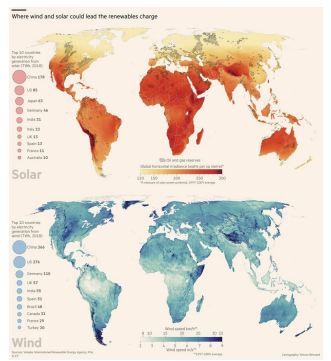
What are the key challenges to transitioning from fossil fuels to alternative energy sources?
Challenges:
The environmental impact
Green extractivism - exploitation of natural resources and land for the purpose of sustainability, decarbonization and green growth
e.g. Kalahari (action aid)
Public acceptance - link to geo lecture stuff
Socio-political acceptance - acceptance by the public, key actors and stakeholders
Community acceptance - NIMBY, energy justice
Market acceptance - does the market adopt the innovation - consumer access and willingness to invest
What are the key opportunities to transitioning from fossil fuels to alternative energy sources?
Opportunities:
Energy security - can transition to democratization of energy
but still challenges - just different
Grid expansion and flexibility
bottleneck as cannot expand grid as quickly as we need
aging infrastructures and lengthy permitting processes
long grid connection queues