MKT 201 Exam 1
 Call Kai
 Learn
 Practice Test
 Spaced Repetition
 Match
 Flashcards
 Knowt Play
1/40

Earn XP
Description and Tags
41 Terms
define “marketing”
the activity, institutions, and processes for creating, communicating, and delivering offerings that have value for customers/society
What are the requirements for marketing to occur?
-Two or more parties with unsatisfied needs
-A desire and ability to be satisfied
-A way for the parties to communicate
-Something to exchange
Describe the marketing mix.
promotion (ads/slogans)
product (good/service/idea)
price (money/barter/trade)
place (where product is available)
people (consumers, target market)
What is the difference between the ultimate consumer vs. organizational buyers?
Ultimate consumers: the people who use the products and services for a household
Organizational buyers: manufacturers, retailers, etc. that buy products and services for their own use or for resale
Define “utility”
the benefits or customer value received by users of the product.
Define “organization” and its various levels:
Organization: legal entity that consists of people who share a common mission.
Various levels usually include: board of directors, corporate level, strategic business unit level, functional level (information technology, finance, R&D, marketing, manufacturing, HR)
Define “mission” (aka vision)
a statement of the organization’s functions in society that often identifies its customers, markets, products, and technologies.
Define “stakeholders”
One who has a share or an interest, as in an enterprise
Define “organizational culture”
the values, ideas, attitudes, and norms of behavior that are learned and shared among the members of an organization
Define “goals”
statements of an accomplishment of a task to be achieved, often by a specific time (aka, objectives)
What is the difference between competencies vs. competitive advantage?
Competencies: things a company does extremely well, which sometimes give it an advantage over its competition
Competitive advantage: the result of a company matching a core competency to opportunities it has discovered in the marketplace
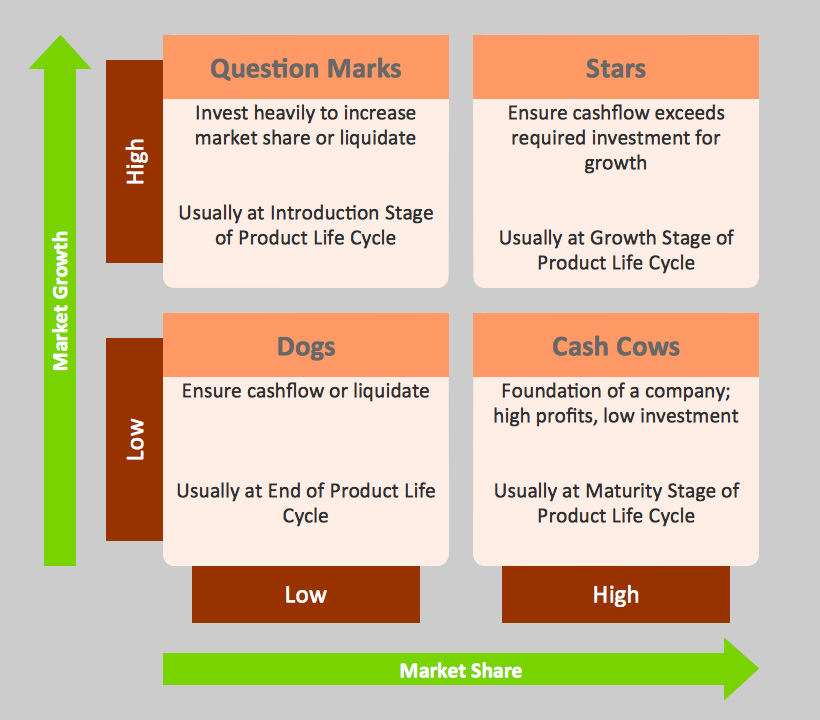
Understand market-product analysis (BCG Matrix)
Question Mark: Apple Card
Star: iPhone
Cash Cow: iPad/iPad mini
Dog: iTunes
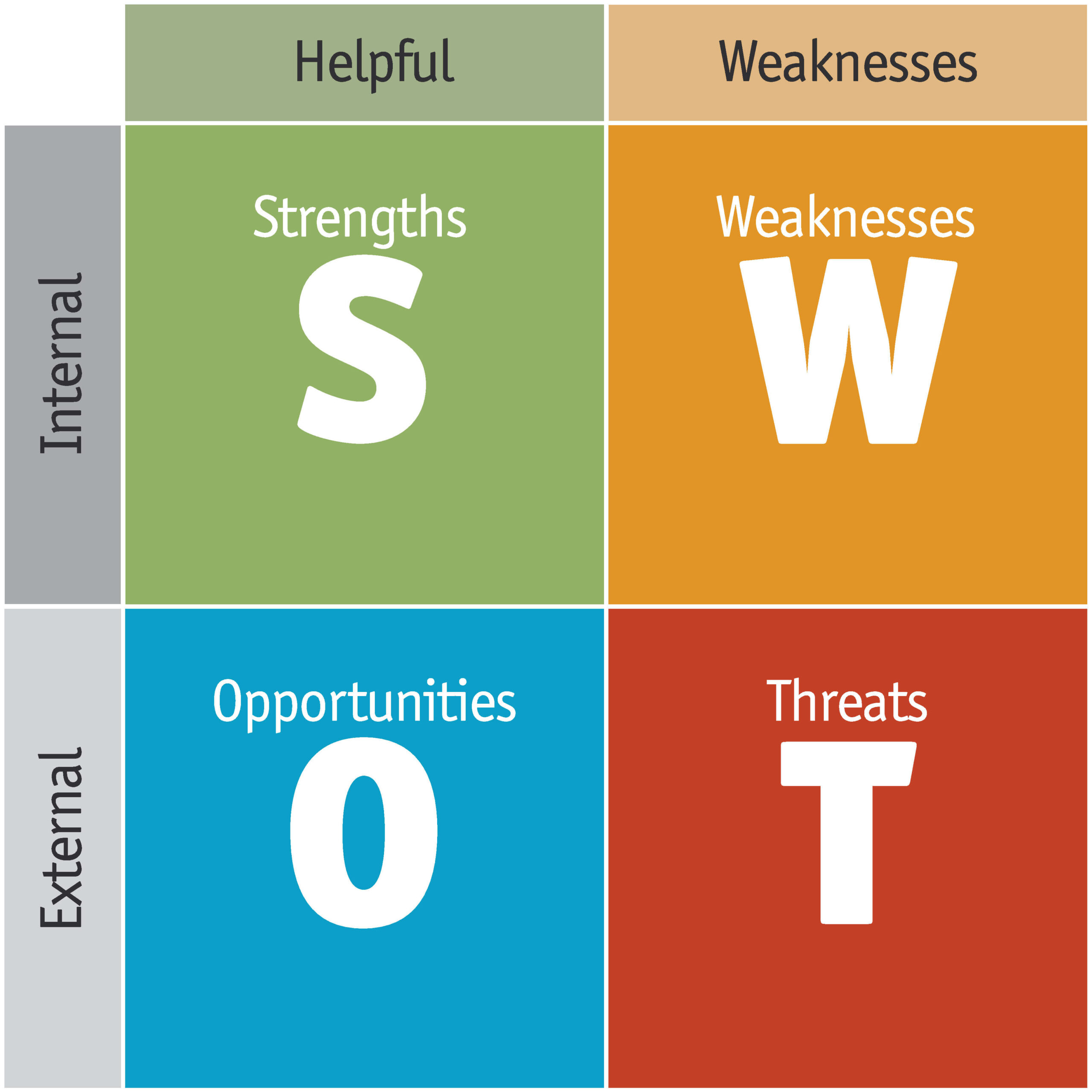
What is a SWOT analysis?
assessment of an organization's strengths, weaknesses, opportunities, and threats
Define “environmental scanning”
the process of continually acquiring information on events occurring outside the organization to identify and interpret potential trends
5 types of environmental forces:
social (demographic/cultural shifts)
economic (consumer income, macroeconomics)
technological (impact on customer value, data analytics)
competitive (small businesses)
regulatory (protecting competition, self-regulation)
Define caveat emptor and the Consumer Bill of Rights
Caveat emptor: the legal concept of "let the buyer beware" that was pervasive in the American business culture prior to the 1960s.
Consumer Bill of Rights: an outline presented by JFK that codified the ethics of exchange between buyers and sellers, including the rights to safety, to be informed, to choose, and to be heard.
What is a code of ethics?
A formal statement of ethical principles and rules of conduct.
Define “whistleblowing”
when employees report unethical or illegal actions of their employers
Define “social responsibility”
the idea that organizations are part of a larger society and are accountable to that society for their actions
What is the difference between green marketing vs. cause marketing?
Green marketing: marketing efforts to produce, promote, and reclaim environmentally sensitive products
Cause marketing: occurs when the charitable contributions of a firm are tied directly to the customer revenues produced through the promotion of one of its products
Define “consumer behavior”
the actions a person takes in purchasing and using products and services, including the mental and social processes that come before and after these actions.
What is the purchase decision process?
5 stages a buyer passes through in making choices about which goods/services to buy include:
problem recognition
information search
alternative evaluation
purchase decision
post purchase behavior
How does consumer involvement affect problem solving?
Something that has a high level of consumer involvement may be expensive, have serious personal consequences, or could reflect on one’s social image. Because of this, the consumer’s behavior is likely to change as they will be more likely to want to problem solve.
How do situational influences impact purchase decisions?
5 situational influences that may impact decisions:
the nature of the purchase task
social surroundings
physical surroundings
temporal effects
antecedent states
Identify psychological and socio-cultural influences on consumer behavior
Psychological Influences: motivation, personality, selective perception, perceived risk, learning, brand loyalty, lifestyle
Socio-cultural Influences: Opinion leadership, word of mouth/advocacy, reference groups, social class, family, culture, subculture
define “business-to-business marketing”
The marketing of products and services to companies, governments, or nonprofit organizations for use in the creation of products and services that they can produce and market to others.
What is the difference between industrial, reseller, and government markets?
Industrial Markets: reprocess a product or service they buy before selling it to the next buyer (ex. materials into optical fiber), companies primarily selling physical goods only make up 25% of industrial firms. Companies selling services (ex. legal, finance, insurance, repair, etc.) make up 75%.
Reseller Markets: buy physical products and resell them again without any reprocessing.
Government Markets: federal, state, and local agencies that buy goods and services for the constituents they serve. (ex. paying Lockheed martin to develop rockets)
Define “buying center”
the group of people in an organization who participate in the buying process and share common goals, risks, and knowledge important to a purchase decision.
What are the 3 types of buying situations:
New buy: first-time purchase of the product or service, greater risk
Straight rebuy: buyer/purchasing manager reorders an existing product or service
Modified rebuy: the users, influencers, or deciders in the buying center want to change the product specifications (price, delivery schedule, supplier, etc), product is mostly the same as a straight rebuy.
Define “countertrade”
the practice of using barter rather than money for making global sales
Define “balance of trade”
the difference between the monetary value of a nation’s exports and imports
define “protectionism”
the practice of shielding one or more industries within a country’s economy from foreign competition through the use of tariffs or quotas.
What is the World Trade Organization(WTO)?
a permanent institution that sets rules governing trade between its members through panels of trade experts who decide on trade disputes between members and issue binding decisions.
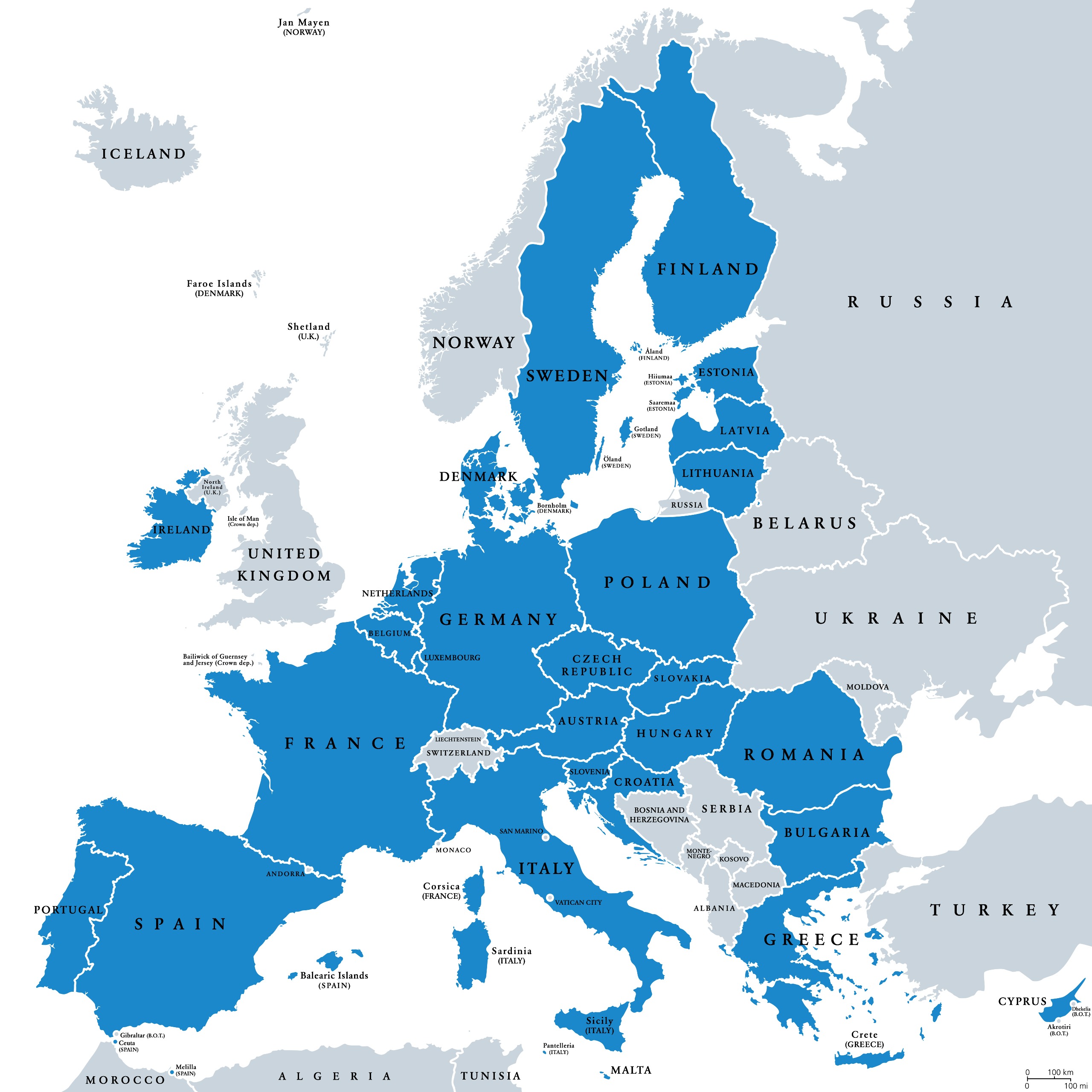
What is the European Union (EU)?
consists of 27 member countries that eliminated most barriers to the free flow of products, services, capital, and labor across their borders. Combined GDP higher than the united states. Common currency (euro).
What is the United States-Mexico-Canada Agreement (USMCA)?
ratified in 2020 to replace the North American Free Trade Agreement (NAFTA), which was in effect since 1994. Under NAFTA, tariffs on most goods passing between North America's three major economic powers were gradually phased out. The USMCA is a 16-year agreement.
types of companies that operate in the global marketplace:
International firm: engages in trade/marketing in different countries as an extension of marketing strategy in home country.
Multinational Firm: views the world as consisting of unique parts and markets to each part differently
Transnational Firm: views the world as one market and emphasizes cultural similarities across countries or universal consumer needs/wants rather than differences.
Types of marketing strategies in global companies:
Multidomestic Marketing Strategy: used by multinational firms that have as many different product variations, names, and advertising programs as countries in which they do business.
Global Marketing Strategy: used by transnational firms that employ standardizing marketing activities when there are similarities and adapting them when cultures differ
Define “economic espionage”
the clandestine collection of trade secrets or proprietary information about a company’s competititors
What is the Foreign Corrupt Practices Act of 1977?
a law, amended by the international anti-dumping and fair competition act (1998), that makes it a crime for U.S corporations to bribe an official of a foreign government or political party to obtain or retain business in a foreign country
Define “consumer ethnocentrism”
the tendency to believe that it is inappropriate, indeed immoral, to purchase foreign-made products
What is a “joint venture”?
a global market-entry strategy in which a foreign company and a local firm invest together to create a local business in order to share ownership, control, and profits of the new company