Footwear evidence
 Call Kai
 Learn
 Practice Test
 Spaced Repetition
 Match
 Flashcards
 Knowt Play
1/21

Earn XP
Description and Tags
22 Terms
What is Class Characteristics of a footwear mark?
• Size
• Pattern
• Make/model
Individual Characteristics of a footwear mark?
• Wear
• Damage
• Cuts
Explain legality of footwear recovery and what PACE code?
PACE D
Police can take impressions or images of the soles of footwear from a person in custody without consent if they are suspected of being
involved in a criminal offence
Types of Footwear Marks – How They Are Formed?
Marks made by dry material (e.g., dust or dirt) deposited on a
surfaceMarks from wet substances (e.g., mud, blood) that dry and leave a
visible printNegative impressions created by the removal of existing material
(e.g., wiping through dustIndented or 3D impressions left in soft surfaces like mud, sand, or
snowBruise marks on skin caused by forceful contact with footwear
Factors affecting the formation of footwear marks?
Surface Characteristics
Type of contaminant present
Wet/Dry origin of the mark
Footwear type and condition
Walking/running speed
Duration of contact
Applied pressure during contact
How can you locate Footwear Marks at Crime Scenes
• Visual Examination
• Retrace offender’s steps — think like they did
• Key places to check:
• Outside & inside sills
• Bin lids, toilet seats
• Paper on floor, vehicle footwells
• Tiled floors, gardens
• Not exhaustive — be thorough and use common
sense
When conducting a visual examination what do you need?
Light source/ torch
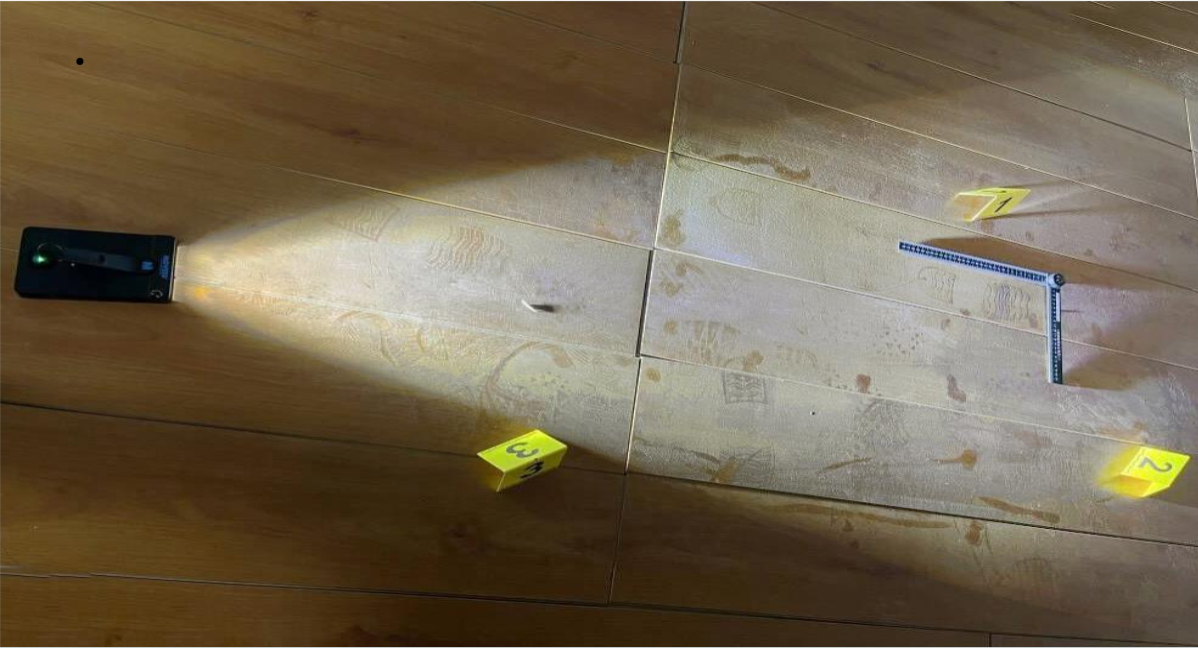
What kind of process is footwear photography
Non-destructive process
not destroying anything
What Can Footwear Evidence Tell Us?
• Number of individuals present
• Direction of approach
• Point of entry
• Movements within the scene
• Point of egress
• Direction on leaving
• Make and model of shoe
• Linking multiple scenes
Describe 2D footwear marks
Formed on hard, flat surfaces
Common locations of 2D marks
Windowsills
Floors
Worktops
Tiles
What surfaces can 2D marks occur on
Porous surfaces (e.g. fabric, untreated wood)
Non-porous surfaces (e.g. glass, metal, tile)
Describe the recovery sequence of footwear marks 2D
• Photograph first
• Assess the mark
• Enhance if required
• Recover/Lift
• Package and preserve
Common Recovery Methods?
• Electrostatic Lifting Apparatus (ESLA) Particularly effective for dry dust marks
• Gelatine Lifters Suitable for visible and enhanced marks Often provide excellent detail
• Powder Enhancement
Used on latent marks
Followed by photography and lifting
Describe 3D footwear mark characteristics
• Common Surfaces
Soil, Sand, Snow, Mud, Powders etc
• Depth
Deep or Shallow
• Surface Stability
Stable/Unstable
(A 3D mark may sometimes transfer and result in a 2D impression
elsewhere)
3D Footwear Marks General Recovery?
• Always photograph first (with scale, oblique lighting)
• Do not remove embedded debris (e.g., stones, twigs)
• Pour casting mix close to the ground, outside the impression
• Use a steady, smooth flow
• Tap gently to release air bubbles
• Add label
• Allow to dry fully
• Do not clean the cast
How to get prints from Granular Substrate
EGS DRY SOIL, SAND, CEMENT POWDER, FLOUR ETC
• TOO FRAGILE TO SURVIVE THE POURING
• PHOTOGRAPH MARK
• SPRAY WITH HAIR LACQUER (hair spray) TO HOLD TOGETHER
• CAST
• DO NOT CLEAN THE CAST
How to get prints from Submerged Marks
• Photograph mark using a polarising filter
• Gently sieve casting powder over mark
• Powder will sink into the mark
• Do not attempt to drain the puddle
• Only method currently available
How to get prints from Marks In Snow
• Photograph
• Fix
(snow wax or light sprinkling of casting medium) - usually casting exothermic would melt )
• Cast
• Recover
What is an immovable footwear mark
footwear impression left on a fixed surface that requires recovery at the
scene.

Search with light source is it moveable or immoveable
