approach to erythrocytosis/ polycythaemia
 Call Kai
 Learn
 Practice Test
 Spaced Repetition
 Match
 Flashcards
 Knowt Play
1/10

There's no tags or description
Looks like no tags are added yet.
11 Terms
erythrocytosis
increase in RBC mass
PCV
RBC count
HGB

relative vs absolute
relative = proportional changes of RBC mass in relation to plasma water
dehydration
splenic contraction and release of RBCs
absolute = true increase in RBC mass due to increased erythropoiesis
normal breed-specific variation
sighthounds/ other breeds have higher HCT
Relative erythrocytosis- Decreased plasma volume due to dehydrationrel
GI disease, water deprivation, severe hyperthermia
Clinical signs of dehydration and fluid loss (e.g. vomiting, diarrhoea)
TP/ALB often increased with dehydration
Correct fluid and electrolyte imbalances
Treat the cause
relative erythrocytosis - RBC redistribution due to splenic contraction
Adrenalin release (e.g. fear, excitement)
Exercise
Only modest HCT increase
Transient
Physiological leukocytosis?
Thrombocytosis?
No clinical consequences
absolute erythrocytosis
Caused by a real increase in RBC mass
Secondary due to increased EPO
Appropriate (due to hypoxia)
Inappropriate (not a response to hypoxia)
Primary
Not due to increased EPO
Chronic myeloproliferative disease
Clinical signs of hypervolaemia and hyperviscosity
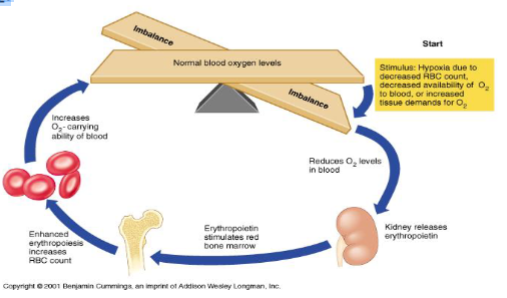
appropriate secondary erythrocytosis
Response to generalised hypoxia (low SatO2) and hypoxaemia (low PaO2)
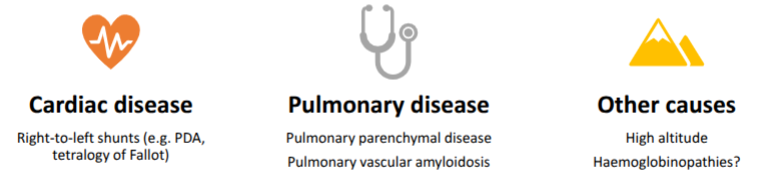
Appropriate secondary erythrocytosis - examples
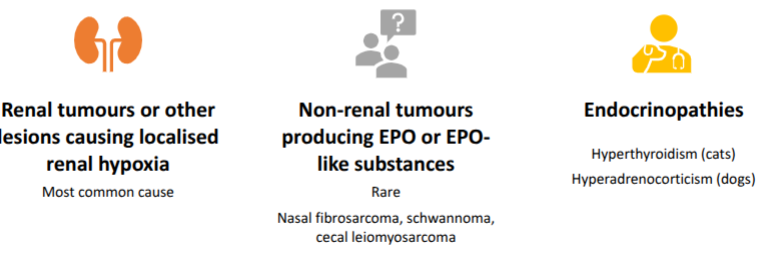
inappropriate secondary erythrocytosis examples
Primary erythrocytosis
Not caused by increased EPO
Chronic myeloproliferative disease
Due to a mutation in the JAK2 gene (humans and dogs)
Very rare
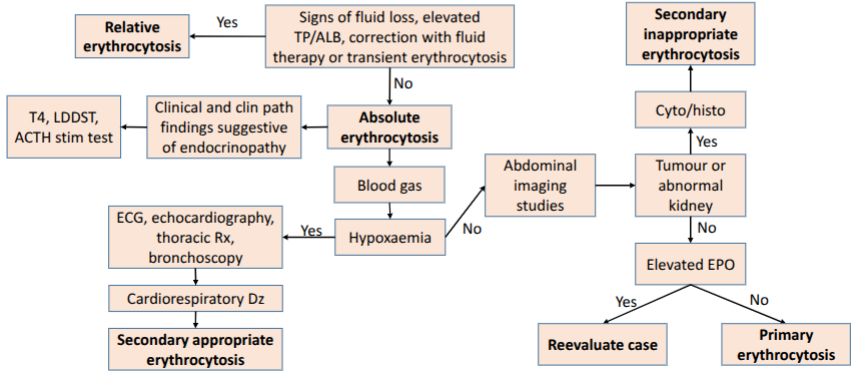
Diagnostic algorithm for erythrocytosis
Treatment of absolute erythrocytosis
Remove the underlying cause if possible
Stabilise with phlebotomy
15-20 ml/kg until resolution of clinical signs and HCT < 55% in dogs, <50% in cats (60-65% can be acceptable if cyanotic cardiac disease)
Care maintaining normovolaemia
Can be repeated every 4-8 weeks
Myelosuppressive therapy (hydroxyurea) in case phlebotomy not effective (required more than once every 4 weeks)