TEST 3 - Ch 8: Motivation, Emotion, & Engagement
 Call Kai
 Learn
 Practice Test
 Spaced Repetition
 Match
 Flashcards
 Knowt Play
1/42

There's no tags or description
Looks like no tags are added yet.
43 Terms
motivation
theoretical concept referring to our beliefs, values, & interests
motives
hypothetical constructs that explain why people engage in certain behaviours/actions
WHY we act
goals
specific outcomes we want to achieve
WHAT we want to achieve
strategies
methods used to achieve goals
HOW we get their
incentives
encourages people to take action & behave in a specific way
primary drives
innate needs present @ birth
secondary drives
learned through experience & socialization, rather than being innate
e.g. parent constantly present during nursing, infant learns to associate social contact with/ reward of food
how do theorists shift away from drives
shifted away and focused on reinforcement
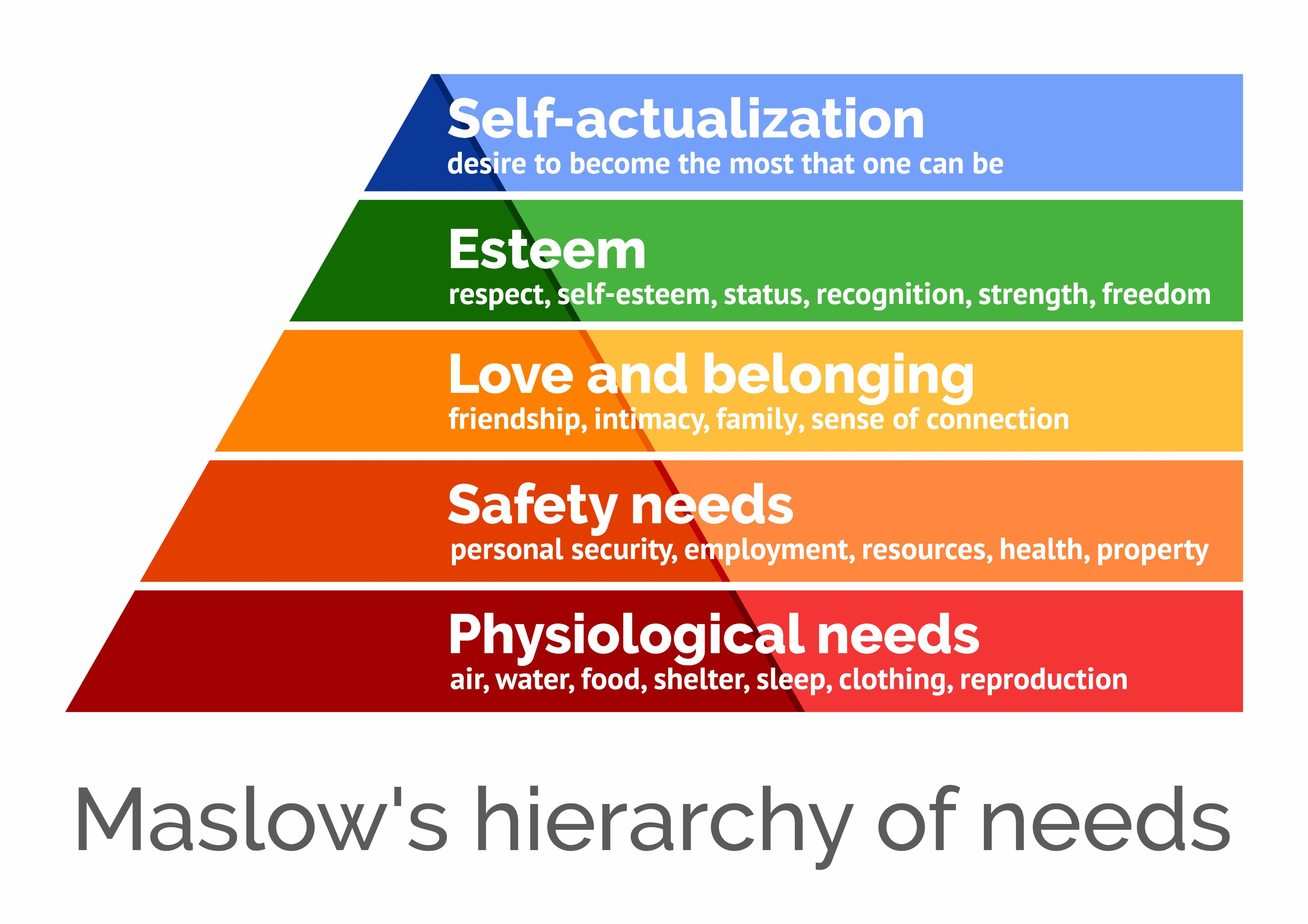
Maslow’s HONs
self-actualization
self-esteem
love & belonging
safety
physiological needs
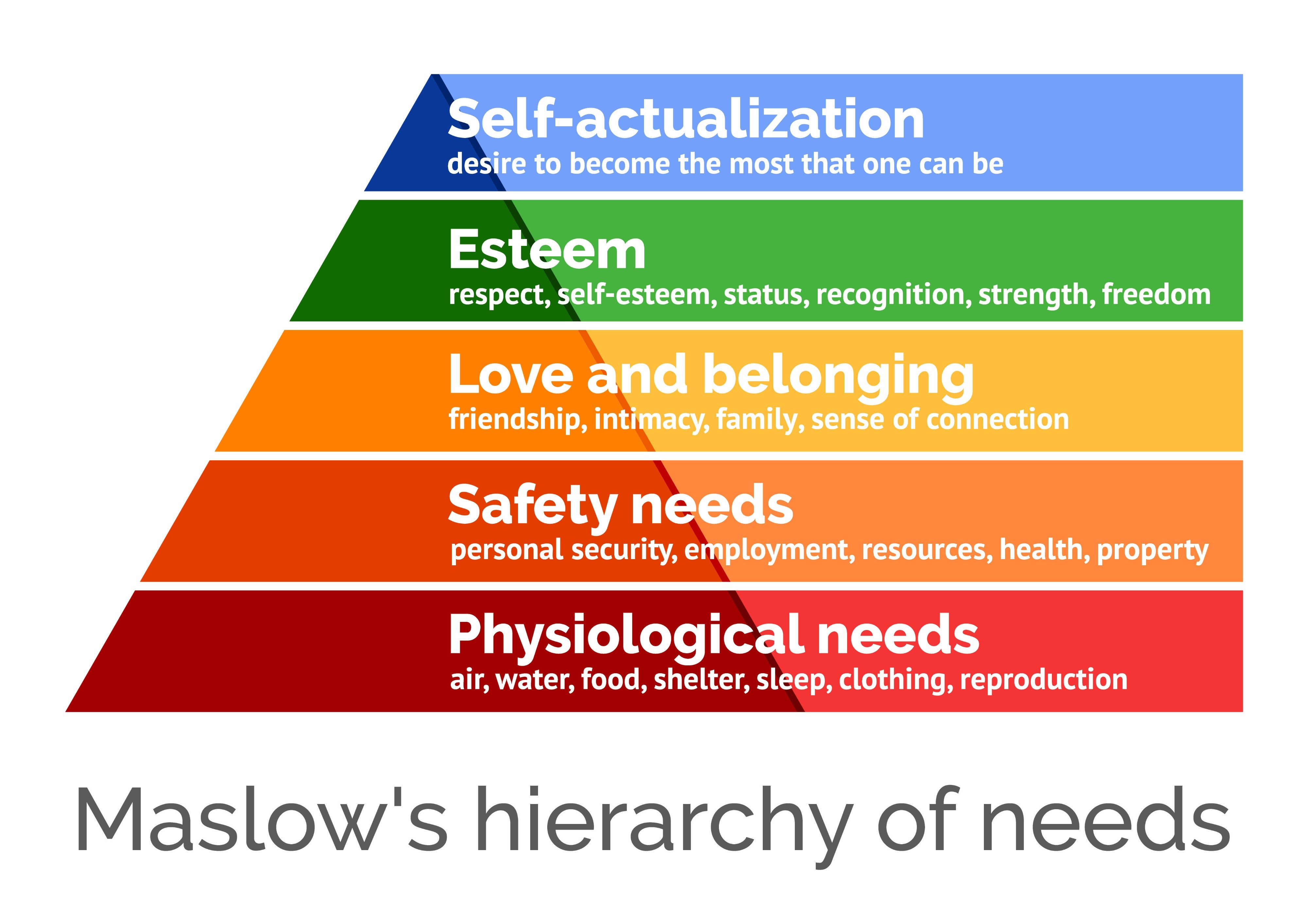
Maslow’s HONs: criticisms
needs may shift depending on an individuals developmental stage or life circumstances
too simplistic to explain all human behaviours
may differ across cultures e.g. collectivist vs individualistic societies
Western cultural bias
affective goal
emotional & physical satisfaction
e.g. meditation to relieve stress
cognitive goal
intellectual curiosity
e.g. solving complex puzzle
subjective organization goal
spiritual awareness & experiences beyond the ordinary
e.g. meditate to achieve heightened spiritual awareness
self-assertive social relationship goal
achievement, recognition, & personal success in social settings
e.g. taking leadership role
integrative social relationship goal
ethical & social obligation
e.g. volunteering
task goal
practicing & developing skills
e.g. learn instrument
learning goal
understanding & mastering course content
performance goal
outcomes rather than learning process
e.g. high grades
work-avoidant goal
minimizing challenges & decrease time & effort spent studying
academic goal types: in classroom applications
create environment where students feel safe making mistakes - errors are part of the learning process
decrease competition between students e.g. avoid publicly posting scores
3 factors that contribute to worker satisfaction
skill variety
task identity
task significance
skill variety
opportunities to use different skills & participate in varied actives
task identity
completing a meaningful piece of work from start to end & seeing the final results
task significance
recognizing that your work has meaning/makes a difference
3 factors that contribute to worker satisfaction: in classroom applications
role-playing historical characters - immersive
projects w/ final products (task ID)
educational games
connect historical events to current/daily situations
growth mindset characteristics
abilities can develop through effort, practice, & learning
embraces challenges
persists through setbacks
effort = path to mastery
learns from criticism
growth mindset: benefits
greater resilience
improved psychological wellbeing
greater academic performance
greater school engagement
greater self-efficacy
reduced academic burnout
fixed mindset characteristics
believes abilities are innate & unchangeable
avoids challenges
gives up more easily when faced w/ setbacks
difficulty = evidence of lack of abilities
intrinsic motivation
motivation that comes from w/in
activity is rewarding in itself
rather than being performed solely for an external reward
flow
a state of complete absorption in an activity
loose track of time
effortless focus & enjoyment
optimal experience & peak performance
when does flow state occur
when the challenge of the task matches the individuals skill level
task too easy = boring
task too difficult = overwhelming
flow - brain: hypothalamic-pituitary-adrenal axis (HPA) steps
hypothalamus → corticotropin-releasing hormone
→ anterior pituitary → adrenocorticotropic hormone
→ adrenal cortex → cortisol
= blood pump, decrease in physiological responses, decrease rest & digest

Mihaly research
low PLS + low PLC = apathy
high PLS + low PLC = bored
low PLS + high PLC = anxiety
high PLS + high PLC = flow

stress
a behavioural, psychological, & physiological response
excessive = impair functioning
but moderate = help focus attention & motivate action
during immediate stress response → body releases adrenaline
increase in energy & alertness
psychological thriving
idea that a stressor can lead to great self-confidence & potentially improving health
stressful experience may encourage positive physical, social, & psychological health behaviours

Yerkes-Dodson law of performance
performance increases w/ stress/arousal, up to an optimal point
beyond = additional stress decreases performance

Yerkes-Dodson law of performance: criticism/limit
strong debate, still to be resolved
the candle problem: participants 1 of 2 instructions
low drive: just obtain normal time to solve for sake of experiment
high drive: depending how quickly you solve the problem, $5-20 reward
the candle problem: participants other category
DM+: easy problem to solve
DM-: difficult problem to solve
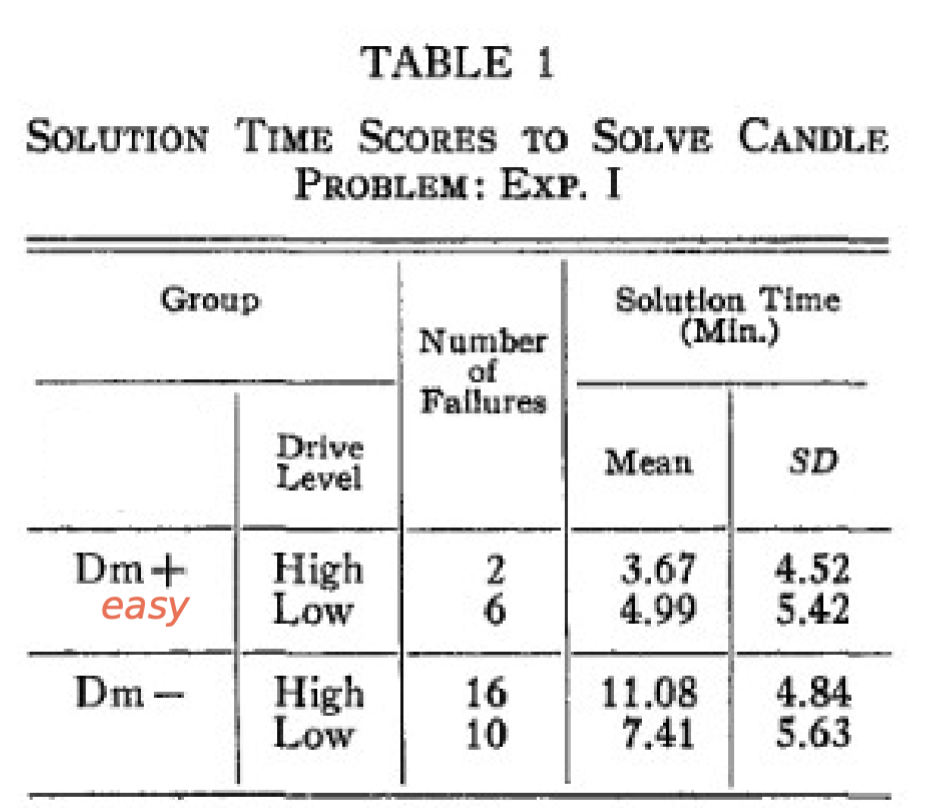
the candle problem: result
DM+:
high drive → low failures - money = success as incentive
low drive → high failures
however no sig diff tho
DM-:
high drive → high failures - incentive didn’t work
low drive → low failures
sig diff
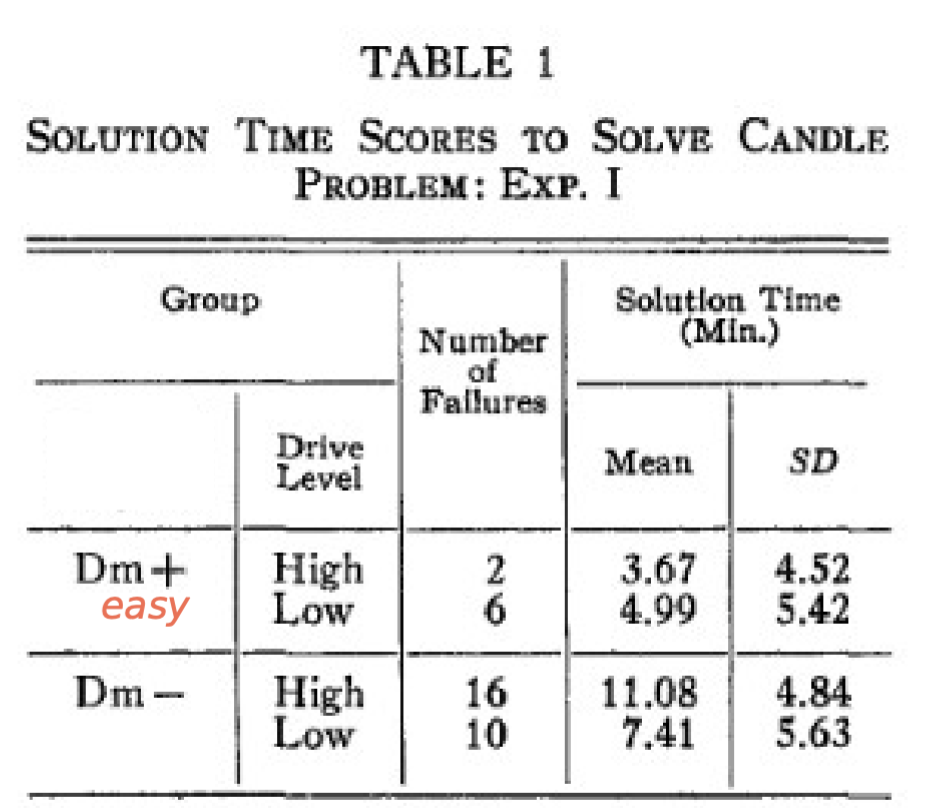
the candle problem: why
functional fixedness: peoples past experiences with objects could limit their ability to creatively solve problems
thinking outside the box
STAR project: groups
offered academic support services
financial incentives for good grases
combo
STAR project: result & thoughts
improved academic standing of women (combo)
complexity when thinking about incentives (challenge, demographic, incentive, characteristics)
results persisted through 2nd year