Task oriented interventions & Mvmt sx diagnosis
 Call Kai
 Learn
 Practice Test
 Spaced Repetition
 Match
 Flashcards
 Knowt Play
1/31

There's no tags or description
Looks like no tags are added yet.
32 Terms
is the most contemporary way to treat neuro patients
Task oriented approach

Task oriented approach - takes into account?
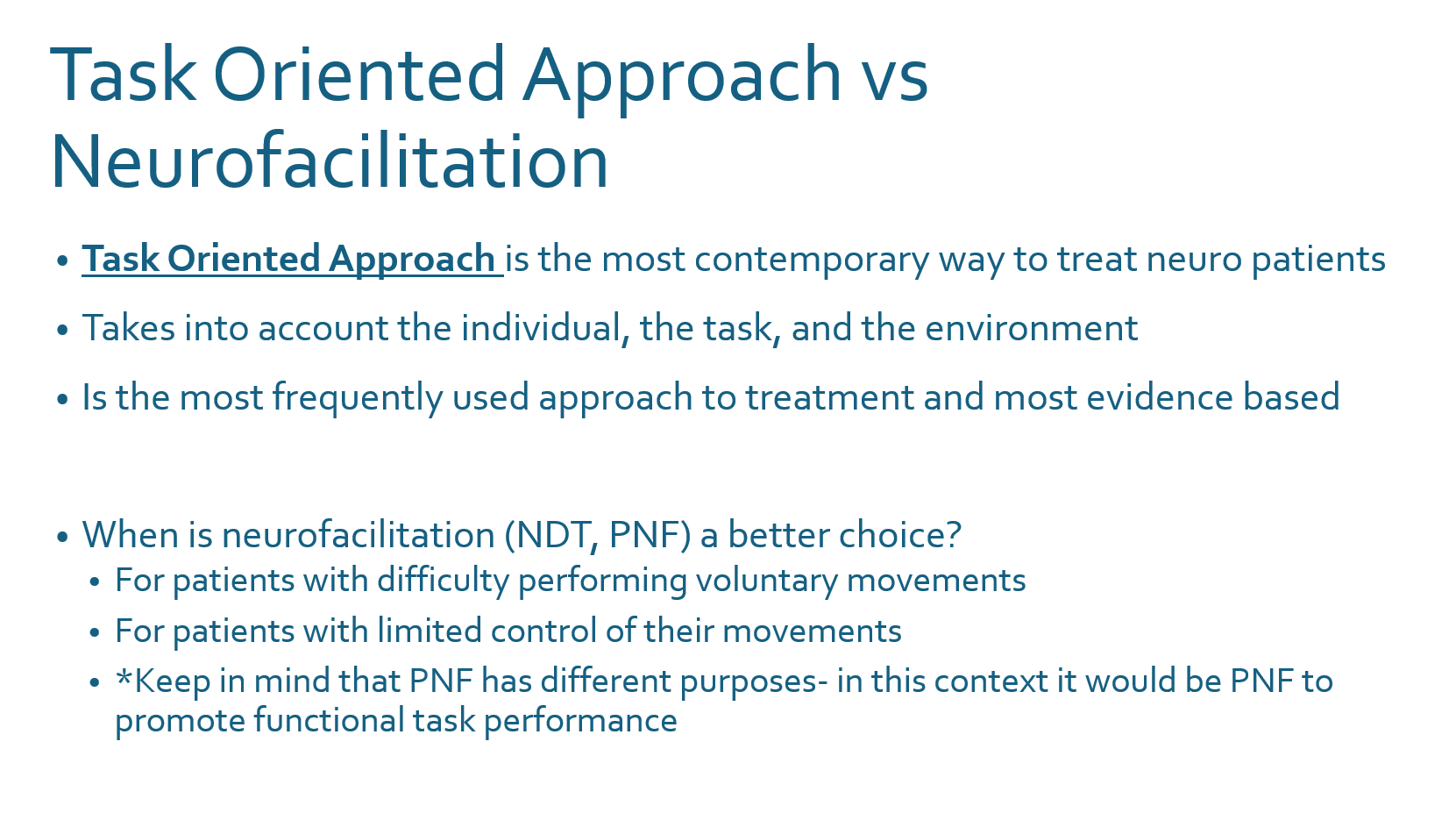
When is neurofacilitation (NDT, PNF) a better choice?

Task oriented approach is considered? creates?

Compensatory strategies may be needed for patients with

Neuroplasticity= ___ induced recovery
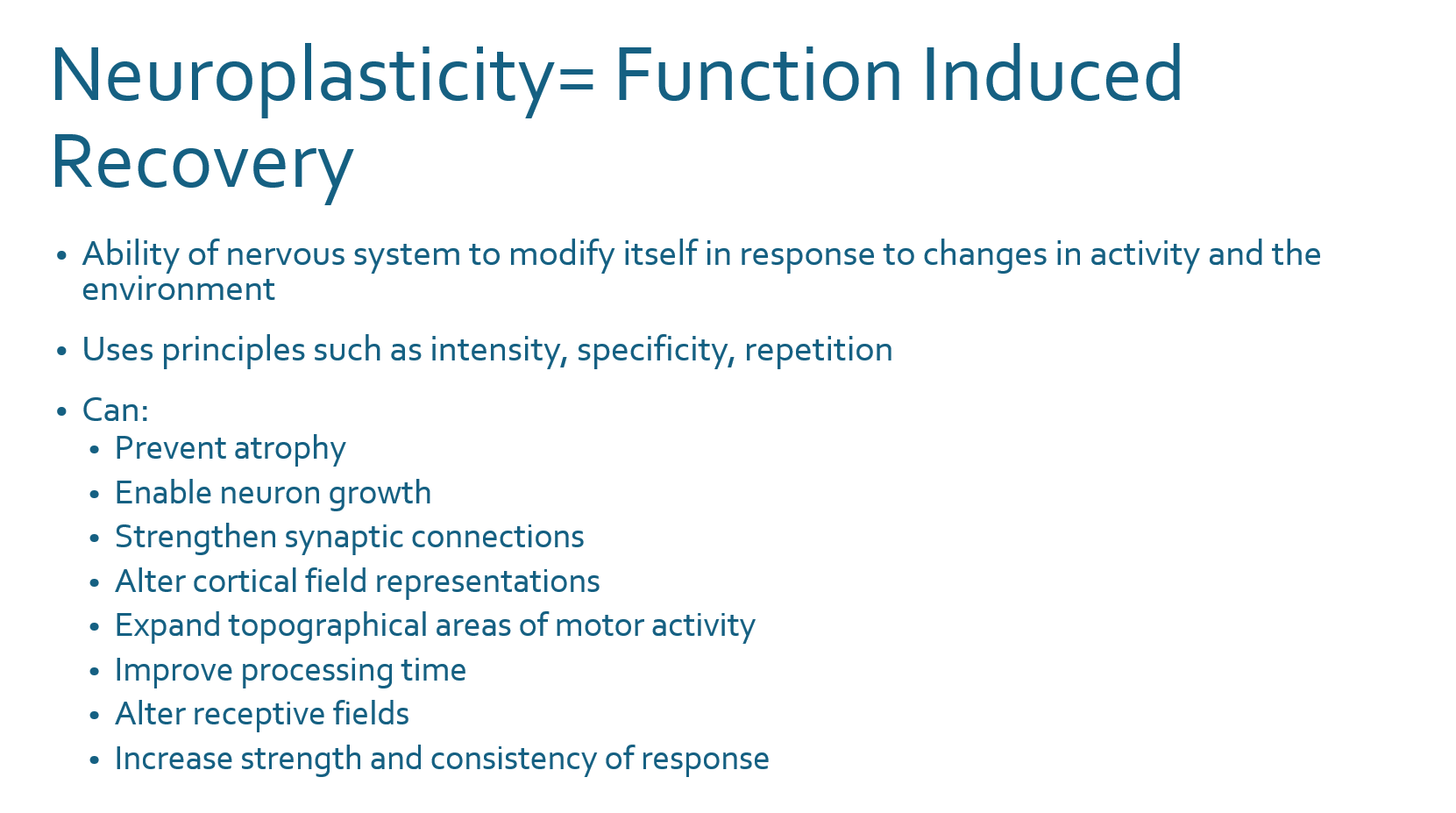
Ability of nervous system to modify itself in response to changes in activity and the environment
neuroplasticity
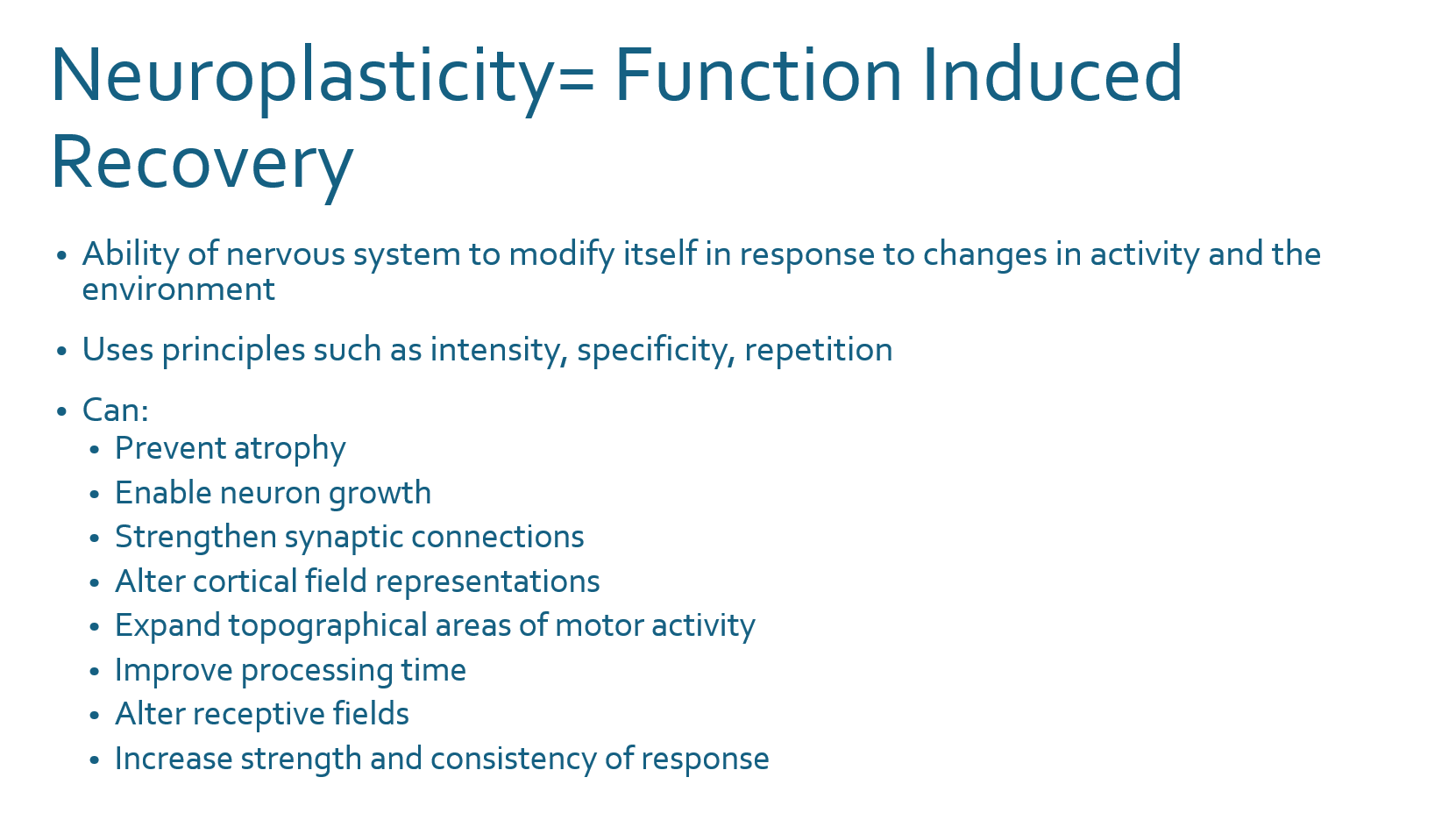
Neuroplasticity uses principles of?

Using Task Oriented Approach
Starts with?
Next:
Finally:

need to evaluate and understand demands of the task in a “typical” performance
Task analysis
Step 1: Task Analysis- “Typical” Movement

Step 2: Task Analysis- Pt Performance

Step 3: Task Analysis- Other Factors

Creating Task Oriented Interventions
Guided by?
Therapist sets practice parameters and types of feedback to maximize learning and retention = _____
Level of practice is?
Patient is encouraged to?

2 Task Oriented Training Strategies

Emphasize early training - promotes? prevents?
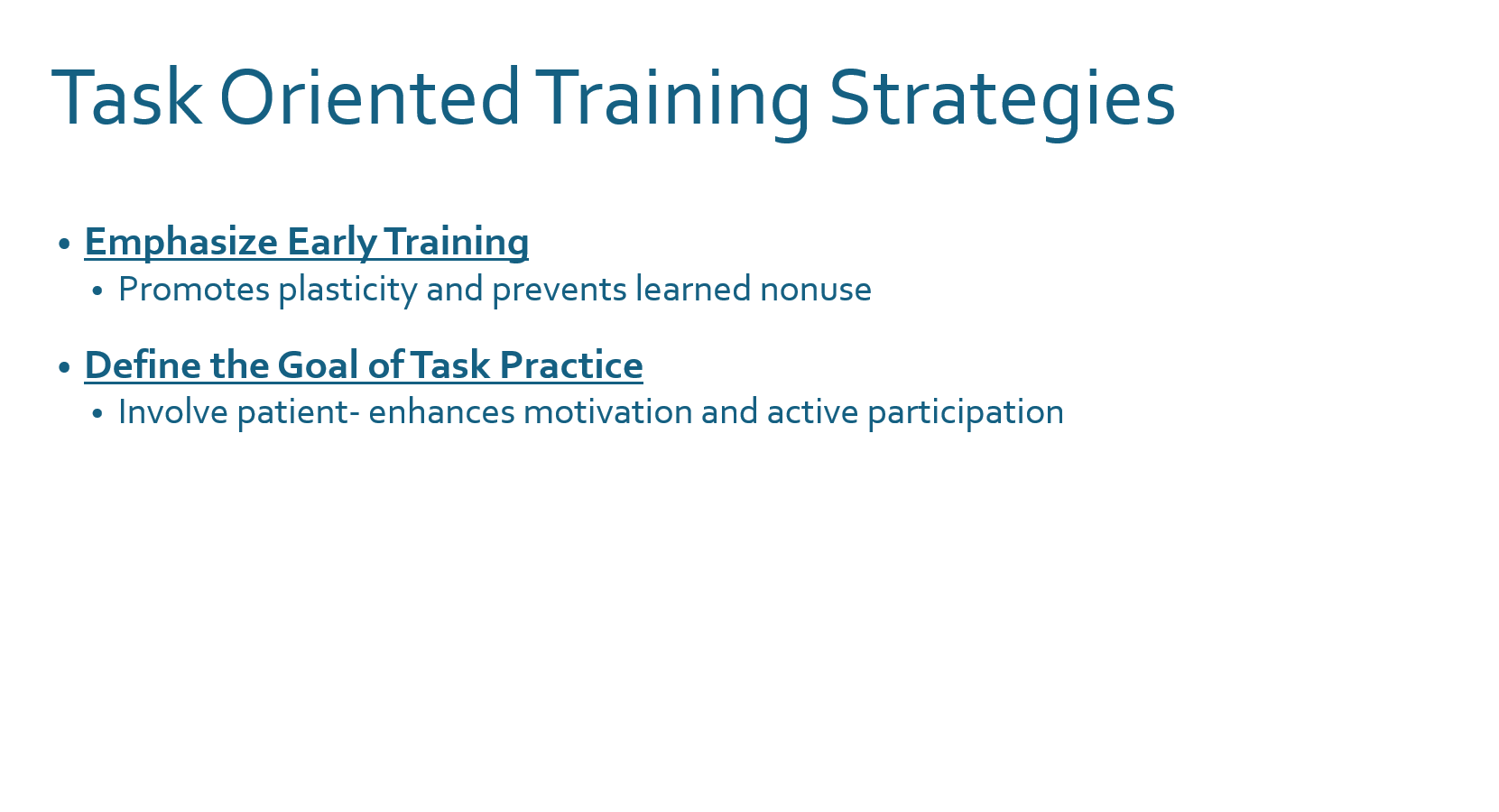
Define the goal of task practice - involved the patient - enhances?

Creating Task Oriented POC

Set Parameters of Practice

Utilize Behavioral Shaping Techniques
Gradually modify the task to?
Recognize & acknowledge?
Emphasize?
Avoid?

Promote problem solving

Structure the environment
Start with?
Progress to?

HEP and Active Learning are Important

What is the main goal of instruction during the cognitive stage of motor learning?
To demonstrate the task exactly as it should be performed and provide a reference of correctness.

What type of feedback is most beneficial during the cognitive stage
Visual feedback and clear, concise verbal instructions.

How should patients learn during the cognitive stage?
Through trial and error.

Why is demonstration important during the cognitive stage?
It provides the patient with a

reference of the correctness
What type of verbal cues are encouraged during the associative stage?
Cues that promote proprioceptive feedback, such as "How did that feel?"
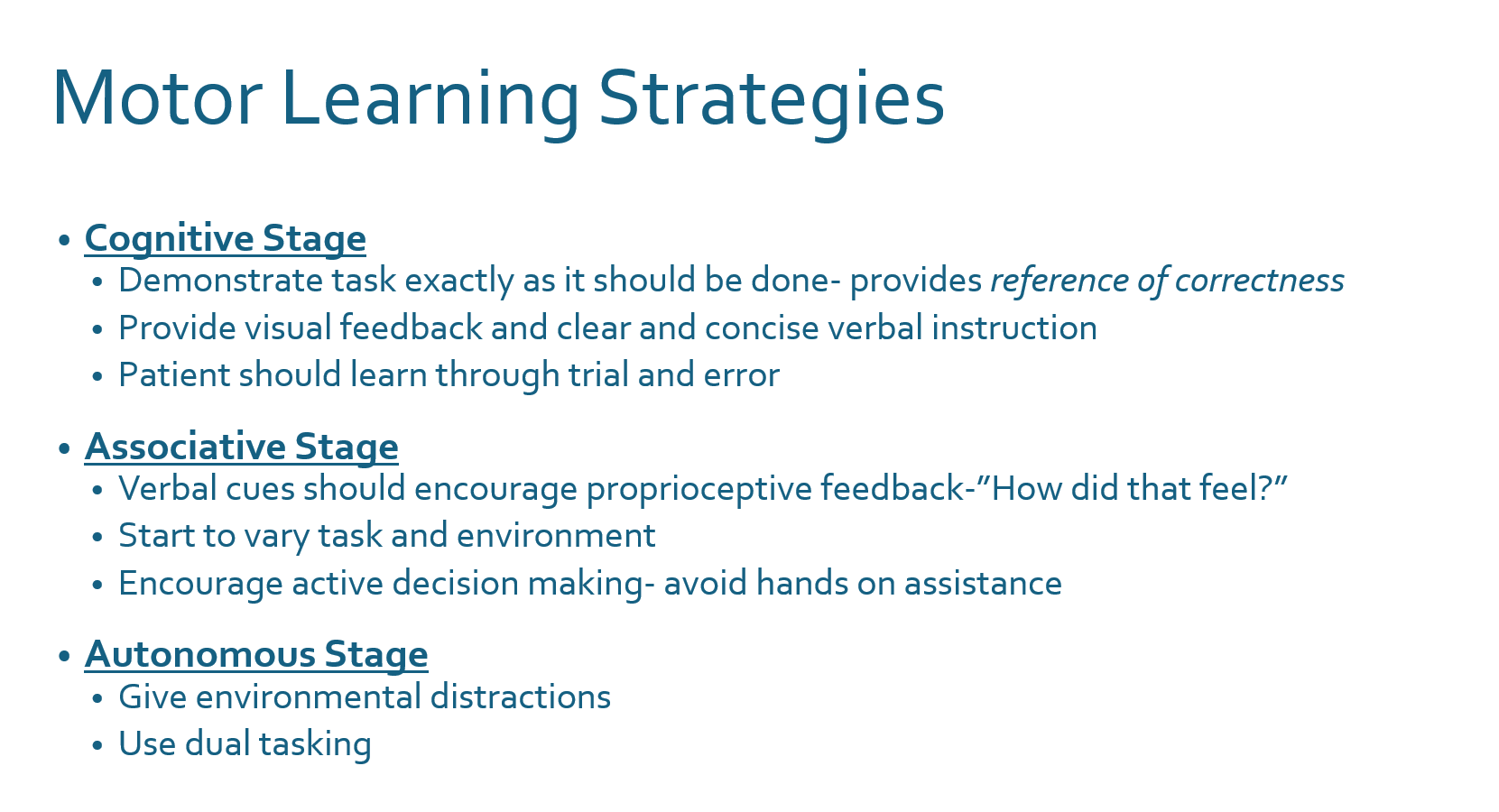
How should practice conditions change during the associative stage?
Tasks and environments should start to vary.

Why should therapists avoid excessive hands-on assistance during the associative stage?
To encourage active decision-making and independent problem-solving.

How should the environment be modified during the autonomous stage?
Add environmental distractions.

What type of activities challenge a patient in the autonomous stage?
Dual-task activities.
