highway code
 Call Kai
 Learn
Learn Practice Test
 Spaced Repetition
 Match
Match Flashcards
 Knowt Play
1/94

There's no tags or description
Looks like no tags are added yet.
Name | Mastery | Learn | Test | Matching | Spaced | Call with Kai | Chat |
|---|
No analytics yet
Send a link to your students to track their progress
95 Terms
what is a single carriageway
traffic traveling in both directions shares the same surface, separated by painted lines without a central reservation
what is a dual carriage way
road is seperated by physical barrier - can have one lane for each
maximum speed limit on built up area (mph)
30
maximum speed limit for single carriageway
60
maximum speed limit for dual carriageway's and motorways
70
stopping distance
allow 2 second stopping gap behind vehicle in front
comprised of thinking distance and braking distance
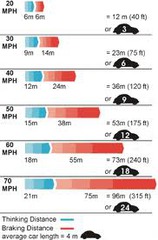
how many metres behind vehicle in front should you be at 20 mph and how many additional meters behind should you be for each additional 10mph
12 meters or three car lengths and add 12 meters every extra 10mph
how many metres and car legnths behind vehicle in front should you be at 30 mph
23 meters and 6 car lengths
what factors might influence stopping distance (3)
weather, road, condition of your car
broken white line
centre of road
what happens to broken white line road markings when a hazard is approaching
lines lengthen and gaps shorten - lines indicate speed
what does it mean if double white lines when line closest to you is broken
- can cross to overtake if safe before reaching solid white line on your side
what does it mean if double white lines closest to you are solid
no overtaking
unless maintenance vehicle less than 10mph
areas of white diagonal stripes or chevrons and their borders
seperate traffic lanes or protect traffic turning right
dashed border = can enter if safe
solid = dont enter

white road studs mark the
middle of road
red road studs mark the
left edge of road
green road studs mark (2)
the left edge of main carriageway at lay-bys and slip roads
amber / yellow studs mark
right edge
lane discipline on three-lane single carriageway
stay left, middle for overtaking, dont use right
two lane DC rules
use right for if turning right and overtaking but return to left
cycle lanes rules (2)
Don't cut across cyclists when turning
give way when they are crossing at junctions
one-way roads, lane discipline
Stay left if turning left, stay right if going right
signs of a one-way road
no entry road markings
DO's in slow-moving traffic (2)
allow access to side roads
allow pedestrians and cyclists to cross in front
DO's on single track roads (2)
pull into passing place or wait opposite one on your right, also if vehicle wants to overtake
give way to those coming uphill
make sure before overtaking ..... (3)
- road is sufficently clear ahead
- road users are not already overtaking you
- there is sutiable gap in front of road user to slot into
overtaking DONT's (2)
- dont follow vehicle overtaking ahead as may not be enough room for both
- don't overtake on hills or bends
dont overtake on the left unless....
vehicle in front is turning right
traffic on right is slower than you
overtaking large vehicles DO's
drop back to increase range of vision to see infront of vehicle and to be seen in mirrors
when turning right you should position yourself
left of the middle of the road or space marked for those turning right
when turning right you should leave room for
vehicles to pass on left if possible
when turning right you should check
mirrors and blind spots for overtakers
what should you check for when turning left (2)
cyclists and dont cut in on them
give way to bus and cycle lanes
white zig zag road markings
controlled zone
dont park
do you have to wait for pedestrians to fully cross pelican crossings with central island
yes
pelican crossing flashing amber light
proceed with caution but give way
when turning a junction be aware of _____ which could be behind or on the inside of cars
motorcycles
once spotting emergency vehichles you should prepare by
anticipating their route
you must still comply with ___ when dealing with emergency vehicles
road signs
why shouldnt you brake harshly during junction/ roundabout or in general when spotting emergency vehicle
vehicles behind you may not have same view
if pulling up on side to let emergencies through, where shouldnt you stop (3)
bend
hill
narrow road
what should you be aware of when interacting with large vehicles e.g. buses (3)
may not be able to see you in mirrors
will need extra room when turning
pull back
how should you adjust to wet weather and why
double stopping distance due to less tyre grip
how might windy weather affect you
turbulence from large vehicles
stay back from motorcyclists who are affected by wind
in fog you should use
wipers and demisters
brake lights
what must you not do in fog
use rear fog lights as they overpower brake lights
hesitate in a position that is in traffics path
double yellow lines
no waiting at any time
How shouldn't you park?
against flow of traffic
clearway's
stretch of road where you cannot park
places you cannot park or stop
roads with double white lines
yellow markings
cycle lanes
within 10m of junction
lowered kerb
where are double white lanes typically placed
hazardous locations e.g. blind bends
when parking on roads with speeds greater then 30mph at night you must
put sidelights/ parking lights on
parking facing uphill
select forward gear and turn steering wheel AWAY from kerb
parking facing downhill
select reverse and turn sterring wheel TOWARDS kerb
how to respond to amber flashing light signals on motorway
prepare for hazard ahead
reduce speed
only increase speed after passing non flashing signal
red flashing light signals on motorway
closed lane
cautions on motorway closed lane
several hazards in closed lane
left lane closed at exit slip road means exit cannot be used
when joining motorway (3)
match speed
give priority to traffic already there
stay on slip road if it becomes extra lane
What shouldn't you cross when joining the motorway
dont cross solid white lines or hard shoulder
what shouldnt you do on motorway under any circumstances
reverse
including in cases of hard shoulder and missed exits
what should you do if vehicles are pulled over in hard shoulder
move over a lane to give them space
steps when overtaking on motorway (3)
check mirrors as traffic can come behind you quickly
take time to judge speeds
blindspot check
when can you 'undertake' in left lane
traffic in left is moving faster then right and you must keep up with traffic in your lane
when can you use a hard shoulder as an extra lane on a motorway
when speed limit is shown above it
do not use when X is shown above it
rejoining carriageway from hard shoulder
build speed and indicate
rejoining carriageway from emergency area
use emergency telephone to help rejoin
in case of road works make sure you adhere to
temporary speed limit
when you cross level crossings what must you make sure that
the road is clear on the other side
where must you stop at controlled train crossings
behind the white line
what should you bear in mind about some open train crossings
some may not have barriers or signs
can you drive on tramways
no and don't drive directly on rails
do tramways operate with their own signals and traffic lights
yes
passing trams
do not pass trams on left or right unless road signs offer alternative route
speed of 0-10mph
1st gear
speed of 10-20mph
2nd gear
speed of 20-30mph
3rd gear
speed of 30-40 mph
4th gear
if a vehicle in the wing mirror is pulling away you are…
going faster than them
if a vehicle in your wing mirror is coming towards you they are ….
going faster than you
where would you see contraflow bus lane
one way street
standard lights to use if conditions are normal
dipped headlights
where can you overtake on a one way street
left or right
signs to give warnings
triangular with red border
signs to give orders
circle with red border
restrictions for trailer
cannot use right hand lane
ESC light comes on briefly while driving means
ESC system has activated
if car wheels are unbalanced
steering will vibrate
single yellow line
waiting restrictions apply at times
speed limit for cars towing caravans on built up areas, single carriageways, and dual carriageways/motorways
30, 50, 60
what should you do before making U-turn
look over shoulder for final check
what is extra important during wet weather (parked or driving)
keeping both hands on steering wheel
toucan crossing
includes cyclists and pedestrians
pelican vs puffin crossing
pelican is old and has fixed timings
puffin crossing has smart sensors
warning triangle distance from car
45m
whats the nearest you may park to a junction
10m