Chapter 8: Physical Growth, Maturation, and Aging
 Call Kai
 Learn
 Practice Test
 Spaced Repetition
 Match
 Flashcards
 Knowt Play
1/95

Earn XP
Description and Tags
Exam 2
96 Terms
Physical Growth is influenced by
Genetic and Extrinsic factors
Patterns in growth and aging (Universality) but can vary amongst individuals (Variability)
Universality: Patterns that hold for all humans
Specificity: Individual Variation
Understanding of growth and aging
fundamental to help individuals develop/maintain motor skills
Educators and therapists can make tasks
developmentally appropriate
Prenatal Stage consists of
Embryonic and Fetal Stage
Full term pregnancy lasts an average of
40 weeks
Pregnancy is divided into 3 trimesters
First : first 12 weeks
Second : 13-27 Weeks (golden age period)
Third : 28 Weeks to birth
First 2 weeks of the prenatal development is called
Germinal Stage
Germinal Stage, _______ has occured
fertilization (zygote is formed)
zygote divides into blastomeres (group of cells)
- 12-15 blastomeres, morula
During the Germinal Stage, the morula then turn into
Blastocysts
About 6 days after fertilization, blastocyst will implant itself in the endometrium (Lining of the uterus)
Placenta development also begins
Germinal Stage
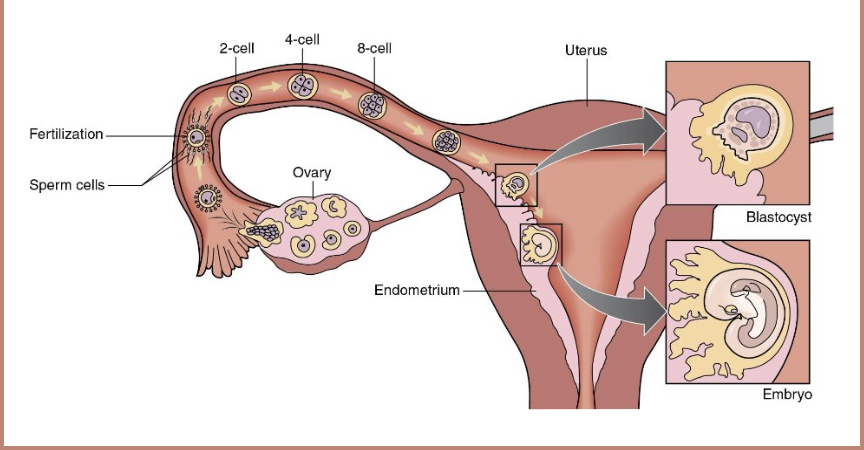
The Embyronic Stage of Prenatal Development is how many weeks
3-8
Differentiation : the process wherein cells become specialized, forming specific tissues and organs.
What week does heartbeat begin
4 weeks
Human form is noticeable at
8 weeks
Embryonic Stage

What layers are grown during the Embryonic Stage
Endoderm, Ectoderm, and Mesoderm
Endoderm
inner layers; provide groundwork for development of respiratory and digestive systems
Ectoderm
outer layers; nervous system is developed, sensory receptors (i.e., ears, eyes), skin features (hair, nails)
Mesoderm
outer layers; circulatory system, muscles, bones, excretory system, reproductive system
Week 3 of the Embryonic Stage
Appearance: Head, tail fold form
Internal Development: Optic vessels, head
Week 4 of the Embryonic Stage
Appearance: Limb rudiments form
Internal Development: heartbeat begins, organs are recognizable
Week 5 of the Embryonic Stage
Appearance: Eyes, ears, nose, mouth, digits form
Internal Development: Sensory organs developing, bone ossification
For Prenatal Development, the Fetal Stage is what weeks
9 to birth
differentiation occurs
functional capacity
What growth continues during the fetal stage?
Tissues and organs
Hypertrophy : Increase in SIZE of cells
Hyperplasia : Increase in NUMBER of cells
For the fetal stage, growth occurs in what two directions
Cephalocaudal A
Proximodistal B

Week 12 of the Fetal Stage
Appearance: Sex recognizable, head is large
Internal Development: Brain configuration is nearly complete
Week 16 of the Fetal Stage
Appearance: motor activity ; scalp hair present; trunk size gaining on head size
Internal Development: Heart muscle developed; sense organs are formed
butterflies in stomach
Week 20 of Fetal Stage
Appearance: Legs have grown
Internal Development: Myelination of spinal cord
Week 28 of the Fetal Stage
Appearance: Increasing development of fat tissue
Internal Development: Retina layered and light receptive
baby can hear and see light
Week 32 of the Fetal Stage
Appearance: Weight increase
Internal Development: Taste sense operating
Week 36 of Fetal Stage
Appearance: Body more rounded
Internal Development: Ossification begins in distal femur
Week 40 of Fetal Stage
Appearance: Skin smooth with pinkish tone
Internal Development: Proximal tibia begins ossification; myelination of brain begins
First OB Gyn Appointment happens when
8-10 weeks

OB Gyn Visits happens every ___ weeks
four
relatively short
15 minutes
H/W
Doppler Heartbeat
Prenatal Ultrasound happens when
18-22 weeks
they take measurements of : brain, heart, kidneys, bladder, hands, arms, fingers, umbilical cord, and placenta location
Different Fetal Motor Activity
Fetus is Active
fetal movements are REFLEXIVE (palmar grasping, sucking reflex)
Fetal movements : yawn, stretching, blink, kick, turning head
Both ____ and _____ need adequate nutrition
mother and fetus
Women at low _______ typically give birth to lighter infants
socioeconomic status
greater risk of disease
infection
death
Physical Activity Guidelines for Americans (2018) says that women should engage in
150 MINUTEs of moderate intensity aerobic activity during pregnancy and post-partum
if already active before pregnancy, they can continue during and after pregnancy
Pregnant women should not be doing exercises
lying on their back after the first trimester
avoid collision sports
avoid activities with high risk of falling
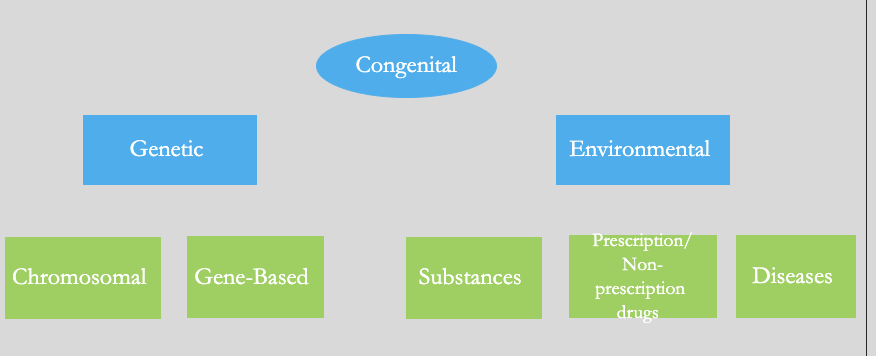
Abnormal Prenatal Development may arise from
either genetic or extrinsic factors.
Congenital Defects
Abnormalities present at birth, regardless of whether causes are genetic or extrinsic.
Abnormal Prenatal Development Congenital Defects Chart
Fetal Nourishment
Many characteristics of fetal environment have the potential to affect growth (Positively or Negatively)
Extrinsic factor
Placenta : Organ connected to the fetus
Growing fetus needs : energy, nutrition, and oxygen
Mom feels baby starting at ___ to __ weeks
16 to 20
Abnormal Prenatal Development – Genetic Causes
Individual may inherit genetic abnormalities as dominant or recessive (including sex linked disorders)
Dominant disorders
Recessive disorders
Mutations
Chromosomal Disorders occur when there are
extra or missing chromosomes
ex: down syndrome
Each cell in the body has
46 pairs of chromosomes
23 from the father
23 from the mother
Down Syndrome occurs when chromosome 21 has
three chromosomes
lifelong developmental delays
Gene based disorders are caused by a
mutation in a gene
Cystic Fibrosis
Sickle Cell Trait
Sickle Cell-Disease
What environmental factors can cause abnormal prenatal developement
Teratogens are drugs or chemical agents that cause abnormal prenatal development upon exposure
Viruses, drugs, chemicals
Internal or external pressure to the fetus
Extreme temperatures
Teratogens are
Substances

Teratogen Substance : Alcohol
Attention problems, smaller brains, hyperactivity, low IQ, delayed growth
Teratogen Substance : Narcotics
opioids, heroin, codeine, fentanyl
Effects: Heroine-Low birth weight, risk of HIV infection, low IQ, attention, behavioral issues
Teratogen Substance : Cocaine
Brain, CNS damage, low attention span, deficiencies in fine motor skills involving eye-hand coordination
Teratogen Substance : Tobacco
Low birth weight, reduced mental and visual alertness, respiratory disorders
___/10 women take at least 1 prescription drug during pregnancy
7
Perscription drugs can be harmful to
to the developing systems or body parts during the time of usage
Can be harmful to fetus, while beneficial to mother
What was developed in Germany to treat morning sickness but caused severe damage to the developing fetus.
Thalidomide
Physicians ________ recommend treating illnesses with nonprescription medication
do not
_______ intake during the first trimester can lead to pregnancy loss and congenital defects
Aspirin
During ______ trimester, nonprescription drugs can cause premature closure of vessel in infant’s heart
third
______ intake can affect development of circulation and kidneys
Ibuprofen
________ intake can increase child developing ADHD
Acetaminophen
Teratogens : Maternal Diseases
Rubella, HIV, and Toxoplasmosis
Rubella is a
virus characterized by swollen lymph nodes, mild fever, body aches
deafness, slowed growth, cataracts
HIV is
Human immunodeficiency virus can be passed to fetus while the fetus is developing, during delivery, through breast milk
Neurodevelopmental delays, language delay, decrease in fine motor coordination
Toxoplasmosis is caused by
a protozoa in uncooked beef, pork, and lamb
Mental slowness, motor abilities affected, deafness
Prenatal Diagnostic Procedures
Ultrasound/Sonogram
Amniocentesis
Chorionic Villus Sampling (CVS)
Alpha-Fetoprotein Test
Triple Marker Screening
Prenatal development represents a very important
sensitive period for growth. It is important to understand the stages and the timing of the development of functional systems.
Prenatal abnormalities can arise from
genetic, extrinsic factors, or a combination and can have a long-term impact growth and development.
Overall Growth is
Physical Growth : An increase in size or body mass resulting from an increase in complete, already formed body parts
Predictable and Orderly (non linear but is consistent)
Height and Weight
___________ is the age during which one is growing the fastest
Peak Velocity
____________ is a period of rapid physical growth and recovery. It occurs after a period of deprivation or negative influences.
Catch-Up Growth
____ is factor that determines growth
Sex
gender differences are minimal
Girls begin growth spurt at age
nine
Boys begin growth spurt at age
eleven
Height follows a ____ pattern
sigmoid
Rapid INCREASE in height during infancy, STEADYING during childhood, INCREASE during adolescence, TAPERS OFF at end of growth period
______ ______ is the age during which one is growing the fastest
Peak Velocity
Girls : 11.5-12 years old
Boys: 13.5 to 14 years old
Long growth period of ______ contributes to absolute height differences
males
Weight follows a _____ pattern
sigmoid
Rapid INCREASE during infancy, MODERATE INCREASE increase during childhood, SPURT during early adolescence, continued INCREASE that tapers off at end of growth period
Weight is susceptible to
extrinsic factors such as diet, exercise, and disease
Peak Weight velocity follows
peak height velocity in adolescence
By 2.5–5 months in boys
By 3.5–10.5 months in girls
_______ ________ is the developmental process leading to a state of full functions
Physiological maturation
chronological age
Development age is a better indicator of Maturation( EX: Early childhood, Adulthood)
Adults typically exhibit a ____________ in height across age.
slight decrease
older = shorter
Adults typically exhibit an _________ in weight across age.
increase
older = gain weight
The maintenance of postnatal growth during adulthood and in aging is dependent on
lifestyle factors including diet/nutrition and exercise
combat disease and age related breakdown
important for maintaining functional capacity
Nature is the development caused by
genes
biological predispositions
Nature states that development is a product of
Maturation
development unfolds in a systematic and sequential
Nurture is the development caused by
the environment
physical and social conditions
development is a product of Learning
development is a variable
Language of Nature and Nurture

KNOW THIS TABLE !!!!
____ ______ is federally funded program that provides services and resources to low – income families
Head Start
Children : education, nutrition, socializing
Parents : Parenting classes, Education programs
Medical Services, Dental Services, Food Banks, Resources
Head Start launched in
1965
started as a 8 week summer program and grew into school year length program
Gymboree is a curriculum designed to enhance
children’s (ages 0-5) social/emotional, cognitive, and physical development
Infant:
Toddler:
Preschool
Gymboree Play and Music launched in
1976
900 locations across 30 countries and regions
Deprivation is a
sensitive topic
Victor, Wild Boy of Aveyron (case in France, left to be raised by wolfs in forest): Cognitive and Language Delays
Anna (Isolation) Locked in Attic: Malnourishment, Language Delays, Cognitive Delays, motor delay