BMS 300- Exam 2
 Call Kai
 Learn
Learn Practice Test
 Spaced Repetition
 Match
Match Flashcards
 Knowt Play
1/206

There's no tags or description
Looks like no tags are added yet.
Name | Mastery | Learn | Test | Matching | Spaced | Call with Kai | Chat |
|---|
No analytics yet
Send a link to your students to track their progress
207 Terms
Mechanisms of intercellular communication
Exchange of ions and molecules between adjacent cells (of the same type) across gap junctions
Chemical signals transfer information from cell to cell
within a single tissue. Example: blood clot formation
Messages affect the same cells that secrete them
Hormones are transported to target cells in the bloodstream
Hormone
Is more broadly defined as any chemical, irrespective of whether it is produced by a special gland or not, for export or cellular use, that "controls and regulates the activity of certain cells or organs
Direct communication
Exchange of ions and molecules between adjacent cells (of
the same type) across gap junctions

Paracrine Communication
Chemical signals transfer information from cell to cell within a single tissue. Example: blood clot formation

Autocrine Communication
Messages affect the same cells that secrete them
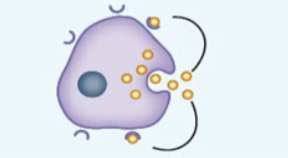
Endocrine Communication
Hormones are transported to target cells in the bloodstream

Endocrine vs. Exocrine glands
Both are made up of glandular epithelium
Exocrine glands release their contents through a duct that leads to the epithelial surface (Reaches the external environment of the body)
Merocrine
Apocrine
Holocrine
Merocrine
Part – release by exocytosis (sweat & salivary glands)
Saliva and watery sweat (mere water)
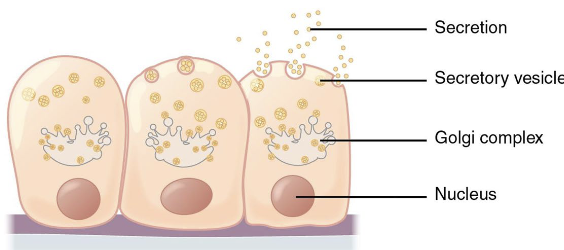
Apocrine
Away – release by part of the cells is pinched off (mammary & odorous sweat glands)
Milk and odorous sweat, (smelly ape)

Holocrine
Whole – release by entire cell rupturing (sebaceous glands)
(Hair and holes from acne)
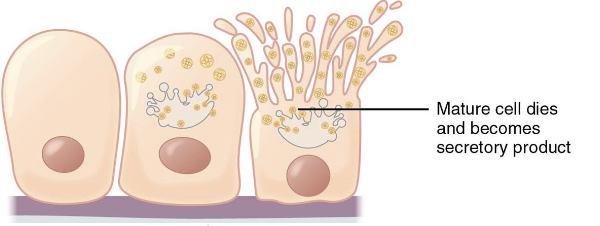
Sebaceous glands are examples of ____ exocrine glands because the entire cell ruptures to release the secretion.
Holocrine
Amino acid derivatives
Hormone being made from a single amino acid
Tryptophan → Melatonin
Tyrosine → Thyroid hormones (hydrophobic) vs. Catecholamines (Epinephrine & Norepinephrine) (hydrophilic)
Peptide hormones
Amino acids linked together
Peptides (2-50 amino acids (a.a) vs. protein hormones (>50 a.a)
Lipid derivatives
Fatty acid molecules
Steroid hormones - derived from cholesterol
Include androgens from the testes in males
Estrogens and progesterone from ovaries in females
Corticosteroids from adrenal cortex
Calcitriol from kidneys
Bound to specific transport proteins in the plasma
Remain in circulation longer than peptide hormones
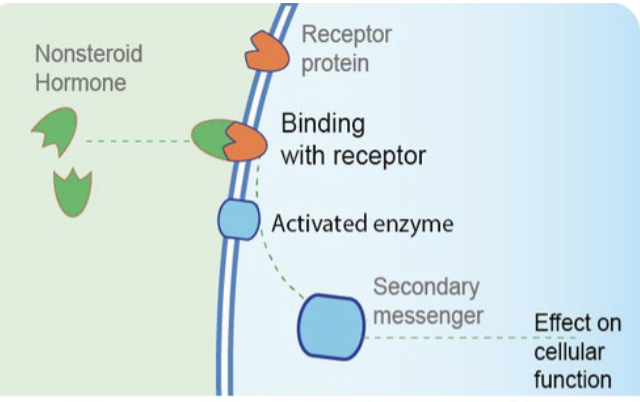
Catecholamines and peptide hormones mechanism of action
• Not lipid soluble
• Unable to penetrate plasma membrane
• Bind to receptor proteins on outer surface of plasma membrane (extracellular receptors
Steroid and thyroid hormones
• Lipid soluble
• Diffuse across plasma membrane and bind to receptors inside cell (intracellular receptors)

Hormones derived from ____ are most likely capable of diffusing across plasma membrane and binding to receptors inside cell.
Lipids
G protein coupled receptors
• A hormone that binds to receptors in the plasma membrane cannot directly affect the activities inside the target cell.
• Instead, the hormone uses an intracellular intermediary to bring about its effects.
• Once activated, many G proteins increase cyclic AMP levels, which acts as the second messenger within the cell.

Effects of secondary messengers (G-protien receptors) activation
The activation of enzymes or opening ion channels may accelerate the metabolic activity of the cell.
E.g. Epinephrine and norepinephrine, Calcitonin, Parathyroid hormone, ADH, ACTH, FSH, LH, TSH
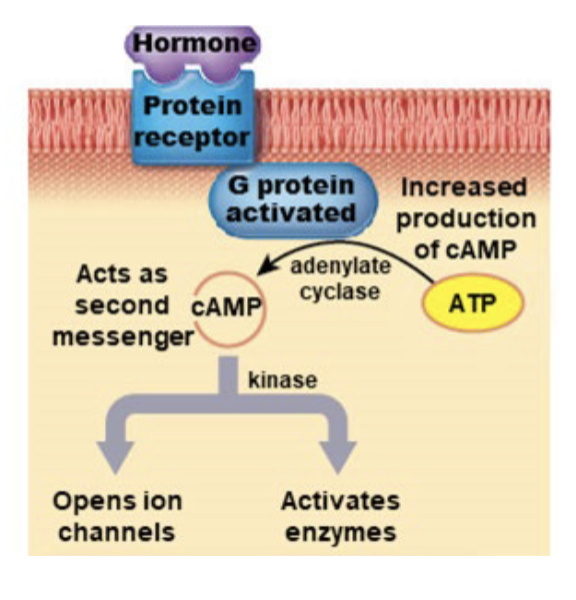
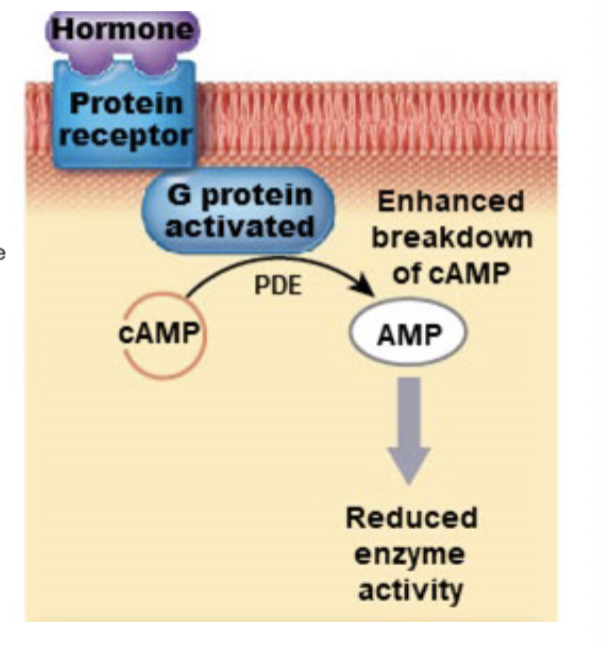
Effects of secondary messengers (G-protien receptors) inhibitory effect
In some instances, G protein activation can decrease cAMP levels in the cytoplasm resulting an inhibitory effect on the cell.
E.g. Epinephrine and norepinephrine
GPCR – 7-pass transmembrane receptor pathway
ligand binding extracellular side causes conformational change
alpha subunit of GTP binding protein binds intracellular GPCR
alpha subunit is inactive with GDP
GDP released, GTP binds
alpha subunit is active with GTP
activated alpha subunit separates from beta and gamma subunits
Gαs
Gαi
Gαq
G-alpha-s (Gαs ) and G-alpha-i (Gαi ) pathways are both mediated by
cAMP/PKA
Both subunits bind adenylyl cyclase
G-alpha-s (Gαs) is ___
Stimulatory
Excites adenylyl cyclase and increases cAMP/PKA
Adenylyl cyclase converts ATP to cAMP
G-alpha-i (Gαi ) is ____
Inhibitory
• Inhibits adenylyl cyclase and decreases cAMP/PKA
G-alpha-q (Gαq ) pathway
IP3/Ca2+
Alpha subunit binds Phospholipase C (PLC)
Converts PIP2 to IP3 and DAG
IP3 binds intracellular calcium store
Releases calcium into cytoplasm
Increased intracellular calcium causes smooth muscle contraction

Which of the following will need to use a 2nd messenger to activate cellular targets?
Epinephrine
When eipinephring binds to a G-protein coupled receptor, a mutation in ____ may prevent the release of intrercellular Ca2+.
G alpha q
Transport and inactivation of hormones
• Hormones may circulate freely or travel bound to special carrier proteins (if lipid soluable)
• Bloodstream contains a substantial reserve of bound hormones (long life span)
Free hormones
Remain functional for less than an hour and are inactivated when they
Diffuse out of bloodstream and bind to receptors on target cells (can diffuse more easily than bound cells)
Are absorbed and broken down by liver or kidneys, or
Are broken down by enzymes in blood or interstitial fluids
• Thyroid and steroid hormones remain functional much longer
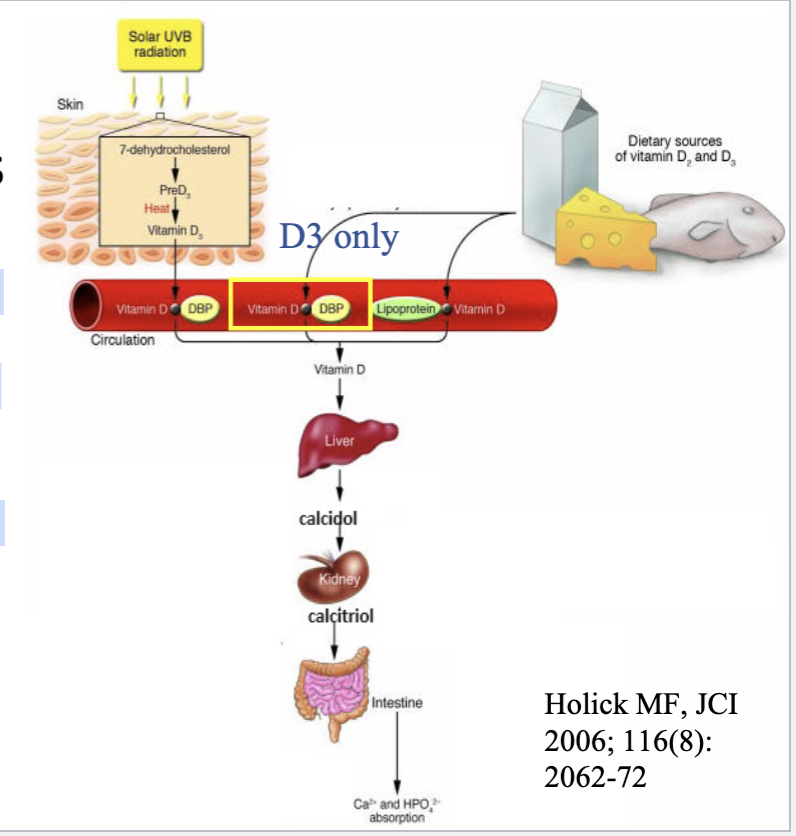
Hormones and intracellular receptors – Genomic effects
Has an impact of DNA and protein synthesis
Steroid hormones can alter rate of DNA transcription in nucleus
Alterations in synthesis of enzymes or structural proteins
Directly affect activity and structure of target cell

Hormones and intracellular receptors – Non-genomic effects
Can bind directly to mitochondria to increase ATP production
Thyroid hormones bind to receptors within nucleus and on mitochondria
Activate genes or change rate of transcription
Increase rates of ATP production

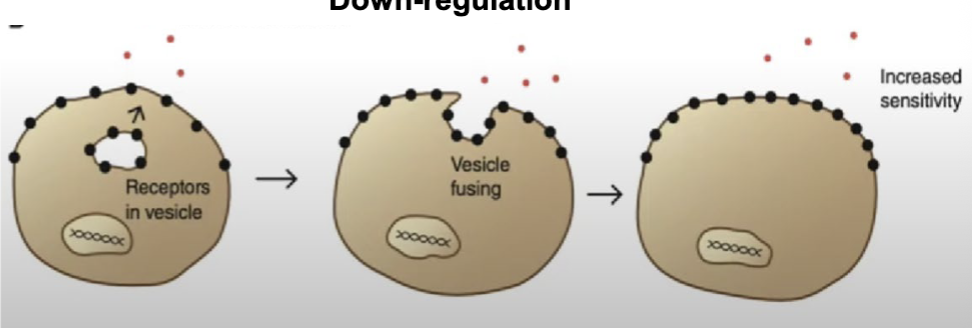
Down-regulation
When levels of a particular hormone are high, cells become less sensitive to it by decreasing the number of hormone receptors

Up-regulation
When levels of a particular hormone are low, cells become more sensitive to it by increasing the number of hormone receptors
Hormone release can be triggered by
Hormonal stimuli
Humoral stimuli
Neural stimuli
Hormonal Stimulus
Arrival or removal of hormone
The hypothalamus secreates hormones that stimulate the anterior pituitary gland to secreate hormones that stimulate other endocrine glands to secrete hormones
Thyroid gland
Adrenal cortex
Gonad (Testis)

Humoral Stimulus
Refering to body fluids
Change in extracellular fluid concentration
Capillary blood contains low concentration of Ca2+ which stimulates secreation of parathyroid hormone (PTH) by parathyroid glands

Neural Stimulus
Neurotransmitters
Preganglionnic sympathetic fibers stimulate adrenal medulla cells to secreate catecholamines (epinephrine and norepinephrine)
CNS
Medulla of adrenal gland

A protein contains a DNA binding domain and a hormone binding domain. Which of the following is likely true about this protein.
It can be synthesized on free ribosomes since it is mostly hydrophillic it is comfortable in the cytoplasm
Secretes
Something that is made and then released
Released
Just letting out what “somone” else made
Pituitary gland
Hangs inferior to hypothalamus
• Anterior lobe has three regions (produces & secretes 7 hormones) – ACTH, TSH, GH, PRL, FSH, LH, MSH
• Posterior lobe (releases 2 hormones) – OXT, ADH
Hypophyseal Portal System
Ensures that regulatory hormones reach cells in anterior pituitary before entering general circulation (unidirectional flow)
Both lobes are controlled by the hypothalamus

Hypothalamus regulates functions of the
Pituitary gland and the adrenal gland
Oxytocin & Childbirth
Stimulates uterine contractions and dilation of the cervix
Released through a positive feedback mechanism throughout childbirth
OXT prompts uterine contractions and cervical stretching stimulates additional OXT synthesis which increases the contraction intensity and cervical dilation.
Oxytocin &
Lactation
OXT is necessary for the milk ejection reflex (commonly referred to as “let-down”)
In both males and females, OXT is thought to contribute to parent–newborn bonding, feelings of love and closeness, as well as in the sexual response.

Antidiuretic hormone (ADH)
Osmoreceptors in the hypothalamus (sensitive to the concentration of blood) trigger ADH release when blood osmolarity increases.
Released by the posterior pituitary gland
Functions in a negative feedback loop
ADH (vasopressin) causes blood vessels to contract and increases blood pressure.
Alcohol consumption inhibits the release of ADH => ↑ urination => dehydration
Increase in ADH = higher water reabsorption during dehydration (When blood osmolarity increases, blood is too salty)

Diabetes insipidus is characterized by
Chronic dehydration.
• ADH levels are not high enough to trigger water reabsorption in the kidneys.
• Electrolyte imbalances can occur in severe cases of diabetes insipidus
Which type of stimuli causes ADH release?
Humoral stimuli (change in blood concentration)
Overlapping roles of OXT & ADH
• Given the structural similarity excess oxytocin, or synthetic oxytocin used in labor and delivery, can activate renal ADH receptors.
• Both oxytocin and ADH, acting as central neurotransmitters, are involved in pair bonding.
When a baby suckles at the breast, it triggers the release of oxytocin from the posterior lobe of the pituitary gland. Therefore, a ____ stimuli is responsible for the release of oxytocin.
Neural
FLAT PIG
F – Follicle stimulating hormone (FSH)
L – Luteinizing hormone (LH)
A – Adrenocorticotropic hormone (ACTH)
T – Thyroid stimulating hormone (TSH)
P – Prolactin (PRL)
i – (ignore)
G – Growth hormone (GH)

The anterior pituitary gland contains five main types of endocrine cells which secrete various hormones:
Gonadotropes
Corticotropes
Thyrotropes
Lactotropes
Somatotropes
What do gonadotropes release
FSH and LH
What do corticotropes release
ACTH
What do thyrotropes release
TSH
What do lactotropes release
Prolactin
What do somatotropes release
Growth hormone
The hypothalamus produces a ___ to stimulate hormone production by other glands
Releasing hormone (RH)
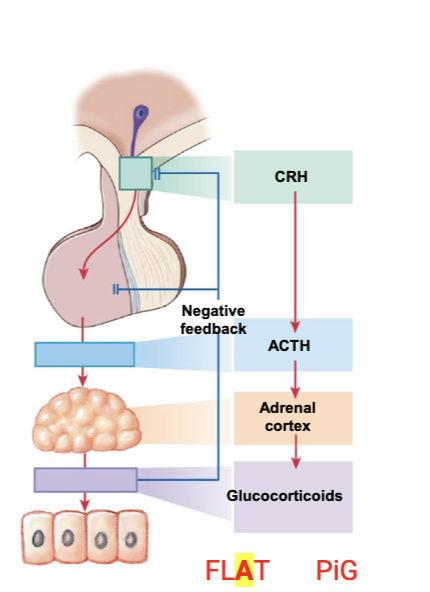
Homeostatic control occurs by negative feedback
(FLAT)

The hypothalamus produces both a
Releasing hormone (PRH) and an inhibiting hormone (PIH)
PI

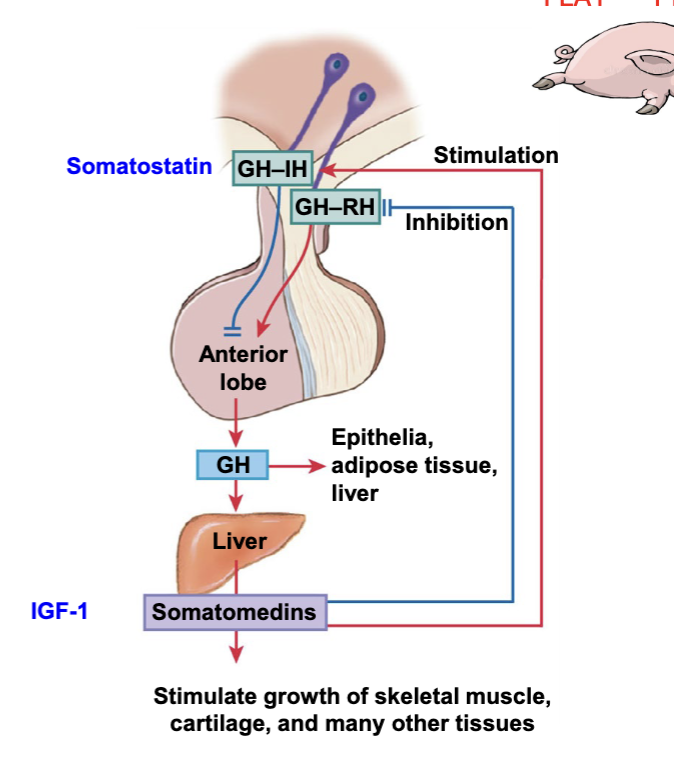
GH-RH release is
inhibited by GH-IH (somatostatin) release is stimulated by IGF-1 (somatomedin)
Stimulates growth of skeletal muscle, cartilage, and many other tissues
G

Stunted growth could be due to an inhibition of ___
Somatomedin (IFG-1), GH-RH, or Somatostatin (GH-IH)
Follicle-stimulating hormone (FSH)
• Gonadotropin Releasing Hormone (GnRH) leads to increased release of follicle-stimulating hormone (FSH) and luteinizing hormone (LH).
FSH stimulates male ___ and female ___.
Spermatogenesis, oocyte maturation
FSH production is inhibited by
Inhibin, a peptide hormone released by cells in the testes and ovaries

Luteinizing hormone (LH)
Stimulates testes to produce testosterone and ovaries to produce estrogen.
• These hormones lead to secondary sexual development in males and females, respectively.
• A surge in LH causes ovulation.

In males, _________ facilitates spermatogenesis while _______ facilitates testosterone synthesis.
FSH; LH
Gonadotropin-producing tumors can cause
Precocious (premature) puberty or hirsutism (facial hair in women).
Adrenocorticotropic hormone
The corticotropin-releasing (CRH) hormone from the hypothalamus causes the corticotrophs to releas adrenocorticotropic hormone (ACTH) into capillaries
ACTH travels through systemic circulation to stimulate the adrenal cortex
Zona fasciculata
Zone reticularis
Zona fasciculata
Produces cortisol – a stress-response hormone
Zona reticularis
Produces androgens
Glow- Zona glomerulosa
Salt (Mineral levels controled)
• Mineralocorticoids (primarily Aldosterone) – key hormone in the Renin, Angiotensin, Aldosterone System (RAAS)
Fast- Zona fasciculata
Sugar (Blood glucose)
• Glucocorticoids (cortisol, corticosterone, and cortisone) - crucial roles in various physiological processes (immunity, metabolism, stress, etc.)
Rex- Zona reticularis
Sex (Sexual properties)
• Androgens - contribute to the sex drive in women, development of pubic hair in boys and girls before puberty
Thyroid Stimulating hormone
• Thyrotropin-releasing hormone (TRH) leads to systemic thyroid stimulating hormone (TSH) secretion, increasing the synthesis and release of thyroid hormone to regulate metabolism.
• The hypothalamus senses body energy stores in part by receptors for the adipocyte hormone leptin.
• When reserves are low, the hypothalamus decreases metabolism by decreasing the thyroid hormone.

Prolactin (PRL)
Prolactin helps to stimulate mammary gland development in females and stimulates milk production by the mammary glands
Prolactin production is inhibited by the neurotransmitter dopamine (tyrosine derivative), also known as prolactin- inhibiting hormone (PIH).
Prolactinomas cause galactorrhea and suppress gonadotropins, leading to decreased libido and infertility

Growth hormone
• Growth hormone-releasing hormone (GH-RH) leads to the release of growth hormone (GH), which stimulates tissue growth and metabolism.
• The liver releases somatomedins (IGF-1) in response to GH.
• somatomedins (IGF-1) activates somatostatin (GH- IH) and opposes GHRH.
Pituitary gigantism
Occurs in adolescents and children who have growth hormone excess before the fusion of their epiphyseal growth plates
Acromegaly
Occurs in adults who have growth hormone excess after the fusion of their epiphyseal growth plates
Adults with acromegaly present with soft tissue overgrowth with the characteristic features of macrognathia, macroglossia, and enlarged hands and feet, hypertrophy of the knees, ankles, etc
Melanocyte-stimulating hormone (MSH)
Pars intermedia secretes melanocyte-stimulating hormone (MSH)
Stimulates melanin production
Virtually nonfunctional in adults except in
Pregnant women
Those with certain diseases. E.g Addison’s disease, Cushing's syndrome, etc.
Hypothalamic control of the anterior pituitary gland
Hormonal stimuli
Hypothalamic control of the posterior pituitary gland
Neural and humoral stimuli
Thyroid gland
Butterfly-shaped organ, the thyroid gland is located anterior to the trachea
The medial region, called the isthmus, is flanked by wing-shaped left and right lobes
T4, T3, CT

Histological details of the thyroid gland
• The tissue of the thyroid gland is composed mostly of thyroid follicles.
• The colloid-filled follicles are the center of thyroid hormone production.
T3 is the more ___ form of thyroid hormone
Active
T4 is converted to T3 when needed
Synthesis of Thyroid Hormones
1. Binding of TSH to its receptors in the follicle cells causes the transport iodide ions into the cytosol.
2. Iodide ions undergo oxidation to form iodine (I2)
3. In the colloid, enzymes link the iodine to the tyrosine amino acids in thyroglobulin to produce triiodothyronine (T3) or tetraiodothyronine, also known as thyroxine (T4).
4. T3 and T4 remain in the thyroid follicles until TSH stimulates endocytosis of colloid back into the follicle cells.
5. lysosomal enzymes break apart the thyroglobulin colloid, releasing free T3 and T4, which diffuse across the follicle cell membrane and enter the bloodstream.
6. T3 and T4 diffuse across the follicle cell membrane and enter the bloodstream.
7. 99% of the hormone is bound to proteins – released when levels drop

Low blood levels of T3 and T4 stimulate the release of
TRH
Metabolic role of Thyroid hormones
T3 and T4 bind to intracellular receptors located on the mitochondria, they cause an increase in nutrient breakdown and the use of oxygen to produce ATP.
T3 and T4 initiate the transcription of genes involved in glucose oxidation.
abnormally increased level of heat is released as a byproduct of these reactions
protein synthesis, and for fetal and childhood tissue development and growth
first trimester is the critical period for fetal brain development – damage has irreversible consequences.
increase the body’s sensitivity to catecholamines
Hyperthyroidism
• Autoimmune disease (antibodies against thyroid follicle cells mimic TSH actions and stimulate T3/T4 production)
• Symptoms include – exophthalmos, increased metabolic rate, sweating, & weight loss

Congenital iodine deficiency syndrome (cretinism)
Insufficient maternal intake of iodine (irreversible but preventable)
• Symptoms – Intellectual disability, short stature with disproportionately sized body, etc.
Prolactin (PRL) production and secretion by the anterior pituitary are tonically regulated by hypothalamic inputs. Which of the following neurotransmitters acts as the primary prolactin-inhibiting hormone (PIH)?
Dopamine
Thyroid hormones T 3 and T 4 play a critical role in controlling the body's basal metabolic rate. At the cellular level, how do they directly drive nutrient breakdown and ATP production?
By binding to intracellular receptors located on the mitochondria
Myxdema
• Inadequate iodine intake in adulthood
• Symptoms – Low metabolic rate, lethargy, mental sluggishness, feeling cold, goiter
T3 + TH levels drop → TRH → TSH secreation
Parathyroid Glands
Posterior to the thyroid
regulate Ca2+ levels
Calcium homeostatis

Calcium homeostatsis High calcium

Low blood calcium
neural and muscle super excitable
muscle spasms
higher RMP due to low Ca2+ levels, so Na+ voltage gated channels open eaiser
High blood calcium
depressed neural and muscular function
cardiac arrhythmias
A drop in phosphate levels would act as a
humoral stimuli (change in concentration)
To prevent abnormally high levels of phosphate,
phosphatonin (FGF23)
inhibits phosphate reabsorption
suppresses the production of Vit D
suppresses PTH secretion

Adrenal glands
• The adrenal glands are wedges of glandular and neuroendocrine tissue adhering to the top of the kidneys by a fibrous capsule.
• Blood flows to each adrenal gland at the adrenal cortex and then drains into the adrenal medulla.