Endocrine System
 Call Kai
 Learn
 Practice Test
 Spaced Repetition
 Match
 Flashcards
 Knowt Play
1/107

There's no tags or description
Looks like no tags are added yet.
108 Terms
Exocrine glands
have ducts
Endocrine glands
ductless
Endocrine system functions
Maintain homeostasis
Regulate the activity of other organs, tissues, and cells
Adjust the rate of cellular growth, blood glucose levels, reproductive function, and salt/water balance
Hormones consist of
Target organ
Target cell
Target cell receptor
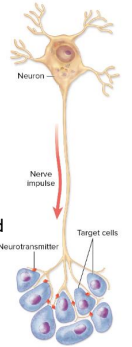
Nerves are
fast, direct, and short-lived

Hormones are
slower, long distance, long-lived
What is a target cell?
A cell that responds to a hormone through its specific receptor

What is negative feedback loop?
mechanism that reverses/inhibits a change to maintain homeostasis
What is an example of a negative feedback loop?
Blood Sugar Control: After you eat, your blood glucose goes up. The pancreas releases insulin, which causes your cells to absorb glucose, lowering your blood sugar back to a safe range

What is positive feedback loop?
mechanism that amplifies a change
What is an example of positive feedback loop?
Lactation: baby suckling mother’s breast, stimulating sensory receptors in the nipple, which causes nerve signals to travel to the hypothalamus, prompting the release of oxytocin and causes the milk ducts to release milk
The hypothalamus serves to maintain homeostasis by?
receiving information about external/internal stimuli and controls other endocrine organs
What hormones does the hypothalamus release?
Regulatory hormones and Hypothalamic hormones
What are regulatory hormones?
Releasing hormone (RH)
Inhibiting hormone (IH)
What hormones does the hypothalamus produce that regulate the anterior pituitary?
Releasing hormone (RH) and inhibiting hormone (IH)
What are hypothalamic hormones?
Oxytocin (OXT) and Antidiuretic hormone (ADH/Vasopressin)
What are the two hormones stored in the posterior pituitary?
Oxytocin (OXT) and Antidiuretic hormone (ADH/Vasopressin)
What does the Pituitary Gland (hypophysis) do?
regulates other endocrine glands, but is under control of the hypothalamus
Where is the Pituitary Gland (hypophysis) located?
inferior to the hypothalamus at the sella turcica

What is structure A?
Anterior pituitary (Adenohypophysis/Anterior Lobe)
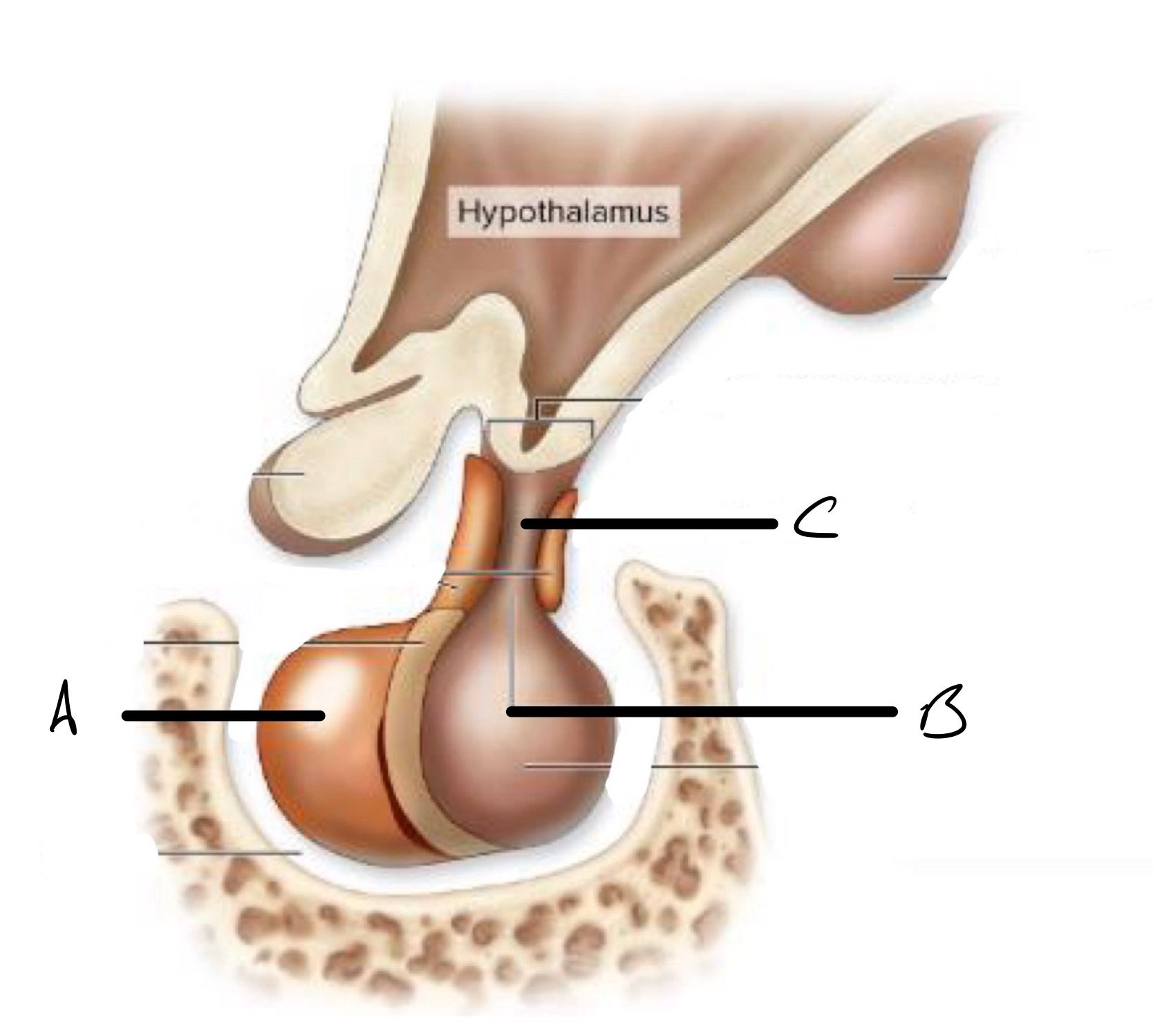
What is structure B?
Posterior pituitary (Neurohypophysis/Posterior Lobe)

What is structure C?
Infundibulum (Infundibular stalk)
What are the hormones secreted by the anterior pituitary?
Follicle-stimulating hormone (FSH)
Luteinizing hormone (LH)
Adrenocorticotropic hormone (ACTH)
Thyroid-stimulating hormone (TSH)
Prolactin (PRL)
Growth hormone (GH)
Melanocyte-stimulating hormone (MSH)
What are the two hormones stored in the posterior pituitary?
oxytocin and vasopressin
What are the functions of luteinizing hormone and follicle-stimulating hormone?
act on gonads to stimulate the development of gametes and release hormones
What are the targets of luteinizing hormone and follicle-stimulating hormone?
ovaries and testes
What is the function of adrenocorticotropic hormone?
acts on the adrenal cortex to cause release of corticosteroids
What is the target of adrenocorticotropic hormone?
adrenal cortex
What is the function of growth hormone?
stimulates increased growth and metabolism in target cells
What is the target of growth hormone?
almost every cell in the body
What is the function of melanocyte-stimulating hormone?
acts on melanocytes in the epidermis to stimulate melanin synthesis
What is the target of melanocyte-stimulating hormone?
melanocytes in the epidermis
What is the function of thyroid-stimulating hormone?
stimulates thyroid gland for thyroid hormone synthesis and secretion
What is the target of thyroid-stimulating hormone?
thyroid gland
What is the function of prolactin?
acts on mammary glands to stimulate milk production
What is the target of prolactin?
mammary glands; interstitial cells in testes
What is the function of vasopressin?
stimulates reabsorption of water from tubular fluid in kidneys;
stimulates vasoconstriction in arterioles of body, thereby raising blood pressure
What is the target of vasopressin?
kidney, smooth muscle in arteriole walls
What is the function of oxytocin?
stimulates smooth muscle contraction in the uterine wall; stimulates milk ejection from the mammary glands
What is the target of oxytocin?
uterus, mammary glands; smooth muscle of male reproductive tract
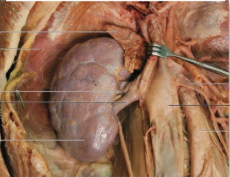
Where are the adrenal glands located?
sitting above each kidney
Each adrenal gland is connected to a kidney by?
dense connective tissue capsule
What is the Adrenal Cortex?
derived from embryonic connective tissue
What is the Adrenal Medulla?
derived from nervous tissue
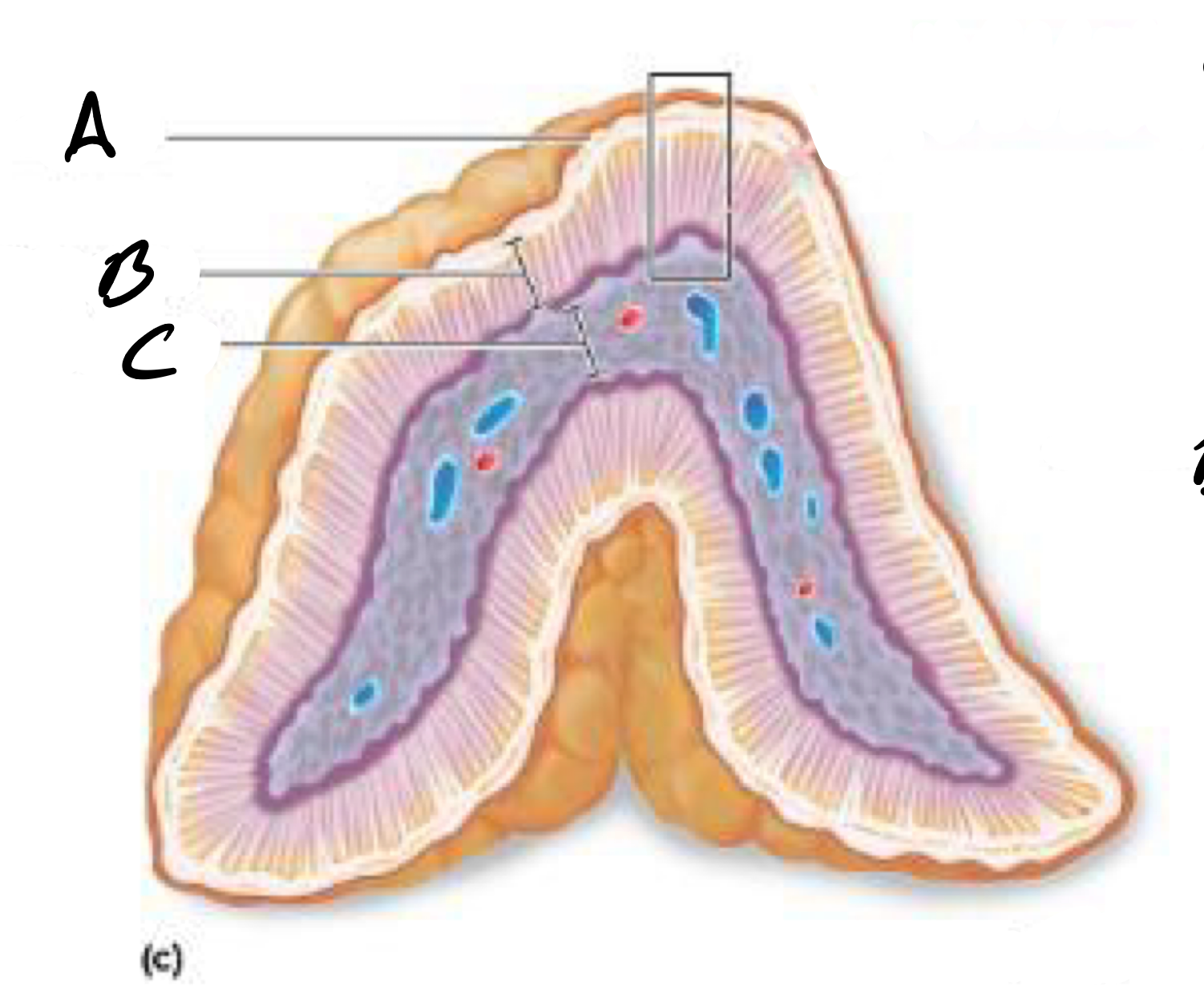
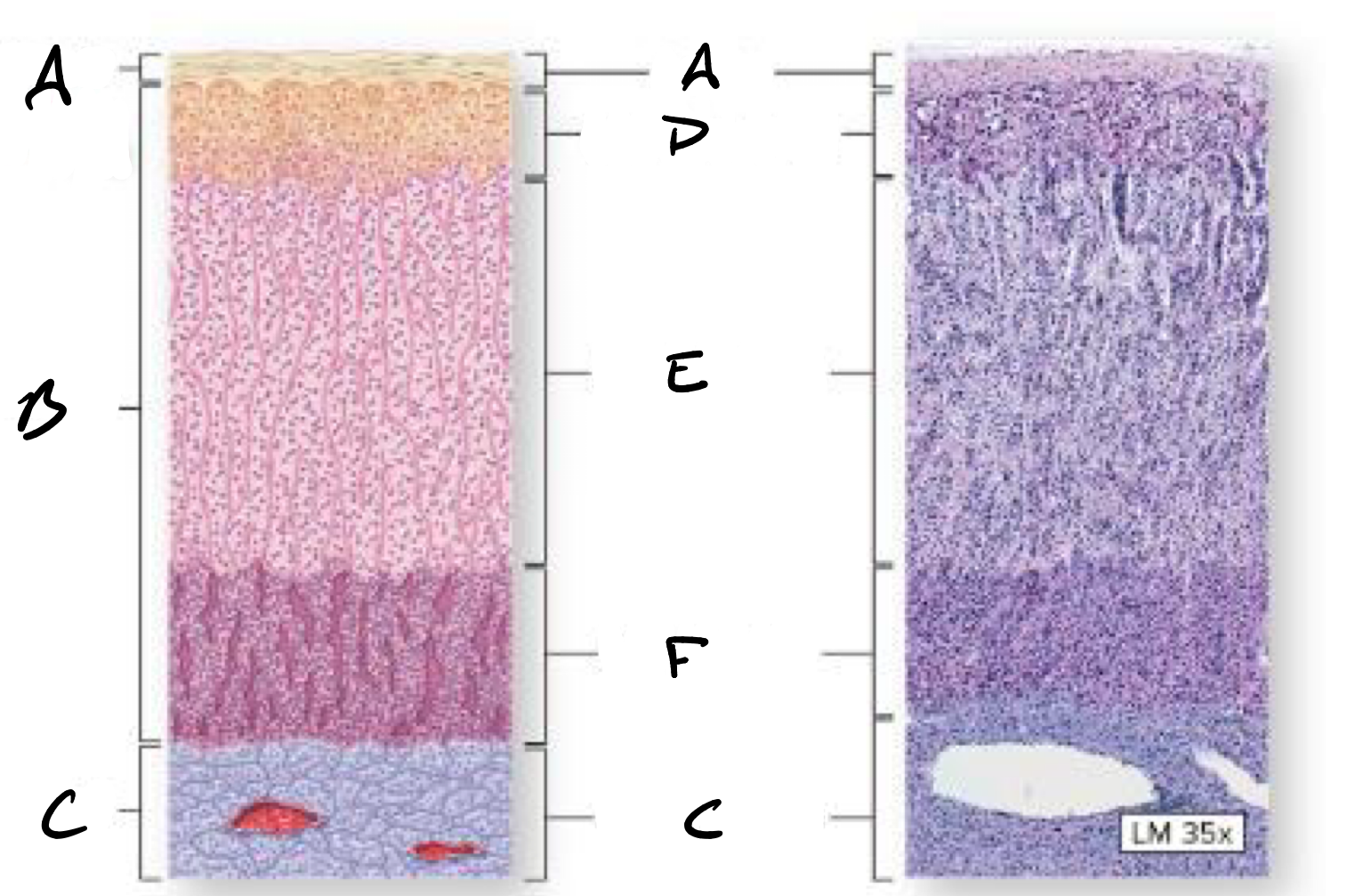
What is label A?
Adrenal capsule

What is label B?
Adrenal cortex

What is label C?
Adrenal medulla

What is label A?
Adrenal capsule
What is label B?
Adrenal cortex

What is label C?
Adrenal medulla

What is label D?
Zona glomerulosa

What is label E?
Zona fasciculata
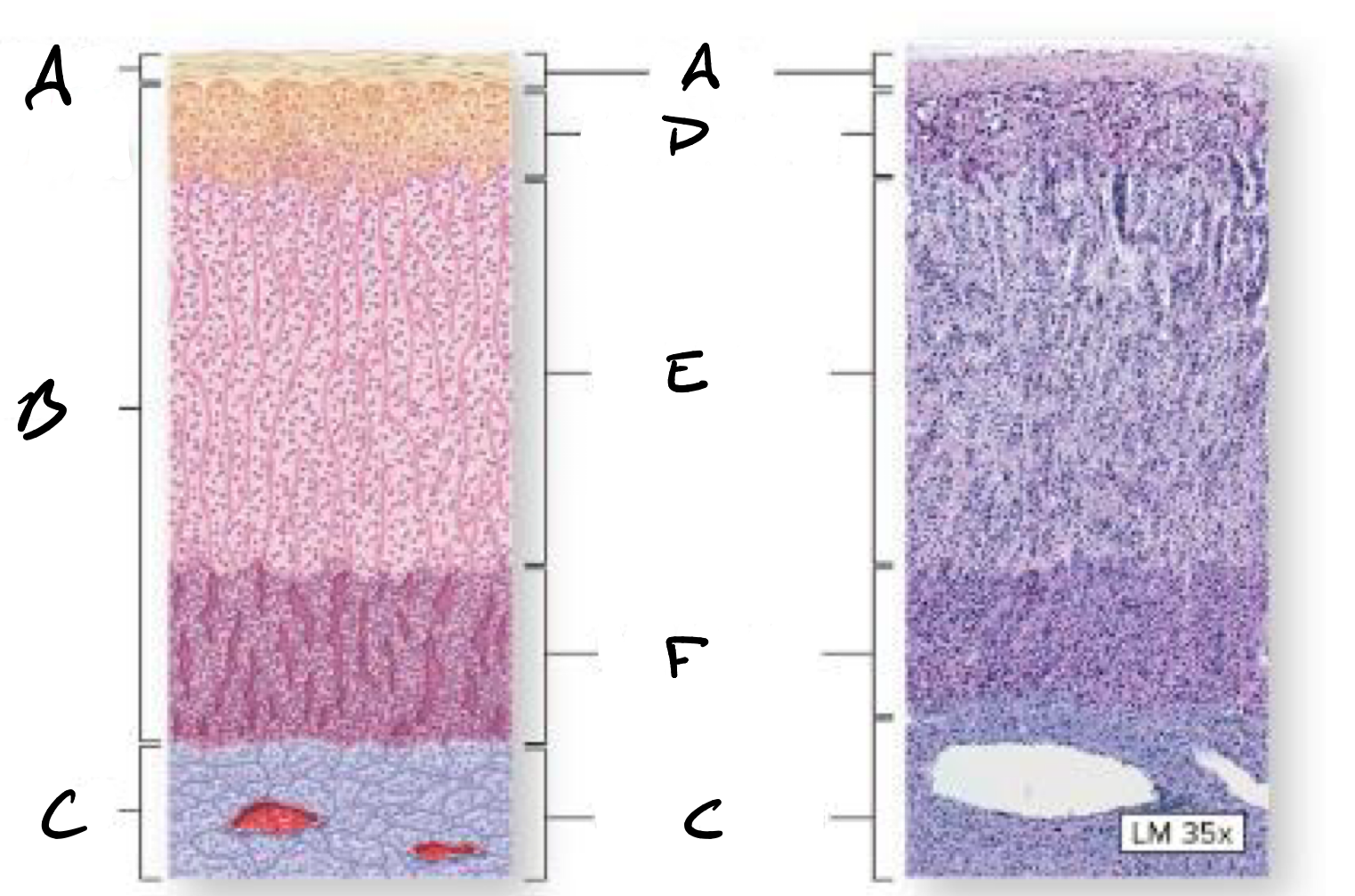
What is label F?
Zona reticularis
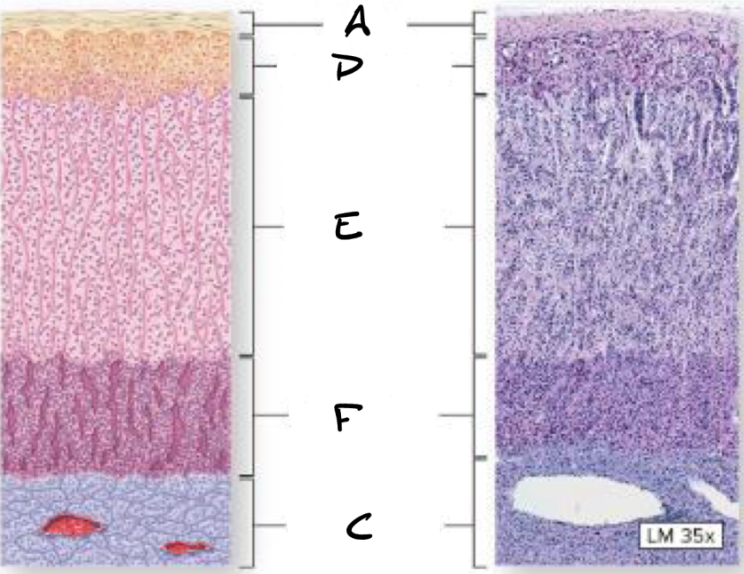
What hormones come from D?
mineralocorticoids

What hormones come from E?
glucocorticoids

What hormones come from F?
gonadocorticoids
What are mineralocorticoids (aldosterone)?
hormones that regulate electrolyte composition and concentration in body fluids
What are glucocorticoids (cortisol)?
hormones that stimulate lipid and protein metabolism and regulate blood glucose levels
What are gonadocorticoids (androgens)?
hormones that stimulate protein synthesis in sex organ cells
What is epinephrine and norepinephrine?
hormones that work with the sympathetic division of the ANS to stimulate fight-or-flight response

What is label A?
Thyroid gland

What is label B?
Parathyroid gland
What is the hormone produced by the thyroid gland?
thyroid hormone and calcitonin
What is the hormone produced by the parathyroid gland?
parathyroid hormone
What is the function of thyroid hormone?
increases metabolism, oxygen use, growth, and energy use
What is the function of calcitonin?
reduces calcium levels in body fluids
What is the function of parathyroid hormone?
increases calcium levels in blood
What gland is the pancreas?
exocrine gland and an endocrine gland
What is the pancreas is located?
near the stomach
What is the pancreas connected to the duodenum by?
the pancreatic duct
What is the main exocrine component of the pancreas?
pancreatic acini
What is the main endocrine component of the pancreas?
pancreatic islets
What is the function of glucagon?
increases blood glucose levels
What is the function of insulin?
decreases glucose levels in body fluids
What are hormones secreted by the pancreas?
glucagon and insulin
The thymus gland is located in the
superior mediastinum of the thoracic cavity posterior to the sternum
The thymus gland is ______ in infants and children
large
The thymus gland begins to ______ in young adults
devolve
The thymus gland virtually _______ in adults
disappears

What is label A?
thyroid gland
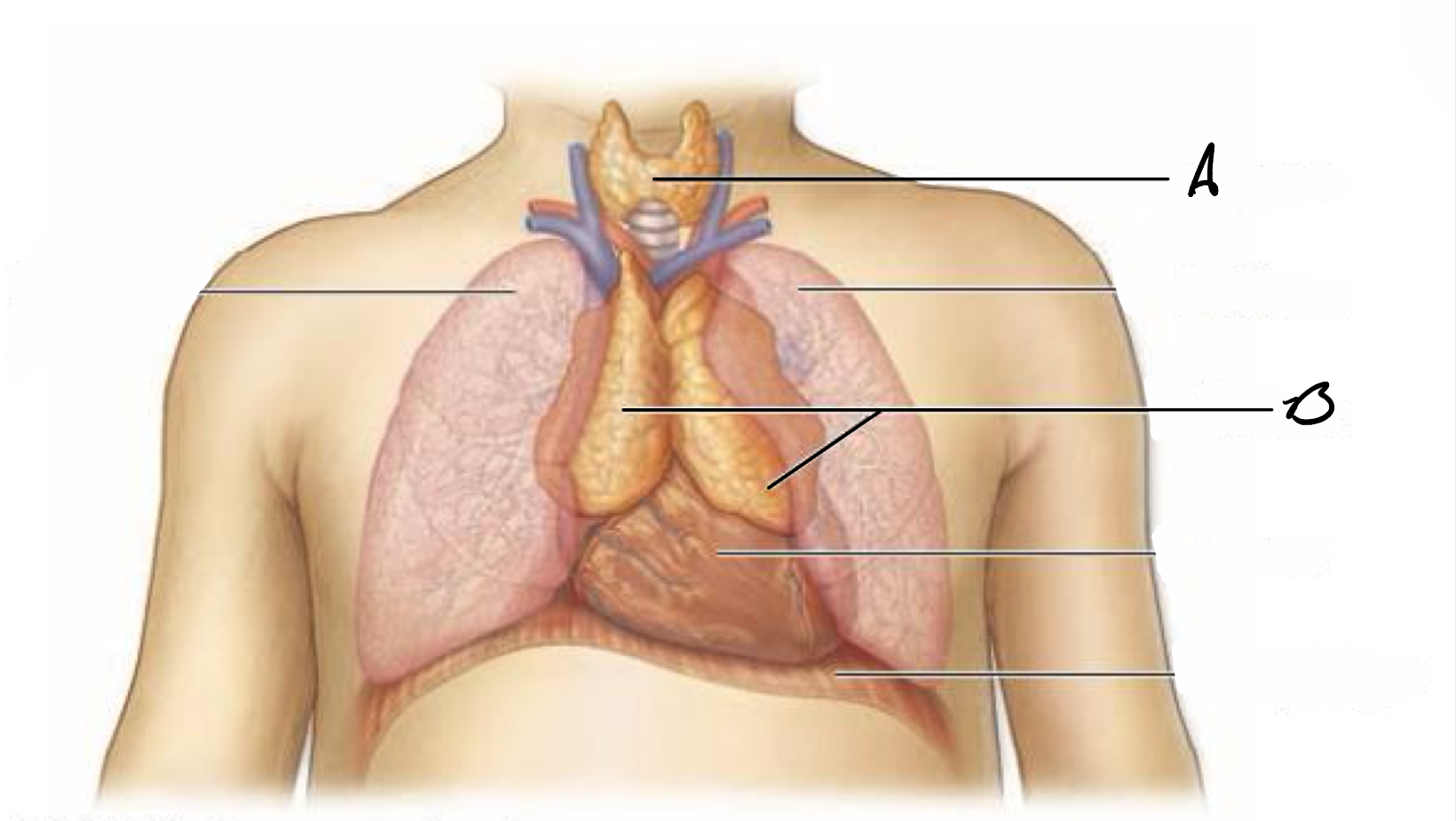
What is label B?
thymus
The pineal gland is part of the?
diencephalon
Where is the pineal gland located on?
the posterior wall of the thalamus
What does the pineal gland produce?
melatonin

What is label A?
hypothalamus

What is label B?
pituitary gland
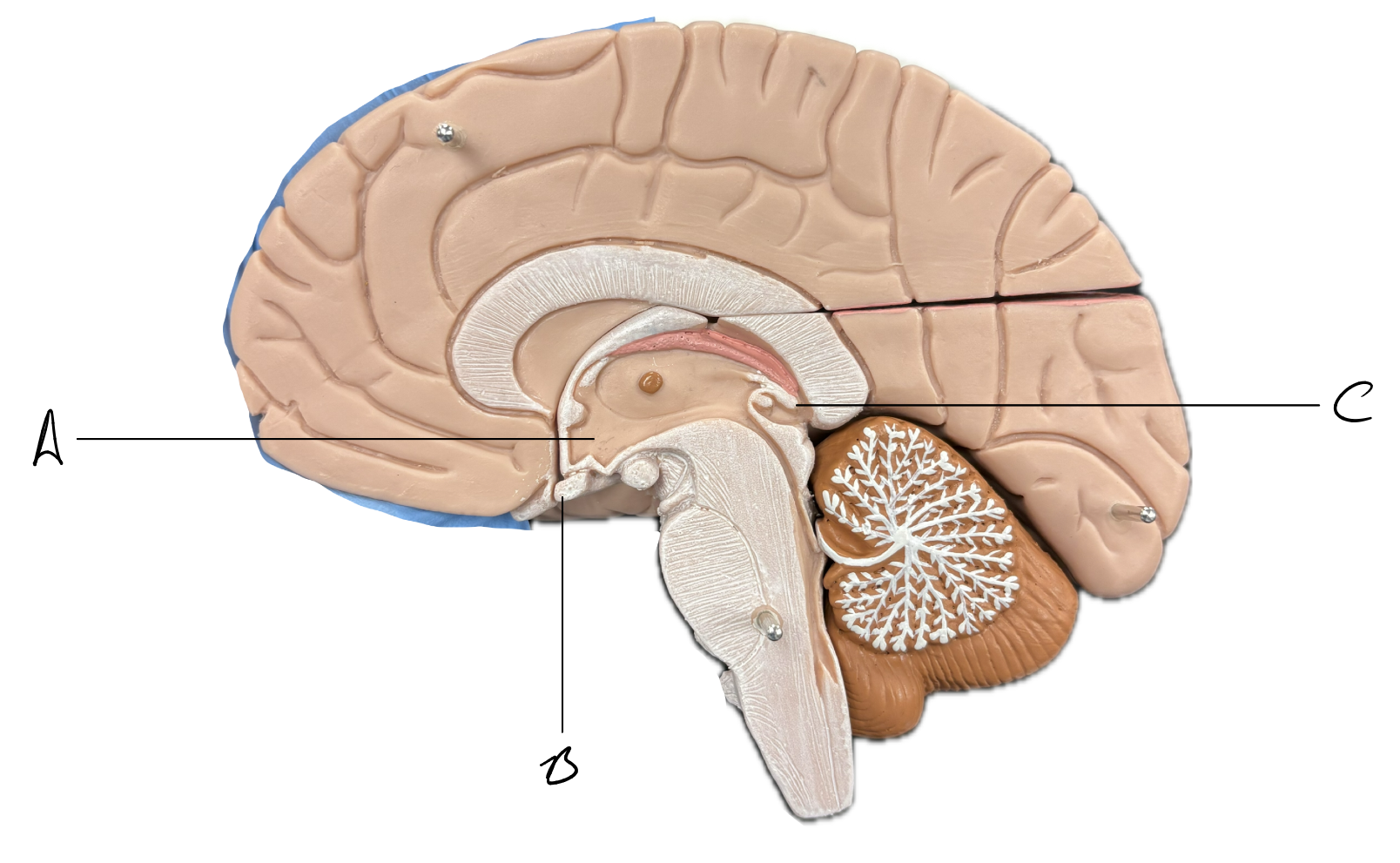
What is label C?
pineal gland
What hormones does the kidney produce?
calcitriol and eryhtropoietin
What is the function of calcitriol?
promotes calcium absorption in small intestine
What is the function of erythropoietin?
stimulates erythrocyte production and maturation
What hormone does the heart produce?
atriopeptin
What is the function of atriopeptin?
increases sodium and water loss in urine
What hormone does the GI tract produce?
various hormones related to digestion
What do the GI tract hormones do?
controls overall secretory activity and motility in GI tract
What hormones do the ovaries produce?
Estrogen
Progesterone
Inhibin
What does estrogen do?
stimulates development of female reproductive organs
What does progesterone do?
regulates menstrual cycle
What does inhibin do?
inhibits secretion of follicle-stimulating hormone
What hormones do the testes produce?
Androgens (primarily testosterone)
Inhibin
What do androgens (primarily testosterone) do?
stimulates male reproductive organ development, and production of sperm