a level bio: enzymes
 Call Kai
 Learn
 Practice Test
 Spaced Repetition
 Match
 Flashcards
 Knowt Play
1/15

There's no tags or description
Looks like no tags are added yet.
16 Terms
what are enzymes?
biological catalysts (speed up rate of reaction without being used or permanently changed in the process)
globular proteins
what is an anabolic reaction?
a reaction where molecules are built up
what is a catabolic reaction?
a reaction where molecules are broken down
why do organisms need enzymes?
the temperature in organisms is relatively low, so without enzymes, metabolic reactions would be too slow for life to exist
what is an example of an intracellular and an extracellular enzyme
intracellular: DNA polymerase
extracellular: amylase
what determines the active site’s shape?
R groups (which forms hydrogen bonds or ionic bonds with the substrate), affecting the enzyme’s tertiary structure
the shape of the active site is complementary to the substrate and is specific to the substrate the enzyme binds to
what is the purpose of the rest of the enzyme (not the active site)?
to keep the active site in exactly the right shape and position for it to bind to a substrate and catalyse a reaction
give an example of how specific active sites are highly specific
in respiratory enzymes, the active site binds to alpha-glucose but not beta-glucose
what is the lock and key hypothesis?
a model that proposes that the substrate is perfectly complementary to the active site and so the active site fits perfectly with it
the substrate is held in the right position by the enzyme so the right atoms react with each other (the substrate’s atoms and the active site’s R groups, which put strain on the substrate to convert it into the products faster)
what is the induced fit hypothesis?
a model that proposes that the active site starts off not being perfectly complementary to the substrate, but when weak bonds are formed between the active site’s R groups and the substrate, the active site undergoes a conformational change to bind to the substrate and put strain on it, converting the substrate to products faster
what affects rate of reaction of enzymes?
pH
temperature
substrate concentration
enzyme concentration
how does pH affect enzyme rate of reaction?
for more acidic conditions: more H+ ions are attracted to the negatively-charged R groups in the active site and so cluster around these R groups, changing the charge around it and interfering with substrate binding. the H+ ions also change the shape of the active site by disrupting the hydrogen and ionic bonds between R groups
for more alkaline conditions: more OH- ions are attracted to the positively-charged R groups in the active site and so cluster around these R groups, changing the charge around it and interfering with substrate binding. the OH- ions also change the shape of the active site by disrupting the hydrogen and ionic bonds between R groups
how does enzyme concentration affect enzyme rate of reaction?
the higher the concentration, the greater the number of active sites available and the greater the likelihood of enzyme-substrate complexes forming
this means initial rate of reaction to increase linearly with enzyme concentration
after a certain point (Vmax), all of the substrates have been converted to products, so enzyme concentration stops affecting rate of reaction, and the rate of reaction levels off, and substrate concentration becomes the limiting factor
how does substrate concentration affect enzyme rate of reaction?
the higher the concentration, the greater the number collisions between substrates and enzymes per second, and so the substrates bind to the active sites more often
this means initial rate of reaction to increase linearly with substrate concentration
after a certain point (Vmax), the maximum number of active sites are occupied and so increasing substrate concentration no longer affects rate of reaction, so rate of reaction levels off and enzyme concentration becomes the limiting factor

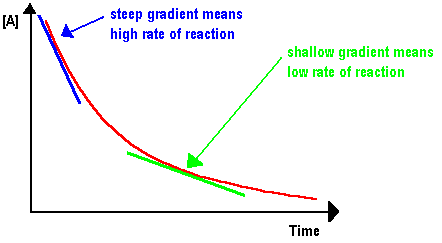
why is the initial rate of reaction the highest reaction rate in an experimental situation?
after this point, substrate molecules are used up while product molecules increase in number
this means frequency of collisions between the enzyme’s active site and the substrate decreases
what is Q10 and how do you calculate it?
temperature coefficient (measure of how much rate of reaction increases with each 10 degrees Celsius rise in temperature)
it’s usually 2 for enzyme-catalysed reactions (reaction rate usually doubles every 10 degrees)
Q10 = R2 / R1
R2 = rate of reaction at x+10 degrees Celsius
R1 = rate of reaction at x degrees Celsius