Homeostasis, surface anatomy, directional terms, body planes, body cavities, body quadrants and regions, membranes
 Call Kai
 Learn
Learn Practice Test
 Spaced Repetition
 Match
Match Flashcards
 Knowt Play
1/109

There's no tags or description
Looks like no tags are added yet.
Name | Mastery | Learn | Test | Matching | Spaced | Call with Kai | Chat |
|---|
No analytics yet
Send a link to your students to track their progress
110 Terms
homeostasis
the ability to maintain a relatively stable internal environment in an ever-changing outside world
receptor, afferent pathway, control center, efferent pathway, effector
5 elements of reflex arc
receptor
homeostatic control mechanism that monitors the environments and responds to changes (stimuli)
control center
homeostatic control mechanism that determines the set point
effector
homeostatic control mechanism that provides the means to respond to the sitmulus
afferent pathway
pathway from the receptor to the control center
efferent pathway
pathway from the control center to the effector
negative feedback
type of feedback where output shuts off the original stimulus (body works to get back to set point)
positive feedback
type of feedback where output enhances the original stimulus (body changes from normal point
negative feedback
regulation of body temperature: positive or negative feedback?
negative feedback
regulation of blood sugar: positive or negative feedback?
positive feedback
blood vessel clotting from a cut: positive or negative feedback?
responsiveness/excitability
ability to sense changes (stimuli) in the environment and then respond to them
superior (cranial/cephalad)
toward the head end or upper part of a structure or the body; above
inferior (caudal)
away from the head end or toward the lower part of a structure or the body; below
anterior (ventral)
toward or at the front of the body; in front of
posterior (dorsal)
Toward or at the back of the body; behind
medial
Toward the midline of the body; on the inner side of
lateral
Away from the midline of the body; on the outer side of
intermediate
between a more medial and a more lateral structure
proximal
Closer to the origin of the body part or the point of attachment of a limb to the body trunk
distal
farther from the origin of a body part or the point of attachment of a limb to the body trunk
superficial (external)
toward or at the body surface
deep (internal)
Away from the body surface; more internal
medial (midsagittal) plane

frontal (coronal) plane

transverse plane

cranial cavity, vertebral cavity
2 dorsal body cavities
abdominopelvic cavity, thoracic cavity
2 ventral body cavities
parietal pericardium
serous membrane that lines the pericardial cavity (#2)

visceral pericardium
serous membrane that covers the heart
parietal pleura
serous membrane that lines the thoracic cavity
visceral pleura
serous membrane that covers the lungs
parietal peritoneum
serous membrane that lines the abdominal cavity
visceral peritoneum
serous membrane that covers the organs in the abdominal cavity
cutaneous membrane, mucous membrane, serous membrane
3 classes of membranes
cutaneous membrane
membrane that is skin; covers the body surface
mucous membrane
membrane that lines body cavities open to the exterior

serous membrane
membrane that lines body cavities closed to the exterior
right hypochondriac region

right lateral (lumbar) region

right inguinal (iliac) region

epigastric region

umbilical region

pubic (hypogastric) region

left hypochondriac region

left lateral (lumbar) region

left inguinal (iliac) region

sternal

axillary

umbilical

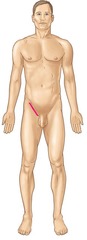
inguinal
acromial

brachial

antecubital

carpal

pubic

patellar

tarsal

coxal

femoral

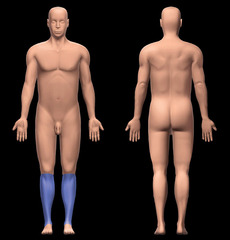
crural
digital

hallux

occipital

vertebral

sacral

cervical

scapular

lumbar

gluteal

perineal

olecranal

popliteal

sural

calcaneal

cephalic
pertaining to the head
frontal

orbital

nasal

buccal

oral

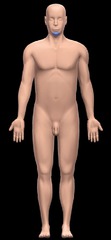
mental
mammary

antebrachial

palmar

pollex

fibular/peroneal

plantar

otic

cranial cavity
body cavity that contains the brain
vertebral cavity
Body cavity that contains the spinal cord
thoracic cavity
body cavity that contains the heart and lungs
mediastiunum
space between the lungs
diaphragm
separates the thoracic cavity and the abdominopelvic cavity
abdominal cavity
body cavity that contains digestive organs
pelvic cavity
body cavity that contains urinary bladder, reproductive organs, and rectum
right upper quadrant

right lower quadrant

left lower quadrant
