Sterile compounding
 Call Kai
 Learn
 Practice Test
 Spaced Repetition
 Match
 Flashcards
 Knowt Play
1/38

There's no tags or description
Looks like no tags are added yet.
39 Terms
sterile compounding is used to make what kind of preparations
Injections
Eye drops
Irrigations
Pulmonary inhalations
Bath soaks for live tissue
Implants
What is ISO?
stands for the international standards organization; this organization sets standards for air quality
quality is determined by size and number of particles
What is there to know about HEPA filters?
HEPA provides the ISO 5 air for compounding
the air coming directly from HEPA filter is called the first air
Must be rectified every 6 months
Primary Engineering Control(PEC)
aka the hood
provides ISO 5 air or better
There are two types:
Laminar Air flow→air flows in unidirectional lines
Compounding Aseptic Isolator→ closed front PEC that can be in buffer room or placed in Segregated Compounding Area
Air pressure between the PEC and SEC
Needs to be positive
Secondary Engineering Control/SEC
the room that contains the PEC
often called the buffer room because it provides a buffer of relatively clean air (ISO 7) around the PEC
Air changes per hour must be >30 in the SEC for non-hazardous
Anteroom in sterile compounding
connects the rest of the pharmacy to the buffer room/SEC
provides ISO 7 or 8 air
contains sinks, benches to facilitate garbing and preparation for compounding
possess line of demarcation: separates room into clean and dirty sections
What pressure is required for sterile compounding between the buffer room and anteroom?
Postive pressure
What is a Segregated Compounding area?
this is a designated area with unclassified air
requires a defined parameter around it
Personnel and training for sterile compounding
Need to have designated person
Must be trained & documentation initially and q12 months
What do staff need to demonstrate proficiency in prior to compounding sterile products?
Hand hygiene
Garbing and gloving technique
Cleaning and disinfecting
Sterile Drug preparation
Gloved fingerprint test
demonstrates competency in hand hygiene, garbing and gloving
Must be completed initially then every 6 months is CI or CII and every 3 months if CIII

Media Fill test
used to determine if a compounder can prepare a CSP with aseptic technique
Must be completed initially then every 6 months is CI or CII and every 3 months if CIII
Pass Criteria: Must remain clear liquid (no turbidity/cloudiness) after 14 days of incubation.
Types of sampling to know
• AIR SAMPLES: every 6 months
• SURFACE: every 30 days
• continuous air pressure monitoring
How often are PECs kept running?
PECs are preferred to be kept running at all times
If power outage occurs, what to do with PEC?
Stop all compounding
PEC needs to be cleaned and disinfected
Apply 70% IPA prior to recitation of compounding activities
Note: PEC must be on for 30 mins before any compounding can begin
How is the PEC cleaned and how often?
PEC is cleaned daily and anytime contamination is suspected
cleaned with a detergent, then disinfectant, then apply 70% IPA
Note: 70% IPA is applied very 30 mins
How to clean PEC:
use sterile low lint wipes
cleaned top to bottom, back to front
cleanest areas are done first and dirtiest are cleaned last
Which sites in cleanroom require daily cleaning and disinfecting
PEC
Pass through
work surfaces outside PEC
floors
These all get monthly sporicidial disinfectant
Which sites in the cleanroom require monthly cleaning and disinfecting
walls, doors
ceiling
storage shelves and bin
equipment outside pec
These all get monthly sporicidial disinfectant
Sterile compounding garbing order
1. remove anything on the body not clothing or hair ties
2. head and face cover then show covers while stepping across the demarcation line(in anteroom)
3. hand hygiene from hand to elbows with warm water and soap clean under fingernails and wash for at least 30 seconds
4. Don gown
5. enter buffer area apply surgical hand scrub ( chlorohexidine betadine)
6. don sterile powder free gloves
7. spray the gloves with 70% IPA
if garb is not soiled can be taken off and kept and reworn for current shift
What are ready to use medications
prepared iv bags or prefilled syringes that are not compounded
Automated equipment in sterile compounding:
Automated Compounding Device(ACD): aseptically transfers ingredients into a sterile final container interfaced with the EHR to prevent transcription errors
IV workflow management system: helps automate prep and verification
helps to identify meds uses barcode scanning and PHOTO CAPTURE
How to set up items inside the hood
all components wiped of with 70% IPA prior to entering PEC
work performed 6 inches from the front
Do not block spaces between the sterile objects and HEPA filter
place all items side by side
open sterile syringes along the seal(not torn open)
Vial reconstitution in PEC
Swab the rubber stopper with a fresh 70% isopropyl alcohol (IPA) pad, rubbing back and forth.
Attach a standard sterile needle to your syringe. Pull the plunger back to draw in a volume of air equal to the volume of liquid you plan to remove.
Puncture the Stopper: Position the needle at a 45° angle with the bevel facing up touching the center of the stopper. Press downward and rotate the syringe upright to a 90° angle as the needle enters the vial.
Inject Air and Withdraw Liquid: Equalize pressure & invert
Ampule use in PEC
Clear Fluid & Disinfect: Wipe the neck thoroughly with a 70% IPA swab and let air dry.
Snap the Ampule Neck . Hold the base securely in one hand and snap the top away from your body using your thumbs.
Withdraw Solution with a Filter Device; Attach a filter needle or filter straw (typically 5-micron) to your syringe. Tilt the ampule slightly and insert the filter needle into the corner/shoulder of the ampule where fluid pools. Pull back on the plunger to withdraw the dose.
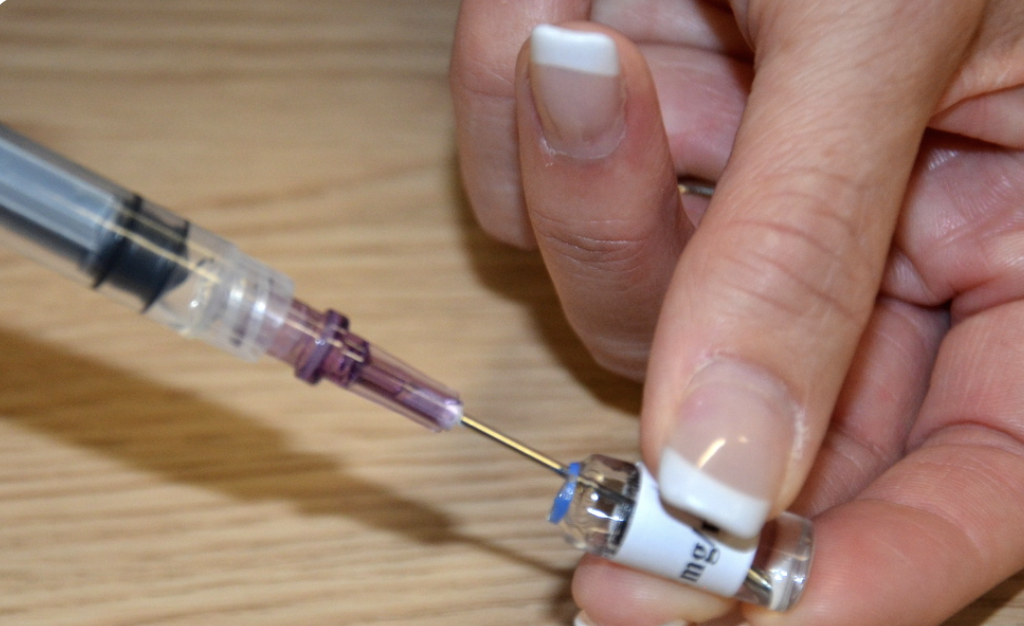
Replace the Filter Needle before injecting the solution into an IV bag or administering to a patient.
When is terminal sterilization required and what are the types?
for CSPs that are compounded with any non sterile ingredients
Types: steam(with autoclave) and dry heat sterilization
For drugs that are heat sensitive, how can they be sterilized?
Filtration using 0.22 micron filter
If filtering is needed, bubble point test might be done to test integrity
How to avoid pyrogens?
Glassware and utensils should be rinsed with H2O and then depyrogenated with dry heat sterilization
pyrogens come from using equipment washed with tap water
Immediate/emergncy use BUD
4 hours(any storage condition)
Category I BUD
Room temp: 12 hours
Refrigerated temp: 24 hours
Frozen: N/A
category II BUD
Room temp: 1-45 days
Refrigerated temp: 4-60 days
Frozen: 45-90 days
category III
Room temp: 60-90 days
Refrigerated temp: 90-120 days
Frozen: 120-180 days
SDC vial bag bottle or syringe in ISO 5 BUD
up to 12 hours from puncture or opening
SDC ampule inside or outside of iso 5
any unused contents left in the ampule cannot be stored and must be discarded
MDC inside or outside ISO 5 environment
Up to 28 days from puncture or opening
When is the master formulation record needed?
Required whenever preparing a batch for more than one person OR when starting from non-sterile ingredients
Mnemonic: "MANY or RAW"
MANY = Made for more than 1 patient.
RAW = Uses raw/non-sterile ingredients (needs standard procedure written down).
What is the compounding record needed?
Rule: Immediate-Use Compounded Sterile Preparations (CSPs) made for 1 single patient under emergency/immediate care guidelines do not require a full Compounding Record.
When it IS needed:
Immediate Use CSPs for more than one patient (batching emergency doses means a log/CR is required).
CI-CIII preparations
Mnemonic: "LOG the BATCH & Category "
LOG required if Batching (more than 1 patient).
sterile compound labeling requirements
name, amounts or concentrations of ingredients, total volume, BUD, route of admin, and storage
aux labels for special handeling
and high alert meds should get a warning label
what to do if a recall
immediatly notify prescriber, pull all aftected csps to the pharmacy, quarintining remaining stock to see if any other lots are affected