AB2, L60: Antimicrobial Resistance - NEEDS TO BE EDITED
 Call Kai
 Learn
 Practice Test
 Spaced Repetition
 Match
 Flashcards
 Knowt Play
1/17

Earn XP
Description and Tags
Given definition, answer w/ term
18 Terms
More toxic; more expensive; less effective
Scale of the Challenge Anti-Microbial Resistance Pose to Humans:
Heath care providers are forced to use antibiotics that:
May be _______ (less/more) toxic
Frequently _______ (less/more) expensive
_______ (less/more) effective
Higher mortality rates; longer hospital stays; longterm disability
Scale of the Challenge Anti-Microbial Resistance Pose to Humans:
Patients with resistant infections have _______ (lower/higher) mortality rates
Survivors have significantly _______ (shorter/longer) hospital stays, delayed recuperation, and _______ (short term/longterm) disability
2050
Scale of the Challenge Anti-Microbial Resistance Pose to Humans:
Antimicrobial resistance is currently responsible for 1.14 million deaths/year globally since 1990
Unchecked economic burden of AMR may triple by _______ (year), and bring ~30 million people into extreme poverty
Extensive use
Drivers of Anti-Microbial Resistance:
What is the major driver of antibiotic resistance?
Scale of the Challenge Anti-Microbial Resistance Pose to Animals:
80% of the antibiotics sold in the US were used on farms
Although Europe has regulations preventing antibiotic use for growth promotion, many farmers are still able to blanket treatment their stock on the basis of ‘treatment’ for diarrhea and respiratory issues
Scale of the Challenge Anti-Microbial Resistance Pose to Animals:
Antibiotic administration routes to farm animals are varied:
Majority delivered via feed/water
Intramammary
Oral neonatal doses
Footbaths
Long acting injectables

Horizontal gene transfer
Bacterial Antibiotic Resistance:
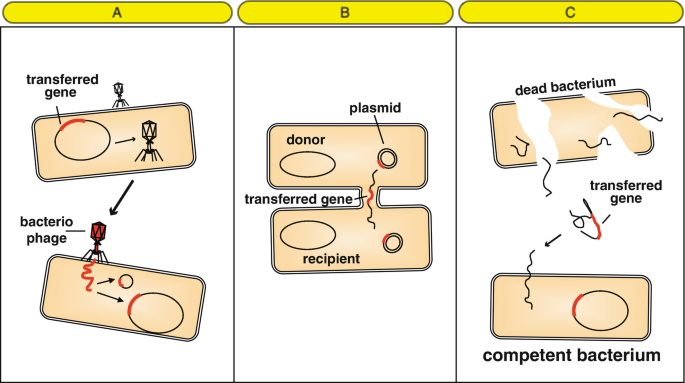
Definition: Gene movement between cells that are NOT direct descendents, can be categorized as either conjugation, transformation, or transduction
Speed: Fast
Example: Bacteria A picks up plasmid from Bacteria B that codes for a penicillinase (enzyme that destroys penicillin)
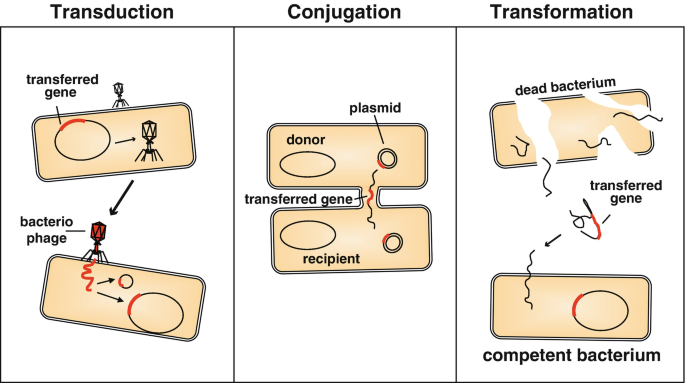
Conjugation
1 of the 3 Types of Horizontal Gene Transfer:
On Diagram: B
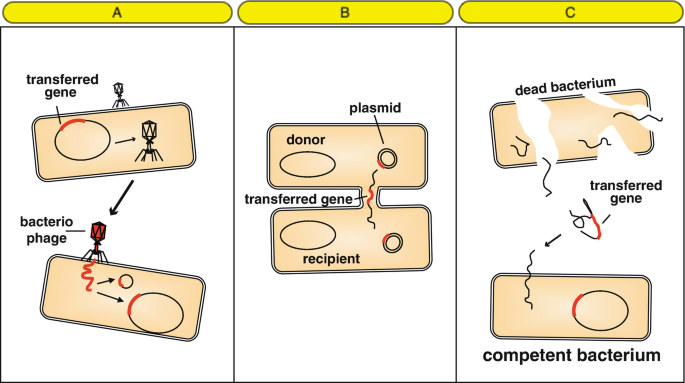
Transformation
1 of the 3 Types of Horizontal Gene Transfer:
On Diagram: C
Definition: Genetic transfer process by which free DNA is incorporated into a recipient cell and brings about genetic change
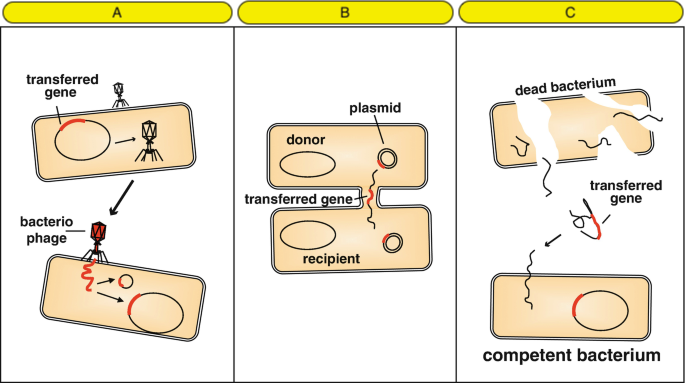
Transduction
1 of the 3 Types of Horizontal Gene Transfer:
On Diagram: A
Definition: Bacteria C is filled with bacterial or bacteria infected by viral DNA that has gone from Bacteria A to Bacteria B; rare
Antimicrobial resistance

Efflux pumps
Mechanisms of Antibiotic Resistance:
Definition: Transport proteins located on the cytoplasmic membrane of bacteria that can expel a wide variety of structurally diverse antibiotics across the membrane and out of the bacteria
Reduced penetration of drug
Mechanisms of Antibiotic Resistance:
Definition: Decrease uptake of antibiotic
Example:
LPS in Gram negative bacteria provide a barrier to some antimicrobial agents
High lipid content in Mycobacterial cell wall makes it difficult for hydrophilic drugs to enter cell
Staphylococcus aureus produces a thicker cell wall, making it difficult for vancomycin to enter
Antibiotic cleavage
Mechanisms of Antibiotic Resistance:
Definition: Bacteria releases enzymes that destroy antibiotic
Antibiotic modification
Mechanisms of Antibiotic Resistance:
Definition: Release enzymes that add functional groups to antibiotic
Example:
Gram positive bacteria alter the structure/number of penicillin binding proteins. This directly impacts the amount of drug that can bind to its target
Penicillin binding proteins
Definition: Transpeptidases involved in the construction of peptidoglycan in the cell wall
Multi-Drug Resistance: Next Steps
According to the Jim O’Neill Report:
Reduces the use of available microbials
Stimulate the development of new antimicrobials
Some key antibiotics should not be used in agriculture at all
Multi-Drug Resistance: Next Steps
According to the WHO Action Plan
Improve awareness and understanding of AMR
To strengthen knowledge and evidence base through surveillance
To reduce the incidence of infection through effective sanitation & hygiene
To optimize the use of antimicrobial medicines in human and animal health
To develop the economic case for new medicines, diagnostics, and vaccines