Anatomy and Physiology 141 - Unit 1
 Call Kai
 Learn
Learn Practice Test
 Spaced Repetition
 Match
Match Flashcards
 Knowt Play
1/51

Earn XP
Description and Tags
Chapter 1 Introduction to A&P, Chapter 2 Chemistry, Chapter 3 Cell Biology, Chapter 4 Tissues, Chapter 5 Integumentary System
Name | Mastery | Learn | Test | Matching | Spaced | Call with Kai | Chat |
|---|
No analytics yet
Send a link to your students to track their progress
52 Terms
Histology
The study of tissues and their structure. It involves examining the microscopic anatomy of cells and cellular components and is essential for understanding how tissues function in various organs.
Epithelial Tissue
A type of tissue that covers body surfaces, lines cavities, and forms glands. It plays roles in protection, absorption, secretion, and sensation.

Identify the Epithelial cell structure
Apical surface

Identify the Epithelial cell structure
Basal structure

Identify
Basal surface

Identify
Apical surface
Apical Surface
free unattached surface of an epithelial cell facing the body exterior or internal cavity
Basal surface
lower surface of an epithelial cell attached to the underlying basement membrane
Four major tissue types
Epithelial, connective, muscular, and nervous tissue.

Connective tissue
Supports, connects, and protects body structures.
Simple epithelium
Epithelium with one layer of cells.
Stratified epithelium
Epithelium with multiple layers of cells.
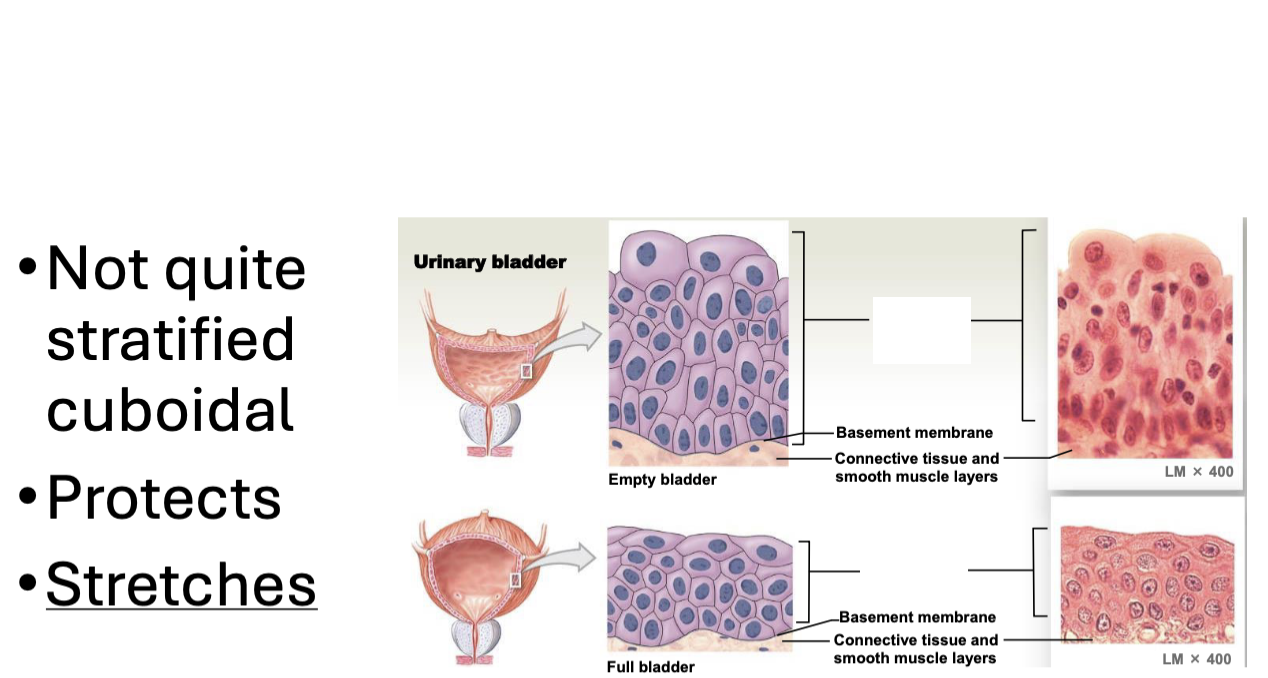
Transitional epithelium
Not quite stratified cuboidal specialized to stretch.

Pseudostratified epithelium
Single layer of cells of varying heights giving a false appearance of multiple layers, equipped with cilia (e.g., trachea lining).

Cilia
Hair-like structures that move and trap material across a cell surface.
Microvilli
Small projections that increase surface area.
Simple Squamous Epithelium
Single layer of flat, scale-like cells specialized for rapid diffusion and filtration (e.g., alveoli, capillaries).


Simple Cuboidal Epithelium
Single layer of cube-shaped cells specialized for secretion and absorption (e.g., kidney tubules, gland ducts).
Simple Columnar Epithelium
Single layer of tall, column-like cells specialized for absorption and secretion (e.g., digestive tract lining).

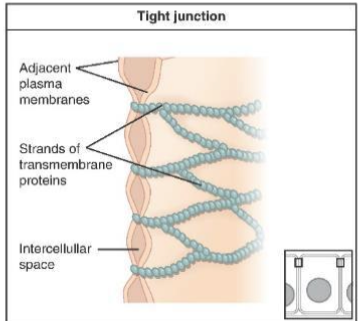
Tight junction
Intercellular junction that forms a leak-proof barrier sealing adjacent plasma membranes together.
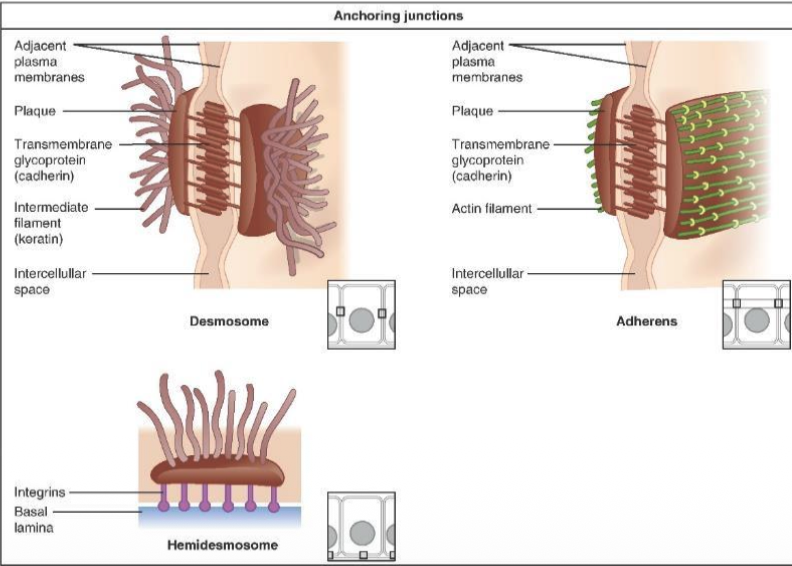
Anchoring Junction
Cell junction anchoring actin filament networks between neighboring cells via cadherins.
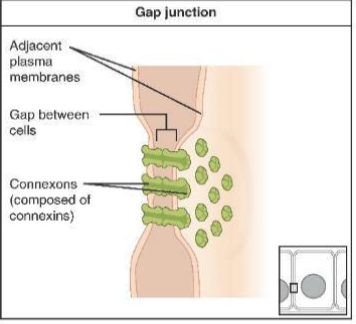
Gap Junction
Protein channel (connexon) linking adjacent cells to allow direct passage of ions and small molecules.
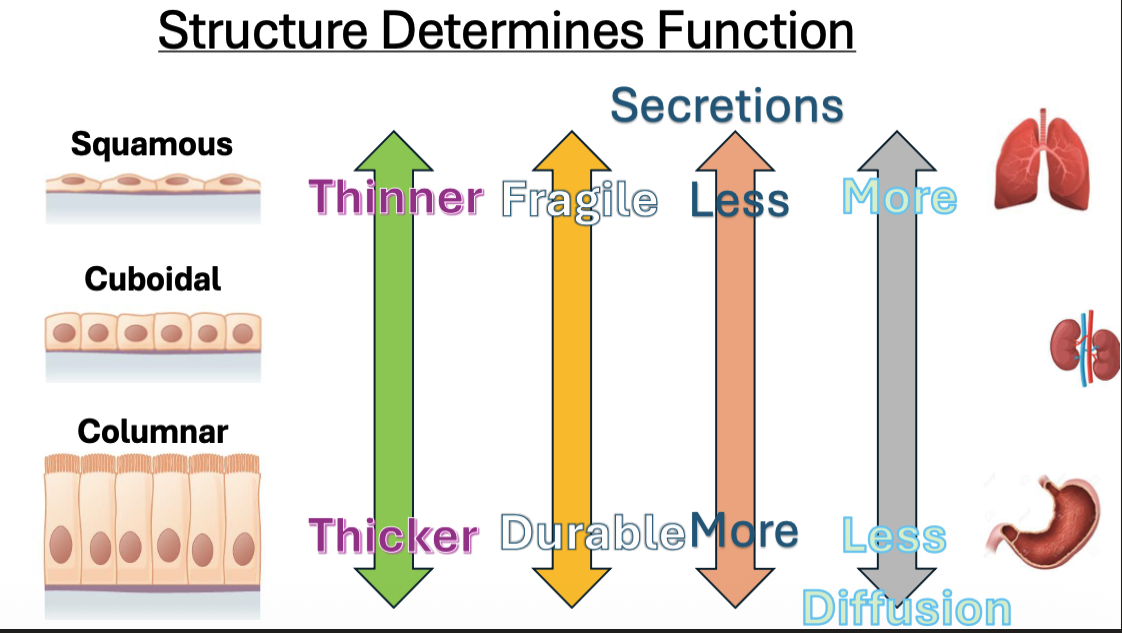
(Epithelial) Structure Determines Function: Squamous, Cuboidal, Columnar
thinner, thicker
fragile, durable
Secretions: less, more
Diffusion: more less
Glands
Epithelial tissue that secrete substances
• Glands often produce the substances that they secrete
• Secretions are released from the apical surface
Exocrine Gland
Gland releasing secretions through ducts onto body surfaces (or surface of
epithelium) or into cavities (e.g., sweat, salivary glands).
Endocrine Gland
Ductless gland secreting hormones directly into interstitial fluid and bloodstream (e.g., thyroid, pituitary).
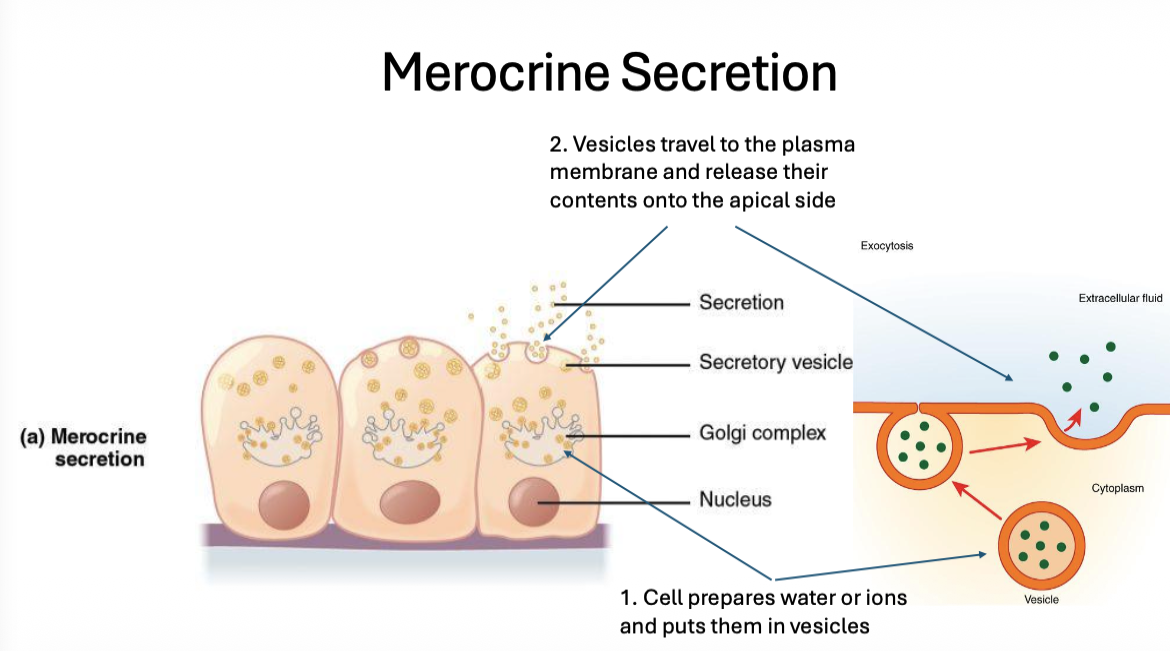
Merocrine Secretion
Secretory product released via exocytosis without loss of cellular material (e.g., eccrine sweat glands).
Apocrine Secretion
Secretory product released along with the apical portion of the cell membrane (e.g., mammary/pelvic/axillary glands).

Holocrine Secretion
Secretion accumulating within the cell until the entire cell ruptures and dies (e.g., sebaceous glands).

Simple Tubular Glands
A gland with an unbranched duct and a tubular secretory portion.

Simple Alveolar Glands
A gland with an unbranched duct and sac-like (alveolar) secretory portion.

Compound gland
A gland with a branched duct system.

Connective Tissue
Tissue type that binds, supports, protects, insulates, and transports substances throughout the body.

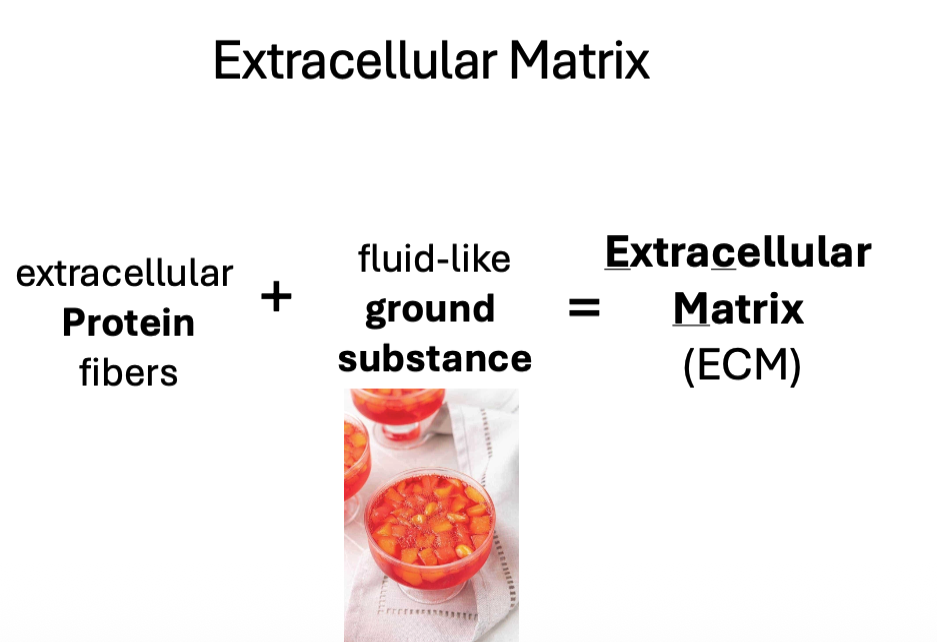
Extracellular Matrix (ECM)
Non-living material surrounding cells, composed of ground substance and protein fibers.
Provides structural and functional support.
ECM = fibers + ground substance
Protein fibers (for ECM)
One component of ECM; includes collagen, reticular, and elastic fibers.
strength, support, elasticity
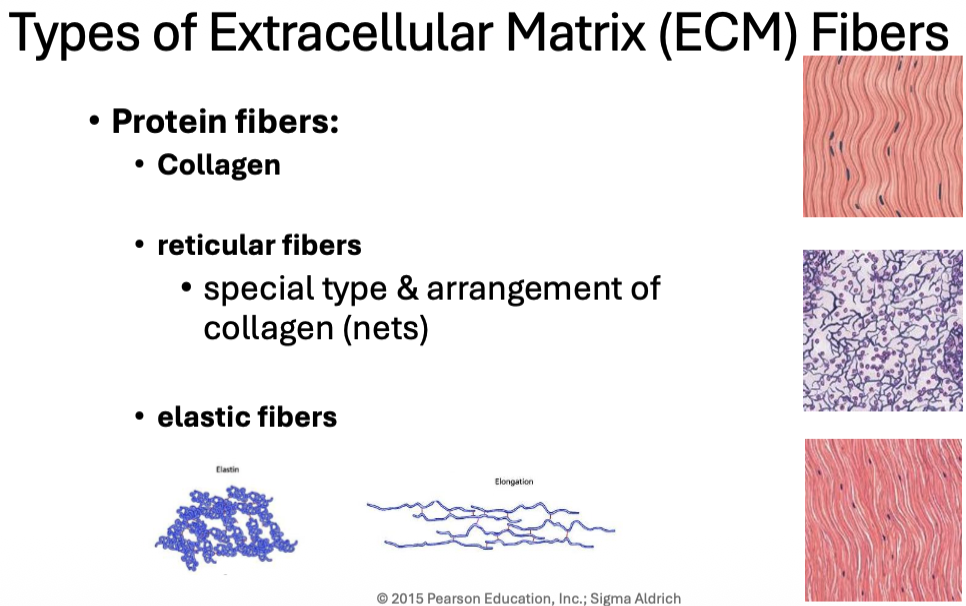
Collagen fibers
Strong fibers that provide tensile strength.

Reticular fibers
Delicate fibers that form supportive networks.

Elastic fibers
Fibers that allow tissues to stretch and recoil.

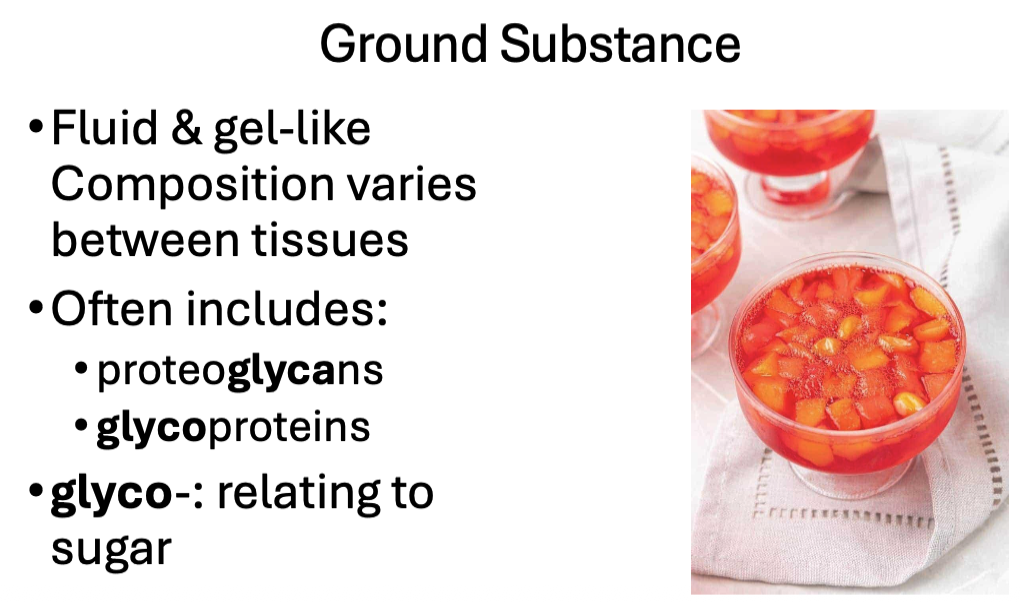
Ground Substance
The gel-like, non-fibrous part of the ECM that supports cells, binds water (hydration), and provides cushioning/protection.
Mesenchymal cells
Undifferentiated connective tissue cells that can develop into other connective tissue cell types.

Fibroblasts
Connective tissue cells that produce the extracellular matrix (ECM), including fibers and ground substance.
Fibrocytes
Mature connective tissue cells that maintain the ECM.
Melanocytes
Cells that produce melanin, a pigment that contributes to coloration and helps protect cells from UV radiation.
Adipocytes
Fat cells specialized for storing lipids (fat).
Macrophages
Immune cells that engulf and digest pathogens, dead cells, and cellular debris through phagocytosis.
Neutrophils
White blood cells that respond quickly to infection and inflammation and destroy pathogens.
Mast cells
Immune cells that release chemicals involved in inflammation and allergic responses, including histamine.
Lymphocytes
White blood cells involved in specific/adaptive immune responses, including B cells and T cells.