cognitive behaviour therapy
 Call Kai
 Learn
 Practice Test
 Spaced Repetition
 Match
 Flashcards
 Knowt Play
1/33

There's no tags or description
Looks like no tags are added yet.
34 Terms
cognitive behaviour therapy
operates on the premise that maladaptive patterns of thinking influence the way we feel (physically and emotionally) and behave
general aim of CBT
identify and modify unhelpful patterns in thinking in order to alleviate unpleasant feelings and promote helpful responses
cognitive model
situation: what was happening, automatic thought: what the person thought, emotion experienced: what the person felt, behaviour performed: what the person did
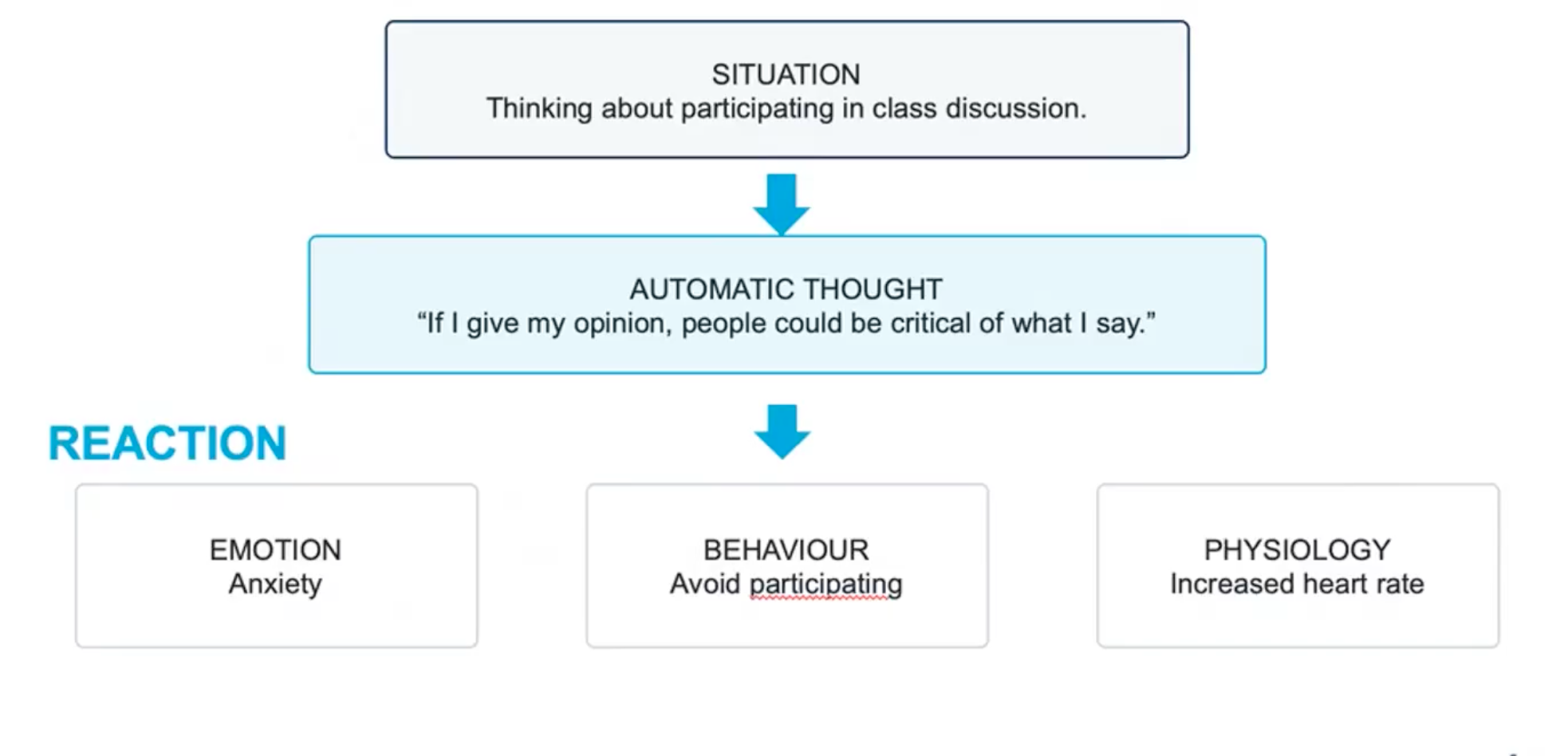
common types of unhelpful automatic thoughts
catastrophizing, mind-reading, all of nothing thinking, selective attention, overgeneralisation
automatic thought - catastrophizing
a negative possible is treating as disastrous and unmanageable
automatic thought - mind-reading
the person assumes they know what others think without sufficient evidence
automatic thought: all or nothing thinking
performance in judged as complete success or complete failure
automatic thought: selective attention
threat or failure is notice while neutral or positive information is missed
automatic thought: overgeneralization
one event is used to draw a broad conclusion about the future or the self
CBT will not work unless the patient is willing to change

common principles of CBT
formulation of clients and their problems in cognitive terms
treatment protocols are manualised —> set instructions for how to do it, but therapy is nuanced and spontaneous
empirical validation of treatment (outcomes/progress towards goals are measured)
short term, collaborative and active
problem-focused and goal oriented
treatment emphasises the present moment
therapist as teacher who educates the patient to identity, evaluate and respond to thoughts and beliefs, and to problem solve and make devisions mare effectively in order to bring about desired change.
create opportunities for new learning in therapy
generalise changes outside of therapy situations
principles are made explicit to the client
phases of therapy
thorough preliminary assessment (symptom set, severity, risk assessment), first, second and third round
cbt - first round
includes concentration on psycho-education and non-cognitive behaviour techniques (relatively straightforward and easier to achieve success but those with depression experience difficulty initiating change)
cbt - second round
focuses on cognitive techniques and problem solving
cbt - third round
generalisation outside of therapy and relapse prevention
activity scheduling
goals, rationale, self-monitoring, activity scheduling
cbt - activity scheduling: goals
increase behaviour, create and identity positive reinforcement
cbt - activity scheduling: rationale
therapist provides rationale to the client about “depression cycle”
cbt - activity scheduling: self-monitoring
client records actual behaviour for several days including pleasure and mastery ratings. Proving that not everything is all bad (automatically subverts an all or nothing mindset)
cbt - activity scheduling
planning one’s day and week in advance, after showing competence at activity scheduling develop a to-do list of practical tasks
sleep problems
a behavioural assessment should include habits around sleeping, stimulant usage, sleeping patterns, and more
explains the sleepy cycle to clients
helpful strategies for sleep management
most effective intervention for sleep problems is getting up at the same time every day
decrease stimulant use generally and avoid stimulant use completely after evening meal
establish firm times for going to bed and getting up
no screens in bed
if not falling asleep in 30 minutes, try again later
distraction techniques:
another simple behavioural technique for depression eg. Interrupt negative rumination and inactivity. Distraction techniques can be established individually for each of your clients
pleasurable activities list doubles as distraction techniques
CBT steps, regarding identifying automatic thoughts and responding to them
evaluate the validity of the thought (evidence?)
evaluate the utility of the thought (is the thought useful?)
respond to automatic thoughts, do problem solving if thoughts are true
techniques to identify/eliclit automatic thoughts
ask the question: what was going through your mind just then? In following circumstance
when the therapist notices a shift/identification in emotion
client is describing situation in which they experienced an emotion shift
using imagery to enhance client’s memory
doing a role-play of specific interaction
working with thoughts: socratic questioning
evidence, perspective, probability, utility, distance, action
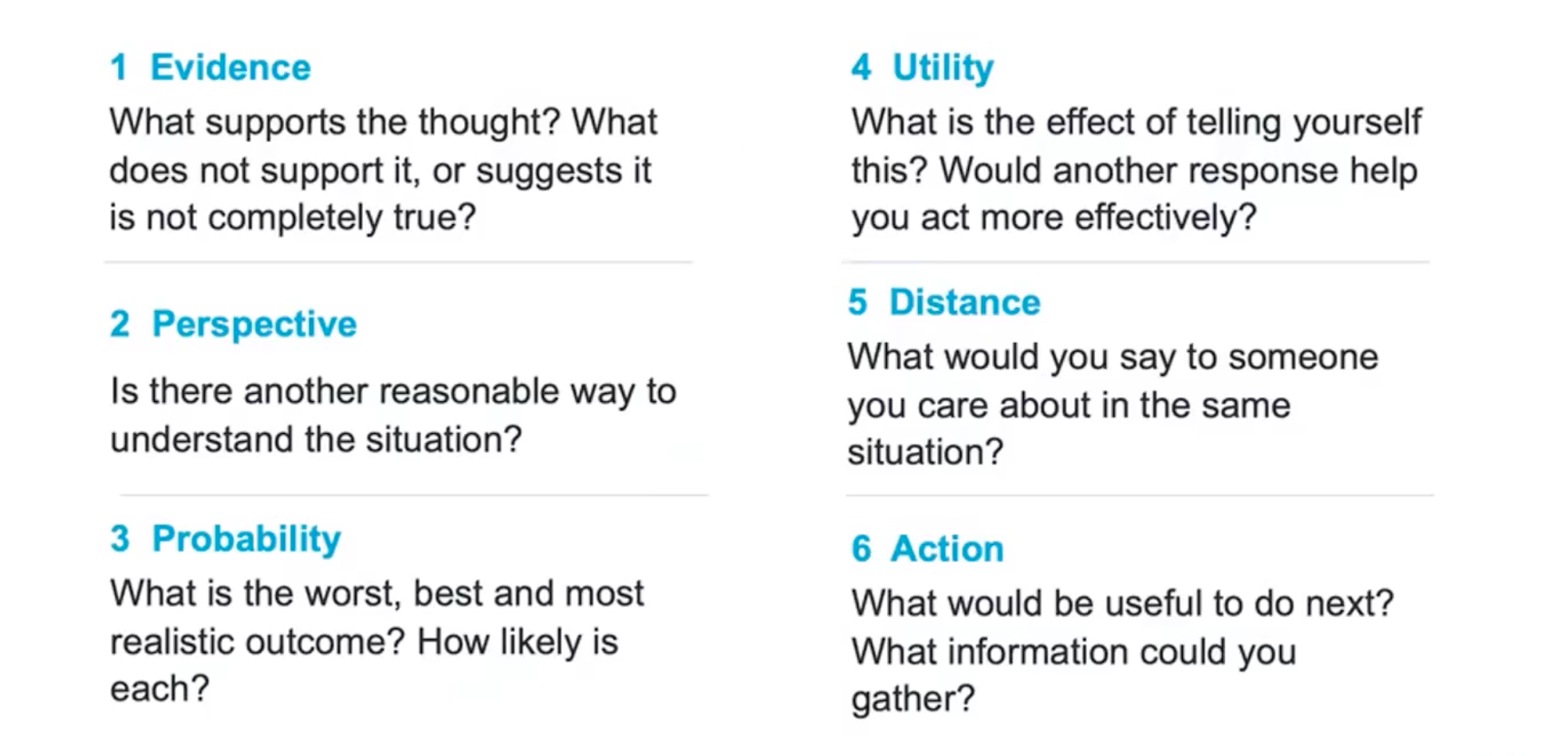
socratic questioning - evidence
what supports the thought? what does not support it, or suggests that it is not completely true?
socratic questioning - perspective
is there another reasonable way to understand the situation?
socratic questioning - probability
what is the worst, best and most realistic outcome? how likely is each?
socratic questioning - utility
what is the effect of telling yourself this? would another response help you act more effectively?
socratic questioning - distance
what would you say to someone you care about in the same situation?
socratic questioning - action
what would be useful to do next? what information could you gather?
phase three: relapse prevention
occurs throughout therapy (coping cards, homework sheets, hand outs etc. —> becomes material for relapse prevention program
following enhance relapse prevention:
reinforcing client capabilities by attributing progress to the patient
stresses techniques/tools learned in therapy are for lifelong use
discussing possible setbacks the client might experience in future