l&d exam 2
 Call Kai
 Learn
 Practice Test
 Spaced Repetition
 Match
 Flashcards
 Knowt Play
1/127

There's no tags or description
Looks like no tags are added yet.
128 Terms
what are some signs that labor may be beginning? (6)
*does not mean you are in labor, but uterus is getting ready
lightening → baby “drops” into pelvis between 36-40 weeks
mucus plug is expelled as cervix softens and dilates
nesting → burst of energy preceding labor
cervical ripening (“softening”)
rupture of membranes → “water broke”; may occur before or during labor
bloody show → light, red tinged bleeding as cervix begins to dilate
labor officially begins with…
uterine contractions that cause cervical change
dilation
opening of the cervix from 0-10cm
effacement
thinning of the cervix measured as a percentage
→ 0% = thick
→ 100% = paper thin
what needs to come first? dilation or effacement?
effacement!
the cervix needs to thin and soften before it dilates

labor: fetal presentation
ideally, you want the baby’s head to be down towards the vagina (cephalic position).
sometimes, the baby is flipped (breech) or their shoulder is in the way of the birth canal
labor: fetal position


labor: fetal attitude
relationship of the fetal head to the spine
we want the baby’s head to be flexed, with their chin tucked in (“vertex”)
we do not want the baby’s head to be extended, with their face coming out first

labor: fetal station
fetal position within the maternal pelvis, rated from -5 to +5
negative station = baby is high and not engaged
0 station = baby is engaged in maternal pelvis
positive station = baby is low, coming out of the pelvic outlet
we want the baby to be a positive station when they are being delivered!
“-5 is up in canada and +4 is on the floor”
T or F: patients should be continuously moving while in labor
true!
changing positions is great for labor for many reasons. it helps mom with coping through pain and it keeps baby awake and stimulated
T or F: stress hormones are not good for labor
true!
therefore, it is important to keep mom as relaxed as possible during the labor process. lower cortisol = easier labor that progresses faster
how can you determine labor contractions are real/true?
contractions start in lower back/abdomen
may feel pressure in pelvis
may feel like intense menstrual cramps
contractions get closer together and stronger
these contractions cause cervical change!
how can you determine if contractions are false?
may feel like mild menstural cramps that are uncomfortable but not painful
contractions stop with rest
contractions don’t effect mom’s ability to walk, talk, and progress with normal activities
these contractions do not cause cervical change!
how does mom adapt physiologically during labor?
increased HR during contractions, WBCs increase, increased oxygen demands
decreased gastric emptying (why moms feel nauseous)
oxytocin levels rise
T or F: labor is stressful to baby
true!
why is labor stressful to baby?
transient hypoxia!
during contractions, blood flow from the placenta is pushed away from baby

4 stages of labor
1 - begins with onset of contractions causing cervical change. can be considered active or latent. the first phase of labor persists until the patient is 10 cm dilated
2 - begins when mom is 10 cm dilated and pushing
3 - begins when baby is born. “birth” of the placenta happens in this phase
4 - recovery period after placenta is delivered until about 2 hours after delivery
first stage of labor: active vs latent phases
latent phase → characterized by irregular contractions, effacement progress, and dilation from 0-4 cm
active phase → characterized by regular contractions, decent of fetus into birth canal, and dilation of the cervix from 4-10 cm
which phase of the first stage of labor takes longer? active or latent?
latent
T or F: the duration of labor varies, especially depending on parity
true
first time moms typically have much longer labors compared to moms with multiple children
when a mom first comes in to the ED in suspected labor, what is apart of the initial assessment? (5)
vitals
fetal monitoring (at least 20 mins)
monitoring contractions
cervical exam
review prenatal history
what are some ways a nurse can assess contractions? (3)
palpation
belly will feel hard during contractions
external monitoring - “belly bands” called a TOCO
non-invasive; uses a pressure sensor at the top of the fundus
does not measure strength of contractions accurately
most commonly used
internal monitoring - using a device called IUPC
invasive; catheter is inserted in uterus to accurately measure the strength of contractions
membranes must be ruptured
can dislodge the placenta

what factors do nurses measure when measuring contractions? (4)
frequency - 2-5 in 10 minutes
duration - lasts about 90 seconds
strength - varies
resting tone - uterus is soft in between contractions
T or F: its okay for contractions to occur every minute during the first stage of labor
FALSE
we want adequate rest time for baby in between contractions. when they’re being squeezed, they’re receiving little to no blood flow.
contractions become closer together (about every minute or two) when mom is ready to push

what is fetal monitoring? how do we monitor a baby?
fetal monitoring (FHR) monitors the baby’s heart rate and oxygenation alongside contractions.
intermittent auscultation - auscultation of baby’s HR with a doppler. used for low risk clients after fetal wellbeing is established after admission
electronic fetal monitoring - recommended upon admission and used at all times in high risk clients. can be done externally or internally.
what are the steps when interpreting FHR? (4)
establish a HR baseline (roughly, what is the average of the baby’s HR?)
establish variability
are any accelerations present?
are any decelerations present?
what is a normal HR range for FHR?
110-160 bpm
FHR: variability
fluctuations/variations in baby’s heart rate. when interpreting a baby’s variability, do not include accels/decels
four types: absent (bad), minimal (can be okay), moderate (YES), marked (can be okay)
why do we want baby’s HR to fluctuate or be variable?
FHR variability is a good sign that suggests the baby’s neurological system is mature and intact.
the baby’s heart rate SHOULD vary based on changes in its environment, such as contractions, sleeping, etc.
FHR: absent variability

FHR: minimal variability
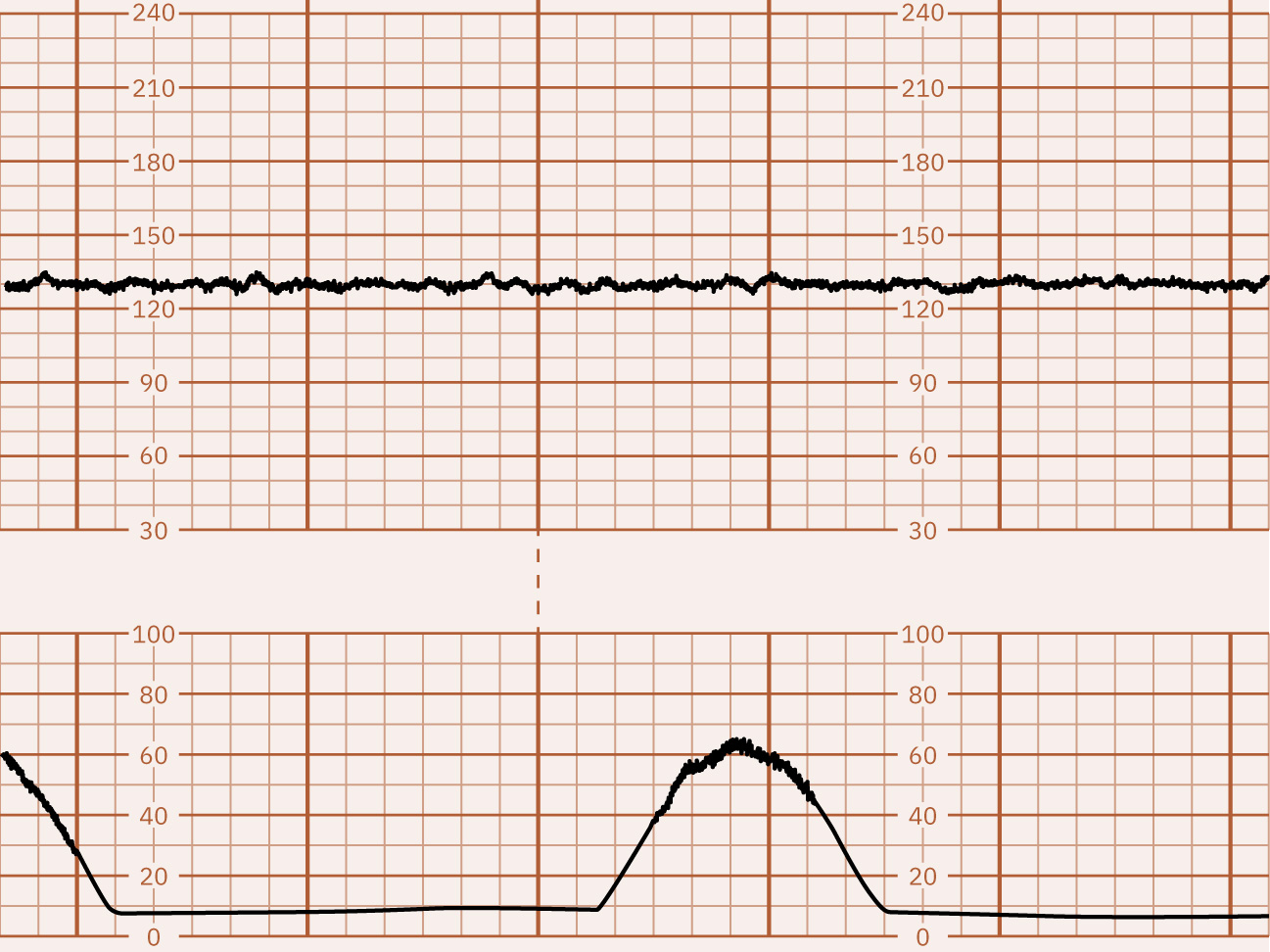
FHR: moderate variability

FHR: marked variability


FHR: what are accelerations?
increases in fetal heart rate from baseline
needs to rise at least 15 beats above baseline to be considered an acceleration and needs to last for at least 15 seconds → “15 by 15”
accelerations are good! they show fetal wellbeing and solid neurological function

FHR: what are decelerations?
decreases in fetal heart rate from baseline
some decelerations are expected, some are more dangerous

FHR: early decelerations
gradual decreases in fetal heart rate that match contractions
caused by fetal head compression
shaped like a “U” on FHR/contraction strip
“contraction goes up, fetal heart rate goes down”

FHR: variable decelerations
an abrupt decrease in fetal heart rate
may occur with or without contractions and are caused by umbilical cord compression
shaped like a “V”
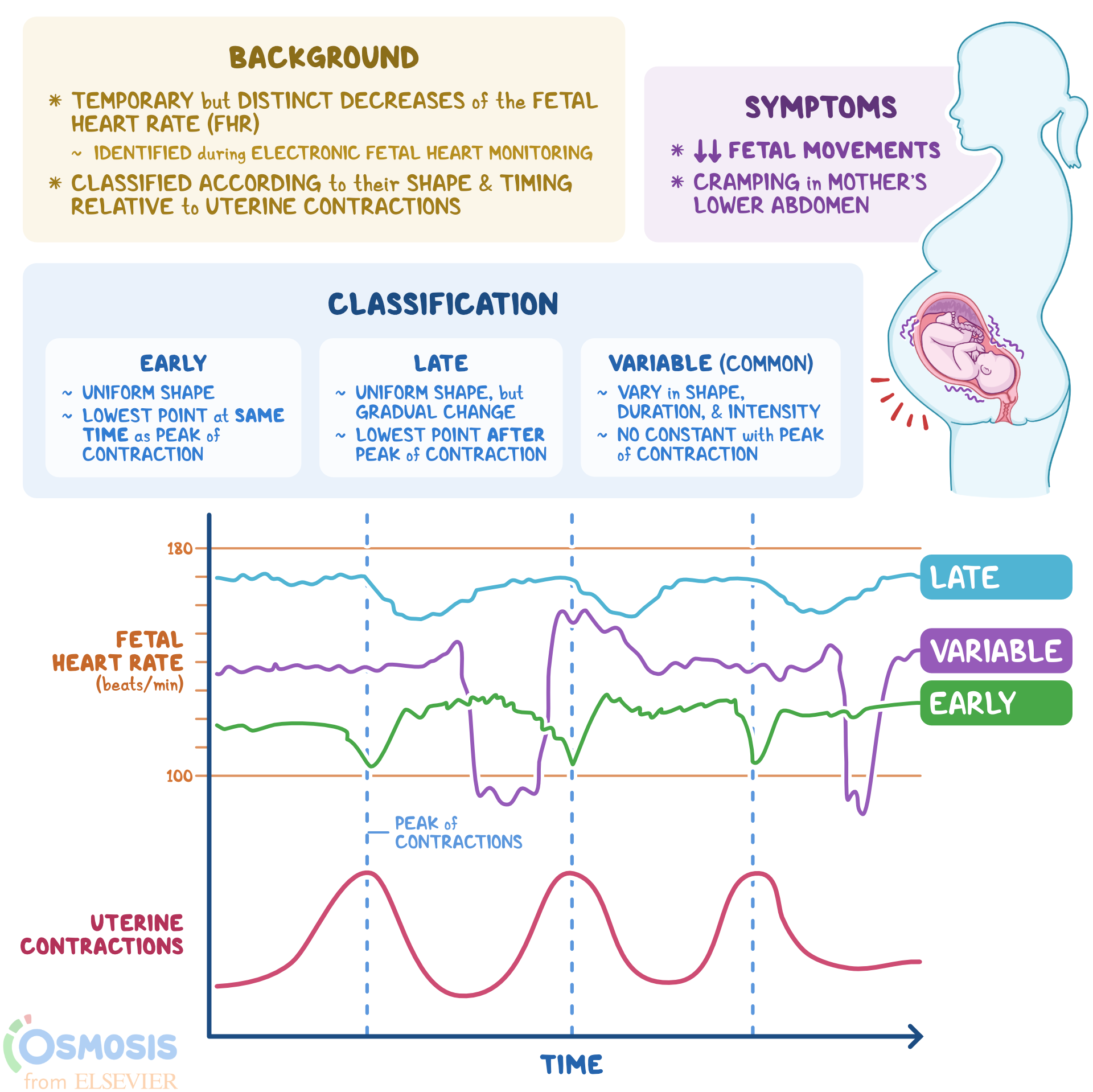
FHR: late decelerations
gradual decrease in fetal heart rate that occurs after the peak of a contraction
associated with placental insufficiency
shaped like a “U”
ex) my mom when she had me :)
VEAL CHOP pnemonic for FHR accels/decels


FHR: prolonged decelerations
any deceleration that lasts longer than 2 mins but less than 10 minutes
this is very very bad

FHR: sinusoidal pattern
smooth, undulating wave-like pattern lasting greater than 20 mins
rare, but emergent → emergent birth necessary
associated with fetal anemia
FHR: bradycardia (FHR <110bpm) and tachycardia (FHR>160bpm) for more than 10 minutes
both not reassuring
bradycardia → associated with hypoxia, cord compression, cord prolapse, placental abruption, or uterine rupture
tachycardia → maternal fever (sepsis!), dehydration, fetal distress, and hypoxia
FHR: category 1
baseline 110-160bpm
moderate variability
no late or variable decels
early decels are present or absent
accels present or absent
this is the NORMAL category!
FHR: category 3
recurrent late/variable decels and absent variability
bradycardia and absent variability
sinusoidal pattern
BAD BAD BAD
“we should never see a cat. 3 FHR unless they come in emergently”
FHR: category 2
somewhere in between categories 1 and 3
moderate variability with recurrent late or variable decels
minimal variability
absent variability without recurrent decels
prolonged, variable, or late decels

intrauterine resuscitation
means…. “what should i do if I don’t like this baby’s FHR?”
maternal repositioning
increasing IV fluids especially if BP is low or placenta is insufficient
supplemental oxygen
amnioinfusion → putting amniotic fluid back in to mom
if FHR patterns do not improve or worsen, anticipate emergency birth
visceral pain
pain originating from organs or nerves
during birth, this type of pain originates from…
uterine contractions
cervical dilation
somatic pain
pain felt in muscles, joints, and bones
during birth, this type of pain originates from…
pressure from fetal head
stretching pelvic muscles and perineal tissue
during the first phase of labor, ___________ pain is felt the most
visceral
during the second phase of labor, __________ pain is felt the most
somatic
what factors influence a mom’s pain perception? (5)
length of labor
comfort measures in place
anxiety
physical pain
preparation for labor
is the 0-10 scale a beneficial tool when assessing labor pain?
NO

coping/not coping pain scale
Instead of asking a laboring person to rate the intensity of their physical pain on a number scale, care teams evaluate how well the person is managing or coping with the sensations of labor

what are some non-pharmacological pain management interventions for moms in labor? (8)
relaxation and breathing → lamaze technique
positioning
touch and massage → effleurage, counterpressure
acupressure and acupuncture (needs extra training)
heat/cold therapy → baths, hot/cold packs
aromatherapy
water therapy
music

effluerage
a massage technique that focuses on…
gentle or deep pressure in circular or linear motions
performed on the mom’s back, abdomen, hands, or forearms

counterpressure
a massage technique that is most helpful with back pain during contractions
a second person applies pressure to a spot on mom’s back or both hips during contractions to provide counterpressure for contractions
what are some pharmacological pain management interventions for moms in labor?(6)
opioid analgesia (fentanyl, morphine, meperidine, oxycodone, tramadol)
opioid agonist-antagonist (nalbuphine)
perineal infiltration
pudendal nerve block
spinal/epidural

what opioid analgesics can be used for moms in labor? what route are they given and what are some complications?
meperidine (demerol), oxycodone, tramadol, fentanyl, morphine
route: IV
comps: can cross placenta and make baby sleepy, so watch for bradycardia and absent variability. for this reason, avoid within 1 hour of birth (8 cm dilated)
there is a medication that can be used for pain management that actually is associated with decreased respiratory depression. what medication is this?
nalbuphine (nubain)
this medication is an opioid agonist/antagonist

labor pain management: perineal infiltration
numbing skin used for episiotomy or repairs
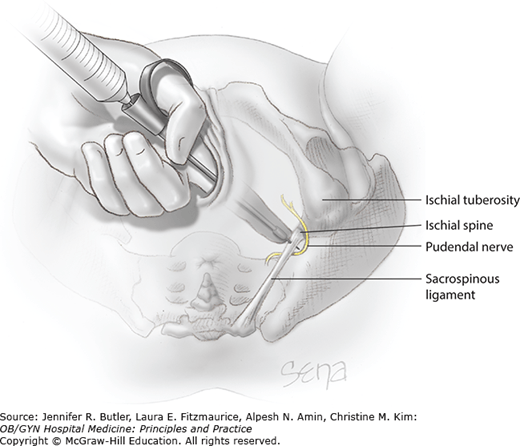
labor pain management: pudendal nerve block
local anesthesia injected into the pudendal nerve
more effective than perineal skin infiltration

labor pain management: spinal anesthesia
a single injection into the subarachnoid space (goes deeper than epidural)
most commonly used before c-sections
lasts about 2 hours
PATIENT CANNOT MOVE AROUND AT ALL

labor pain management: epidural anesthesia
a continuous infusion of pain medication given via a catheter that remains in the epidural space for the duration of labor
most commonly used for labor/natural vaginal births
PATIENT CAN MOVE IN BED, BUT CANNOT GET UP
what are some contraindications that would stop an individual from getting an epidural? (3)
coagulopathy → conditions that affect blood clotting, such as HELLP syndrome and elevated platelet levels
spinal anomalies → conditions that affect normal spine curvature, such as scoliosis
infection around epidural site
what are some complications of an epidural? (4)
infection
hematoma
severe headache (“spinal headache”) that is worse when sitting up; caused by accidental puncture of CSF sack, causing a CSF leak
hypotension caused by vasodilation from epidural meds
to prevent hypotension from an epidural, what can the nurse do to intervene? (2)
give a fluid bolus before epidural placement
q. 5 mins BP checks
T or F: epidural may interfere with pushing
true!
the epidural decreases sensation and can dull the natural reflex to bear down, especially if the medication rate is too high

what are some different birthing locations and why would they be chosen over others?
home
relaxing environment, recommended for low risk births
birth center
recommended for safe birth outcomes, less invasive than hospitals, usually staffed by midwives, recommended for low risk births
hospital
recommended for safest birth outcomes
emergency care available for high risk births
more options for pain mgmt

T or F: evidence shows that having a doula reduces maternal morbidity and mortality
true
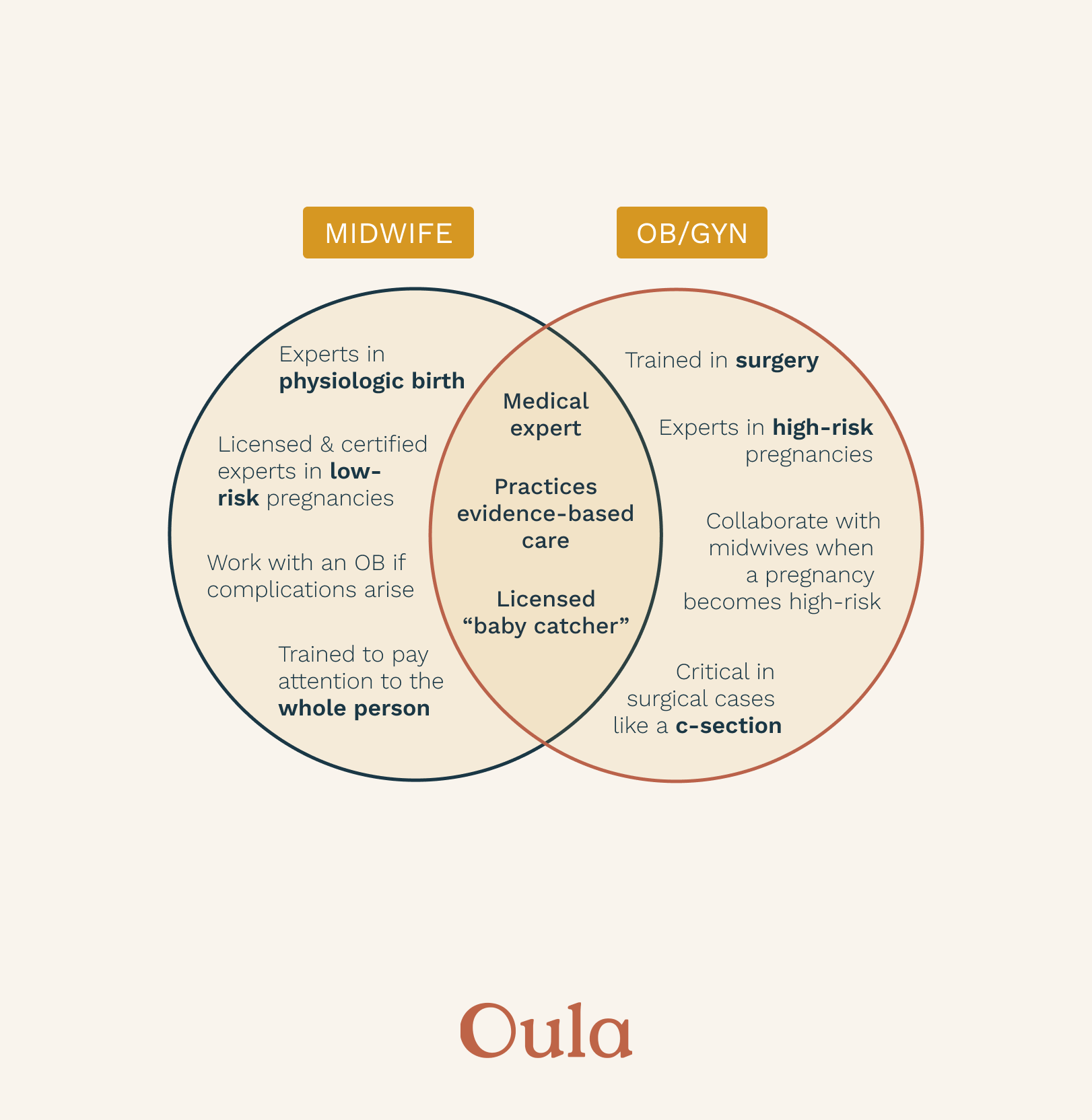
differences between midwives and OBGYNs
midwives (certified nurse midwife)
licensed and certified in low risk pregnancies
OBGYNs
licensed and certified in high risk pregnancies, trained in surgery
when a mom is actively pushing the baby out, what should you be assessing as the nurse? (3)
exhaustion/pain levels
coping/not coping
monitor pushing efforts and give feedback → good pushing = baby is moving down!

a mom has been pushing for three hours and is physically and mentally exhausted. what is a great option for next steps?
“labor down” → for 1-2 hours, stop physically pushing and let baby do the work
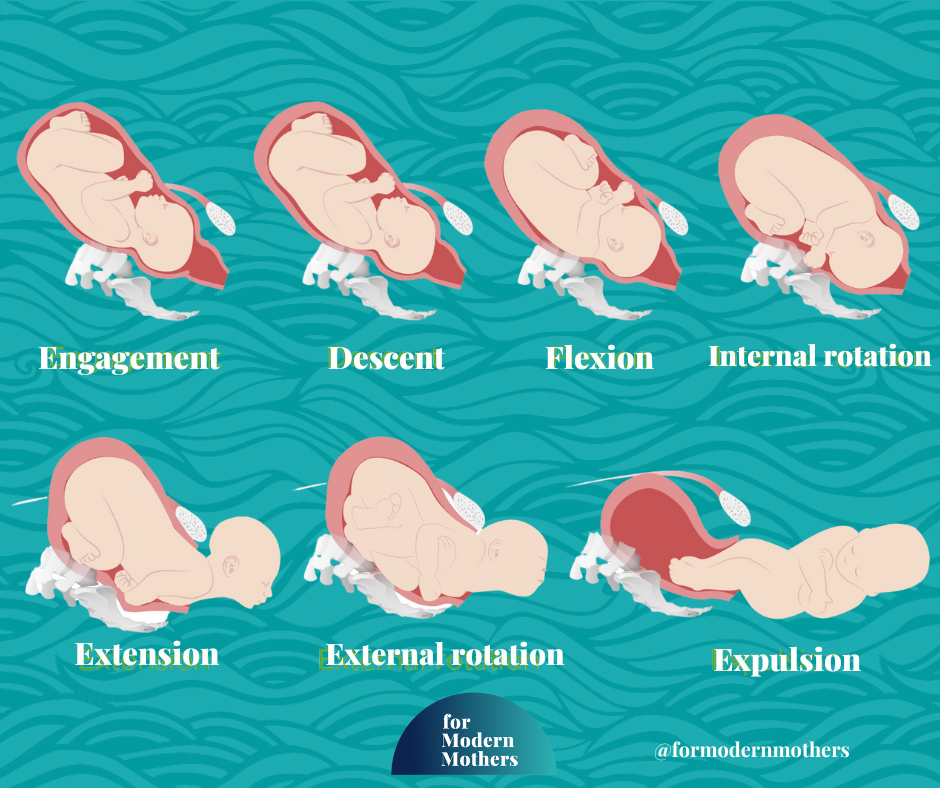
labor: cardinal movements
“twists and turns the baby is doing”
includes multiple steps:
pre-engagement (before labor, cervix is closed)
engagement
descent
neck flexion
internal rotation
extension
external rotation
expulsion

labor: crowning
when the baby’s head is visible on the perineum
during the birth of the baby’s head, the mom should push _______ to prevent tearing
slower

labor: nuchal cord
umbilical cord wrapped around baby’s neck
can potentially be very very bad!!!
provider is trained to assess if the cord is wrapped around baby’s neck and what to do afterwards
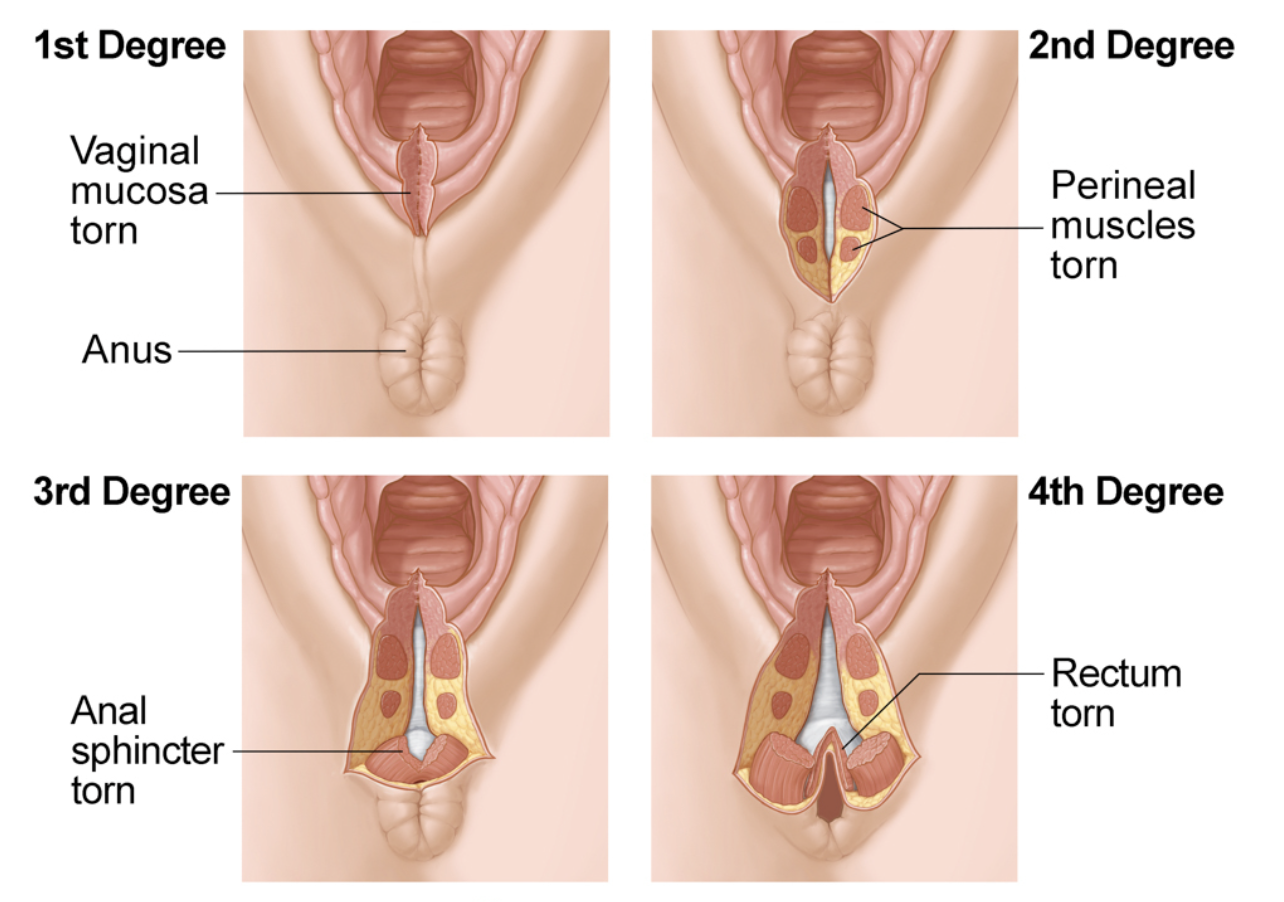
labor: perineal lacerations
tearing of the tissue of the perineum due to stretching during birth, typically when baby’s head and shoulders are coming out
four degrees:
1st - skin is lightly torn, like a mark
2nd - most common; perineal muscles are torn but the anal sphincter is intact
3rd - anal sphincter is torn
4th - skin tear from vagina to anus, completely tearing the anal sphincter. this type of laceration typically needs surgical removal to fix

episiotomy
perineal incision done by the provider during birth with the intention of opening the pelvic outlet for baby to easily move through
decreases the length of the 2nd stage of labor due to fetal distress
mom should be locally anesthetized before episiotomy
why would a natural tear heal easier than an episiotomy?
“jagged edges reattach easier than straight, floppy edges”
after the baby is delivered, the placenta needs to be expelled from the uterus. what are some signs of placental separation? (2)
bleeding
umbilical cord lengthening

the placenta can be delivered two ways: actively and passively. what is the difference?
passive - allowing maternal body to expel placenta on its own
active - typically the standard of care in the hospital setting; controlled cord traction by provider and uterotonic medication
pitocin given so uterus contracts, which clamps bleeding and speeds up the birth of the placenta
decreased risk of postpartum hemorrhage
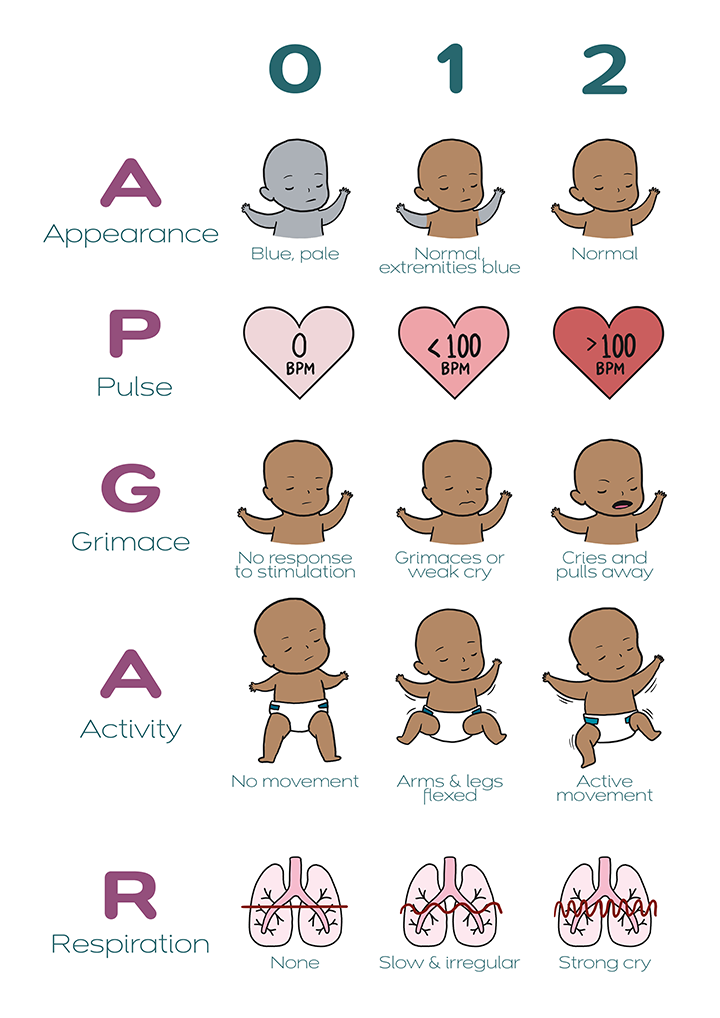
APGAR
basic assessment of a newborn’s physiologic status immediately after it comes out of the womb (1 min and 5 mins)
the APGAR tool assesses HR, breathing effort, muscle tone, reflex irritability, and color

what two body systems are extremely important to assess in a freshly newborn baby?
temperature regulation
newborns are extremely sensitive to temperature differences, especially cold. They have a high risk of heat loss because their skin is thin and fragile
interventions: put baby skin-to-skin with mom or dad, have them wear a hat, warm blankets, infant warmer
respiratory status
assess respiratory rate (normal = 30-60), strength of cry
coarse respiratory sounds are expected since their lungs are still full of fluid
abnormal signs = nasal flaring, grunting, retractions
how do babies lose heat? (4)
evaporation: occurs when the newborn is wet
conduction: occurs when a newborn comes in contact with a cold object
convection: occurs when the newborn is in a cold environment
radiation: occurs when the newborn is placed near a cold object or environment, such as a crib next to a window
what is the PRIORITY assessment for a freshly postpartum mom?
monitor for postpartum hemorrhage!!
to watch for this, vitals should be done q. 15 mins for the first two hours

fundal assessment - why is it done?
a fundal assessment is done to ensure the uterus is shrinking quickly after birth to prevent excessive bleeding. the uterus should feel firm.
if the uterus feels boggy → massage the fundus to stimulate contractions!

lochia
vaginal discharge following birth consisting of uterine tissue, blood, and mucus
three types: lochia rubra (bright red), serosa (dark brown), and alba (clearish/white). lochia should lighten as the “dinner plate” heals
how should you measure a mom’s output of lochia?
by weight!
1g = 1 mL of blood
how much bleeding is considered ‘too much’ after birth?
soaking a peri pad in 15 minutes or less is considered concerning, especially when this is accompanied by…
boggy fundus
hypotension
tachycardia
passage of large blood clots

what are the three most important medications to give to a newborn after birth? why is this?
eye prophylactic abx - prevents neonatal ophthalmia, caused by gonorrhea. if left untreated, this can cause eye blindness.
vitamin K - newborns lack clotting factors at birth, so babies get an extra boost of vitamin K to stimulate production of clotting factors
hep B vaccine - since hep B can easily be transmitted from mom to baby during birth, the hep B vaccine is given to decrease the risk of transmission

birth complications: preterm labor and birth
(patho, etiology, S/S, diagnostics)
patho:
onset of regular uterine contractions that cause cervical change in moms who are 37 wks or less
preterm labor does NOT always result in birth!
etiology:
not well understood, but associated with multiple risk factors, including GI/U infections, trauma, acute illness, dehydration, hx of preterm birth, SDOH, and lack of support
S/S:
regular uterine contractions that cause cervical change
PPROM
diagnostics:
cervical checks, fetal monitoring, additional labs to RO infection, fFN lab testing (protein found in amniotic fluid after water broke)

tocolysis
a fancy word for “stopping contractions” and delaying preterm birth. done with multiple medications including:
terbutaline → acts on smooth muscles of uterus to relax them
nifedipine → CCB that lowers BP
mag sulfate → neuroprotection
what are some contraindications to tocolysis? (5)
(aka, why would we not want to keep baby cooking?)
fetal demise
non-reassuring FHR (category 2 or 3)
hemodynamic instability in mom
severe preeclampsia
frank bleeding
why can corticosteroids be used for preterm labor/birth?
corticosteroids improve neonatal respiratory outcomes
that being said, corticosteroids need at least 48 hours in mom’s system for effectiveness

birth complications: PPROM
(patho, etiology, S/S, diagnostics)
PPROM = preterm/prelabor rupture of membranes
patho
membranes rupture before 37 weeks, creating a risk for infection!
etiology:
not fully understood
increased risk with acute infection, trauma, preterm labor, amniocentesis
S/S:
gush/trickle of fluid from vagina
diagnostics:
no single definitive test; mostly centers around assessments and infection prevention
what is the most important assessment to do for a mom with PPROM?
ASSESS FOR INFECTION!!
foul smelling/discolored discharge or fluid from vagina
elevated temp, WBC count, tachycardia in mom or baby
uterine tenderness
what is the treatment for PPROM?
depends on gestational age, but usually mimicks the treatment for preterm labor (expectant mgmt, tocolysis, corticosteroids, mag sulfate, abx)
why are abx given to moms with PPROM?
for prophylactic coverage to prevent chorioamnionitis and sepsis in mom and baby

birth complications: chorioamnionitis
(patho, etiology, S/S, diagnostics)
patho:
infection of the amniotic fluid, placenta, uterus, or membranes that typically begins as an ascending GU infection
etiology:
can be caused by any pathogen, including bacteria, viruses, fungi, and STIs
S/S:
fever, uterine tenderness, maternal and fetal tachy, elevated WBC
diagnostics:
amniotic fluid culture
placental pathology culture is definitive!
what is the main treatment for chorioamnionitis?
antibiotics!