03320 Exam 3 - Cell Cycle
 Call Kai
 Learn
 Practice Test
 Spaced Repetition
 Match
 Flashcards
 Knowt Play
1/72

Earn XP
Description and Tags
sessions 21-
73 Terms
What are the main steps of the eukaryotic cell cycle (in order)
G1, S, G2, M
what are the steps involved in interphase
G1, S, G2
what is the START/restriction point
the point in G1 when the cell is committed to DNA synthesis after this point (S phase)
what are CDKs
Cyclin-dependent kinases. They drive progression through the cell cycle
CDKs are highly regulated. How? (3 major ways)
phosphorylation + dephos
molecular recognition/binding (like cyclins and CKIs - cyclin kinase inhibitors)
ubiquination mediated destruction
are Cyclins necessary or sufficient
necessary but not sufficient
what are cyclins, cdk and ckis
cyclins - bind to cdks to activate cdk
cdk.- cyclin-dependent kinases, kinases that require the binding of cyclin to be activated
cki - inhibits CDKs
what do cyclin-CDK complexes do
initiates different steps of the cell cycle
Describe the two G1 Cyclin-CDK complexes
CyclinD-CDK4/6 - G1 cyclin that helps initiate cell cycle
CyclinE-CDK2 - G1/S cyclin that prepares cell for S phase (moves them past restriction point
Describe the S phase Cyclin-CDK complex
Cyclin A-CDK2 - S phasecomplex that activates DNA rep.
Describe the G2 phase Cyclin-CDK complex
CyclinB-CDK1 - Mitotic CDKs that induce mitosis
How are Cyclin-CDK complex activity controlled?
Cyclin levels are manipulated to change the acivity of the complex
what are the two regulatory mechanisms of the cyclin-CDK complexes + what are they controlled by
cyclin accumulation - controlled by transcription of cyclin genes
cyclin disappearance - controlled by Ub-mediated proteosomal degredation
Explain the steps of the EGF signaling pathway (Stop at Ras/Rac, 5)
EGF binds to EGFR (type of RTK)
EGFR is phosphorylated
GRB2 binds to EGFR
Sos binds to GRB2 and acts as GEF
Ras/Rac is activated by Sos

Continue EGF pathway (from Ras activated stop before TF get involved, 3)
Ras activates RAF
RAF activates MEK
MEK activates ERK (MAPK)

Continue EGF pathway (from ERK activation,4)
ERK activates TCF which is a TF for the c-fos gene
c-fos is made and phosphorylated by ERK
c-fos works as a TF with c-Jun to transcribe c-myc
c-myc is phosphorylated by ERK to be a TF for c-myc gene like Cyclin D

Continue EGF pathway (from Rac activated,5)
Rac activates JIP1 including JNK
phosphorylated JNK activates TF for the c-jun gene
c-jun protein is made
c-jun is phosphorylated by JNK
c-jun with c-fos work as TF for c-myc
To review what does Rac pathway lead to and what does Ras pathway lead to (before proteins go in nucleus)
Rac - activation of JNK
Ras - activation of ERK
what does JNK do (2)
phosphorylate TF for c-jun gene
phosphorylate c-Jun
What does ERK do (3)
phosphorylate TCF (TF) for c-fos ene
Phosphorylate c-fos for c-myc gene
phosphorylate c-myc for c-myc regulated genes
wat does c-jun and c-fos do
act as TF (when phosphorylaed) to activate transcription of c-myc genes
what are anti-mitogens and what do they promote: (2)
mitogens that signal blocking mechanisms of the cell cycle
transcription of CKIp15INK4b
G1 arrest/entry into G0
What does CKIp15INK4b do
Acts as a CKI for CyclinD-CDK4/6 complex
what blocks the CKIp15INK4b
mitogens like growth factors
What is the target of Cyclin D-CDK4/6 kinase activity that we discussed
Rb
What does Rb do normally (2)
binds and blocks E2F activity
recruits chromatin modifying enzymes that promotes chromatin condensation that represses txn
what is E2F
family of transcription factors
what is the relationship between Cyclin D-CDK4/6 and Rb (2 things occur)
Rb is phosphorylated by the Cyclin D-CDK4/6 (kinase activity) which causes Rb to be exported to nucleus. This allows for release of Rb on E2F allowing for the txn of E2F target geneswh
what are E2F target genes? (3)
makes more E2F - positive feedback loop
genes encoding proteins needed for DNA synthesis
makes other cyclins
What cyclin is made specifically from E2F
cyclin E or A
What does Cyclin E-CDK2 do (generally)
promotes entry into S phase past restriction point.
how does Cyclin E-CDK2 promote entry into S phase (2, general)
promotes accumulation of S phase cyclins
inducing degradation of a CKI that inhibits S-phase CDKs
how specifically does Cyclin E-CDK2 promotes accumulation of S phase cyclins (2)
promotes their transcritipn
inhibiting Cdh1
what is Cdh1
substrate targeting co-activator —> specicity determing module
how does Cdh1 act as a substrate targeting co-activator?

binds to APC/C scaffold and works together with that and the catalytic module (holding ubiquitin)
What does Cdh1 usually do when not inhibited + when in cell cycle
Acts during the mitosis stage as cell goes into G1
targets S and M phase cyclins and ubiquitinates them —> degrade
How specifically does Cyclin E-CDK2 inactivate Cdh1
phosphorylates Cdh1
how does Cdh1 become reactivated
Cdc14 phosphatase is used to dephosphorylate
What stages in cell cycle is Cdh1 phos and which stages is it dephos

phos —> S phase, G2, mitosis
dephos —> exit from mitosis, G1
What is the second way that Cyclin E-CDK2 is able to induce S phase
inducing degradation of a CKI that inhibits S-phase CDKs
What is the s phase cyclin
cyclin A
What is the name of the CKI that regulates the S phase cyclin in yeast/p27 in metazoans
Sic1
What specifically does Cyclin E-CDK2 do to the Sic1(CKI)
phosphorylates at all 6 “sub-optimal” sites
what does phos of Sic1 do
allows for SCF ubiquitin ligase to bind and add Ub
what is SCF
E3 ubiquitin ligase
what happens to ubiquitinated Sic1
proteasomal degradation
what happens once the Sic1 is degraded
Cyclin A-CDK2 can induce S phase DNA replication
what happens if only one optimal site of Sic1 is phosphorylated vs 6 sub-optimal and when can each one occur
one - causes full deg. of Sic1 even at low G1/S CDK activity so there is a longer gradual increase of S phase CDK activity and entry into s phase
six - only partially phos at low G1/S CDK activity and fully phos when max G1/S CDk. So its only degraded at max G1/S CDK activity so there is a rapid flip entry into S-phase (rapid increase of S phase CDK activity)

What is the s phase cyclinCDK
Cyclin A-CDK2
How does Cyclin A-CDK2 promote a single round of DNA rep (2)
controlling initiation of replication specifically at the G1-S transition
preventing re-initiation at ORIs that have already been used in that S phase
What is ORI licensing (2) and when does it occur
during G1
ORC recognizes the ORIs and binds
Assembling replication initiation factors and the replicative helicase
What is the prerelication complex (pre-RC)
replication initiation factors + replicative helicase
What is ORI firing (3) and when does it occur
During S
recruiting helicase cofactors
activating helicase to unwind dna strands
recruiting dna pol
what is the level of the Cyclin A-CDK2 during ORI licensing
low CDK state because we are still in G1 phase
what has to be true for the helicase to be loaded onto the DNA and what has to be true abt the level of Cyclin A-CDK2
helicase —> needs to be non phosphorylated and inactive
cyclin A-CDK2 —> low levels so helicase is not phos
how is helicase activated specifically
phosphorylated by Cyclin A-CDK2 and DKK (2nd kinase)
what does ORI licensing and firing ensure
that each ORI is only used once per cycle and therfore DNA is only replicated once per cycle
what is true abt Cyclin A-CDK and DDK levels during ORI firing
high

name all missing parts
What is order of the cyclins from G1—>S—>G2—>Mitosis (and nemonic)
DEAB
cyclin D —> E —> A —> B

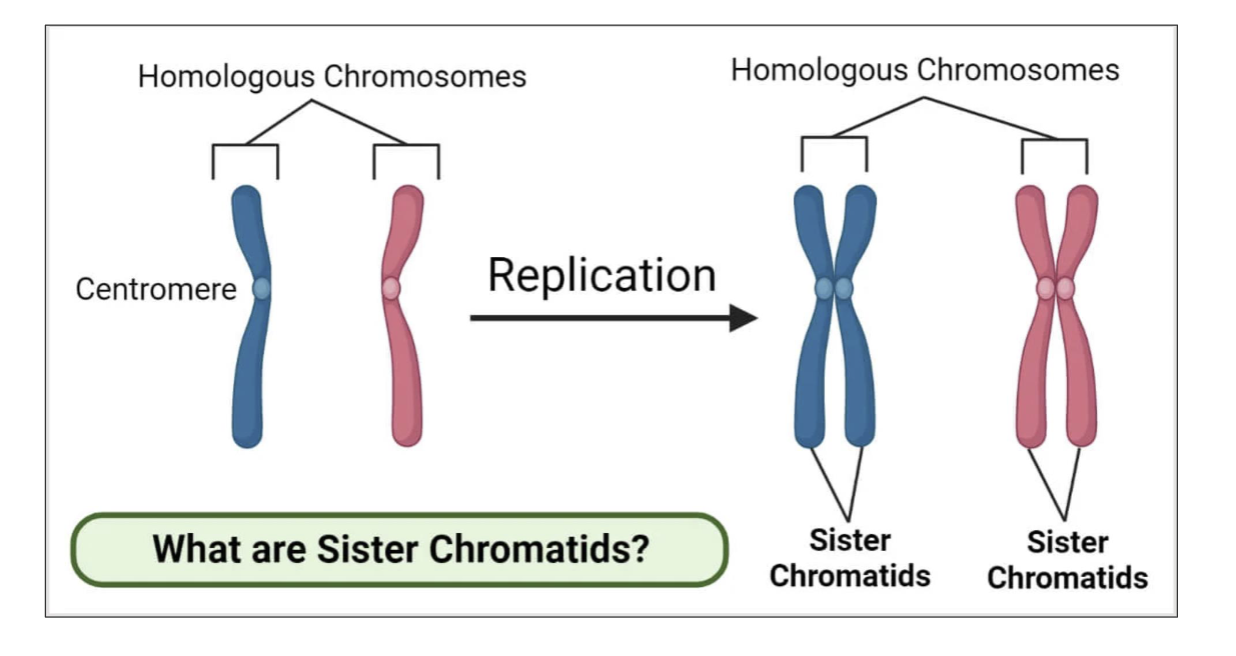
what holds the sister chromatids together
cohesins
what is cohesin
a 4 subunit ring-shaped protein complex that acts like a physical embrace holding DNA strands together.
What are the 4 subunit of cohesin
Smc1, Smc3, Scc1, and Scc3.

What is Soroin
A regulatory protein that binds to bottom of cohesin and enables continual loaing and unloading of cohesins during G1W
Where are the cohesins located before dna rep (G1)
cohesins around individual homologous chromosome (each stick of double stranded DNA)
what happens to cohesins in S phase
they form cohesive complexes and contain the replicating sister chromatids

converting G1 cohesins into cohesive complexes (S) requires what (2)
acetylation of Smc3 by acetyl transferase (CoATs)
Soronin stabilitization
what do G1 non-cohesive cohesins do (2)
1. partioning genomic dna ino discrete compartments (TAD)
2. facilitate DNA looping to regulate transcription

How is cyclin B-CDK1 activated
Active Cdc25B dephosphorylates Cyclin B-CDK1 to activate CDK1 kinase

where in the cell is cyclin B-CDK1 activated
on centrosome
How is Cdc25C activated
Active Cyclin B-CDK1 phosphorylates Cdc25C (blue knobs)
What is Cdc25C bound to
114-3-3 on multiple Ser/Thr knobs
what happens after Cdc25 is activated by Cyclin B-CDK1?
the phosphorlated sites on Cdc25C are recognition sites of Pin1 and Pik1