USP 800, Hazardous Drugs - Constantino
 Call Kai
 Learn
 Practice Test
 Spaced Repetition
 Match
 Flashcards
 Knowt Play
1/43

There's no tags or description
Looks like no tags are added yet.
44 Terms
USP 800
Responsible for the safe handling of hazardous drugs
Minimize risk exposure
Protect healthcare personnel and environment
Applies to the drug its whole life (from manufacturer to dispensing)
Applies to everyone that deals with hazardous drugs
What is special about hazardous drugs
They can cause toxicity to healthcare workers that handle them. They require spaces, equipment and devices that reduce exposure of the drug according to USP requirements.
HD definition
Carcinogenic
Teratogenic
Reproductive toxicity
Toxic to organs at low doses
Labeled by the manufacturer with special handling instructions
Who determines which drugs are hazardous
The National Institute of Occupational Safety (NIOSH)
Safety data sheets
Are documents required by OSHA for employees working with hazardous materials and provide safety information including PPE, first aid procedures, spill cleanup procedures
What aspects of handling HD must be addressed in institutional policies
Hazard communication program
Occupational safety program
Designated HD receiving, storage, and compounding areas
Receipt, including handling of damaged shipping containers
Storage
Compounding
Use and maintenance of proper engineering controls
Hand hygiene and use of PPE based on activity
Deactivation, decontamination, cleaning and disinfection
Dispensing
Transport, including packaging and labeling
Administering
Disposal
Spill control
Environmental monitoring
What is a Hazardous communication program
Includes a written plan that details implementation of HD safety procedures, proper training of personnel, competency assessment and maintaining all HD documentation.
Designated person
Each facility must have a designated individual who is responsible for SOPs focuses don worker safety during all aspects of HD handling.
What must pharmacies do consider Hazardous drugs
Maintain a list of all hazardous drugs stocked. It must be reviewed every 12 months or whenever a new drug or dosage form is stocked or used.
Medical Surveillance Program for Occupation Safety
OSHA requirement that must be performed annually
Staff are surveyed, must get a physical, exposure risk reviewed, blood work and urinalysis
Assessment of Risk for HD drugs
A pharmacy can conduct an Assessment of Risk to determine if drugs with lower risk can avoid having to follow all USP 800 requirements if they are only dispensed and not manipulated
Low risk activities
Counting, packaging, dedicated counting tray and spatula for HDs and decontaminating after use, using gloves when counting or packing, HDs placed in sealed bag
Unpackaging of HD
they must be unpacked in negative pressure with at least 12 air changes per hour. Staff must wear PPE in the event of a breakage. Single pair of chemo gloves to unpack. Staff should also be trained on how to use a spill kit
Storing of HDs
Must be stored separately from other drugs. In a well-ventilated area with appropriate signage.
Spill Kit protocol
Isolate the area and alert personnel
Don PPE
Contain and absorb the spill
Clean up and collect debris
Decontaminate and neutralize the surface
Doff PPE and dispose of Waste
Air handling for HDs in PEC
Must have negative pressure in the C-PEC to keep air flowing into the room that externally vents air
How many ACPH does a non-sterile HD compounding room need
12
How many ACPH do sterile HD compounding room need
30
How many ACPH do containment segregated compounding areas need
12
Which PECs can be used for HD compounding - all negative
Biological safety cabinet - sterile compounding need class 2 or 3
Containment ventilated enclosures - powder containment hoods for non sterile compounding
Compounding aseptic containment isolators (CACIs) - closed front glove boxes located in a buffer room or C-SCA
Laminar Airflow Bench Picture
Can be used for sterile compounding
Not for hazardous drugs

Biological safety cabinet picture
Class 3 has the arm holes
Can be used for sterile compounding (class 2-3, not 1)
Class 2 can be for HD if appropriately configured
Class 3 can be for HD

Compounding aseptic isolator picture
Can be used for sterile compounding
For hazardous drugs
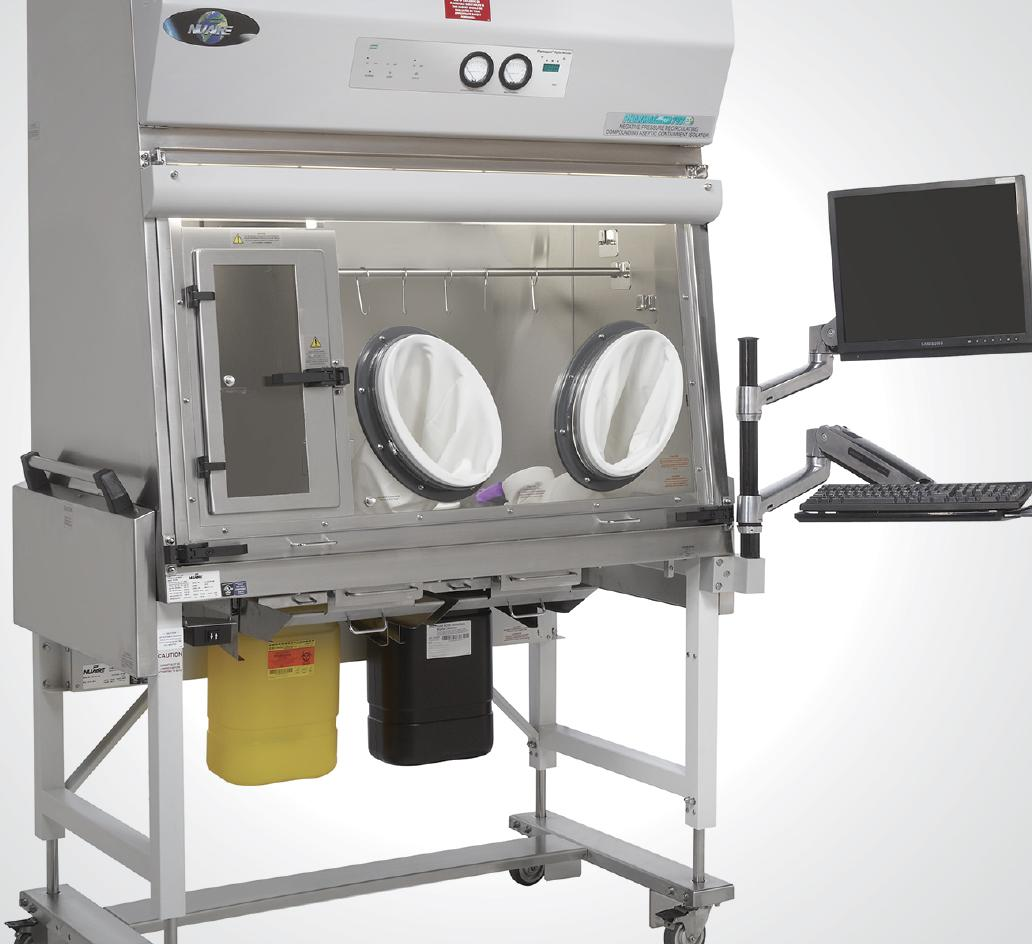
Compounding Aseptic Containment Isolator
Similar to Compounding aseptic isolator but for HD

Containment Ventilated Enclosure picture
Designed for non-sterile hazardous drugs, specifically powders and aerosols
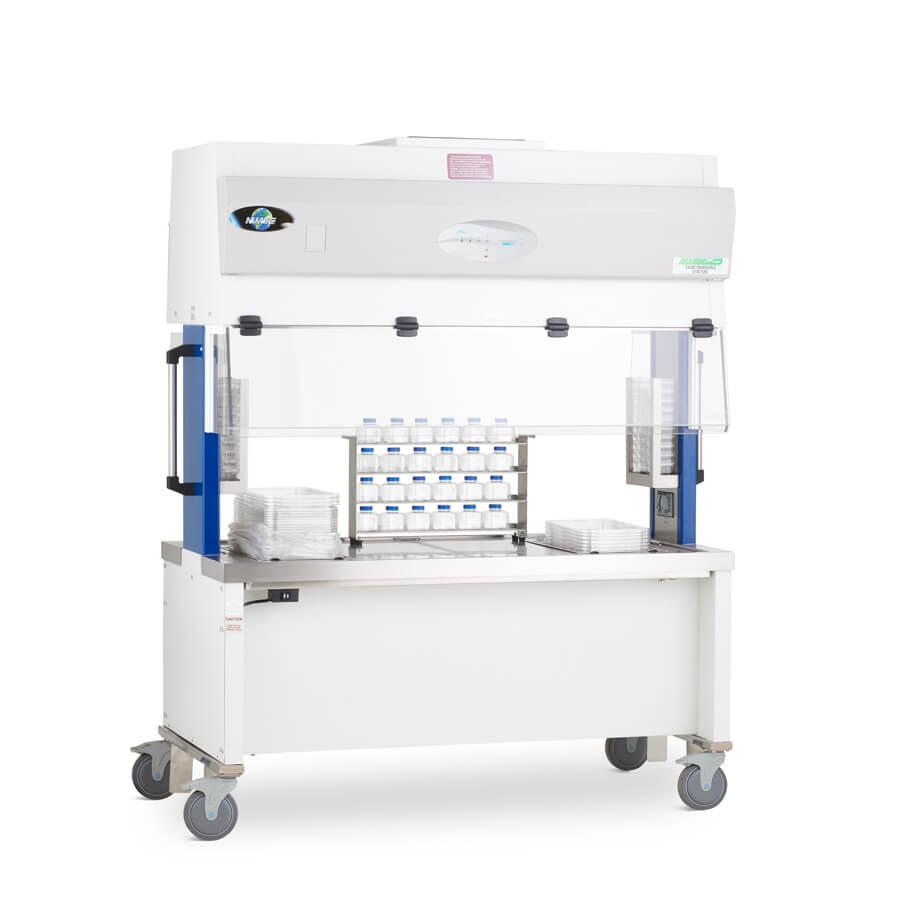
PEC Comparison chart

Characteristics of BSC or chemotherapy hood
Vertical air flow, blows top down to maintain sterility and protect the worker
Used to make chemotherapy
Compounding sterile and non-sterile in the same place
Preferable to keep spaces separate. The C-SEC must maintain ISO 7 air even for non-sterile compounding. If there are separate C-PECs in the same space they must be one meter apart. Non-sterile compounding can not be performed when sterile compounding is being performed.
Non-sterile compounding in steril C-PEC
Need to decontaminate afterwards
3 steps of sanizations
Deactivation + decontamination: bleach or peroxide
Cleaning: germicidal
Disinfection: Sterile isopropyl alcohol
Deactivation and Decontamination
Reduces HD toxicity and removes HD residues
Cleaning
Removes dirt and microbial containment
Disinfection
Inhibits or destroys microorganisms
Hand hygiene and PPE for non-sterile hazardous drugs
For AoR identified drugs one pair of gloves can be used.
Repeated cutting or crushing of tablets poses a higher risk of exposure so if a BSC or CACI is not available double glove, mask, and gown.
Hand hygiene and PPE for sterile hazardous drugs
Head covers, face mask, beard cover, gown impermeable to liquid, 2 pairs of chemo rate gloves, full face respirator or face shield with goggles if there is risk of spill or splash
Garbing for HD compounding
Need a respirator N95 or CPAP
Chemotherapy gloves 2 pairs one under the cuff of the gown and the other pair over the cuff
Face mask
Hair cover
Eye protection
Chemo gown with impermeable coating
Shoe covers - 2 pair needed for sterile compounding
Donning for BSC and CACI
Remove all jewelry, makeup and outer clothing.
No artificial nails are allowed
Don shoe covers while stepping over the line of demarcation. Add 2nd pair of shoe covers if HD compounding
Don head and facial coverings and mask
Perform hand hygiene. Clean under fingernails
Dry hands with lint free disposable towels
Don a non-shedding gown over hospital scrubs
Apply an alcohol based surgical scrub to hands
Don 1 pair of chemo rated gloves
Enter the HD buffer area and don chemo gown
Don second pair of chemo rated gloves before compounding.
Gloves should be changed every 30 minutes.
Doffing sterile compounding
When compounding is complete, all garb except the gown goes in the disposal container
The gown can be worn again during the current shift but must stay in the ante area
Doffing HD sterile compounding
When compounding is complete, the chemo gown, exterior gloves and top pair of the shoe covers are removed and placed in a waste container in the hazardous buffer room upon exiting.
Transport of HDs
Need to be properly labeled. Sterile HDs should be transported in a hard sided container that has a lid and is labeled to prevent the risk of breakage or spillage. Pneumatic tubes can not be used.
HD Disposal
All PPE that is worn when handling HDs are considered contaminated. All should be placed in yellow waste binds. All trace antineoplastic waste (syringes, empty vials, gloves) go in yellow waste. Bulk antineoplastic (partial vials, chemo bags) are thrown in black waste bins
Wipe sampling of hoods
Done every 6 months
Closed system transfer devices
Mechanically prohibits the transfer of environmental contaminants into the system and the escape of hazardous drug or vapor outside the system.