Veterinary Pharmacology: Routes, Absorption, and Receptor Pharmacodynamics
 Call Kai
 Learn
 Practice Test
 Spaced Repetition
 Match
 Flashcards
 Knowt Play
1/75

There's no tags or description
Looks like no tags are added yet.
76 Terms
What are parenteral routes?
Routes of drug administration that are absorbed outside the GI tract.
Which parenteral route has the fastest rate of action?
Intravenous (IV) injection.

What is an extravascular injection?
Accidental injection of a drug outside of a vein, which can cause tissue necrosis.
What is a Constant Rate Infusion (CRI)?
A method of administering a continuous dose of drug in intravenous fluids.

What is the difference between intravenous and intra-arterial injections?
Intravenous injections go directly into a vein, while intra-arterial injections go into an artery, which can be dangerous.
What is aerosol administration?
Delivery of drugs into the lungs by air or gas solution.
What is pharmacokinetics?
The study of how a drug moves into, through, and out of the body.
What is pharmacodynamics?
The study of how a drug produces its effects on the body.
What is the therapeutic goal of drug administration?
To maintain drug concentrations within a therapeutic range to produce beneficial effects without significant toxicity.
What is the difference between a loading dose and a maintenance dose?
A loading dose is an initial larger dose to 'load' the body, while a maintenance dose is smaller and matches the body's rate of elimination.
What does total daily dose refer to?
The combined amount of drug times the number of doses administered in a given day.
What is peak concentration?
The highest drug concentration in the body.
What is trough concentration?
The lowest drug concentration in the body.
What is a narrow therapeutic range?
When the maximum effective dose and the minimal effective dose are very close to each other.
What is the risk of wide swings between peak and trough concentrations?
The peak concentration could exceed the therapeutic range and cause toxicity, or the trough concentration could fall below the therapeutic range and cause insufficient drug effect.

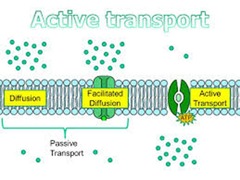
What is passive diffusion?
The random movement of drug molecules down the concentration gradient without expending active cellular energy.
What is facilitated diffusion?
Movement of drug molecules across the cell membrane along the concentration gradient without using active energy.
What is active transport?
Movement of drug molecules across the cell membrane using active cellular energy, often against the concentration gradient.
What is bioavailability?
The extent to which a drug makes it into systemic circulation, indicated by the letter F on a scale from 0 to 1.0.
What is the role of lipophilicity in drug absorption?
Drug molecules must be lipophilic to passively diffuse through cell membranes.
What is the significance of drug absorption?
It is the movement of drug molecules from the site of administration to systemic circulation.
What happens if a drug is not completely absorbed?
Not all of the drug reaches the intended tissue for its effect.
How does the body eliminate drugs?
Through metabolism, balancing the inflow of drug with its outflow.
What is the importance of maintaining therapeutic levels of a drug?
To ensure that drug concentrations are effective without causing toxicity.
What is the effect of dosing frequency on drug concentration swings?
Greater intervals between doses can lead to wider swings between peak and trough concentrations.
What is the consequence of a drug being hydrophilic?
Hydrophilic drugs do not dissolve well in fat and may have difficulty passing through cell membranes.
What is the bioavailability of a drug that is fully absorbed?
F = 100% or F = 1.0
How is bioavailability expressed if 60% of a drug makes it into circulation?
F = 60% or F = 0.6
What route of administration has a bioavailability of 1.0?
Intravenous (IV) administration
What is the primary factor affecting the bioavailability of orally administered drugs?
The absorption phase, which includes dissolution and passage through the gastrointestinal tract.
What is the first pass effect?
The phenomenon where the liver metabolizes a significant portion of a drug before it reaches systemic circulation.
What is the hepatic portal system?
The system of blood vessels that carries blood from the gastrointestinal tract to the liver.
What is the effect of tissue perfusion on drug absorption?
Well-perfused tissues absorb drugs more quickly than poorly perfused tissues.
What happens to drug absorption in a cold environment?
Cold temperatures cause vasoconstriction, reducing blood flow and drug absorption.
What is drug distribution?
The movement of a drug from systemic circulation into tissues.
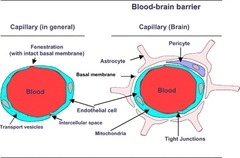
What is the blood-brain barrier?
A selective barrier that prevents certain substances from entering the brain from the bloodstream.
What factors prevent drugs from crossing the blood-brain barrier?
Large molecular size, high ionization, low lipid solubility, and efflux pumps.
Name a common veterinary drug that does not cross the blood-brain barrier effectively.
Maropitant (Cerenia)
What is the role of receptors in pharmacodynamics?
Drugs must bind to receptors on cell surfaces to produce a response.
What does drug affinity refer to?
The ability of a drug to bind to a receptor.
What is intrinsic activity in pharmacology?
The ability of a drug to produce a cellular effect upon binding to a receptor.
What is an agonist?
A drug that has good affinity and produces intrinsic activity.
What is an antagonist?
A drug that has good affinity but little or no intrinsic activity.
What is the function of a reversal agent antagonist?
It blocks the receptor site from exogenous agonist drugs, reversing their effects.
What are blockers in pharmacology?
Antagonist drugs that occupy a receptor and prevent endogenous compounds from stimulating the cell.
What is the significance of lipophilicity in drug absorption?
Drugs must be in lipophilic form to penetrate the gastrointestinal mucosa and be absorbed.
What is dissolution in the context of drug absorption?
The process of breaking down dosage forms into individual molecules for absorption.
What happens to drug concentration levels after IV administration?
They quickly reach peak plasma concentration and then begin to fall.
What is the difference in absorption between IM and SC routes?
IM has a rapid increase to peak plasma concentration, while SC absorption is slower.
How does exercise affect drug absorption?
Exercise causes vasodilation, enhancing absorption of IM drugs but vasoconstriction of subcutaneous tissues.
What is the drug that induces anesthesia?
An anesthetic agent.
What is the drug that reverses the anesthetic effect?
An anesthetic reversal agent.
What are G Protein-Coupled Receptors (GPCRs)?
Transmembrane proteins linked to intracellular G proteins; examples include opioid receptors (mu, kappa) used for analgesia.
What are Ligand-Gated Ion Channels?
Pore-containing channels that open or close when a molecule binds; many antiparasitic drugs target these in invertebrate chloride channels.
What are Enzyme-Coupled Receptors?
Transmembrane receptors with intrinsic or associated enzymatic activity, typically regulating growth and metabolic functions.
What are Intracellular / Transcription Factor Receptors?
Receptors located inside the cell that bind lipid-soluble drugs like steroids to alter gene transcription.
What do Mu (µ) Opioid Receptors primarily mediate?
Strong pain relief from drugs like morphine and hydromorphone.

What is the role of Kappa (κ) Opioid Receptors?
They provide moderate pain relief and sedation with fewer severe side effects.
What is the function of Delta (δ) Opioid Receptors?
They help control pain transmission in the spinal cord but play a smaller role in clinical treatments.
What is NARCAN® Nasal Spray used for?
It is FDA approved for the treatment of known or suspected opioid overdose.

What is a partial agonist/partial antagonist?
A drug that produces a partial effect compared to a full agonist.
What is Mannitol and its mechanism of action?
A sugar compound that causes diuresis by drawing water from the body without attaching to cell receptors.
What is biotransformation in pharmacokinetics?
The process of altering the structure of drugs by enzymes as they pass through the liver.
What is a metabolite?
An altered drug molecule that is often less active than the original drug.
What are prodrugs?
Drugs that are transformed into their more active form after administration.
What is the significance of prednisone in cats?
Prednisone is a prodrug that must be converted to prednisolone in the liver to be effective, but cats have a limited capacity for this conversion.
Why is prednisone not effective in cats?
Cats have low levels of liver enzymes needed to process prednisone, leading to poor absorption and conversion.
What happens to cats that receive inappropriate doses of aspirin?
They may experience aspirin toxicosis due to their reduced ability to biotransform the drug.
What is drug clearance?
The rate at which a drug leaves the body, typically measured in half-life.
What is the drug half-life?
The time it takes for the drug concentration in the body to decrease by 50%.
What is withdrawal time in food animals?
The period that must pass from the last drug administration until the animal can be safely sent to market.
Why are withdrawal times important?
They are crucial for public health to prevent drug residues in food products.
What is the relationship between drug half-lives and withdrawal times?
Withdrawal times are based on the half-lives of drugs to ensure safety for human consumption.
What role do veterinary technicians play regarding withdrawal times?
They educate producers on the importance of adhering to withdrawal times for public health.
How does biotransformation vary among species?
Different species metabolize drugs at different rates, with cats having a more limited capacity compared to dogs.
What is the final step in pharmacokinetics?
Drug elimination or excretion from the body, usually in feces or urine.