Ecology: Populations, Trophic Levels, Interactions & Flower Reproduction
 Call Kai
 Learn
 Practice Test
 Spaced Repetition
 Match
 Flashcards
 Knowt Play
1/102

There's no tags or description
Looks like no tags are added yet.
Name | Mastery | Learn | Test | Matching | Spaced | Call with Kai | Chat |
|---|
No analytics yet
Send a link to your students to track their progress
103 Terms
All individuals of the same species living in one area.
Population
All populations of different species living and interacting in an area.
Community

Living organisms and the nonliving environment they interact with.
Ecosystem

The living components of an environment.
Biotic factors

what happens if there are two different paths an organism is on on trophic levels
pick the highest trophic level

The nonliving components of an environment, such as water, sunlight, and temperature.
Abiotic factors
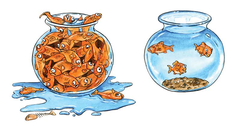
The number of individuals per unit of area or volume.
Population density
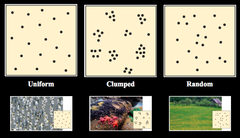
The pattern of spacing of individuals in an area.
Population dispersion
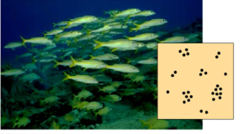
A population pattern in which organisms live in groups or clusters.
Clumped dispersion

A population pattern in which organisms are evenly spaced.
Uniform dispersion

A population pattern in which organisms are spaced without a predictable pattern.
Random dispersion

The movement of individuals into a population.
Immigration
The movement of individuals out of a population.
Emigration

A factor whose effects often increase as population density rises, such as competition or disease.
Density-dependent factor

A factor that affects a population regardless of its density, such as a hurricane or drought.
Density-independent factor (happens randomly, cannot control)

The maximum population size an environment can sustainably support.
Carrying capacity

The number of individuals added to a population through reproduction.
Birth rate

The number of individuals lost from a population through death.
death rate

what is bottom up control?
adding more resources to increase an organisms population
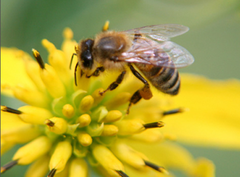
An interaction in which both organisms benefit (+/+).
Mutualism
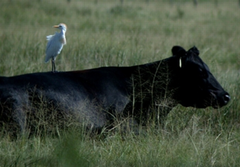
An interaction in which one organism benefits and the other is unaffected (+/0).
commensalism

An interaction in which one organism benefits while its host is harmed (+/−).
parasitism
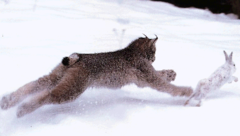
An interaction in which one organism captures and eats another organism.
Predation
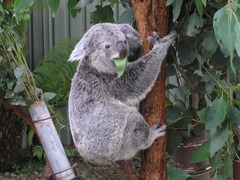
An interaction in which an animal eats plant material.
herbivory
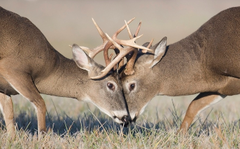
An interaction in which organisms compete for limited resources, potentially harming both (−/−).
Competition

The male reproductive structure of a flower, made of the anther and filament.
stamen
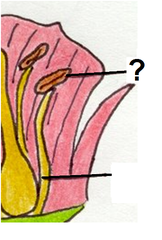
The part of the flower that produces pollen.
Anther

The stalk that supports the anther.
Filament

The part of a flower that receives pollen.
stigma
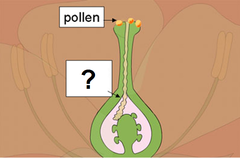
The structure connecting the stigma to the ovary.
Style

The flower structure containing the ovules.
Ovary
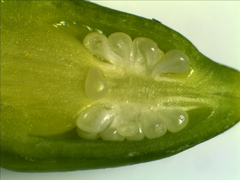
The structure that contains the egg cell and develops into a seed after fertilization.
Ovule

The female reproductive structure of a flower, containing the stigma, style, and ovary.
Carpel

The transfer of pollen from an anther to a stigma.
Pollination
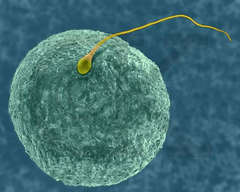
The joining of sperm and egg cells to form a zygote.
fertilization
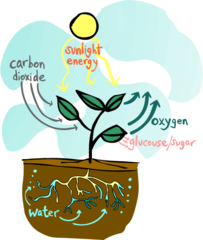
The process in which plants use sunlight to make sugars from carbon dioxide and water.
Photosynthesis

what is a top down impact?
occurs when an organism or factor at a higher trophic level (like an apex predator) has a influence on populations at lower trophic levels (like herbivores and plants).

An organism that makes its own food, usually through photosynthesis.
Producer (autotroph)

An organism that obtains energy by eating other organisms.
Consumer (heterotroph)

what is a heterotroph?
A heterotroph is a living organism that cannot make its own food and must consume other plants, animals, or organic matter to get energy and carbon. (predator)

what is an autotroph?
An autotroph is an organism that creates its own food and organic nutrients from simple inorganic materials like water, carbon dioxide, or minerals
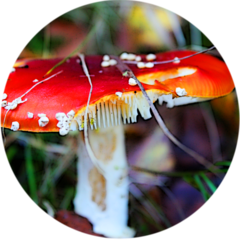
An organism that breaks down dead organisms and waste, recycling nutrients.
Decomposer

A consumer that eats producers.
Primary Consumer

A consumer that eats primary consumers.
Secondary consumer

An organism's feeding position in a food chain or food web.
Trophic level

An organism that can use a variety of food sources and live in different conditions.
Generalist (no dietary restrictions)

An organism that relies on a narrow range of food sources or environmental conditions.
Specialist (only eat specific things)

The original energy source for most ecosystems.
Sunlight
The process by which energy enters most ecosystems when producers capture light energy.
Photosynthesis
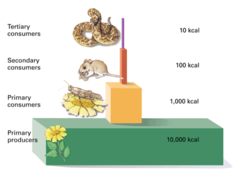
The general pattern in which less energy is available at higher trophic levels because energy is lost through metabolism and heat.
Energy transfer between trophic levels

Gases in the atmosphere that absorb and re-emit infrared radiation, warming Earth's surface and lower atmosphere.
Greenhouse gases

The natural process that keeps Earth warm enough to support life by trapping some heat in the atmosphere.
Natural greenhouse effect

The additional warming caused by increased greenhouse gas concentrations, largely from human activities
Enhanced greenhouse effect

A long-term change in Earth's average temperatures and weather patterns.
Climate change

Short-term atmospheric conditions at a particular time and place.
weather

The main greenhouse gas released by burning coal, oil, and natural gas.
Carbon dioxide (CO₂)
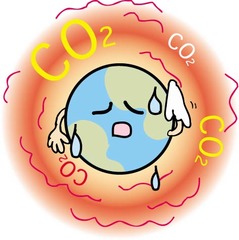
The long-term rise in Earth's average surface temperature.
Global warming

The amount of carbon dioxide released into the atmosphere by activities such as burning fossil fuels.
CO₂ emissions

The long-term record of atmospheric carbon dioxide measurements that began at Mauna Loa in 1958.
Keeling Curve

The movement of carbon among the atmosphere, living things, oceans, soil, and rocks.
carbon cycle

The process in which organisms release carbon dioxide as they break down sugars for energy.
cellular respiration

The breakdown of dead organisms and waste, which returns carbon to the environment.
Decomposition

Coal, oil, and natural gas formed from ancient organic matter over millions of years.
Fossil fuels

The increase in atmospheric carbon dioxide caused by human activities, especially fossil fuel use and deforestation.
Human-caused carbon emissions

The loss of forests, which can release stored carbon and reduce the number of trees absorbing CO₂.
deforestation

The gradual increase in average sea level caused by factors including warming seawater and melting land ice.
sea level rise

Using less energy to provide the same service or accomplish the same task.
energy efficiency
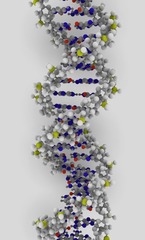
The molecule that stores hereditary instructions in living organisms.
DNA (deoxyribonucleic acid)

The twisted-ladder shape of DNA
Double helix

The basic building block of DNA, consisting of a sugar, phosphate group, and nitrogenous base.
nucleotide

The four nitrogenous bases found in DNA
Adenine, thymine, cytosine, and guanine (A, T, C, G)

The rule that adenine pairs with thymine and cytosine pairs with guanine in DNA.
Complementary base pairing
The DNA and proteins that make up chromosomes in eukaryotic cells.
chromatin

what is a eukaryotic cell?
any cell or organism that possesses a clearly defined nucleus

what is prokaryote cell?
any organism that lacks a distinct nucleus and other organelles (bacteria)

The region where most DNA is located in prokaryotic cells, which do not have a nucleus.
nucleiod

The process of making a copy of DNA before cell division.
dna replication

The enzyme that unwinds and separates the two strands of DNA during replication.
helicase

The enzyme that adds complementary nucleotides to build a new DNA strand.
DNA polymerase
A method used to compare DNA samples to help identify individuals or examine biological relationships.
DNA profiling

A technique that separates DNA fragments according to size using an electric current through a gel.
gel electrophoresis

The process of isolating DNA from cells or tissues.
DNA extraction
A section of DNA containing instructions for a functional product, such as a protein or RNA.
Gene

The process of using information in DNA to produce RNA.
Transcription

The process of using mRNA instructions to assemble a chain of amino acids.
translation

The type of RNA that carries a copy of a gene's instructions to the ribosome.
Messenger RNA (mRNA)
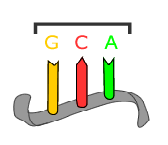
A three-nucleotide sequence in mRNA that specifies an amino acid or a stop signal.
codon

The cell structure where proteins are assembled during translation.
ribosome

The process by which information in a gene is used to make RNA or protein.
gene expression

A chain of amino acids that folds into a particular shape to perform a function.
protein

The specific three-dimensional form of a protein, which helps determine its function.
protein structure

A change in the DNA sequence.
mutation

A mutation that changes a DNA base but does not change the amino acid specified.
silent mutation

A mutation caused by inserting or deleting nucleotides in a number not divisible by three, changing the reading frame.
Frameshift mutation

A technique that introduces or modifies genetic material to help treat or prevent disease.
gene therapy

A DNA sequence variant that can be passed from parent to offspring.
inherited mutation
A mutation that occurs in a body cell and is generally not passed to offspring.
somatic mutation

mutation in an egg or sperm cell, or its precursor, that can be inherited by offspring.
gremline mutation

A genetic variant that changes hemoglobin and can cause red blood cells to become sickle-shaped under certain conditions.
sickle cell allele

The condition in which a person has two copies of the sickle-cell allele, typically causing __________ disease.
sickle cell disease