L19- recombinant technologies 1
 Call Kai
 Learn
 Practice Test
 Spaced Repetition
 Match
 Flashcards
 Knowt Play
1/13

There's no tags or description
Looks like no tags are added yet.
14 Terms
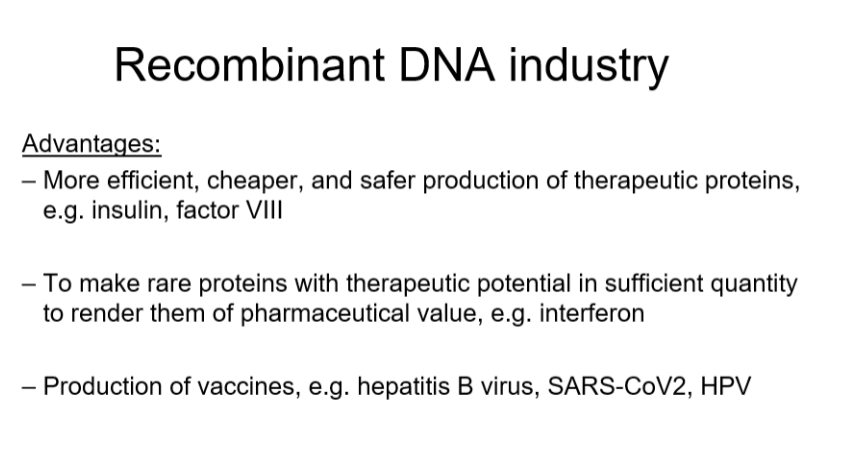
what are the advantages of recombinant DNA industry
describe the two instances where recombination of DNA happens
in natural processes:
dna repair after damage
bacteria and other organisms can take up dna to aquire new functions which allow themto be resistant
recombinant DNA technology
ananlyse function of genes and their functions
expression/regulation studies
production of products insudtrial and pharmacuetical
what direction does DNA polymerase synthesis DNA in
5' to 3' direction
the genes always start at the 5' end and stop at the 3' end

what are meanings of the three types of transfer of DNA ( transformation, conjugation and transduction )

what are mobile genetic elements
they are bits of genes that can easily transfer from one cell into another- plasmids are the most commonly used in recombinant DNA technology
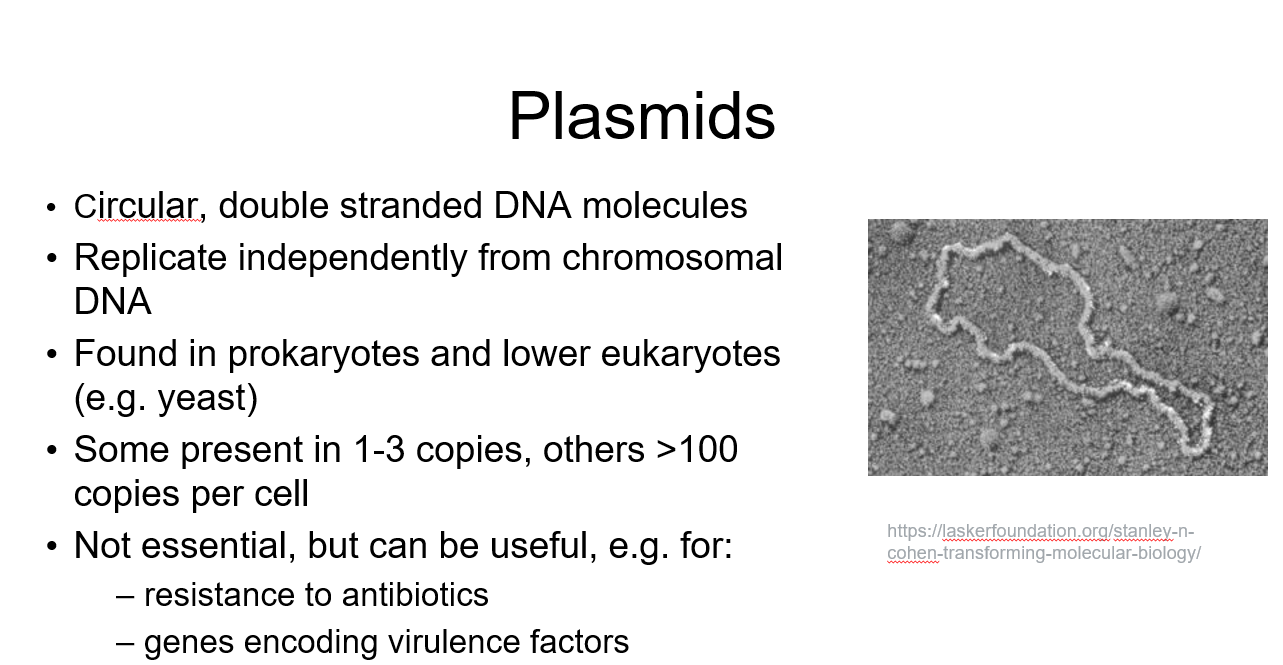
they are circular DNA that replicate independently from he rest of the chromosomes
what are plasmids
what is molecular cloning

what are the three basic steps steps for molecular cloning
isolation of source of DNA- getting the DNA you want
inserting source DNA into a vector- putting it into a plasmid
introduction of cloned DNA into a host organism
how is the source DNA obtained for cloning
method for sequence of unknown DNA not typically used

what is PCR, polymerase chain reaction

how do you locate a target sequence when doing PCR

describe how the source DNA is put into a vector
using an enzyme we are able to combine the PCR fragment with the vector/plasmid
the plasmid would also contain a marker on it whic can help it be distingishable later on in the host
then the plasmid is the bacteria/ the host organisms
when the bacteria is on a plate with ampicillin the bacteria that survive will be the once with with the genes for resistance

what are restriction enzymes
these are enzymes produced by bacteria
they are enzymes that recognise palindromic sequences ( sequence that read the same forwards and backwords )
the restriction site for cloning is typically 4/6 nucleotides in length
they cut the both DNA strands creating sticky blunt ends