AnP Lecture - Chapter 1 - Ex1
 Call Kai
 Learn
Learn Practice Test
 Spaced Repetition
 Match
Match Flashcards
 Knowt Play
1/25

There's no tags or description
Looks like no tags are added yet.
Name | Mastery | Learn | Test | Matching | Spaced | Call with Kai | Chat |
|---|
No analytics yet
Send a link to your students to track their progress
26 Terms
Anatomy =
structure
Physiology =
function
8 Necessary Life Functions
maintaining boundaries (ex: plasma membrane)
movement (ex: peristalsis)
responsiveness (ex: reacting to a hot stove)
digestion (breaking things down)
metabolism (sum of chemically building/breaking down)
excretion (removal of toxic/unecessary waste)
reproduction (continued species survival)
survival (individual survival, homeostasis)
5 Survival Needs
nutrition (energy and materials)
water (50-60% of our body weight)
oxygen (20% of air, needed for oxidation reactions)
stable body temperature
atmospheric pressure (for gas exchange)
Homeostasis
maintenance of relatively stable internal conditions despite continuous changes in environment
dynamic state of equilibrium
Positive feedback
response enhances the continued response to a stimulus, accelerating it into a cascade (ex: labor contractions get more and more intense)
Negative feedback
response decreases the effects of the original stimulus to bring body back to equilibrium (ex: glucose and glucagon cycle in response to eating and blood sugar levels)
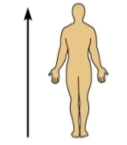
Superior
toward the head end or upper part of a structure
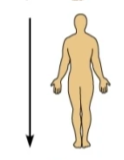
Inferior
away from the head end or toward the lower part of a structure
Ventral / anterior
toward or at the front of body; in front of

Dorsal / posterior
toward or at the back of the body; behind

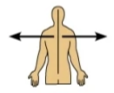
Medial
toward or at the midline of the body; on the inner side of

lateral
away from the midline of the body; on the outer side of
Intermediate
between a more medial and a more lateral structure

Proximal
closer to the origin of the body part or the point of attachment of a limb to the body trunk
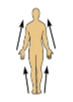
Distal
farther from the origin of a body part or the point of attachment of a limb to the body trunk

Superficial
toward or at the body surface; more external

Deep
away from the body surface; more internal

Midsagittal plane
median; divides left and right

Coronal plane
frontal; divided anterior and posterior

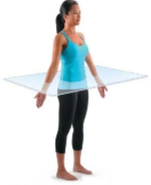
Transverse plane
divides superior and inferior
Axial skeleton
skull, ossicles (inner ear), hyoid bone, vertebral column, and rib cage

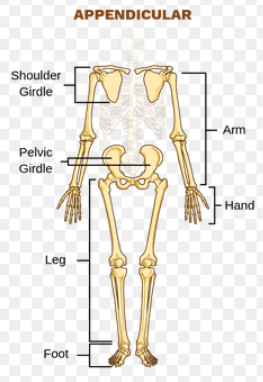
Appendicular skeleton
shoulder girdle, arms, hands, pelvic girdle, legs, and feet
Parietal serosa
outer wall of a membrane
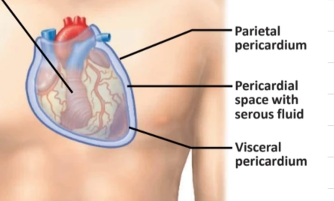
Peri- serous cavity
inner spaces of a membrane, can be filled with fluid

Visceral serosa
inner membrane wall
