lecture 5 anxiety disorders
 Call Kai
 Learn
 Practice Test
 Spaced Repetition
 Match
 Flashcards
 Knowt Play
1/56

There's no tags or description
Looks like no tags are added yet.
57 Terms
anxiety definition
anticipaiton of real/imagined future threats
what is state anxiety
transient experience with a temporarily increased sympathetic nervous system response
A temporary, in-the-moment emotional and physical response to a specific perceived threat or stressful event.
symptoms of high trait anxiety
behaviourally inhibited, wary in novel situations, cautious about risks, more likely to experience anxious states
what is trait anxiety
A long-standing personality disposition or baseline tendency to perceive the world as threatening and to react with anxiety more often than others do
3 conditions for anxiety to be clinically relevant
disproportionate to threat
severe and enduring
linked with impairments in functioning
symptoms of anxiety disorders
excessive fear, anxiety, avoidance of percieved threats
enduring and impairng
can involve autonomic arousal or other physical/cognitive symptoms
how does anxiety disorder differentiate from normal anxiety
episodes often come out of nowhere, an intense/disproportionate emotional response, interferes with day to day life, can have physical symptoms like sweating and trembling
what are subjective experience of anxierty disorders charatcerised by
drowning in intense bodily emotions, losing control of the anxious mind, living in a shrinking and unpredictable box
spectrm of anxiety disorders
GAD = generalised anxiety disorder
PD = panic disorder
specific phobia - limited to specific things
social xneity disorder
agoraphobia = fear of situations without escape
seperation anxiety disorder
selective/elective mutism
five criteria for GAD
excessive anxiety for over 6 months about several things
difficult to contrl the worry
anxiety linked with over 3 symptoms
clinically significant distress/functional impairment
not explained by substance abuse or another health condition
not explained by another MH condition
symptoms considered for GAD
restless
easily fatigued
difficulty concentrating
irritable
muscle tension
sleep disturbance
requirements for childrens diagnosis of GAD
only one symptom of the 6 possible is required for children’s diagnosis
specifier for GAD with panic attacks
a sudden episode of intense fear/discomfort
physical symptoms i.e rapid heartbeat, sweating, shaking, nausea
occur without warning, no specific trigger
likelihood of GAD with panic attacks
1 in 5 GAD patients experience panic attacks
panic disorder criteria
recurrent, unexpected panic attacks = abrupt surge of intense fear/discomfort that peaks within minutes
4 or more present symptoms
at least one attack followed by more than one month of a persistent concern about panic attacks and/or significant maladaptive behaviour change related to attacks
not explained by substance abuse or another health condition
not better explaiend by another MH condition
possible symptoms of PD
palpitations
sweating
trembling
shortness of breath
feelings of choking
chest pain
nausea
dizziness
heat sensations
numbness
depersonalisation
fear of losing contorl
fear of dying
4 categories of symptoms of PD
cardiorespiratory
autonomic/thermoregulatory
gastrointensular/vestibular
dissociative/cognitive
cardiorespiratory symptoms of PD
palpitations
shortness of breath
feelings of choking
chest pain
autonomic symptoms of PD
sweating
trembling
chills
gastrointestinal symptoms of PD
nausea
dizziness
dissociative symptoms of PD
numbness
depersonalisation
fear of losing control
fear of dying
comorbidity meaning
the presence of two or more distinct medical or psychological conditions in the same person at the same time
comorbidity of anxiety disorders
40-70% of anxiety patients fulfill criteria for 2 or more disorders
remes et al meta analysis
found prevalence of anxiety disorders ranged from 4-25%
likelihood of anxiety disorder is higher in…
women, young adults, people with chronic diseases, people who identified with LGBTQ+, pregnant people
millet et al study
found lifetime prevalence of 17-68% of anxiety disorder in transgender people and higher in transgender men
population trends
prevalence rates over same time period appear to be stable despite increase of people with anxiety disorders once adjusting for changes in population age structure
baxter et al meta analysis
looked at global 12 month prevalence
found prevalence highest in western cultures
potential methodological issues, can’t apply western methods to non western countries
gender differences in anxiety disorders
women with an anxiety disorder are more likely to be diagnosed with MDD or bulimia and less likely to be diagnosed with a substance use disorder, ADHD
more women with lifetime prevalence of anxiety disorder met criteria for another anxiety disorder than men
causes of GD
effects of ovarian hormones across life, differences in type and frequency of stressors, differences in the HPA axis
typical age of onset
according to de ljister, mean age of onset is 21 across genders
remission rates over 12 years
increases with years, lower for social phobia and panic disorder with agoraphobia
highest for panic disorder and MDD
recurrernce rates over 12 years
highest for MDD and lowest for social phobia and GAD
penninx et al study
followed anxiety patients for 2 years, found average duration of illness was 16 months
7% of participants switched to depression, 16% developed comorbid depression
what was the presence of anxiety and duration rpedcted by in penninx et al study
(a) severity and duration of baseline episode,
(b) comorbid depression–anxiety,
(c) earlier age of onset, and
(d) older age overall
genetic risk factors for anxiety disorders
30-50% heritability
people whose parents have anxiety disorders are more likely to have anxiety and depressive disorders
no evidence that children have increased risk of specific anxiety disorder
shared genetic risk between anxiety disorders, schizophrenia and ADJD
what is behavioural inhibition
shyness, fear and avoidance of novel stimuli
identifiable in early hcildhood and longitudinally predicts anxiety disorders
psychosocial risk factors in early life
prenatal stressors i.e maternal stress and depression
childhood maltreatment
physical punishment
socioeconomic deprivation
stressful life events
psychosocial risk factors in early life
according to zimmerman meta analysis: cigarette smoking frequency, alcohol use, cannabis use, negative appraisals of life events, avoidance and occupational factors
protective factors in adulthood
social support, coping skills and physical activity
inflammation in anxiety disorders
dysregulation of the HPA axis increases inflammation and symptoms by directly effecting brain regions critical for regulation of fear and anxiety
caused by increased symapthetic tone and decreased parasympatheitc activity in anxiety disorders
brain circuits involved in anxiety
volume and hyperactivation of amygdala, anterior cingulate cortex and postcentral gyrus increase anxiety
volume and hypoactivity of dorsolateral prefrontal cortex reduce anxiety
what are cognitive models of anxiety
show our responses to worry, uncertainty or threat in the development or maintenance of anxiety
2 characteristics of cognitive modes
percieved lack of control = over emotional experirences and external stressors, moderates impact of environmental stressors on development and expression of anxiety
intolerance of uncertainty= uncertainty leads to stress and upset, avoidance
positive and negative beliefs about worry = positive beleifs reinforce worry and negative beliefs trigger worry leading to distress, avoidance
cognitive biases = tendency to focus on threat predicts and maintains anxiety
diathesis stress model of anxiety disorders
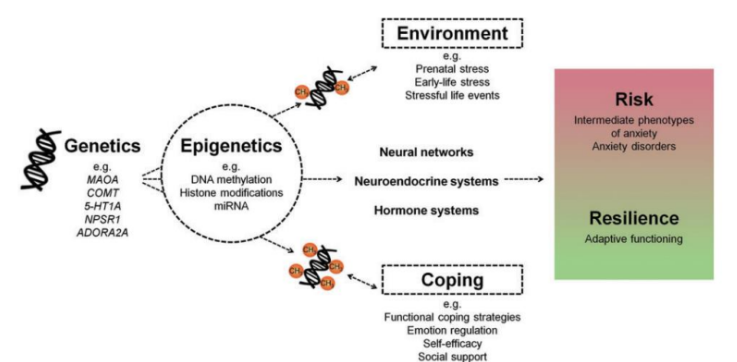
explanation of diathesis stress mode of anxiety disorders
Genetic factors interact with environmental stressors and coping-related protective factors in a risk- or resilience-increasing manner as governed by epigenetic mechanisms via the employment and regulation of neural networks, neuroendocrine systems and hormone systems
4 step NICE model of anxiety treatment

effective medications acc to slee et al of GAD
SNRIs and SSRIs i.e duloxetine, venlafaxine, escitalopram
anticonvulsants i.e pregablin
atypical antidepressants
azapirones
antipsychotics
treament of PD
similar to GAD i.e antidepressants, SSRIs and SNRIs demonstrate higher remission rates
cognitive behavioural therapy for PD 5 key qs
What is the ‘problem’ itself e.g. functional impairment (presenting problems)?
What made the patient vulnerable in the first place (predisposing)?
What triggered the current episode / escalation of symptoms (precipitating)?
What keeps the problem going? (perpetuating / maintenance cycles)
What protective factors are in place?
cognitive model of panic description
states that people experience recurrent panic attacks because they misinterpret body sensations as symptoms of a mental/physical catastrophe
i.e they interpret rapid heartbeat as a heart attack, which increases anxiety and inreases anxiety-related sensations which support the idea of a panic attack
cognitive mode of panic drawing

how does CBT work for PD
identify anxiety trggers
reduce anxiety-driven biases that lead to ambigious stimuli being interpreted as threatening
replace avoidance and safety behaviours
use relaxation and breathing exercises to reduce excessive autonomic arousal
PD episode course according to CBT drawing

what are avoidance/safety behaviours
belief that instead of a feared consequence not happening because of irrational fears, they believe it doesn’t happen because they have averted it i.e safety behaviour
negatively reinforces safety behaviours and misinterpretation
effectiveness of CBT for anxiety disorders
larger positive effect for PD than GAD or soial anxiety disorder
combined psychological and pharmcological treatment efeect
combined therapies more effective than just one
high symptom reduction effect for PD