Biology
 Call Kai
 Learn
Learn Practice Test
 Spaced Repetition
 Match
Match Flashcards
 Knowt Play
1/35

There's no tags or description
Looks like no tags are added yet.
Name | Mastery | Learn | Test | Matching | Spaced | Call with Kai | Chat |
|---|
No analytics yet
Send a link to your students to track their progress
36 Terms
Receptors
Group of specialized cells
(detect change in environment and stimulate electrical impulse in response)
Sense organ
Group of receptor cells
Synapse
In-between 2 neuron (axon terminal and dendrites)
Antagonistic Muscles
A pair of muscles that work at the same time, one contract while the other relax
Pancreas
Produce amylase, lipase, and protease
Vascular Bundle
Mainly transport water
Glucose is made in
Chloroplast
Large Intestine
reabsorption of water and nutrients
Small Intestine
Where most water is absorbed
Lignin
in xylem
for rigidity, for plant to stand tall
Translocation
The movement of amino acids and sucrose from the source to the sink in phloem
Pathway is taken by blood in a fish
heart → gills → body → heart
Cholera in body
Secrete chloride ions from the blood into the lumen of the small intestine
Renal vein
high concentration in Carbon dioxide
Liver
convert amino acid to urea
Mitosis
diploid
duplicate, exactly the same as each other so if one sick all sick
Discontinuous Variation
caused by genes only
Mitochondria
aerobic respiration
release energy
Villus
transport what away?
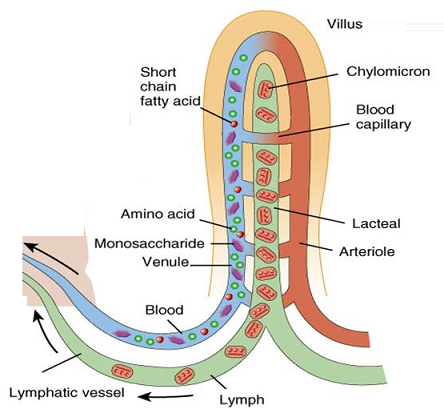
Mutation
Source of genetic variation
Population
A group of organisms of one species living in the same area at the same time
Genetic Modification
Nucleus
Increase blood glucose concentration
Adrenaline and glucagon hormone
Insulin and Glucagon
Produce in Pancreas
Change in liver and muscle cell
Endocrine Glands
Adrenal, Ovaries, Testes
Emulsification in Gall bladder
When bile breaks down of fat into smaller pieces to increase surface area
Deamination
Remove Amino Acid and turn it into urea
Protein digestion starts
Stomach (high acidity)
Digestion of starch
At slivery glands using saliva as lubricant
Small Intestine
Duodenum (neutralize pH), jejunum , Ileum
Lymph moving in lymph vessel
muscle contract
valve preven blockflow
Why need to complete antibiotic treatment
ensure all bacteria is killed
prevent bacteria from becoming resistant
if not some of B not killed
these B survive, become resistant and reproduce
more B
X- ray
cause mutation on bacteria = more resistant to B
Oestrogen
repair and create uterus lining
Progesterone
hold and maintain lining
FSH + LH
start mensural cycle
release egg