Nervous System CH2
 Call Kai
 Learn
 Practice Test
 Spaced Repetition
 Match
 Flashcards
 Knowt Play
1/55

There's no tags or description
Looks like no tags are added yet.
56 Terms
Peripheral Nervous System
Autonomic NS and Somatic NS
All the neurons in your body outside the CNS
Transmits neurons between CNS and the body
Carries messages to and from the CNS
MADE UP OF SENSORY NEURONS AND MOTOR NEURONS
Somatic Nervous system
Apart of the PNS
Carries messages from sensory receptors in body TO the CNS
And motor messages FROM the CNS to the skeletal muscles
skeletal muscles regulation that’s mostly voluntary
Has both sensory and motor neurons
RESPONSIBLE FOR REFLEX ARC
Autonomic nervous system
Regulates non skeletal muscles, internal organs and glands. (INTERNAL ENVIRONMENT)
Connects CNS to internal organs and glands, sends messages to CNS on the activity of the non skeletal muscles, internal organs/glands
doesnt have to be conscious
IS SELF REGULATING
has 3 subtypes: sympathetic NS, Parasympathetic NS, Enteric NS
Parasympathetic nervous system
Autonomic NS Subdivision
Calms body down after action
Controls body’s internal environment in an autonomous/ self regulated manner
Maintains homeostasis
Takes longer to activate in comparison to the sympathetic N.S as hormons such as adrenaline and cortisol can take time to fade away
Dominates normal activities that calm us - regulates our digestion, body temp, etc
Returns our body to calm state after a stressful/threatening situation
Dominates the ‘freeze’ response when the body is still/’stuck’
Sympathetic NS is still partially active in background to keep body alert just in case action is needed
Enteric nervous system
Autonomic NS Subdivision
Dedicated to the functioning of the gastrointestinal (digestive) tract
Consists of neurons lining the gastrointestinal (G.I) tract and controls digestive system
Largest Autonomic NS component, has 200-600 million neurons
90% of bodies serotonin in the digestive system
Controlled by the parasympathetic and sympathetic NS
Works independent from brain
Central nervous system
Brain and spinal cord
Carries messages to and from the PNS
MADE UP OF INTERNEURONS
Sympathetic N.S
Autonomic NS subdivision
‘S’ for STRESS
Prepares body for action
Activates visceral muscle organs, glands, etc to prepare body to respond to a perceived threat/stressor
Activated by hypothalamus when threat is perceived (physical or psychological)
Triggers fight or flight as a survival response (eg. faster heartbeat, pupils dilate, adrenaline and cortisol hormones released into blood stream, stop digestion to save energy, etc)
Brain
Responsible for virtually everything we think, feel and do
Coordinates mental processes and behaviours and regulates body
Controls activity of entire N.S EXCEPT FOR SPINAL REFLEX
Spinal cord and its 3 roles
cable of nerve tissues that extends from brain connecting it to PNS
1 Carry sensory info from PNS to CNS for processing
2 Carry motor info initiated from CNS towards the body PNS
3 Spinal reflex (involuntary and unconcious
S.A.M.E
S ensory
A fferent
M otor
E fferent
Afferent Neurons
Efferent Neurons
Motor
Nervous system
organised system for coordinating and directing the bodies actions
provides basis for conscious experience (perceptions, thoughts, feelings in mental life)
Complex combo of neurons
receives, processes, and coordinates info
CNS steps (3)
1 receives neural messages from senses (PNS)
includes internal and external sensations
2 After recieving the message it processes it and decides what to do with it
3 Intitiate a response
Can be involuntary/automatic/unconscious ORR voluntary/conscious commands
Enteric N.S Function (4)
1 controls digestion/gut movement and muscle gut contractions (moves food along)
2 releases acids and enzymes to break down food
3 aids in nutrient absorption
4 monitors what’s happening/the status of the gut

sensory neuron

motor neuron
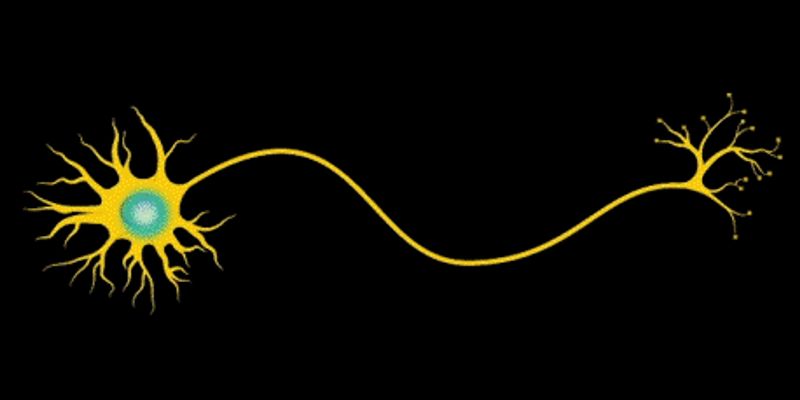
interneuron
dendrites
receives neural messages
the very end of the neuron with the big circle
axon terminal
sends of neural messages
on one side of neuron - the one without big circle
axon
the line in the middle of the neuron
under the myelin
myelin
insulates neurons and prevents disturbance from other neurons
the yellow cubes things along the axon
neurons
enable communication of info around the body
do this by receiving, transmitting and processing info in the from of neuronal messages
sensory neurons
transmits/carry info from sensory receptors in skin and internal organs to CNS
Myelinated which allows faster transmission
Location in PNS
Interneuron
neuron that connects sensory input (brought via sensory neurons) with motor output (carried via motor neurons)
bridges sensory and motor neurons so they can connect
located in CNS
Motor neurons
transmits/carry neural messages about motor movement from the CNS to the body
myelinated
located in PNS, axons reach into the muscles
conscious response
deliberate and voluntary actions initiated by the brain
intentional
involves thinking, learning, decision making, etc
can be performed by body and therefor involes PNS and somatic NS
Unconscious response
automatic and involuntary actions performed without conscious awareness in response to internal and external sensory stimuli
eg. spinal reflexes, digestion, blinking, etc
Spinal reflex and its 4 steps
unconscious response to sensory stimulus that is initated by interneurons in the spinal cord INDEPENDENTLY of the brain so it can act fast to the danger
1 dangerous/harmful sensory stimulus is picked up by sensory receptors, which transmit this sensory message via sensory neurons in the somatic N.S to the spinal cord
2 Interneuron in spinal cord relays the danger stimulus message to a motor neuron initiating an automatic motor response
3 motor messages is transmitted via motor neurons in somatic NS to the skeletal muscles to carry out an unconscious motor response to the dangerous sensory stimulus (eg. such as moving away)
4 the original sensory message continues to travel via afferent pathway in spinal cord to brain so the brain finally recieves the dangerous sensory stimulus that triggered the spinal reflex
reflex arc
the path along which the neural signal is transmitted as part of the spinal reflex
neural transmission
an electrical impulse (‘action potential’) occurs when a neuron is activated
‘an fires’ (couldnt make out notes lmao)
neurotransmission
transfer of info between neurons
specifically the pre synaptic neuron and the post synaptic neuron
vesicles
lil sacks / hole like things in the neurons that hold neurotransmitters and neuromodulators
What triggers/activates neurons
neuron is stimulated by a sensory stimulus
Neural transmission process
neural impulse reaches the axon terminals of presynaptic neuron
causes the vesicles to release neurotransmitters into the synaptic gap
the neurotransmitters then bind to recpetor sites on the dendrites of the post synaptic gap
the neurotransmitters then makes the post synaptic neuron either more likely to fire (excitatory) or less (inhibitory)
neurochemicals
2 types: neurotransmitters and neuromodulaters
Neurotransmitter
When released can have an excitatory or inhibitory effect of post synaptic neuron
chemically produced and released by neurons to communicate across neurons via synapse
allows neurons to further communicate with muscles, glands, etc.
ONLY binds to receptor sites specific to the neurotransmitter. Neurotransmissions wont wonk if neuroransmitters dont bind to its recpetor.
Neuromodulators
subclass of neurotransmitters
modulate = modify/adjusting
alter the strength of neural transmission, by increasing or decreasing the responsiveness of neurons to neurotransmitter signals
when released they activate multiple far away receptor sites - therefor larger affect around brain
can go BEYOND the synapse to affect more
Bind to metabotrophic recpetors causing them to:
act more slowly
doesn’t directly cause excitation/inhibitory
influence MANY neurons (up to 100,000)
excitatory neurotransmitters
increase the likelihood that the post synaptic neuron will fire an action potential (by stimulating it)
inhibitory neurotransmitters
decreases the likelihood of post synaptic neuron firing an action potential/neural impulse
How: released by vesicles into synapse, binds to Post synaptic neuron recpetor sites
GABA
main inhibitory neurotransmitter in our nervous system
counterbalances glutamate and vice versa
Key role in preventing over excitation of neurons, a balance between both is ideal
Glutamate and what too much/too little means
Excitatory neurotransmitter
Main excitatory neurotransmitter in our nervous system
counterbalances GABA and vice versa
involved in memory and learning - allows synaptic connections to strengthen
Too much: over stimulation of neurons which can cause seizures, epilepsy and anxiety
Too little: reduced learning and memory, low cognitive, etc.
Serotonin
inhibitory neurotransmitter and neuromodulator
primarily responsible for mood and sleep regulation
90% made in gastrointentstinal tract, 10% made in brain
Dopamine
Neuromodulator
gives feelings of pleasure and satisfaction when u do smth enjoyable
function: memory, mood, motivation
apparently can be both excitatory and inhibitory
Synapse
gap between neurons where neurotransmission lowkey be happening
serotonin pathway
starts at brainstem (where 10% is produced)
travels and spreads widely throughout brain - influences large regions
modulates/adjusts brain activity
Synaptic plasticity and its 3 modifications
Specific (physical/structural) changes (strengthening/weakining) that occur within the synapse, between neurons, in response to activity or experience
Is about SPECIFIC CHANGES OCCURING WITHIN THE SYNAPSE BETWEEN NEURONS
is NOT neural plasticity where its abt the entire brain
mostly occurs through 3 modifications: sprouting and rerouting (LTP) and pruning (LTD)
Synaptic plasticity’s link to glutamate
When a neural pathway is activated during learning/memory formation, glutamate is released
glutamates excitatory so activity increases in that pathway
repeated activation = stronger connection
more a pathway is used = stronger it becomes
Neural Plasticity
2 important processes in neural and synaptic plasticity
Long term potentiation (LTP) and Long term depression (LTD)
Long term potentiation
Rerouting and Sprouting
relatively permanent
strengthening of synaptic connections as a result of repeated activation of a neural pathway
each time a pathway is activated, it will become stronger and easier
Long term depression
Pruning
Relatively permanent
weakening of synaptic connections as a result of repeated low-level activation
‘prunes’ neural connections that are no longer useful to make room for new pathways
How LTP and LTD work together
weakens and prunes useless pathways (LTD) + strengthens useful pathways (LTP) = more efficient neural pathways
Sprouting
LTP
Result of long term LTP process
Growth of dendrites (Post.S.N) or/and axon terminal branches (Pre.S.N) at the synapse
Process establishes connections to other neurons
Rerouting
LTP
Formation of new neural connections to establish alternative neural pathways
occurs when a damaged or less used neural pathway is replaced by a new one
Pruning
LTD
Removal of synaptic connections that are not frequently activated (eg. weak, ineffective, etc)
helps to increase the efficiency of neural transmission
‘pruning’ away those excess branches from sprouting