Botany 440: Lab Exam 2
 Call Kai
 Learn
 Practice Test
 Spaced Repetition
 Match
 Flashcards
 Knowt Play
1/29

There's no tags or description
Looks like no tags are added yet.
30 Terms
Flower Morphology
Remember:
Anther + Filament = STAMEN
Style + Stigma + Ovary = CARPEL

Fruit Types
Simple: develop from a single ovary of a flower and are the most common type
ex) drupes (stone fruits): fruits with a single seed enclosed in a hard pit
Aggregate: form from a single flower with multiple ovaries that merge into one fruit
ex) strawberries
Multiple Fruits: multiple fruits develop from a cluster of flowers (inflorescence) that fuse into a single fruit
ex) pineapples

Asteraceae: What are the flower head types and what kind of floret does each type have?
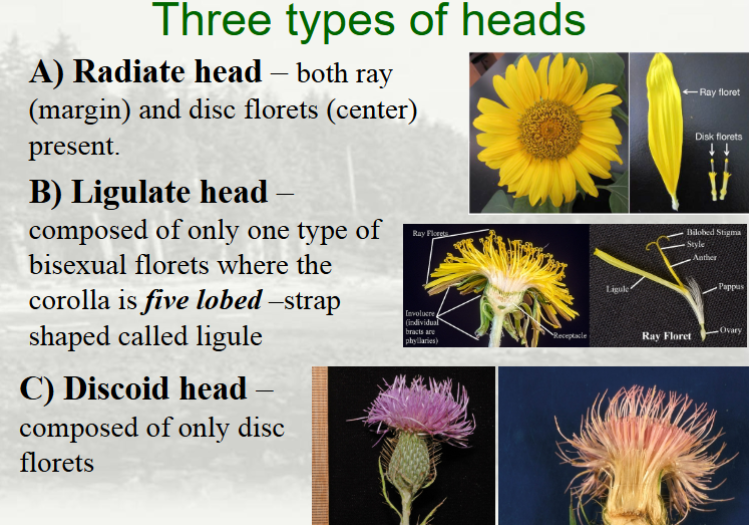

Asteraceae: note location of phyllaries, receptacle, and floral parts
Asteraceae: What is the difference between a bristle/capillary and awn-shaped pappus?
Bristle/Capillary: stiff, hair-like appendage
Awn-shaped: small, pointed, often barbed

Asteraceae: Corolla Morphology
Corolla: the petals of a flower

Asteraceae: Involucre (Bract)
Involucre/Phyllaries: a whorl or rosette of bracts surrounding an inflorescence
Bract: modified or specialized leaf


Poaceae: Leaf Sheath
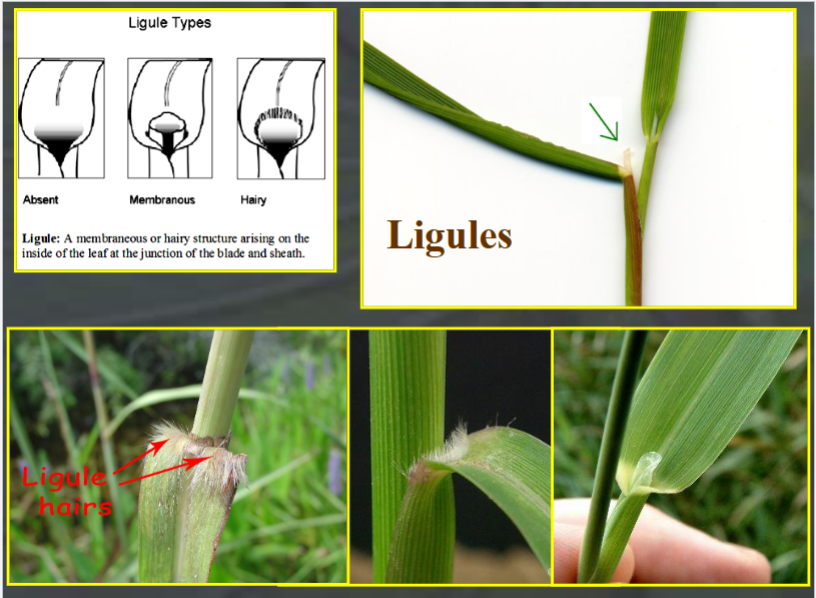
Poaceae: What is a ligule and where is it located?
Ligule: a small appendage at the junction of the leaf blade and the leaf sheath

Poaceae: Inflorescence Types

Poaceae: Spikelet Morphology
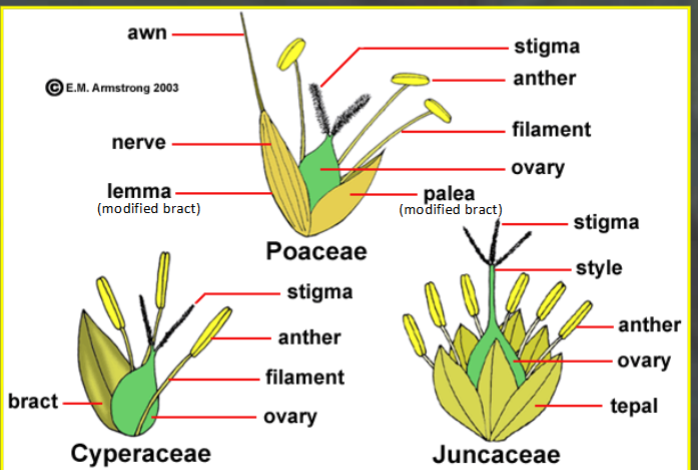
Poaceae: Floret Morphology
note: lemma is bigger and layered on top of palea

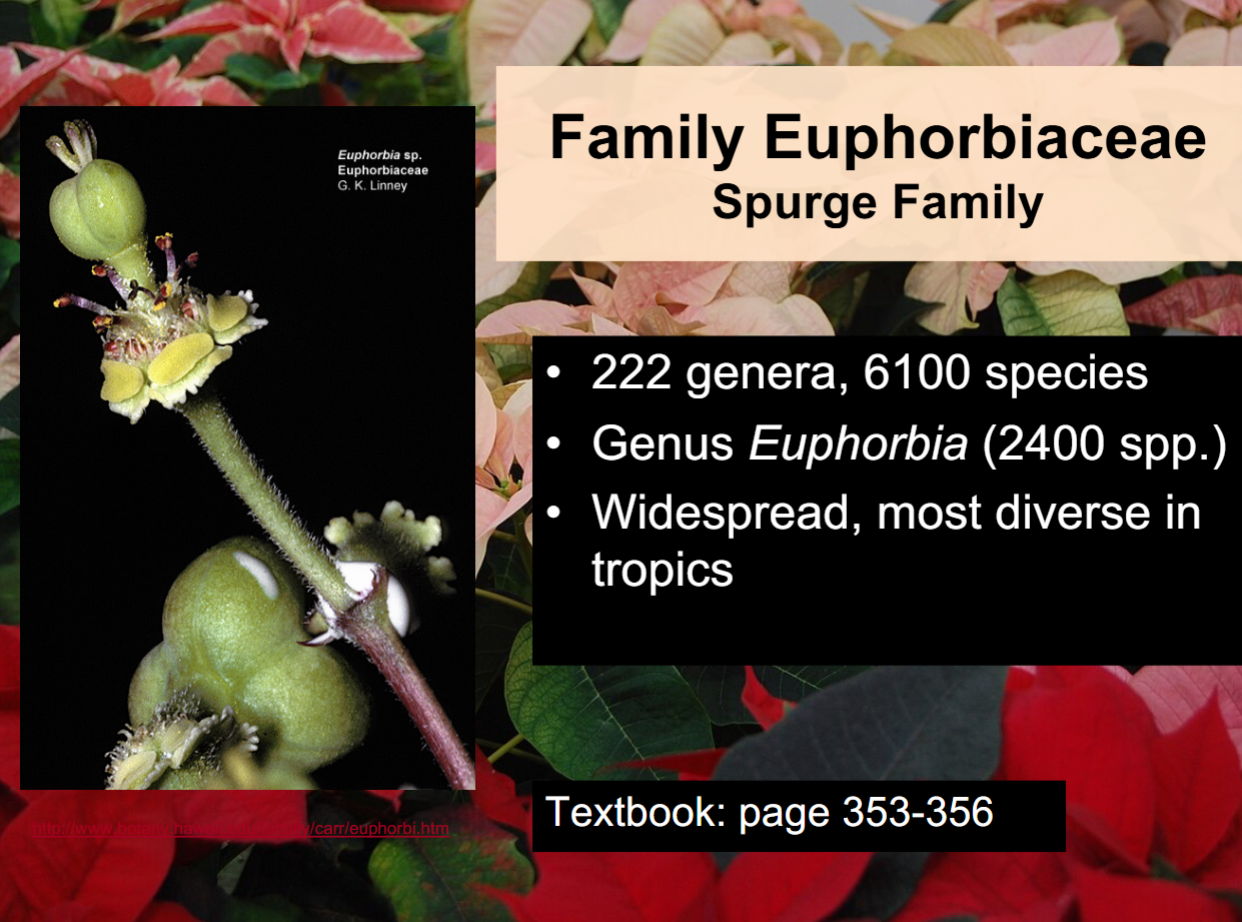
Euphorbiaceae: Cyathium Structure
Know locations of:
Staminate and Pistilate flower
Nectar glands


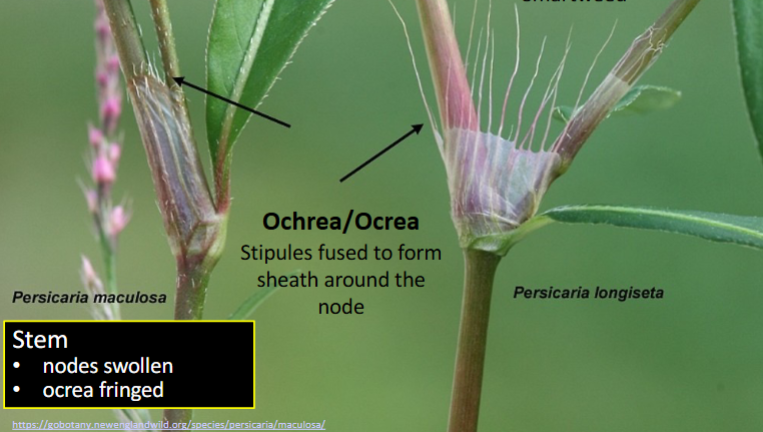
Polygonaceae: Ocrea with bristles
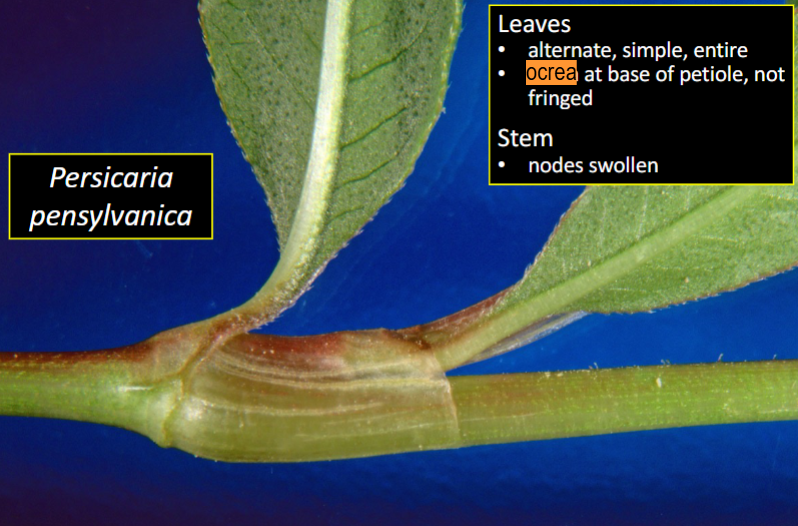
Polygonaceae: Ocrea without bristles
Polygonaceae: Flower Characteristics
Perianth: 5-6 petaloid tepals, undifferentiated sepals and petals (tepals)

Polygonaceae: Achene Types
Achene: a small, dry one-seeded fruit that does not open to release the seed
Trigonous achene often enclosed by persistent tepals
Fruit achenes: lenticular, black, shiny/glossy

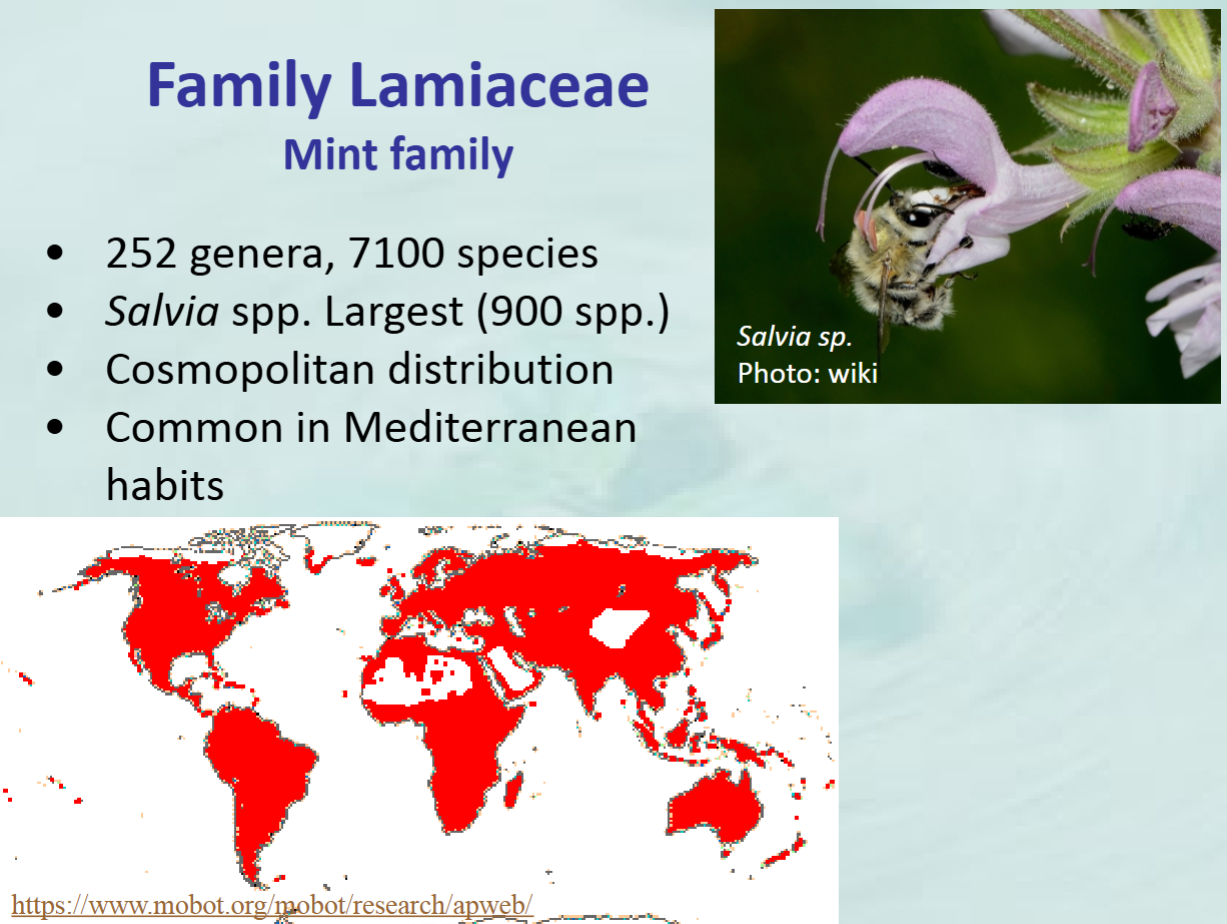

Lamiaceae: Verticillaster Inflorescence
Verticillaster: a fake whorl of flowers around the stem; actually made from two opposite clusters of flowers growing close together

Lamiaceae: Ovary Position
Ovary is usually superior and is deeply lobed (4-lobed) with a long style that grows through/between the lobes of the ovary (gynobasic)
Stigma is 2-forked

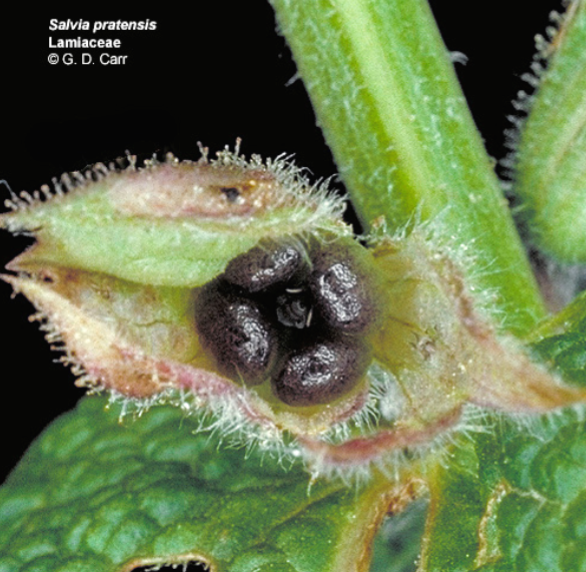
Lamiaceae: Fruit
Fruit consists of four 1-seeded nutlets
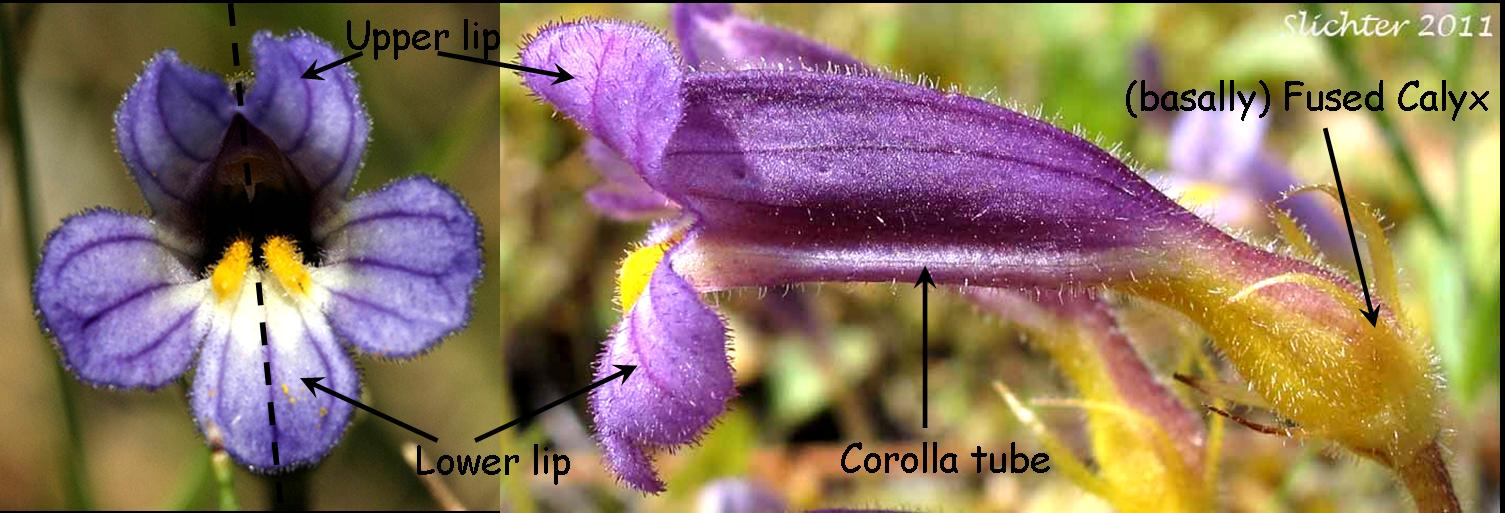
Lamiaceae: Corolla are two-lipped

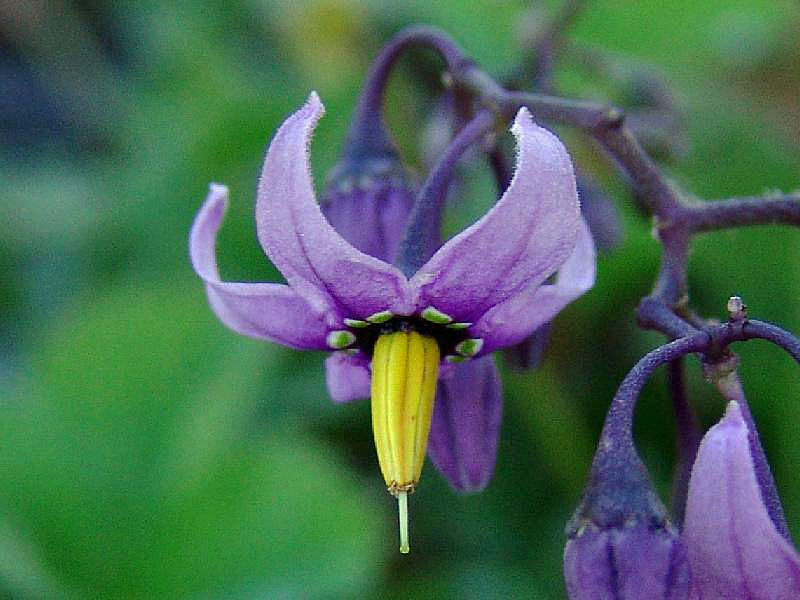
Solanaceae: Flower Types
Complete: has sepals, petals, stamens, and pistil
Perfect/Bisexual: contains both male and female reproductive parts
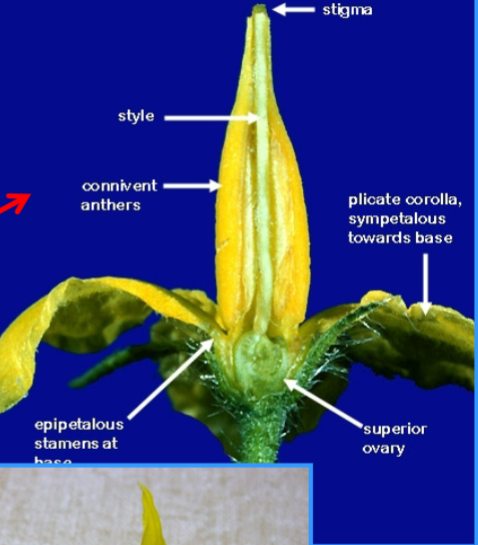
Solanaceae: What is a connivent anther?
Connivent Anthers: anthers clustered together (but not fused) around the style

Solanaceae: Ovary Position
Usually superior