(MMI) Lecture 8 (Chapter 8 and 9)
 Call Kai
 Learn
Learn Practice Test
 Spaced Repetition
 Match
Match Flashcards
 Knowt Play
1/73

Earn XP
Description and Tags
Name | Mastery | Learn | Test | Matching | Spaced | Call with Kai | Chat |
|---|
No analytics yet
Send a link to your students to track their progress
74 Terms
Role of Genetic Material
Store information for the biochemical and structural components of the cell
Replicate to pass the information to the next generation
Generate genetic variation to provide diversity in the population
What does the genome do?
The genome determines all the organism inherited traits and defines the species of the organism.
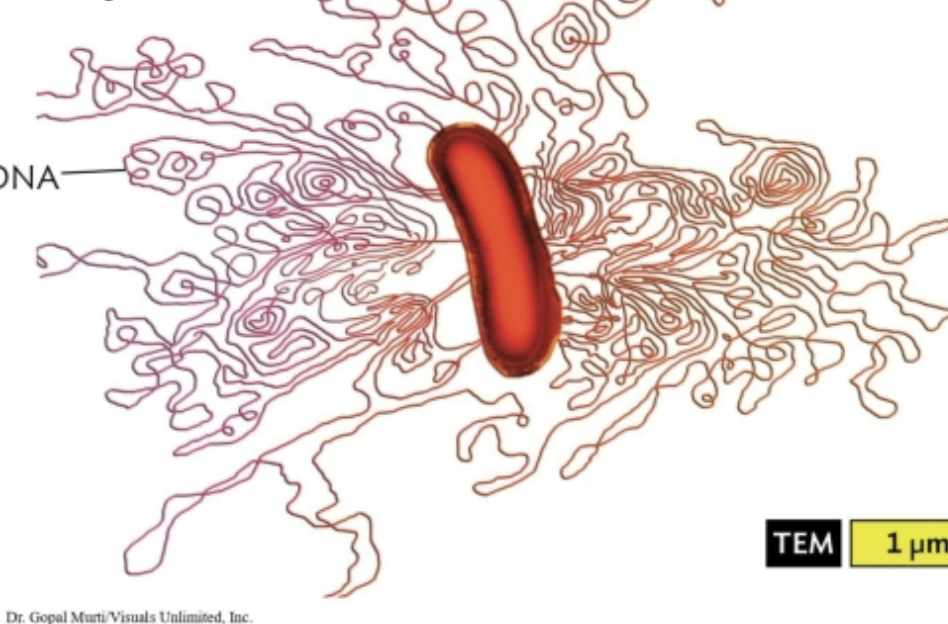
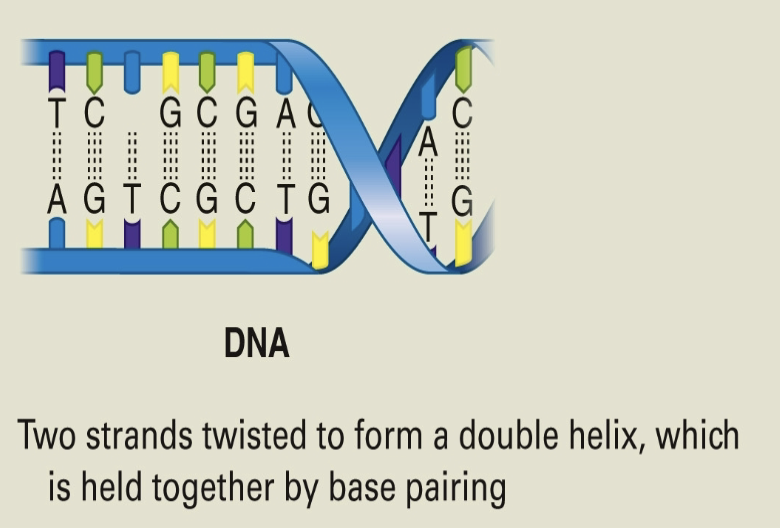
Functions of DNA include…
Self-replication
Genetic material of all organisms
Genetic material of some virus
Genetics
The study of what genes are, how they carry information, how information is expressed, and how genes are replicated and propagated.
Gene
A segment of DNA that encodes for a protein.
Genotype
All of the genes present in an organism.
Phenotype
Physical characteristics of the organism based upon the expression of their genes.
Genome
All of the genetic material in a cell (coding & non-coding).
Genomics
The molecular study of genomes.
DNA replication
DNA is copied by DNA polymerase, always in the 5' 3' direction, initiated by an RNA primer.
Leading strand
Synthesized continuously during DNA replication.
Lagging strand
Synthesized discontinuously (stop-start) in small pieces known as Okazaki fragments.
Okazaki fragments
Small pieces of DNA synthesized on the lagging strand during DNA replication.

Transcription
The process by which mRNA is made from a DNA template by RNA polymerase.
RNA polymerase
The enzyme that binds to the promoter sequence to initiate transcription.
mRNA (messenger RNA)
Carries genetic instructions out of the nucleus to a ribosomes, where instructions are used to build proteins.
Translation
The process of converting the info stored in the RNA into proteins. The codons will specify which amino acid needs to be inserted into the growing polypeptide/protein.
Codons
Groups of three nucleotides in mRNA that are translated into amino acids.
Start codon
The codon AUG at which translation of mRNA begins.
Stop codon
Codons UAA, UAG, UGA at which translation ends.
Degenerate code
The description of the genetic code where several codons encode the same amino acid.
Eukaryotes
Organisms whose mRNA requires additional processing to remove introns.

Coupled transcription and translation
transcription and translation can be coupled together because they lack a nuclear membrane
Constitutively expressed genes
Genes which produce protein all the time at a fixed rate.
Repressible genes
Genes that are turned on by default and switched off when not needed
Inducible genes
Genes that are expressed only as needed and can be turned on. (Switched on when needed)
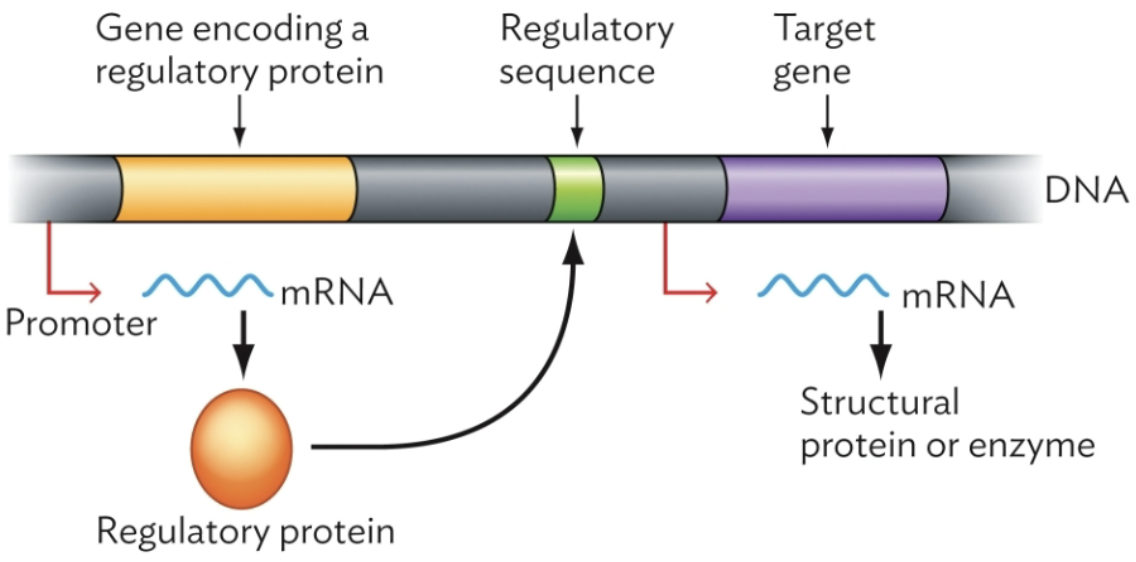
Operon (Bacterial gene organization)
Genes encoding the enzyme components of a metabolic pathway are often organized together into an operon.

Lac operon
A specific example of inducible gene expression where a repressor protein prevents transcription of lactose metabolism genes.

Repressor protein in lac operon
Always made and sticks to the promoter region preventing transcription of the genes needed for lactose metabolism.

Lactose effect on lac operon
If lactose is present, it binds to and inactivates the repressor allowing transcription of the lactose metabolism genes.
Repressible gene expression
A type of gene expression regulation where the presence of a specific molecule inhibits gene expression.
Tryptophan biosynthesis operon
A cluster of genes involved in the synthesis of tryptophan that is regulated by the availability of tryptophan.
What are the three principical mechanism of which bacteria reproduce asexually?
Transformation
Conjugation
Transduction

Transformation
The process by which DNA released from dead bacteria is taken up by living bacteria and integrated into their genome.

Conjugation
The process of transferring genetic material between bacterial cells through direct contact, typically involving a plasmid and a sex pilus.

What does bacterial conjugation involve?
The copying and passing of a plasmid from (F+) ot a recipient (F-)
Transduction
The transfer of genes between cells by viruses. Can either happen through the lytic cycle or lysogenic cycle.

Lytic cycle (Transduction)
1. The phage will attach and inject DNA
Phage DNA will circularize
New P.DNA synthesized and assembled into virions
Cell lyses , releasing virions

Lysogenic cycle (Transduction)
1. The phage will attach and inject DNA
Phage DNA will circularize
P.DNA integrates with bacterial chromosome=prophage
Lysogenic bacterium reproduces normally (CELL DIVISION)
Mutation
Any change in the normal sequence of nucleotides in a piece of DNA.

Missense mutation
A mutation that results in the substitution of one amino acid for another in a protein.
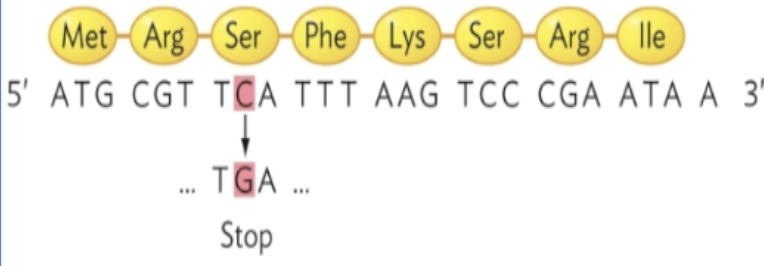
Nonsense mutation
A mutation that converts a codon into a stop codon, leading to premature termination of protein synthesis.
Frame-shift mutation
A mutation caused by the insertion or deletion of nucleotides that alters the reading frame of the gene.
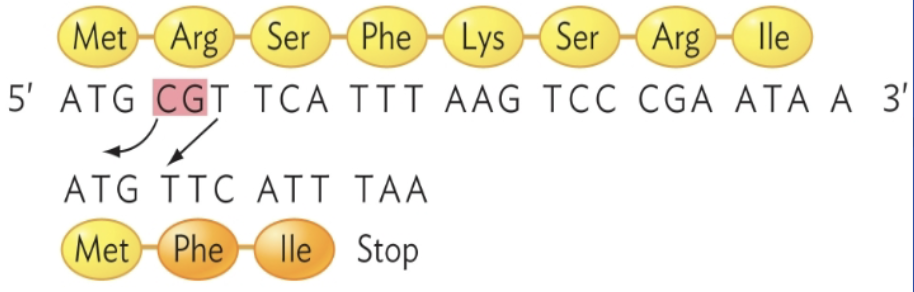
Deletion
A genetic change where one or more nucleotides or a larger segment of a chromosome is lost during DNA replication
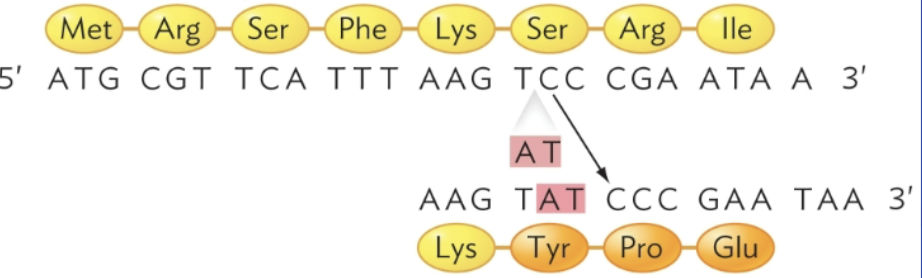
Insertion
A genetic change where one or more extra nucleotide base pairs are added into a DNA sequence
Spontaneous mutation rate
The frequency at which mutations occur naturally in an organism.
Mutagens
Agents that increase the mutation rate.
Examples of mutagens
Ultraviolet light, radiation, and some chemicals that can increase mutation rates.
Conjugative plasmids
Plasmids that contain genes encoding the pilus necessary for bacterial conjugation.
Antibiotic resistance genes
Genes often found on plasmids that confer resistance to antibiotics.
Virus excision
The process by which a virus removes itself from a host genome, which can sometimes include bacterial DNA.
Genetic recombination
The process by which genetic material is exchanged between organisms, leading to genetic diversity.
Asexual reproduction in bacteria
A method of reproduction where bacteria replicate without the fusion of gametes, leading to genetic variation through recombination.

Griffith's experimental proof
An experiment demonstrating the process of transformation in bacteria. Found that he could kill mice when injecting with the dead cells of a virulent streptococcus pneumoniae.
Bacterial chromosome
The circular DNA molecule that contains the genetic information of a bacterium.
Next generations (what are they?)
Subsequent offspring that inherit genetic material from their predecessors.
The Flow of Genetic Information
Expression
Recombination
Replication

Expression
Genetic information is used within a cell to produce the proteins needed for the cell to function

Recombination
Genetic information can be transferred between cells of the same generation.

Replication
Genetic information can be transferred between generations of cells. (Daughter cells)

The functions of RNA include…
Protein Synthesis
Genetic material of some viruses
Comprises viroids

What is DNA replication?
The biological process where a cell makes an identical copy of its DNA before cell division.
DNA Helicase
Unwinds double-stranded DNA

DNA gyrase
Remove the supercoils as DNA strands unwinds ahead of the replication fork and transcription machinery
DNA Polymerase III
Polymerizes nucleotides to synthesize DNA; DNA proofreading
DNA polymerase I
Removes RNA primers and replaces them with nucleotides
DNA ligase
Links Okazaki fragments together
What do bacterial genomes look like?
Their genome is contained in a circular chromosome

DNA replication in many bacteria occurs bi-directionally (2 replication forks), why is it that this is possible?
The unique circular shape of bacterial DNA
the origin site (oriC) contains DnaA boxes that force the two DNA strands to apart.
Can simultaneously copy and divide.
When does transcription begin and when does it end?
Begins when RNA polymerase binds to the promoter sequence and ends when it reaches the terminator sequence,

What do bacterial genes lack and why?
They lack introns for fast replication
Transfer RNA (tRNA)
A structural link which contains anti-codons to match the codon and amino acid that the mRNA is coding for.
Ribosomal RNA (rRNA)
Structural components of ribosomes, is the small subunit and large subunit and holds everything together.
MicroRNA (miRNA)
Various regulatory functions, causes mRNA degradation or stops ribosomes from making proteins.