ARH 210 Test 2

0.0(0)
Studied by 0 people
call kaiCall Kai
learnLearn
examPractice Test
spaced repetitionSpaced Repetition
heart puzzleMatch
flashcardsFlashcards
GameKnowt Play
Card Sorting

1/82

encourage image

There's no tags or description

Looks like no tags are added yet.

83 Terms

1
New cards
<p>What film is this?</p>

What film is this?

Walter Ruttmann - Lightplay, Opus 1, 1921
2
New cards
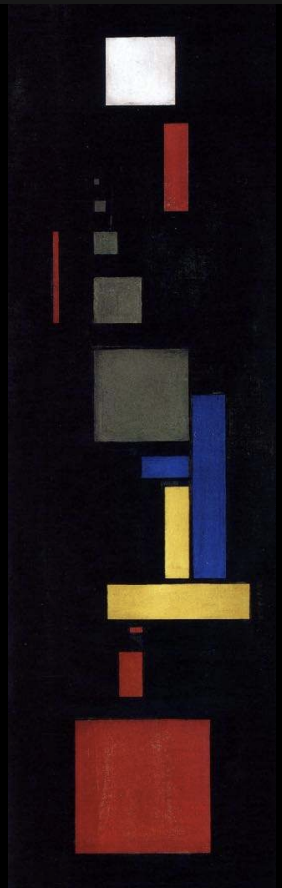
<p>What painting is this?</p>

What painting is this?

Hans Richter - Orchestration of Colors, 1923

3
New cards
<p>What film is this?</p>

What film is this?

Hans Richter - Rhythm 21, 1921

4
New cards
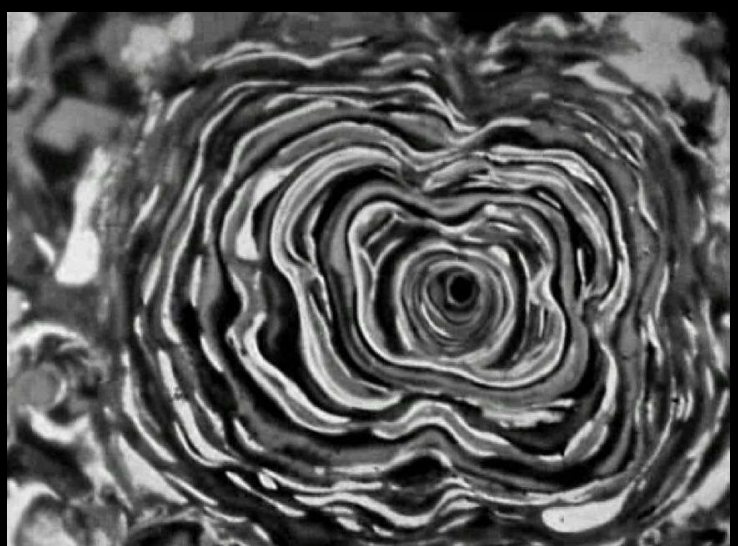
<p>What film is this?</p>

What film is this?

Viking Eggeling - Diagonal Symphony, 1923
5
New cards
<p>What film is this?</p>

What film is this?

Oskar Fischinger - Wax Experiments, mid-1920s

6
New cards
<p>What film is this?</p>

What film is this?

Oskar Fischinger - Space Light Music, 1926

7
New cards
<p>What film is this?</p>

What film is this?

Len Lye - Tusalava, 1929
8
New cards
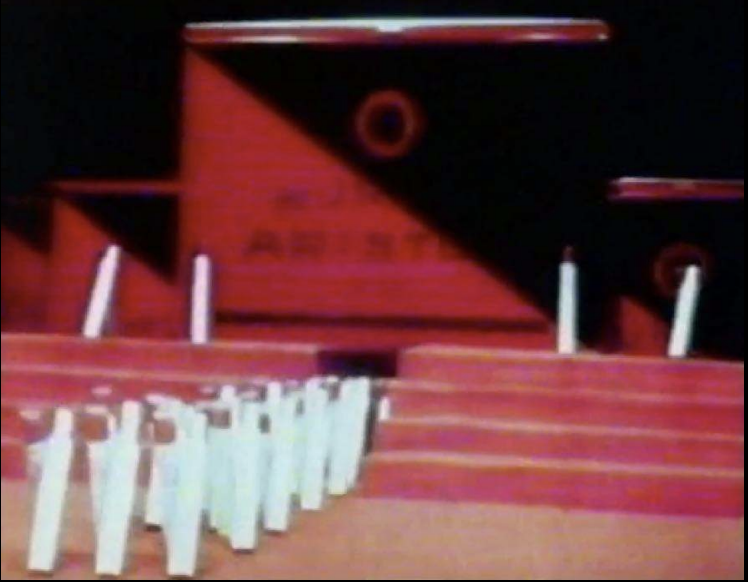
<p>What film is this?</p>

What film is this?

Oskar Fischinger - Muratti commericals, 1934-5

9
New cards
<p>What film is this?</p>

What film is this?

Oskar Fischinger - Optical Poem, 1938

10
New cards
<p>What film is this?</p>

What film is this?

Mary Ellen Bute - Synchromy No. 4: Escape, 1938

11
New cards
<p>What film is this?</p>

What film is this?

Len Lye - Colour Flight, 1937

12
New cards
<p>What film is this?</p>

What film is this?

Len Lye - Free Radicals, 1958

13
New cards
<p>What film is this?</p>

What film is this?

Norman McLaren & Evelyn Lambart - Begone Dull Care, 1949
14
New cards
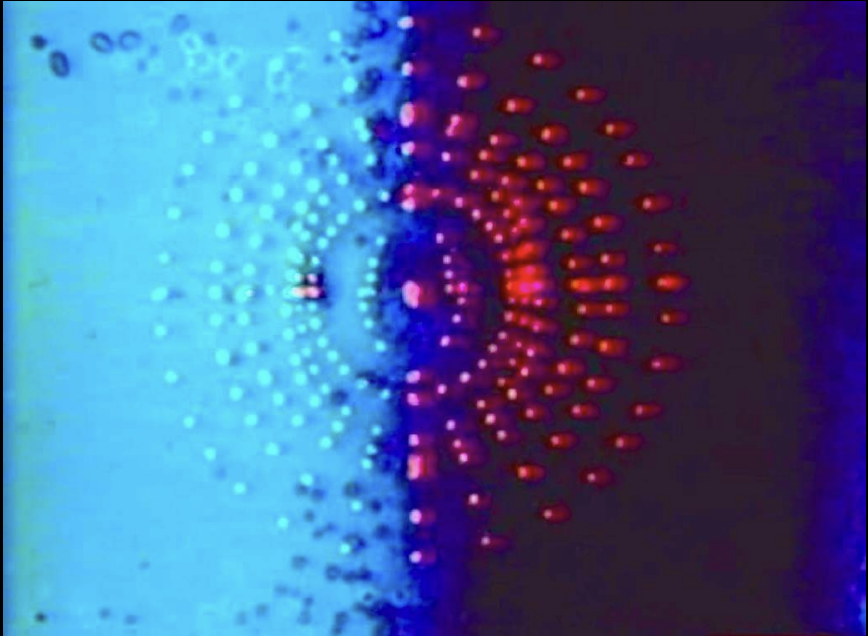
<p>What film is this?</p>

What film is this?

James Whitney - Yantra, 1957

15
New cards
<p>What film is this?</p>

What film is this?

James Whitney - Lapis, 1966
16
New cards
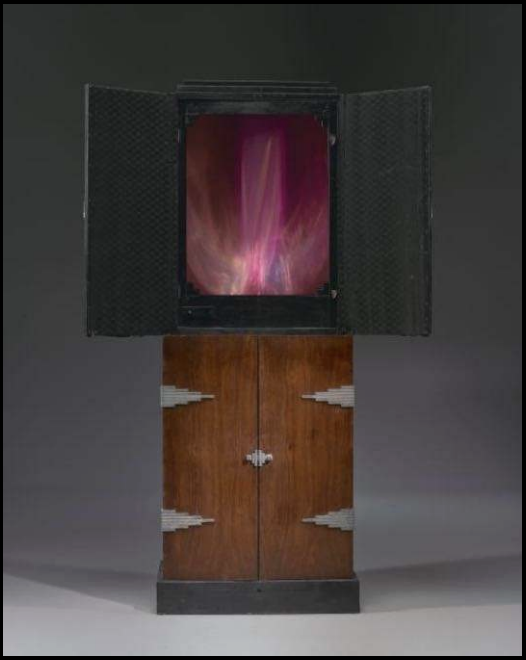
<p>What work is this?</p>

What work is this?

Thomas Wilfred -Lumia, 1930-1968
17
New cards
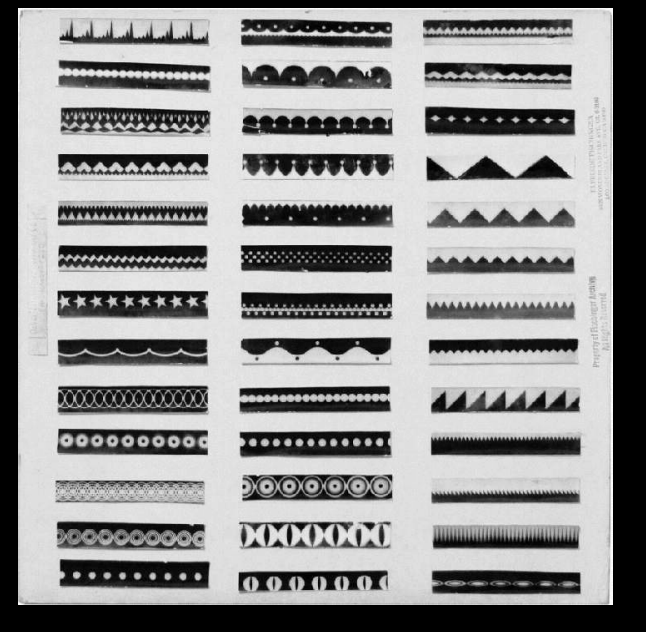
<p>What film is this?</p>

What film is this?

Oskar Fischinger - Ornament Sound, 1932

18
New cards
<p>What film is this?</p>

What film is this?

Norman McLaren - Dots, 1940

19
New cards
<p>What film is this?</p>

What film is this?

Norman McLaren - Pen Point Percussion, 1951

20
New cards
<p>What film is this?</p>

What film is this?

Stan Brakhage - Mothlight, 1963

21
New cards
<p>What work is this?</p>

What work is this?

Man Ray - Untitled Rayograms, 1921-22

22
New cards
<p>What work is this?</p>

What work is this?

Man Ray - Return to Reason, 1923

23
New cards
<p>What work is this?</p>

What work is this?

Hannah Hoch, Beautiful Girl, 1920

24
New cards
<p>What film is this?</p>

What film is this?

Hans Richter - Ghosts Before Breakfast, 1928

25
New cards
<p>What film is this?</p>

What film is this?

Fernand Léger et al - Ballet Mechanique, 1924

26
New cards
<p>What work is this?</p>

What work is this?

George Antheil, Music for Ballet Mechanique, 1924
27
New cards
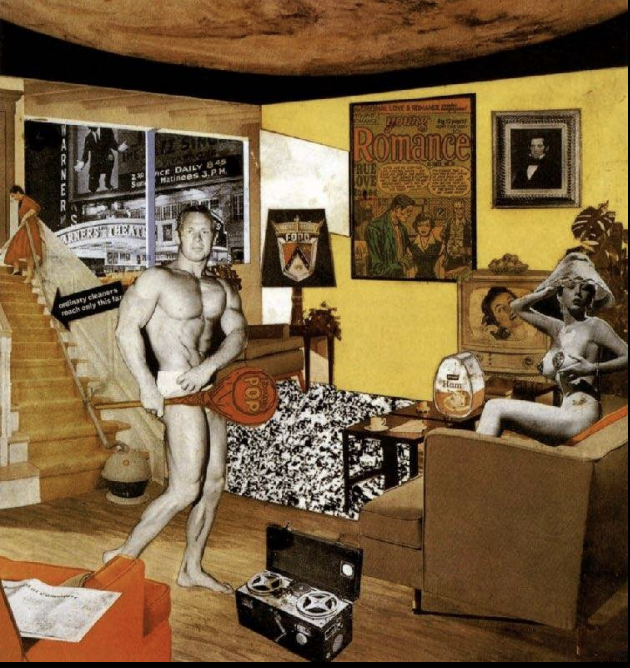
<p>What work is this?</p>

What work is this?

Richard Hamilton - ‘Just What Is It That Makes Today’s Homes So Different, So Appealing?’, 1956

28
New cards
<p>What film is this?</p>

What film is this?

Stan VanDerBeek - A La Mode, 1958

29
New cards
<p>What film is this?</p>

What film is this?

Stan VanDerBeek - Science Friction, 1959

30
New cards
<p>What work is this?</p>

What work is this?

Stan VanDerBeek - MovieDrome, 1965

31
New cards
<p>What work is this?</p>

What work is this?

Frank Mouris - Frank Film, 1973

32
New cards
<p>What work is this?</p>

What work is this?

Bruce Conner - Spider Lady, 1959

33
New cards
<p>What film is this?</p>

What film is this?

Bruce Conner - A Movie, 1958

34
New cards
<p>What film is this?</p>

What film is this?

Bruce Conner - Report, 1967

35
New cards

What did Walter Ruttman do?

Wanted to give music a complementary visual form. So he took well-known classical music and added shapes in different colors to music

36
New cards
How does Rhythm 21 treat the movie screen differently from most films?
As a flat canvas-like surface where abstract forms exist only on the screen, rather than as a window onto an illusionary space.
37
New cards
How do Richter’s Rhythm 21 and Eggeling’s Diagonal Symphony differ, despite their shared origins?
Eggeling uses line and curve in a flat dark void, while Richter uses squares and rectangles that create a Z-axis depth illusion.
38
New cards
What was the Bauhaus devoted to, as described in the paragraph on Fischinger’s beginnings?
Moving art beyond pretty pictures toward exploring modern forms of perception, using new technologies.
39
New cards
What materials did Fischinger use for his Wax Experiments?
Molten wax, a meat slicer, and an animation camera.
40
New cards
What is the 2012 Raumlichtkunst reconstruction?
A multiscreen installation by the Center for Visual Music, with an Italian Futurist soundtrack, that captures the era without claiming to be exact.
41
New cards
What does Lye’s first major film, Tusalava (1929), synthesize, and what is its narrative about?
European avant-garde techniques and indigenous South Pacific and Australian aesthetics; two biomorphic forms in a symbiotic, then parasitic, struggle.
42
New cards
What was Lye’s “Old Brain” theory, and what does the title Tusalava mean?
Art should tap into the biological, pre-conscious rhythms of the body; the title is a Samoan word meaning “everything goes full circle.”
43
New cards
How was Optical Poem made, despite its “digital” look?
Through analog stop-motion of hand-moved paper shapes, using lights and shadows to create 3D space.
44
New cards
What is notable about the studio backing for Optical Poem, and what came next for Fischinger?
A major Hollywood studio backed pure abstraction, but a clash with Disney on Fantasia later pushed him toward independent painting.
45
New cards
Who sponsored Lye’s Colour Flight (1938), and what was its visual and musical makeup?
Imperial Airways; hand-painted and stencilled color imagery with the airline’s “speedbird,” set to “Honolulu Blues” and a Cuban rumba.
46
New cards
How did Time Magazine (12 December 1938) frame Lye against Disney?
As England’s alternative to Disney, an unequal contest between a one-man, hand-painting filmmaker and a big corporation.
47
New cards
How did Lye make Free Radicals, and what is its soundtrack?
He scratched the celluloid with needles, dental tools, and an arrowhead, to traditional African drumming and singing by the Bagirimi Tribe.
48
New cards
What indigenous influences does Free Radicals show, and what background shaped Lye?
Aboriginal body paint, Pacific tapa designs, and Māori, Pacific Island, and African art; he spent early years in Australia and Samoa and was expelled from New Zealand for living in an indigenous community.
49
New cards
How did McLaren and Evelyn Lambart apply color to Begone Dull Care (1949), and what was it set to?
Painting with transparent inks, dyes, and gouache directly on 35mm film, to the Oscar Peterson Trio.
50
New cards

How was Begone Dull Care scratched and how did it echo the music?

With razor blades, lithographic needles, and wire combs, making staccato fissures in fast passages and slower striations in the contemplative middle movement.
51
New cards
How was Yantra made?
Over eight years (1950–1958), by punching pinholes in a 5” by 7” card and painting dots on another card below, repeated for each frame.
52
New cards

What does “yantra” mean, and why does it suit the film Yantra?

Sanskrit for “instrument/machine” or a mandala-like meditation pattern; it fits a film that uses technology to induce spiritual ecstasy.
53
New cards
How did Lapis differ technically from Yantra?
It was made with a custom motion-control rig built around a WWII M-5 anti-aircraft gun director, with layered passes on an optical printer producing moiré patterns.
54
New cards
How does Lapis relate to Ravi Shankar’s music, and what did it evoke?
It forms an organic, kinetic counterpoint to the raga’s accelerating rhythms, evoking a meditation mandala tied to Hindu philosophy and Zen.
55
New cards
What was Thomas Wilfred’s LUMIA, and how did it differ from cinema?
An art form based entirely on light, color, and movement with no soundtrack; he never worked with cinema per se.
56
New cards
How were Wilfred’s works received, and what is their legacy?
Largely overlooked by art historians in his lifetime but popular with audiences, now seen as forerunners of video installation.
57
New cards
How did Fischinger create sound directly from visual forms in his Ornament Sound experiments?
He drew geometric “ornaments” (triangles, parallels, zig-zags) and photographed them onto the optical soundtrack area, which the projector read as sound waves.
58
New cards
What did Fischinger tell a young John Cage, and why does it matter?
“Everything in the world has a spirit which is released by sound”; Cage cited it as a catalyst for his percussion works and “found” sound philosophy.
59
New cards
What is distinctive about the soundtrack of McLaren’s Dots (1940)?
It was composed directly as graphic marks, with no microphone or acoustic event, so sync is guaranteed by construction.
60
New cards
How is Mothlight made, and why is it called both literal and indexical?
Organic material was preserved directly in the celluloid, with no photography; you actually see exactly what the film is made of passing through the projector.
61
New cards
What metaphors does the paragraph draw out of Mothlight?
Moth-like attraction to light, celluloid as cellulose, and wings as the ephemerality of cinema, in what a moth might see “if black were white.”
62
New cards
What idea did Return to Reason introduce, alongside Richter’s Rhythm 21?
“Pure Cinema”: film stripped of narrative, character, and logic to focus on light, texture, and rhythm.
63
New cards
How did Man Ray make sequences for Return to Reason?
By sprinkling salt, pepper, pins, and thumbtacks directly onto 35mm film in the darkroom and exposing it to light without a camera.
64
New cards
What was Hannah Höch known for, and what did she critique?
Political collages and photomontages from mass-media images and text, critiquing popular culture, the Weimar Republic’s failings, and constructed gender roles.
65
New cards
How was Höch tied to Dada, and what did she mock about the “New Woman”?
She met Raoul Hausmann in 1917, joined the Berlin Dada group, and showed at the 1920 First International Dada Fair; she humorously criticized the supposedly man-equal “New Woman.”
66
New cards
What happens in Richter’s Ghosts Before Breakfast, and what techniques does it use?
Everyday objects (clocks, cups, bow ties, bowler hats) “revolt” through stop motion, backwards and negative film, cutout animation, and in-camera effects.
67
New cards

What did the clocks and flying hats in Ghosts Before Breakfast symbolize to 1920s audiences?

Clocks referenced “five minutes to twelve” (danger coming, time running out); flying hats symbolized looming threats to society.
68
New cards

Why did Ghosts Before Breakfast start “disappearing,” and what survives?

The Nazis felt its warnings referenced National Socialism, and disliked Dadaism; Hindemith’s score is lost, but silent copies survive.
69
New cards
What do VanDerBeek’s A La Mode and Science Friction each satirize?
A La Mode: consumerism, using cutout fashion-magazine images; Science Friction: the Space Race, the military-industrial complex, and Atomic Age anxiety.
70
New cards
Whom did VanDerBeek’s jerky, comical collage style influence?
Terry Gilliam, who used a similar aesthetic in Monty Python’s animation sequences.
71
New cards
What was VanDerBeek’s Movie-Drome physically?
A repurposed aluminum grain silo in Stony Point, NY, where audiences lay prone to view dozens of simultaneous projections on a hemispherical screen.
72
New cards
What was the Drome’s aim, and what did it prefigure?
To mimic modern “visual velocity” with thousands of images that induce a “mental mutation” beyond verbal logic; it prefigured VR, immersive installations, and the internet.
73
New cards
What feeling does Mouris’s Frank Film capture, and what later forms is it seen as a precursor to?
Information overload from media and “stuff”; the modern “video essay” and “supercut.”
74
New cards
How does Frank Film represent memory?
As a layered, chaotic jumble of brand names, personal feelings, and visual textures.
75
New cards
How does Conner’s Spider Lady (1959) treat the framed support, and what is it made from?
As an architectural ruin: discarded urban detritus (a bicycle wheel, frayed twine, splintered wood, torn fabric) mounted on a vertical ground, attacking the pictorial plane from within.
76
New cards
What is Spider Lady’s critique of Cold War commodity culture, and what role does nylon play?
Nylon, marketed in postwar America as a miracle synthetic of pristine eroticism, is reclaimed in its damaged, abject state: soiled, laddered, and decaying.
77
New cards
How does Spider Lady relate to Conner’s film A Movie (1958)?
The assemblages and the film editing are reciprocal practices: juxtaposing discarded elements mirrors celluloid montage, and layered nylon works like a semi-transparent filter or variable frame rate, revealing and obscuring forms.
78
New cards
How did Conner make A Movie (1958), and what does it show about where cinematic meaning resides?
He assembled salvaged 16mm scraps (thrift stores, film bins, newsreel discards, erotic reels, educational shorts); meaning lies in the syntactic cut, the radical reorganization of the cultural archive.
79
New cards

What is A Movie’s (1958) most celebrated sequence, and what does it demonstrate?

A submarine captain at a periscope, a bikini-clad model, an officer pressing a launch button, an exploding torpedo, and an atomic mushroom cloud; it shows seamless causal trajectories built from logically unrelated footage.
80
New cards
What music is used in A Movie (1958), and why does it matter?
Respighi’s Pines of Rome; its triumphant crescendos clash with escalating visual disaster, and the precise alignment of pre-existing audio and cutaways laid groundwork for modern audiovisual editing, structuralist compilation film, and music video aesthetics.
81
New cards
What is Conner’s Report about, and what footage does he collage?
A nation’s processing of trauma, the appeal of conspiracy theories, and the slippery nature of time; it begins with J.F.K. and Jackie in the open car in Dallas, then mixes found news footage with monster movies and bullfights.
82
New cards
What two devices does Report use to handle the assassination itself and its aftermath?
A rapidly flashing blank screen standing in for the murder, and an announcer repeating the news of the death, rephrased slightly each time.
83
New cards

What do the repetition and flickering in black-and-white frames in Report convey?

A trauma that cannot be directly seen, made physical through a kind of attack on vision.



