AP Bio Unit 1 - Chemistry of Life
 Call Kai
 Learn
 Practice Test
 Spaced Repetition
 Match
 Flashcards
 Knowt Play
1/54

There's no tags or description
Looks like no tags are added yet.
55 Terms
Organic Chemistry/Compounds
studying compounds containing hydrogen or carbon
What’s so special about carbon?
It has FOUR valence electrons
It can form SINGLE, DOUBLE, and TRIPLE covalent bonds
Can form up to 4 bonds and make LONG CHAINS
It makes up carbon skeletons, needed for macromolecules and molecular diversity
Carbon and Common Pairings
Usually bonds with hydrogen, oxygen, or nitrogen
How do bonds with carbon impact the molecule formed?
The TYPE and NUMBER of covalent bonds carbon makes with other atoms will impact the…
LENGTH of carbon chain
SHAPE of molecule
Carbon Chains
Serve as the SKELETON for most organic molecules, vary in…
LENGTH
BRANCHING
DOUBLE BOND POSITION
PRESENCE OF RINGS
hydrocarbon
organic molecule consisting of only carbon and hydrogen
Many regions of a cell’s organic molecules have these
Functional group
groups attached to the carbon skeleton that partake in chemical reactions
Hydroxyl Group (-OH)

Carbonyl group (C=O)

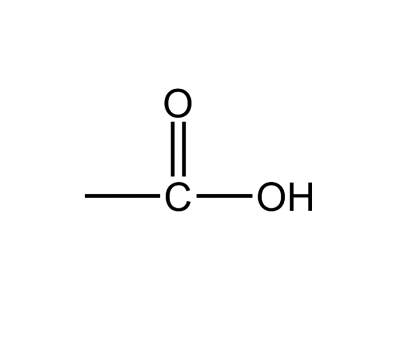
Carboxyl group (Charged)
Amino group (—NH2)

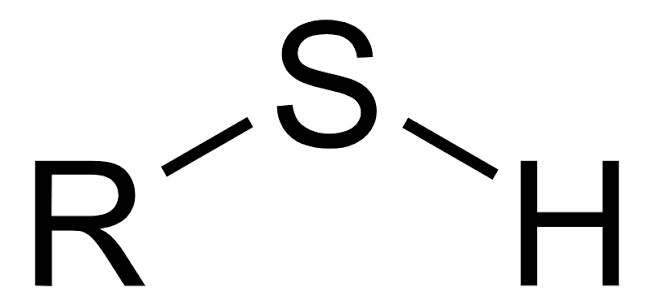
Sulfhydryl group (—SH)
Methyl group

Phosphate Group (—OPO32-)

Four Classes of Macromolecules
Carbohydrates
Lipids (phosphorus for some)
Proteins (nitrogen, sulfur)
Nucleic Acids (nitrogen, phosphorus)
Which of the four macromolecules is NOT a polymer?
Lipids
They have no irreducible form
Polymers
Chain-like macromolecules or identical repeating units that are covalently bonded together
Monomers
Repeating units that make up polymers
Dehydration Reaction
Covalently BONDS TWO monomers with the LOSS of water
-OH of one monomer bonds to the -H of another monomer forming water that is RELASED
Polymerization
Connection of many monomers
Hydrolysis
BREAKING of covalent bonds in a polymer by ADDING water
One -H of the water bonds to one monomer and the remaining -OH of the water attached to the other monomer
Lipids
class of molecules that do NOT include true polymers
Generally SMALL in size
Are nonpolar- HYDROPHOBIC
What types of lipids exist?
Fats
Phospholipids
Steriods
Cholesterol
Fats
Provide long-term energy storage
Provide insulation to keep mammals warm
Support organ function
Composed of GLYCEROL and FATTY ACIDS
Glycerol
An alcohol with hydroxyl groups
Fatty Acids
long carbon chains (carboxyl group at one end)
Ester Linkage
How 3 fatty acids join to a glycerol
Bond between hydroxyl and carboxyl group
Saturated fatty acid
SINGLE BONDS between carbons in carbon chain = more hydrogen
Unsaturated Fatty Acid
contains ONE or MORE DOUBLE bonds
Double bonds cause fatty acid tails to form KINKS (BENDS)
More double bonds = the mre LIQUID it is at ROOM TEMP (think like olive oil)

Phospholipids
Major component of cell membrane
Two fatty acids attached to a glycerol and a phosphate
Form a BILAYER in water
TAILS are HYDROPHOBIC (think: cats don’t like to get their TAILS WET)
HEAD is HYDROPHILIC
Steroids
Hormones that support physiological functions like growth and development, energy metabolism, and homeostasis
FOUR fused rings
Type of steroid determined based on unique groups attached to ring
Cholesterol
Provides structural stability to animal cell membranes
Nucleic Acids
Polymers made of NUCLEOTIDE monomers
Designed to…
Store, transmit, and express hereditary info
Can be either
DNA - deoxyribonucleic acid
RNA - ribonucleic acid

Nucleotides
3 Parts
Nitrogenous base
Five carbon sugar
Phosphate groups (in polynucleotides each monomer has only ONE phosphate group)
Components of nucleic acids
Nucleotides —> polynucleotides —> nucleic acids
Nitrogenous Base
Divided into pyrimidines and purines

Pyrimidines
ONE ring with 6 ATOMS
Cytosine
Thymine (only in DNA)
Uracil (only in RNA)

Purines
ONE ring with 6 ATOMS bonded to ONE ring with 5 ATOMS
Adenine
Guanine
Five Carbon Sugar
Sugar bonded to base
in DNA the sugar is DEOXYRIBOSE
in RNA the sugar is RIBOSE
importance because they differ in structure and function
Phosphate Group
Phosphate group is added to the 5’ carbon of the sugar (that is attached to the base) to form a nucleotide
Polynucleotides
Phosphate groups link adjacent nucleotids \
DIRECTIONALITY
5’ to 3’
Sequences of bases along the DNA or mRNA is unique for each gene
Determines AA sequence —> determines primary structure of protein —> determines 3D structure of a protein
DNA
Two poolynucletides
Strands are ANTIPARALLEL (one is doing in 5’ to 3’, other is opposite)
Held together by hydrogen bonds between bases
Cytosine —> guanine (rounded letters)
Adenine —> thymine (pointy letters)
RNA
Single stranded polynucleotide'
Variable in shape because of base pairing within RNA
Cytosine —> guanine
Adenine —> uracil
Formation of a Protein
Amino acid —> peptide —> polypeptide —> protein
Protein
moelcule consisting of polypeptides (polymers of amino acids) folded into a 3D shape (made of C, H, O, N, S)
SHAPE DETERMINES FUNCTION
Amino acids
molecule that have an AMINO group and CARBOXYL group
Have a UNIQUE SIDE CHAIN
Unique aspects are based on side chain’s physical and chemical properties

General Structure of a Protein
Orange = amino group
Blue = carboxyl group
R = variable side chain
Amino Acid Side Chain properties
Nonpolar (hydrophobic)
Polar (hydrophilic)
Charged/ionic (hydrophilic)
Side chains INTERACT, which will determine shape and function of protein
Formation of peptide bonds
Carboxyl group of one AA must be positioned next to the amino group of ANOTHER AA
Dehydration reaction allows them to bond
Polypeptides
Many AA linked by peptide bonds
Each polypeptide has a unique sequence of AAs and directionality
Each end is chemically unique
One end is a FREE AMINO GROUP (N-terminus)
One end is a FREE CARBOXYL GROUP (C-terminius)
Sequence of AAs determine 3D shape, polypeptide twisting and folds because of R group interaction, a protein is made
Functions of Proteins
Antibody —> helps protect body from disease
Enzyme —> carry out chemical reactions or assist in making new molecules
Messenger —> transmit signals i.e hormones
Structural —> provide structure and support
Transport/storage —> bind to and carry small atoms and molecules through the body
Primary Protein structure
Linear chain of AA
Determined via genes
Dictates secondary and tertiary forms
Secondary Protein Structure
Coils and folds due to hydrogen bonding within the polypeptide backbone
Beta pleated sheet —> Hydrogen bonds between polypeptide chains lying side by side
Alpha helix —> hydrogen bonding between every 4th AA
Tertiary Protein Structure
3D folding due to interactions between side chains of AA
reinforced with hydrophobic interations, hydrogen bonds, ionic interactions, and disulfide bridges of the side chains
Covalent bond is formed between sulfur atoms of two cysteine monomers
Quarternary Protein Structure
Association of two or more polypeptides, found in only some proteins