Architecture Final
 View linked note
 Call Kai
 Learn
Learn Practice Test
 Spaced Repetition
 Match
Match Flashcards
 Knowt Play
1/72

There's no tags or description
Looks like no tags are added yet.
Name | Mastery | Learn | Test | Matching | Spaced | Call with Kai | Chat |
|---|
No analytics yet
Send a link to your students to track their progress
73 Terms
Equitable Use
Design principle ensuring accessibility and usability for all individuals, regardless of ability or status.
Flexibility in Use
Design that accommodates a wide range of individual preferences and abilities.
Simple and Intuitive Use
Design principle that ensures the design is easy to understand and use, regardless of the user's experience, knowledge, language skills, or current concentration level.
Tolerance for Error
Design that minimizes hazards and the adverse consequences of accidental or unintended actions, allowing for user mistakes.
Low Physical Effort
Design that can be used efficiently and comfortably with minimal fatigue, allowing users to maintain a high level of performance.
Size and Space for Approach and Use
Design that provides appropriate space for approach, reach, manipulation, and use regardless of user's body size, posture, or mobility.
Perceptible Information
Design that communicates necessary information effectively to the user, regardless of their sensory abilities.
Point
It has no length, width or depth or dimension
It is static, centralized and directionless
The two ends of a line
The intersection of two lines
• The meeting of lines at the corner of a plane or
volume
• The center of a field
Line
• is a point extended.
• has length, but no width or depth.
• can join, link, support, surround or intersect other elements
• describes the edges of and give shape to planes
• articulates the surfaces of planes
• must have some degree of thickness to become visible
• can be taut, or limp, bold or tentative, graceful or ragged
Plane
A line extended in a direction other than its intrinsic direction transforms into a surface. Conceptually, a surface has length and width but no depth.
Shape is the primary identifying characteristic of a surface, determined by the contour of the line forming its edges. The perception of shape can be distorted by perspective foreshortening.
The supplementary properties of a surface—color, pattern, and texture—affect its visual weight and stability.
Volume
A plane extended in a direction other than its intrinsic direction. Has three dimensions: length, width and depth.
Properities of form: Position
The location of a form relative to
its environment or the visual field within
which it is seen.
Properties of form: Orientation
The direction of a form relative
to the ground plane, the compass points,
other forms, or to the person viewing the
form.
Properties of Form: Visual Intertia
The degree of concentration
and stability of a form. Depends on its geometry as well as its
orientation relative to the ground plane, the
pull of gravity and our line of sight.
Form
In art and design, we often use the term to
denote the formal structure of a work, the
manner of arranging and coordinating the
elements and parts of a composition so as to
produce a coherent image.
• It may refer to an external appearance that
can be recognized, a chair or the human
body that sits in it.
• It may allude to a particular condition in
which something acts or manifest itself, as
when we speak of water in the form or ice of
steam.
Horizontal Elements Defining Space: Base Plane
A horizontal plane laying as a figure on a contrasting background defines a simple field of space. This field can be visually reinforced in the following ways.
Horizontal Elements Defining Space: Elevated Base Plane
A horizontal plane elevated above the ground plane establishes vertical surfaces along its edges that reinforce the visual separation between its field and the surrounding ground.
Horizontal Elements Defining Space: Depressed Base Plane
A horizontal plane depressed into the ground plane utilizes the vertical surfaces of the lowered area to define a volume of
space.
Horizontal Elements Defining Space: Overheard Plane
A horizontal plane located overhead defines a volume of space between itself and the ground plane.
Solid/ Void
Irregular Forms
those whose parts are dissimilar in nature and related to one
another in an inconsistent manner. They are generally asymmetrical and more dynamic that regular forms.
Regular Forms
They can retain regularity even when transformed dimensionally or by the addition or subtraction of elements.
Openings within planes
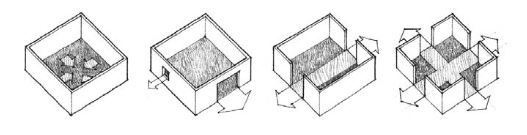
Openings at corners
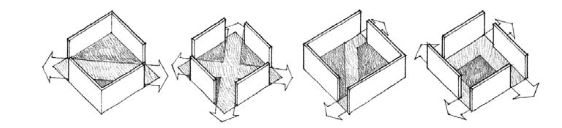
Openings between planes
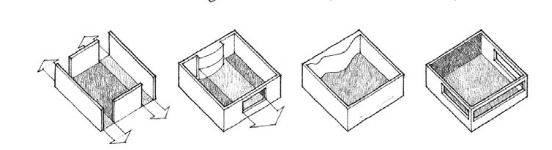
Degree of Enclosure
form of the space
Light
illumination on surfaces
View
the focus of the space
Ventilation
TBD
Time
TBD
Space
the open area or volume between structural elements, such as walls, ceilings, and floors
Sequences
a series of spaces linked by a route that creates an integrated experience for the user.
Size
TBD
Scale
The size of something compared to a reference standard or to the size of something else.
Proportion
The harmonious relation of one part to another or to the whole.
Approach
This is the first phase of the circulation system, during which we are prepared to see, experience, and use the spaces within a building.
Entrance
Involves the act of penetrating a vertical plane that
- distinguishes one space from another
- and separates here from there
- passage thought an implied plane
established by two pillars or an overhead
beam.
Where more visual continuity is desired,
-a change in level can suffice to mark the
passage from one place to another
Configuration of the Path
Refers to the layout of movement paths for people, goods, cars, and services.
OR
linking sequences of space that users are taken through from a chosen starting point to specific destination point.
Path-space Relationships
Pass-by spaces:- The integrity of each space is maintained
- The configuration of the path is flexible
- Mediating spaces can be used to link the path with
the spaces
Pass through space:
The path may pass though a space axially,
obliquely, or along its edge
- In cutting through a space, the path creates
patterns of rest and movement within it.
Terminate in a space:
The location of the space establishes the path
- This path-space relationship is used to approach
and enter functionally or symbolically important
spaces.
Form of the circulation
Enclosed: Forming a public galleria or private corridor that
relates to the spaces it links though entrances in a
wall plane
Open on one side: Forming a balcony or gallery that provides visual and spatial continuity with the spaces it links
Form of the Circulation Space
Open on both sides: Forming a colonnaded passageway that becomes a physical extension of the space it passes through.
Straight-run stair
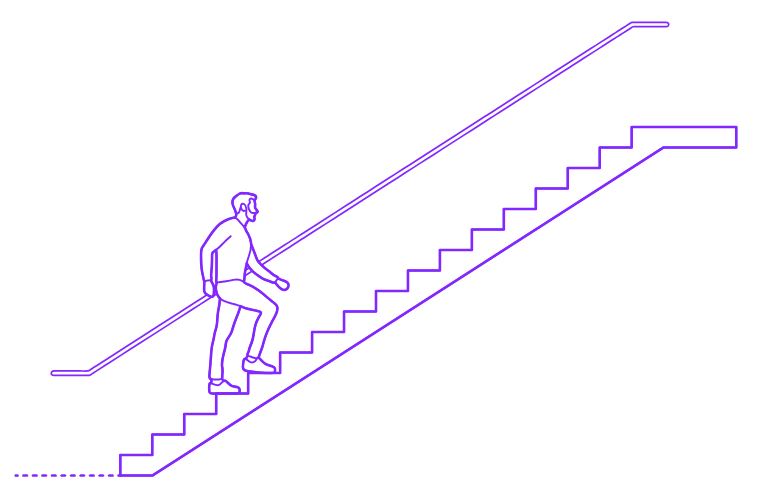
L-Shaped Stair
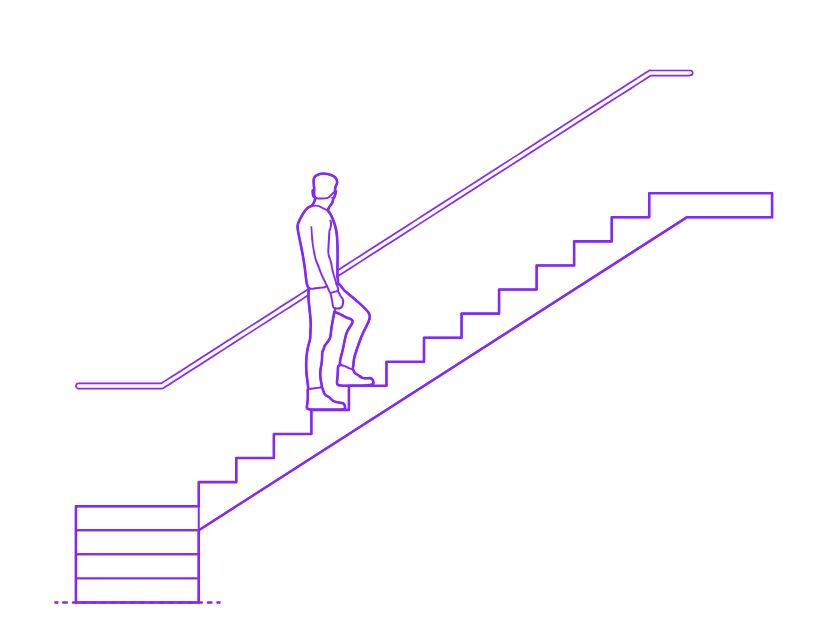
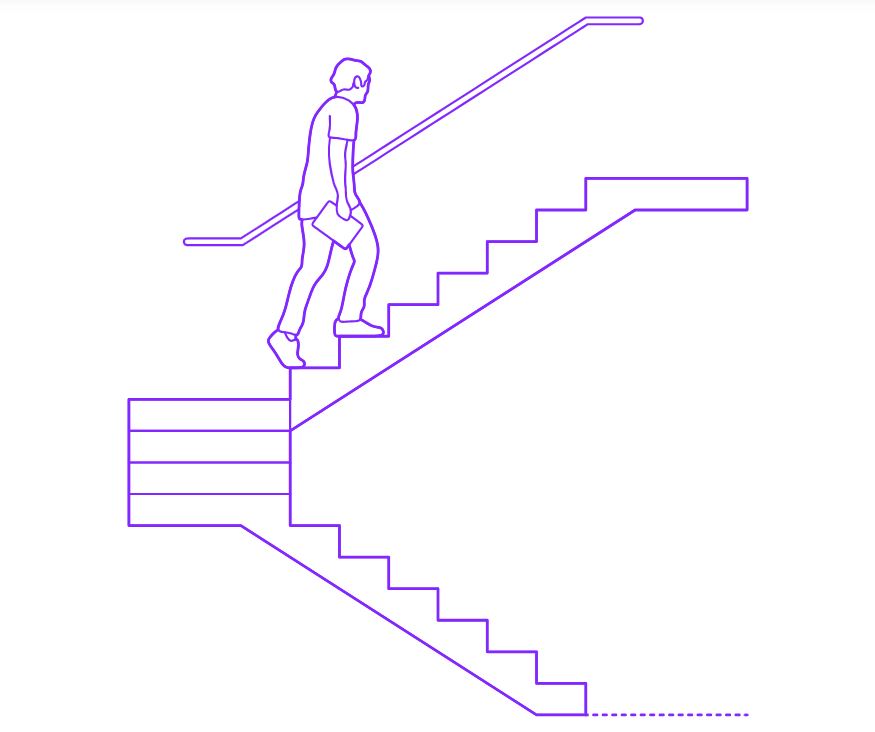
U-Shaped Stair
Circular Stair
staircase that has a radius and an opening in the middle. Has a larger radius, allowing for wider steps
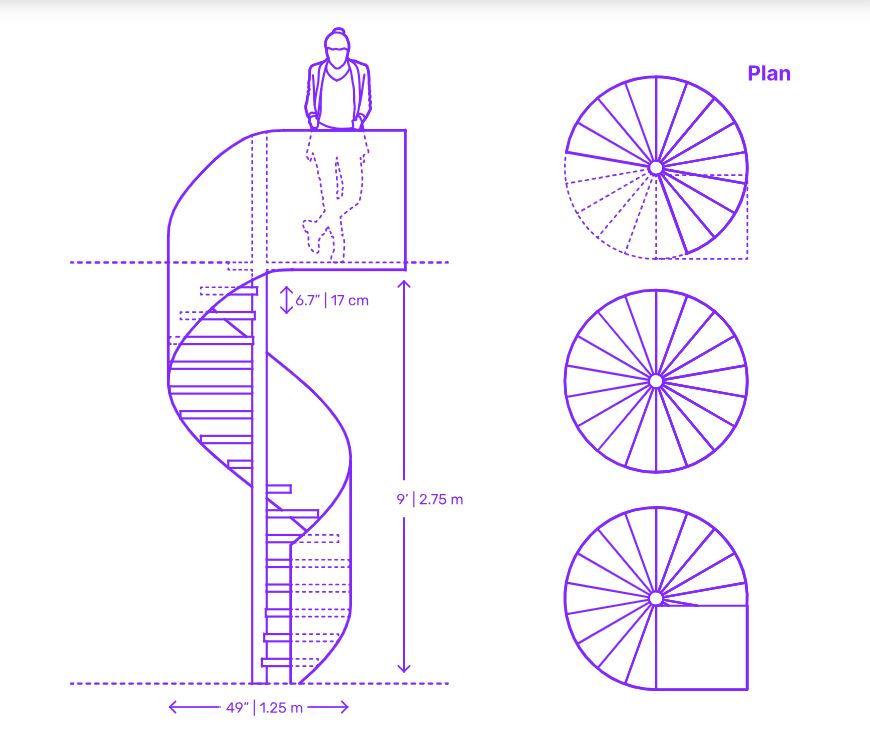
Spiral Stair
Staircase with a radium, and a column in the middle
Configuration of the path: Linear
All paths are this. Can be the primary organizing element for a series of spaces. It can be
- curvilinear or
- segmented,
- intersect other paths,
- have branches, or
- form a loop.
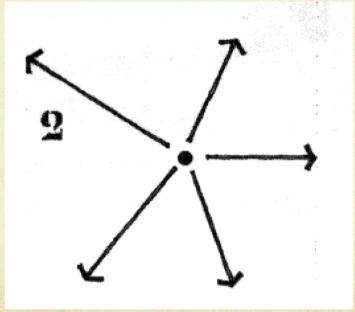
Configuration of the path: Radial
has linear paths extending from or terminating at a central, common point.
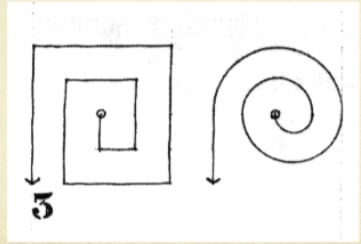
Configuration of the path: Spiral
A single, continuous path that originates from a central point, revolves around it, and becomes increasingly distant from it.
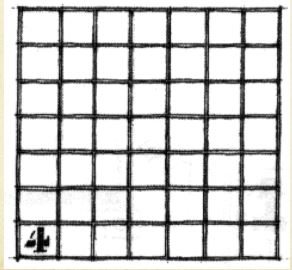
Configuration of the path: Grid
Consists of two sets of parallel paths that intersect at regular intervals and create square or rectangular fields of space
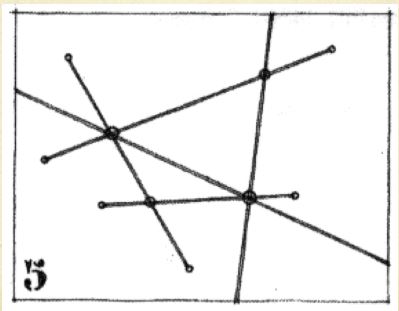
Configuration of the path: Network
Consists of paths that connect established points in space
Configuration of the path: Composite
a building normally employs a combination of the preceding patterns.
Important points in any pattern are centers of activity, entrances to rooms and halls, and places for vertical circulation provided by stairways, ramps and elevators.
Path-space relationships: Pass by spaces
- The integrity of each space is maintained
- The configuration of the path is flexible
- Mediating spaces can be used to link the path with
the spaces
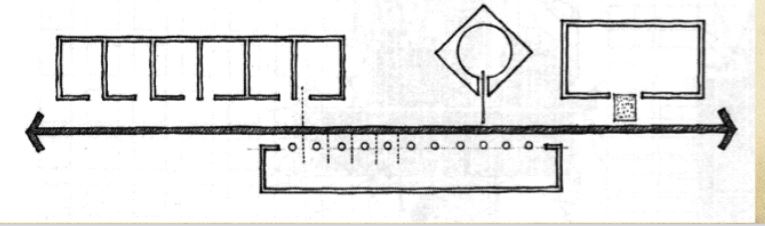
Path-space relationships: Pass through spaces
- The path may pass though a space axially,
obliquely, or along its edge
- In cutting through a space, the path creates
patterns of rest and movement within it.
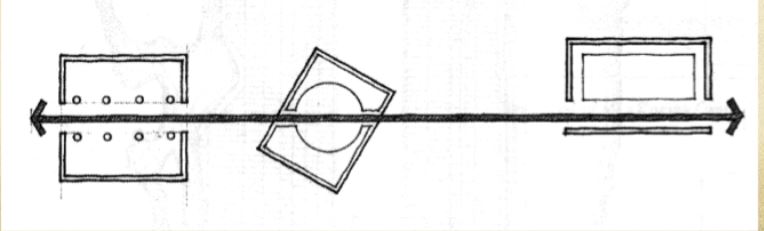
Path-space relationships: terminate in a space
- The location of the space establishes the path
- This path-space relationship is used to approach
and enter functionally or symbolically important
spaces
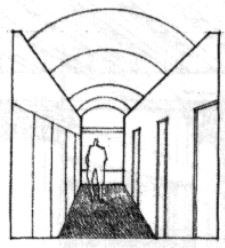
Form of the circulation space: Enclosed
Forming a public galleria or private corridor that relates to the spaces it links though entrances in a wall plane.
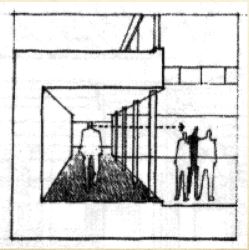
Form of the circulation space: Open on one side
Forming a balcony or gallery that provides visual and spatial continuity with the spaces it links
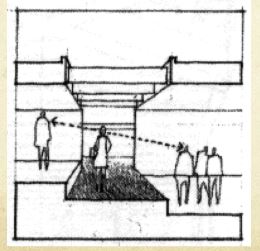
Form of the circulation space: Open on both sides
Forming a colonnaded passageway that becomes a physical extension of the space it passes through.
Additive Form: Spatial Tension
Relies on the close proximity of the forms or their sharing of a common visual trait such as shape, color or material.
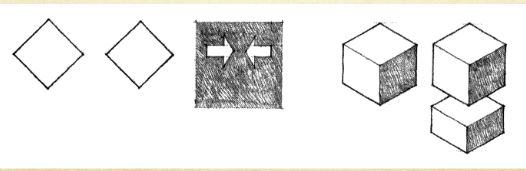
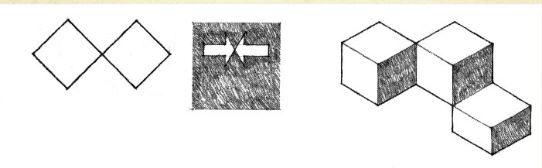
Additive Form: Edge-to-Edge contact
The volumes share a common edge and can pivot about that edge.
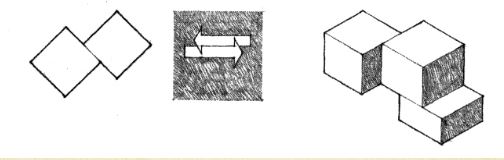
Additive Form: Face-to-Face contact
This type of relationship requires that the two forms have corresponding planar surfaces which are parallel to each other.
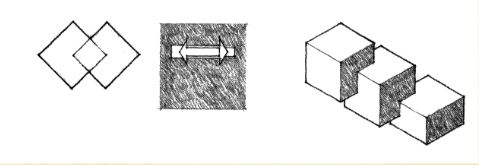
Additive Form: Interlocking Volumes
In this type of relationship, the forms interpenetrate each other’s space. The forms
need not share any visual traits.
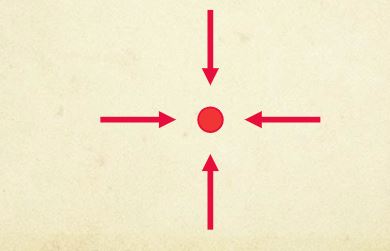
Additive Form: Centeralized Form
A number of secondary forms clustered about a dominant, central parent-form.
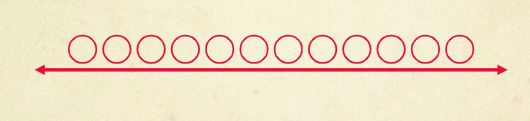
Additive Form: Linear Form
A series of forms arranged sequentially in a row.
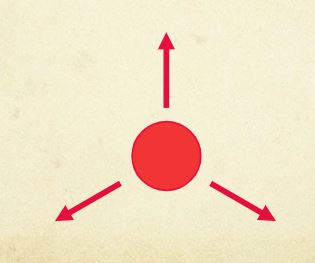
Additive Form: Radial Form
A composition of linear forms extending outward from a central form in a radial manner.
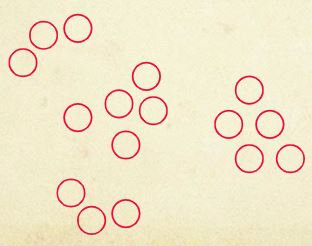
Additive Form: Clustered Form
A collection of forms grouped together by proximity or the sharing of a common visual trait.
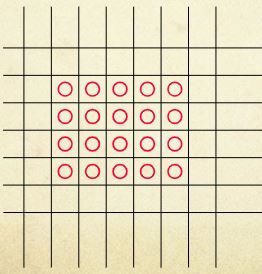
Additive Form: Grid Form
A set of modular forms related and regulated by a three-dimensional grid.
Ordering Principles: Axis
line established by two points in space, about which forms and spaces can be arranged in a The balanced distribution and arrangement of equivalent forms
and spaces on opposite sides of a dividing line or plane, or about a center. symmetrical or balanced manner.
Ordering Principles: Symmetry & 2 types
The balanced distribution and arrangement of equivalent forms and spaces on opposite sides of a dividing line or plane, or about a center or axis.
1)Bilateral symmetry refers to the balances arrangement of
similar of equivalent elements on opposite sides of a median axis
so that only one plane can divide the whole into essentially
identical halves.
2) Radial symmetry refers to the balanced arrangement of
similar, radiating elements such that the composition can be
divided into similar halves by passing a plane at any angle
around a centerpoint or along a central axis.
Ordering Principles: Datum
A line, plane, or volume that, by its continuity and regularity, serves to gather, measure, and organize a pattern of forms and spaces.
Ordering Principles: Hierarchy
The articulation of the importance or significance of a form or spaces by its size, shape,
or placement relative to the other forms and spaces of the organization.
Ordering Principles: Rhythm/Repition
A unifying movement characterized by a patterned repetition of alternation of formal elements or motifs in the same or a modified form.
Ordering Principles: Transformation
that an architectural concept, structure, or organization
can be altered through a series of discrete manipulations and permutations in response to a specific context or set of conditions without a loss of identity or concept.
3 E’s of Licensure
Education, Experience, Examination