Bio 112 Exam Two Review
0.0(0)
Studied by 3 people Call Kai
 Learn
 Practice Test
 Spaced Repetition
 Match
 Flashcards
 Knowt Play
Card Sorting
1/130

Earn XP
Description and Tags
131 Terms
1
New cards
What is the definition of a species?
an evolutionary distinct population
2
New cards
What does it mean to have a reproductively distinct population?
Two populations do not interbreed, or fail to produce viable fertile offspring
3
New cards
What are the two isolation mechanisms?
Prezygotic and Postzygotic
4
New cards
What are the prezygotic barriers (non-mating) ?
Habitat isolation, Behavioral isolation, and Temporal isolation
5
New cards
What does it mean to have habitat isolation?
The populations are found in two different habitats and do not meet/ come in contact
6
New cards
What does it mean to have behavioral isolation?
There is little to no sexual attraction between males and females of a population
7
New cards
What does it mean to have temporal isolation?
Mating/ Flowering happens within different seasons or time of day
8
New cards
What are the prezgotic barriers (mating)?
Mechanical Isolation and Gametic Isolation
9
New cards
What does it mean to have mechanical isolation?
There are structural differences in the populations genitalia or flowers. This causes a prevention of mating or pollon transfer
10
New cards
What does it mean to have gametic isolation?
The male and female gametes do not attract each other, thus causing them to be inviable
11
New cards
What are the postzygotic barriers?
Reduced hybrid viability, Reduced hybrid fertility, and Hybrid breakdown
12
New cards
What does it mean to have reduced hybrid viability?
The hybrid zygotes are unable to reach sexual maturity
13
New cards
What does it mean to have reduced hybrid fertility?
Hybrids are unable to produce functional gametes
14
New cards
What does it mean to have a hybrid breakdown?
The offspring of a hybrid have reduced viability and/or fertility
15
New cards
What is a morphospecies?
Two populations that contain different species if they are different in size, shape, or other morphological traits
16
New cards
What is the phylogenetic species concept?
A species is the smallest monophyletic group in the tree of life
17
New cards
What is synapomorphy ?
A trait that exists in one species but not in others
18
New cards
What is allopatric speciation?
The evolution of a species while having a separation by a geographic barrier.
19
New cards
What is sympatric speciation?
The evolution of a species within the same area/ region
20
New cards
What are the types of allopatric speciation?
Geographic Isolation, Genetic Isolation, and Genetic Divergence
21
New cards
What is geographic isolation (dispersal)?
When individuals disperse from their population and colonize a new habitat
22
New cards
What is genetic isolation?
When two populations are genetically separated due to an absence of gene flow
23
New cards
What is genetic divergence?
When populations diverge due to mutation, genetic drift, and/or selection
24
New cards
What is genetic isolation (vicariance)?
A physical change and/or event causes a population to divide into subgroups
25
New cards
What are the types of sympatric speciation?
No geographic isolation, genetic isolation, genetic divergence
26
New cards
What does it mean to have no geographic isolation
Individuals live in the same geographic area- random mating can occur in the population
27
New cards
What does it mean to have genetic isolation (in a sympatric sense)
Mating becomes increasingly nonrandom
28
New cards
What does it mean to have genetic divergence (in a sympatric sense)
Mutation, genetic drift, and selection increase the difference within a populations over time
29
New cards
What does it mean to be polyploidy?
Having more than two sets of chromosomes
30
New cards
What does it mean to be autoploidy?
The offspring is reproductively isolated from one parent, instant speciation
31
New cards
What does it mean to be allopolyploidy?
The offspring comes from two sets of chromosomes coming from two different parents
32
New cards
What are some things that can happen when isolated populations come in contact?
Fusion, Reinforcement, Hybridization (Zones, Extinction of existing species, Speciation)
33
New cards
What does a fusion of a population mean?
Two population freely interbreed
34
New cards
What does it mean when there is a reinforcement of divergence in a population?
If hybrid offspring have low fitness, natural selection favors the evolution traits that prevent interbreeding between populations
35
New cards
What is a hybrid zone formation?
Hybridization occurs in a wild-defined geographic area
36
New cards
Are protists paraphyletic or monophyletic?
Paraphyletic
37
New cards
What are some unique facts about the mitochondria’s origin?
1. They are the same size as proteobacterium
2. The replicate by fission, like bacteria
3. They have their own ribosomes and make their own proteins
4. They have double membranes
5. They have their own genomes, and are circular molecules
38
New cards
What are the steps for Secondary Endosymbiosis?
1. Photosynthetic protist is engulfed
2. Nucleus from photosynthetic protist is lost
3. Organelle has four membranes
39
New cards
What are the two processes of the origin of the nuclear envelope?
1. The **infoldings** of the plasma membrane surround the chromosomes
2. The **Eukaryotic cell** arises, with infoldings forming nuclear envelope and ER
40
New cards
What is the purpose of the the cytoskeleton?
It is the structure for support and protection
41
New cards
What are ways the protists obtain food?
Ingestive feeding, absorptive feeding, and photosynthesis
42
New cards
What is ingestive feeding?
Eating live or dead organisms or scavenging on organic debris
43
New cards
What absorptive feeding?
Absorbing nutrient molecules directly
44
New cards
What are some ecosystem services that plants provide?
* Fix and store carbon- they are primary producers
* Produce oxygen
* Build and hold soil
* Retain water and moderate climate
* Recreation
* Produce oxygen
* Build and hold soil
* Retain water and moderate climate
* Recreation
45
New cards
What are similarities between green algae and land plants?
* They both have chlorophyll A and B
* They have similar thylakoids, cell wall, sperm, and peroxisomes
* They both make starch
* They have similar thylakoids, cell wall, sperm, and peroxisomes
* They both make starch
46
New cards
What are some ways land plants differ from green algae?
Wide variety amongst land plants…
* Some species are nonvascular- bryophytes (mosses)
* There are seedless vascular plants- ferns
* There are seed vascular plants- angiosperms and gymnosperms
* Some species are nonvascular- bryophytes (mosses)
* There are seedless vascular plants- ferns
* There are seed vascular plants- angiosperms and gymnosperms
47
New cards
What are some quirks of aquatic life/what would an organism need to adapt to?
* There is oxygen in the water
* There is less sun
* There is less water
* There is less sun
* There is less water
48
New cards
What are some quirks of life on land/what would an organism need to adapt to?
* The oxygen is in air
* More sun
* There is gravity
* Reproduction is harder/less simple
* More sun
* There is gravity
* Reproduction is harder/less simple
49
New cards
How have plants on land adapted to prevent water loss?
Through their leaves…
* Cuticle - waxy layer that prevents water loss from stems and leaves
* Stomata- contain pores that allow gas exchange in photosynthetic tissues
* Cuticle - waxy layer that prevents water loss from stems and leaves
* Stomata- contain pores that allow gas exchange in photosynthetic tissues
50
New cards
How have plants on land adapted to protect against UV radiation?
**Flavonoids**- they mitigate the amount of UV rays in plants
51
New cards
What is the main way that plants on land defy gravity?
* They transport water against gravity
* uses cohesion tension
* polar bonds between water
* the water is being”pulled” by sunlight
* uses cohesion tension
* polar bonds between water
* the water is being”pulled” by sunlight
52
New cards
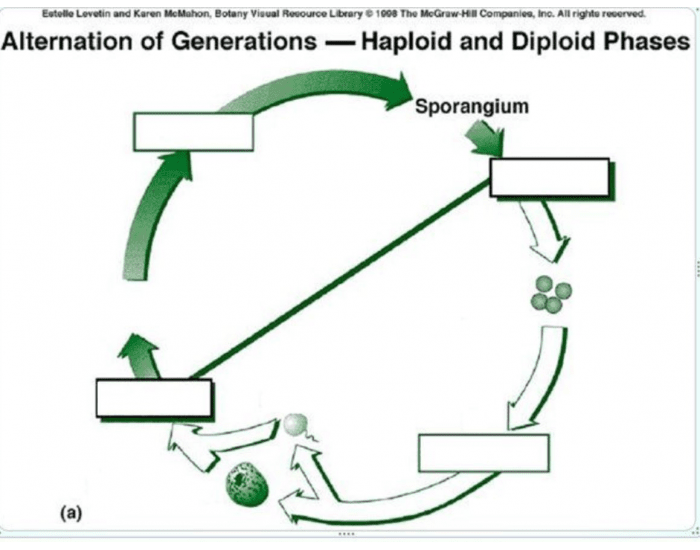
What is the phase that happens right before spore/sporangium? And is it diploid or haploid?
The sporophyte stage
* multicellular, diploid, 2N
* multicellular, diploid, 2N
53
New cards
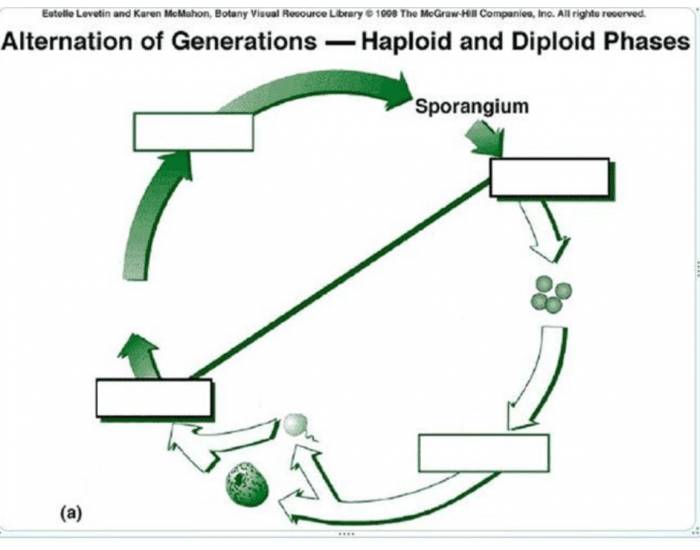
What is the stage that happens after the spore/ sporangium stage? And is it haploid or diploid?
The gametophyte stage
* Multicellular, haploid, n
* Multicellular, haploid, n
54
New cards
What is the stage after gametophyte? Is it haploid or diploid?
Gametes
* haploid, n
* haploid, n
55
New cards
What occurs after the gamete stage?
Fertilization
56
New cards
What is produced after fertilization? Is it haploid or diploid?
A zygote
* diploid, 2N
* diploid, 2N
57
New cards
Is the process between sporophytes and spores mitosis or meiosis?
Meiosis
* 2N → n
* 2N → n
58
New cards
Is the process between spores and gametophyte mitosis or meiosis?
Mitosis
* n → n
* n → n
59
New cards
Is the process between gametophyte and gametes mitosis or meiosis?
Mitosis
* n → n
* n → n
60
New cards
Is the process between zygote and sporophyte mitosis and meiosis?
Mitosis
* 2N → 2N
* 2N → 2N
61
New cards
What is special about the reproduction of Bryophytes (mosses)
They are **gametophyte** dominant
* There are two types of gametophytes- Antheridia (male) and female Archegonia (female)
* The sporophyte comes off the gametophyte (they are dependent of it)
* They are nonvascular- no specialized water transport tissue
* There are two types of gametophytes- Antheridia (male) and female Archegonia (female)
* The sporophyte comes off the gametophyte (they are dependent of it)
* They are nonvascular- no specialized water transport tissue
62
New cards
What is special about the reproduction of Pteridophytes (ferns)?
They are **sporophyte** dominant
* spores are dispersed by wind
* young depend on gametophyte
* the gametophyte look like a heart
* spores are dispersed by wind
* young depend on gametophyte
* the gametophyte look like a heart
63
New cards
What are the two types of spores?
Homospory and Heterospory
64
New cards
What are homospory spores?
* one type of spore is produced
* all are nonvascular and most are seedless, vascular
* all are nonvascular and most are seedless, vascular
65
New cards
What are microsporangia heterospory spores?
They produce microspores which develop into male gametophytes (pollen)
66
New cards
What are megasporangia heterospory spores?
\
They produce megaspores which develop into female gametophytes
They produce megaspores which develop into female gametophytes
67
New cards
What is the importance of the seed?
* they allow protection of embryo away from the parent
* the embryo can disperse away from parent
* they allowed adaptive radiation \~ 365 mya
* the embryo can disperse away from parent
* they allowed adaptive radiation \~ 365 mya
68
New cards
What is important about the Stamen of a flower?
* the anther contains the microsporia
* it is the site of pollen production
* it is the site of pollen production
69
New cards
What is important about the carpel of a flower?
It acts as the flower’s ovary, containing the ovules which hold the megasporangia
70
New cards
What is pollination?
The transfer of pollen from stamen to carpel
71
New cards
What are cues flowers promote pollination to animals with?
Scents, Flower Shape, Flower color
72
New cards
What is a fruit?
a ripened ovary of a plant used to protect/enclose a seed
73
New cards
What are the ways that tissue types are diverse amongst different animal species?
Diploblasts- two tissue types
* Ectoderm germ layer
* Ectoderm germ layer
Triploplasts- embryos with three germ layers
* ectoderm germs layer (skin and nervous system)
* mesoderm germ layer (circulatory, muscle, bones, and organs)
* endoderm germ layer (lining of digestive tract)
* Ectoderm germ layer
* Ectoderm germ layer
Triploplasts- embryos with three germ layers
* ectoderm germs layer (skin and nervous system)
* mesoderm germ layer (circulatory, muscle, bones, and organs)
* endoderm germ layer (lining of digestive tract)
74
New cards
What are the different types of symetery
Radical and Bilateral
75
New cards
What is radical symmetry?
Symmetry around a central axis
* starfish
* starfish
76
New cards
What is bilateral symmetry?
Symmetry that has symmetrical halves, the same on both sides
77
New cards
What are the two types of nervous systems?
Nerve net and Central nervous system
78
New cards
What is a nerve net?
A diffused network of neurons that interconnect and allow certain neurological signals to be spread throughout the organisms body
79
New cards
What is a central nervous system?
Clustered neurons that make up a brain and spinal cord that send neurological signals throughout the organisms body
80
New cards
What is cephalization?
The evolution of the head
81
New cards
What is the importance of the coelom/body cavity?
It the area that allows circulation, space for organs, and can act as a hydrostatic skeleton
82
New cards
True or false: Most animals (99%) bilaterally symmetric
True- Most animals have a plane of symmetry
83
New cards
True or False: Most animals (99%) are diploblasts
False- They are triploblasts
* Three germ layers\~ ectoderm, mesoderm, endoderm
* Three germ layers\~ ectoderm, mesoderm, endoderm
84
New cards
True or False: Most animals (99%) are coelomic
True- Most have a body cavity
85
New cards
What is the “tube within a tube design”?
An inner tube (gut) and an outer tube (body wall) with mesoderm material (muscles, organs, etc) in between
86
New cards
What is special to the development of a protostome?
* The first hole to develop is the mouth (first mouth)
* The coelom is created from blocks of the mesoderm
* The coelom is created from blocks of the mesoderm
87
New cards
What is special to the development of a deuterostome?
* The first hole to develop is the anus, the second hole to develop is the mouth
* The coelom is created from pockets of the mesoderm
* The coelom is created from pockets of the mesoderm
88
New cards
What are factors that triggered the adaptive radiation/diversification in animals?
* Higher oxygen levels could support bigger and more mobile animals
* The diversification of algae ( higher quality food)
* The evolution of predation
* New niches
* New genes and new bodies (HOX genes- genes that play a major role in controlling the body plan of an organism- specify segments to different organisms)
* The diversification of algae ( higher quality food)
* The evolution of predation
* New niches
* New genes and new bodies (HOX genes- genes that play a major role in controlling the body plan of an organism- specify segments to different organisms)
89
New cards
What are some senses used by animals?
* Sight, Taste, Smell, Touch, Sound
* Magnetism, Electric Fields, Barometric pressure
* Magnetism, Electric Fields, Barometric pressure
90
New cards
What are some diet diversification types in animals?
* Herbivores\~ plants
* Carnivores\~ meat
* Detritivores\~ dead/decomposing material
* Omnivores\~ plants and meat
* Carnivores\~ meat
* Detritivores\~ dead/decomposing material
* Omnivores\~ plants and meat
91
New cards
What are some ways different animals eat food (diversification)?
* **Suspension**\~ capture food by filtering particles floating in the water or drifting through the air
* **Deposit**\~ ingest organic material that have been deposited within a substrate or on its surface
* **Fluid~** Suck or mope liquids like nectar, plant sap, or fruit juice
* **Mass~** Take chucks of food into their mouth
* **Deposit**\~ ingest organic material that have been deposited within a substrate or on its surface
* **Fluid~** Suck or mope liquids like nectar, plant sap, or fruit juice
* **Mass~** Take chucks of food into their mouth
92
New cards
What are the two types of reproduction?
Sexual and asexual
93
New cards
What is sexual reproduction?
Fertilization → egg meets sperm
94
New cards
What is asexual reproduction?
Fission, budding, parthenogenesis → one organism makes a “copy'“ of itself
95
New cards
Where can fertilization occur?
Internally or externally
96
New cards
Where can an embryo develop?
Viviparous, Oviparous, Ovoviviparous
97
New cards
What does it mean to have an embryo be viviparous?
It develops inside the body
98
New cards
What does it mean to have an embryo be oviparous?
It develops through deposited fertilized eggs
99
New cards
What does it mean to have an embryo be ovoviviparous?
It develops through the retention of eggs but is nourished by a yolk
100
New cards
What is metamorphosis?
A series of changes in the body’s form or structure throughout an individual organisms life